Highlands
Chaque: Arequipa's hearty wheat and vegetable soup
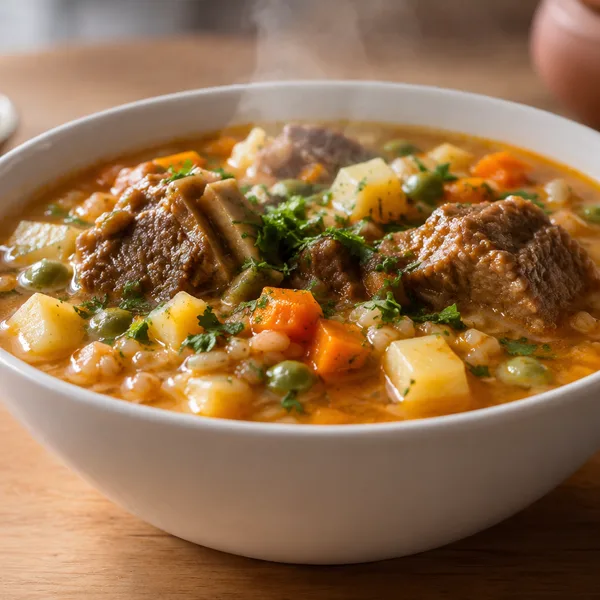
Chaque: cracked wheat, beef and vegetables simmered in ají panca until the pot turns thick. Arequipa cooking, built for cold mornings and real appetite.
Collection · Soups
In Peru a soup is not a small thing served before the meal. In the set lunch that most of the country eats at midday — the menú — the soup is the first of two courses, and it arrives in a bowl deep enough to be a meal on its own. Plenty of people stop there. The phrase for a soup thick enough to stand a spoon in, sopa de cuchara parada, is a compliment.
Altitude shapes the highland end of the list. Above 3,000 meters water boils at a lower temperature, so everything simmers longer, and the ingredients that thrive up there — quinoa, chuño, lamb, native potatoes — are exactly the ones that reward a long pot. Chuño is worth pausing on: it is potato freeze-dried by alternating Andean nights and days, a preservation technology several centuries older than the refrigerator, and it gives chairo a texture nothing else produces.
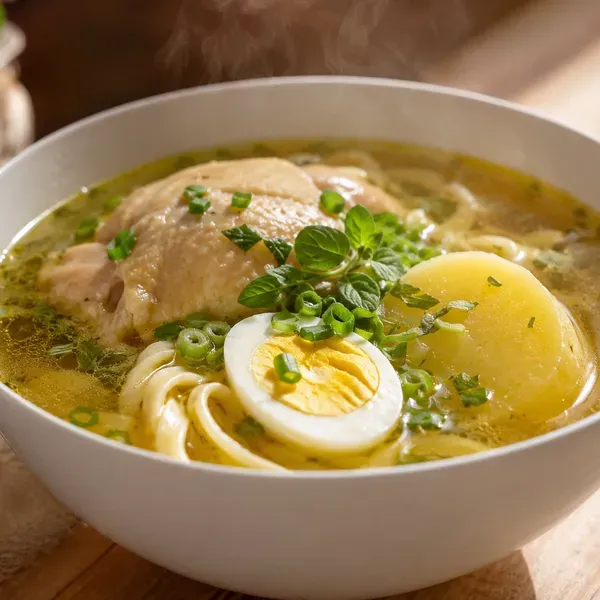
The coast answers with broths rather than stews. Caldo de gallina — hen, noodles, a boiled egg, a squeeze of lime — is what closes a long night and repairs the following morning, and it is sold at hours when nothing else is open. Aguadito takes the same logic and turns it green with a fistful of culantro. And Arequipa contributes the grandest soup in the country, chupe de camarones, built on river shrimp, milk and an egg poached in the broth.
Peruvian soup splits by altitude more than by anything else. These three sit at different heights and show you the range.
Caldo de gallina. The place to begin. A long hen broth with noodles and egg, eaten at dawn and after long nights. Almost nothing can go wrong and it teaches you what a real Peruvian broth tastes like.
Sopa de quinua. Highland cooking without ceremony. Quinoa simmered with vegetables and a little meat — the way it is actually eaten above 3,000 meters, where nobody has ever called it a superfood.
Chupe de camarones. Arequipa at its most serious: river shrimp, milk, cheese, egg and potato in one pot. It is the most demanding soup here and the one people travel for.
Highlands
Chaque: cracked wheat, beef and vegetables simmered in ají panca until the pot turns thick. Arequipa cooking, built for cold mornings and real appetite.
Coast
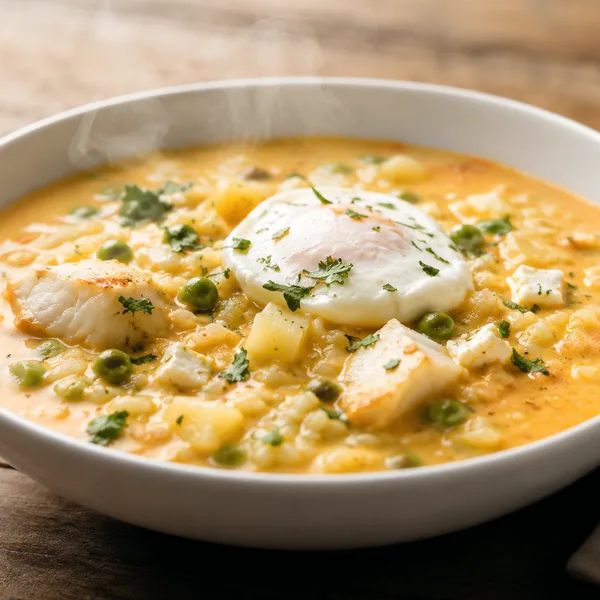
Chupe de pescado: the everyday Peruvian chowder — rice cooked in the broth, milk and fish added at the end, finished with egg and queso fresco.
Coast
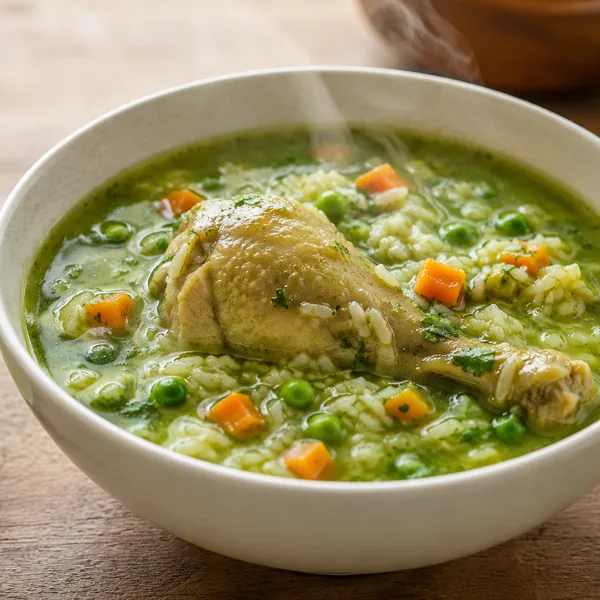
Chicken and rice simmered in a bright cilantro broth until the pot turns thick and green. The Peruvian soup for a cold day, or a rough morning after.
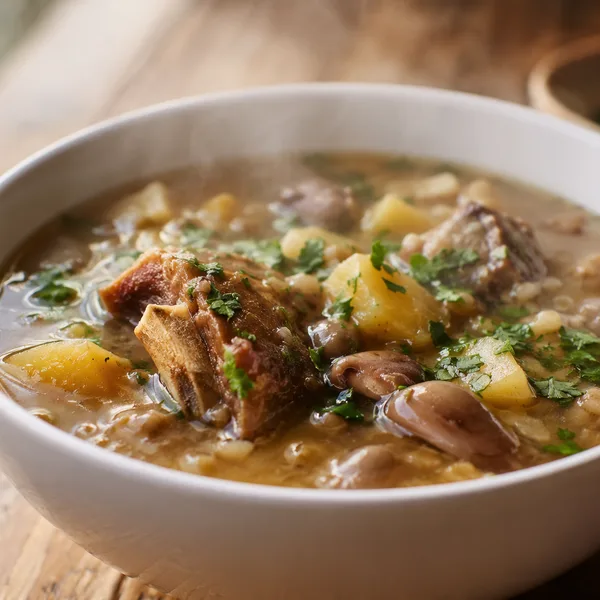
Highlands
Chairo: lamb, chuño and vegetables simmered into a thick soup from Peru's Puno altiplano — hearty food from the harshest growing country there is.
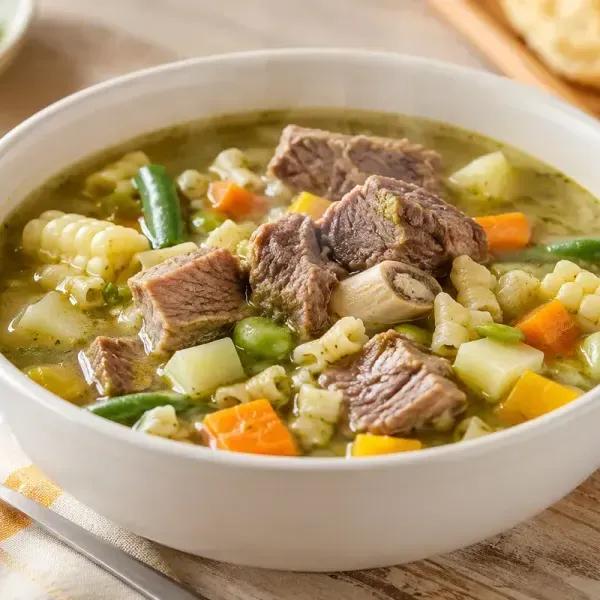
Highlands
Menestrón, Peru's hearty take on minestrone: beef, vegetables and noodles under a blended basil-spinach-cheese pesto stirred in at the end.
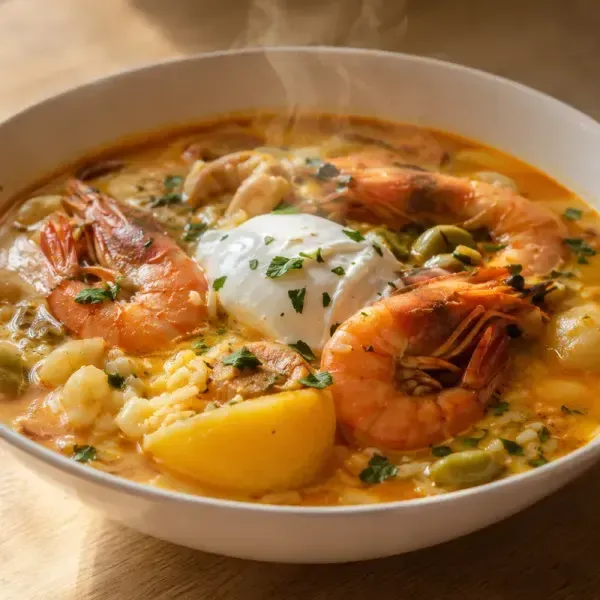
Highlands
How to make chupe de camarones: the shell-stock secret, the ají panca base, and the milk, cheese, egg and corn that make Arequipa's chowder a feast in a bowl.
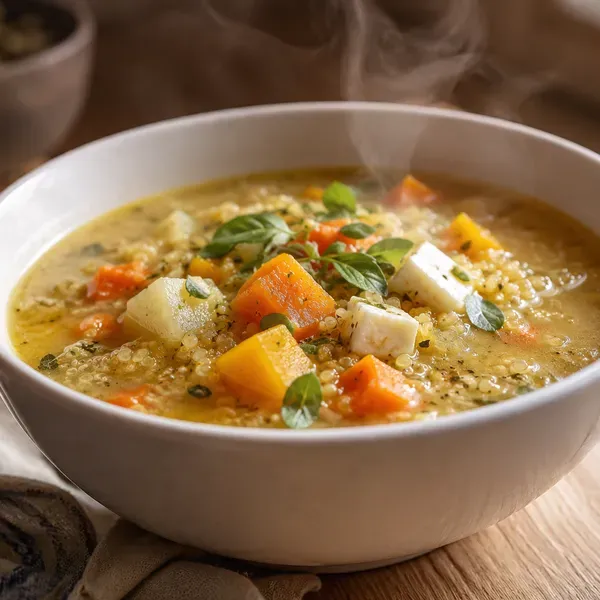
Highlands
Sopa de quinua as it's cooked daily in the Peruvian highlands: the aderezo base, when to add the quinoa, and the cheese-and-milk finish of the sierra.
Coast
How to make caldo de gallina, Peru's restorative hen soup: why hen beats chicken, the long-simmer method, and the egg, noodles and lime that finish it.
What makes a soup a chupe? The word comes from Quechua chupi, meaning simply soup, so the family is older than the things that now define it. In practice a chupe is thick, built on milk, and finished with an egg and fresh cheese — but the ají amarillo, the potato and the rice doing the thickening are what make it Peruvian.
Is soup a starter or a meal in Peru? Usually a meal. A bowl of chairo or chaque is lunch, not something that comes before it, and a soup thick enough to stand a spoon in is praised rather than complained about — there is a phrase for it, sopa de cuchara parada.
Why do Peruvian soups have both rice and potato? Because they thicken differently. The potato breaks down and gives body; the rice releases starch and holds the broth together. Neither is padding — take one out and the soup feels thin in a way more liquid will not fix.
Can I make these without the Peruvian chiles? You can cook something good, but it will not taste Peruvian. Ají amarillo is the single ingredient carrying most of these soups, and there is no clean substitute — the closest is a mild yellow chile with a little extra fruitiness from a sweet pepper.
Between them these six cover the two things a soup is asked to do here: feed a table cheaply, and put someone back together. Each recipe notes what to use when the original ingredient is not available where you live.
Peruvian desserts · Peruvian drinks · Peruvian appetizers · Peruvian main dishes