
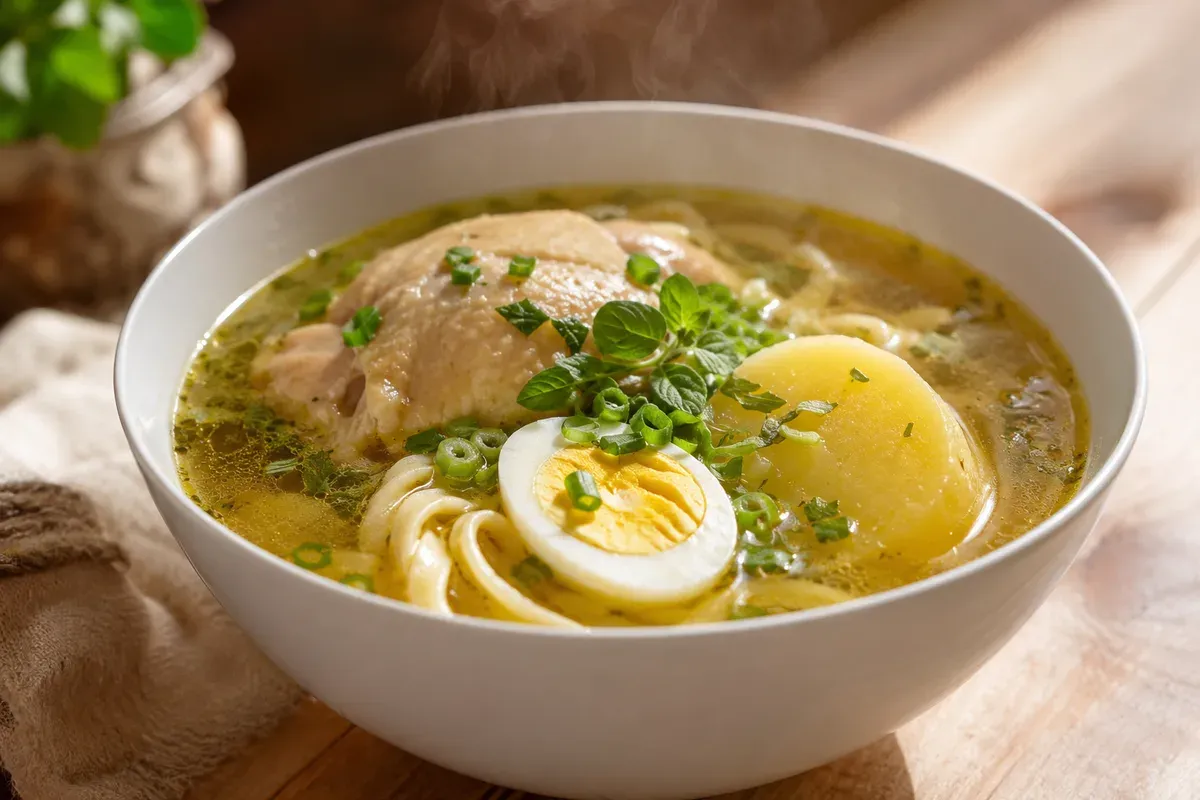
There is a category of soup that exists to fix people, and caldo de gallina is Peru's entry in that canon. It is served at dawn in market stalls to vendors starting their shift, at 3 a.m. to people ending their night out, to anyone with a cold, a heartbreak, or a long bus ride behind them. In the highlands, where we write from, a steaming bowl of caldo on a freezing morning is less a meal than a public service. The formula is fixed and beloved: golden hen broth, a tangle of noodles, a yellow potato, half a boiled egg, a snowfall of scallions, and lime squeezed over everything at the table.
The dish has exactly one secret, and it's in the name: gallina means hen — an older laying bird — not pollo, a young chicken. Everything that makes this soup legendary comes from that distinction.
In the highlands we call it levanta muertos — the "raise-the-dead" — and the name is earned. It's what you eat at first light at the market before the cold gets into your bones, and it's the first thing my family reaches for when someone's coming down with something. Down with a cold myself, I'll take a bowl of this over any pill: it doesn't cure you, but it carries you through the worst of it. Pure comfort in a bowl.
Why hen, and what to do if you can't find one
A hen has lived longer, moved more, and built more connective tissue and more developed fat than a supermarket chicken. Simmered low and slow, all of that dissolves into a broth with real body — golden, faintly sweet, with the gelatin that makes your lips sticky and your spoon slow down. A young chicken simply doesn't have it to give; its broth is pleasant but thin, done in under an hour because there's nothing left to extract.
Outside Peru, look for "stewing hen," "soup hen" or "fowl" at halal butchers, Asian markets and farmers' markets — places that serve communities who never stopped valuing older birds. If you genuinely can't find one, the honest workaround is a whole chicken reinforced with extra wings and backs (the most gelatin-rich parts), simmered at the shorter time. Good soup, not quite caldo de gallina — and now you know why.
A chicken makes broth in an hour because it has nothing more to say. A hen takes three because it's telling you its life story.
The method is patience, not technique
Caldo de gallina asks almost nothing of the cook except restraint. Start the bird in cold water, skim seriously during the first boil — that ten minutes of skimming is the difference between a clear golden broth and a cloudy one — and then leave it barely bubbling for hours. The aromatics are minimal on purpose: ginger and garlic (a fingerprint of Peru's Chinese culinary heritage, the same one behind lomo saltado), plus a leek — poro, as we call it here. No carrots, no bay leaves, no bouillon cubes. The hen is the flavor.
One highland note from experience: at altitude, water simmers cooler, so everything takes longer. If your kitchen is anywhere above 2,500 meters, add half an hour and trust the meat, not the clock — it's done when it surrenders from the bone.
The recipe
Ingredients
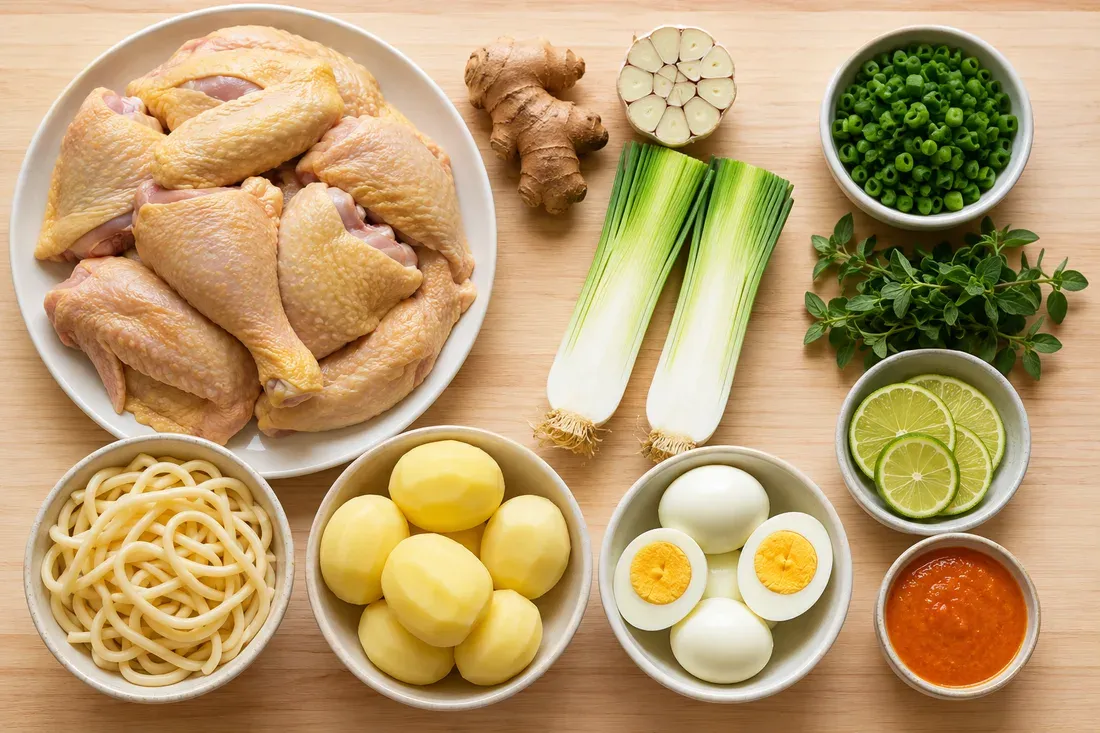
- 1 stewing hen, about 2 kg, cut into 6 serving pieces (or 1 chicken + 500 g extra wings/backs)
- 4 liters cold water
- 4 cm piece of fresh ginger, smashed with the flat of a knife
- 1 whole head of garlic, halved crosswise
- 1 leek (poro), halved (or 2 celery stalks)
- Salt — added only at the end
- 400 g thick noodles (tallarines; spaghetti is fine)
- 6 yellow potatoes, peeled and halved
- 6 eggs, boiled to your liking
- To serve: thinly sliced scallions, fresh oregano (or huacatay), lime wedges, ají sauce
Method
- Cold start, honest skim. Put the hen in the pot, cover with the cold water, bring slowly to a boil. Skim the gray foam diligently for the first 10–15 minutes — this is the only labor the soup asks of you.
- Aromatics in, heat down. Add ginger, garlic and leek. Lower to the gentlest simmer — occasional lazy bubbles, never a rolling boil — and partly cover. Hen: 2 to 2½ hours. Chicken: 45–60 minutes.
- Potatoes for the final stretch. Add them for the last 20 minutes, directly in the broth. Salt the broth now, tasting as you go.
- Noodles apart. Cook them separately in salted water (cooking them in the broth clouds it and drinks it) and divide among big, deep bowls.
- Assemble hot. A piece of hen, a potato and an egg half in each bowl. Ladle broth over until everything floats. Scallions and oregano on top.
- Finish at the table. Lime squeezed over, ají to taste. The lime is not optional — it wakes the entire bowl.
Troubleshooting, from experience
The broth is cloudy. It boiled too hard, or the skimming was halfhearted. Still delicious — clarity is pride, not flavor — but next time keep it at a murmur.
The hen is still tough at 2 hours. Normal. Older birds vary; give it another 30–45 minutes. It's ready when the meat twists off the bone without argument.
The broth tastes weak. Too much water for the bird, or a young chicken doing a hen's job. Reduce the finished broth, uncovered, for 20 minutes — and source a real hen next time.
What to serve it with
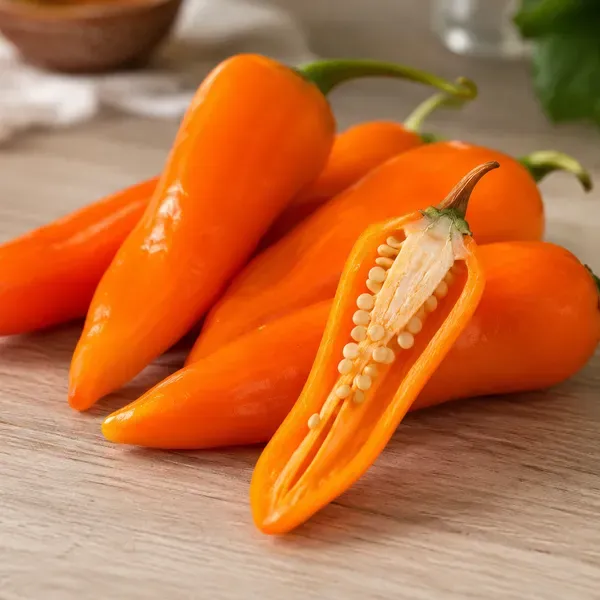
Caldo de gallina is the meal — bread on the side at most, and a glass of chicha morada if it's lunchtime rather than dawn. The ají sauce on the table — uchucuta, from the Quechua uchu, chile — is traditionally a fierce little blend built on ají amarillo or rocoto; even a few drops change the bowl's personality. And if you're cooking for someone with a cold: double the ginger. That's not medicine, that's just what every Peruvian household does.

Junior Quintana learned to cook from his mother, Lina, in Junín, in the central Peruvian Andes — a kitchen where chicha morada simmered every Sunday and there were always native potatoes with cheese and choclo on the table. He started Andean Kitchen to share the food he grew up with, in English and without shortcuts: every recipe cooked and tested at home, where it's really made. His favorite dish is, and probably always will be, pachamanca. See how we cook, test and photograph.
Did you cook this?
Tell me how it went — including what did not work. I read every one, and with your permission I will put it on this page, with your first name, for whoever comes next.