
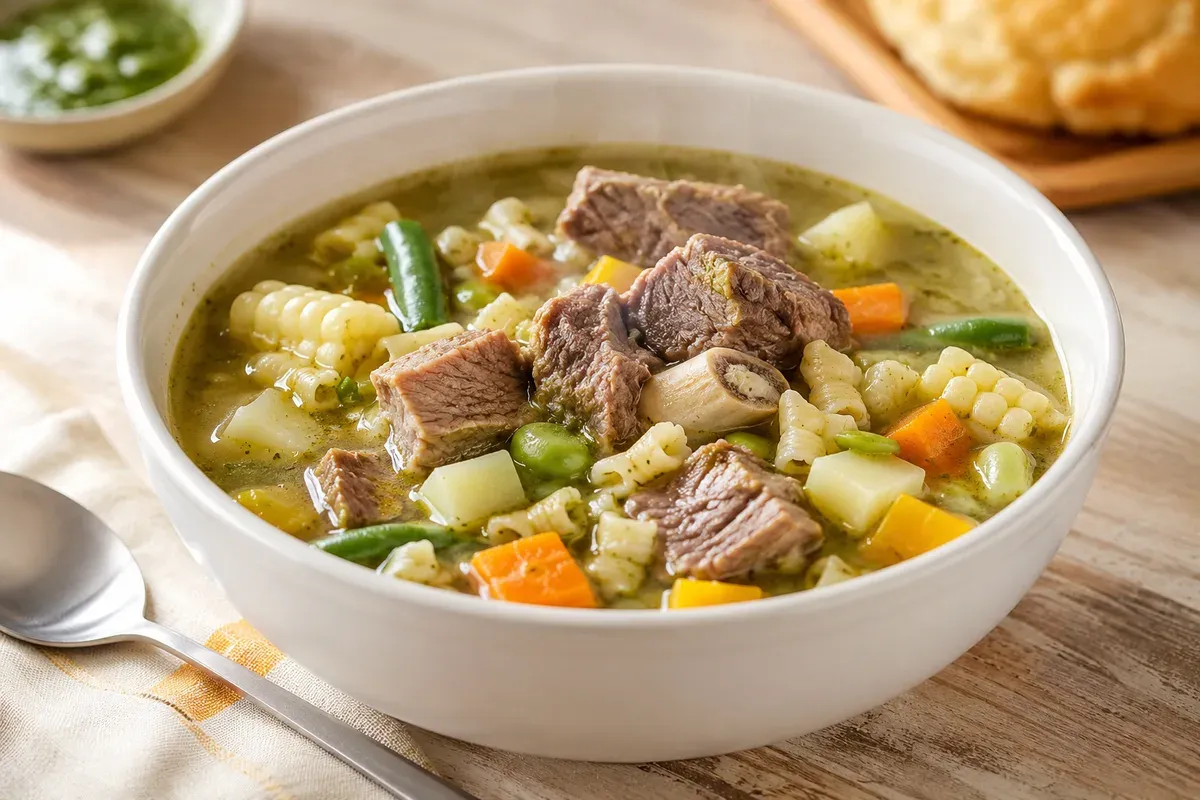
Peru's culinary story is usually told through its Chinese and Japanese chapters — the chifa behind lomo saltado, the Nikkei behind tiradito — but the Italians wrote a chapter too. Genoese immigrants arrived on the same coast in the 1800s, and their minestrone did what every immigrant dish in Peru does: it adapted or it didn't survive. The adaptation gained beef and its broth, swapped vegetables for whatever the Andes offered — squash, corn, favas, always a potato — and, most distinctively, reinvented the pesto: in menestrón, the basil is blended with spinach and queso fresco into a green cream that's stirred into the whole pot at the end, turning the soup green from within rather than dotting it from above. The result out-hearties its ancestor by a comfortable margin, which is very Peruvian of it.
Up here in the highlands, menestrón season is every season; it's the soup for the day the fog doesn't lift. It also happens to be the gentlest introduction on this site to the Peruvian soup method, because it combines two techniques you may already have from us: the patient beef simmer of caldo and the everything-in-order vegetable logic of sopa de quinua.
Ours leaned on whatever the huerta had that week — squash and favas more often than green beans — and the basil always came from a market bunch, never a garden of our own, though I've thought more than once about planting one.
The pesto goes in the pot, not on it
The signature move and the only step that needs faith: the blended basil-spinach-cheese cream meets the soup off the heat, at the very end. Stirred in earlier, the basil cooks dull and the cheese tightens; stirred in at the finish, the whole pot turns fragrant, green and faintly creamy, like the soup had been planning it all along. (The spinach, as in our arroz con pollo, is the color insurance; the cheese is the Peruvian signature no Genoese grandmother sanctioned and no Peruvian grandmother will surrender.)
Minestrone garnishes with pesto. Menestrón becomes it.
Menestrón is not menestra
Worth saying before anyone orders the wrong thing. In Peru a menestra is a legume dish — lentils, beans, favas, stewed and served beside rice — and it turns up on lunch menus every day of the week. Menestrón, with the Italian ending intact, is this soup and nothing else. The names look like relatives and are not.
When the Andean vegetables are not there
- Fresh favas. Frozen fava beans work directly. Failing that, lima beans are the closest in texture, and edamame will do in a pinch — a little sweeter, but it holds its shape the same way.
- Peruvian squash (zapallo macre). Any dense, orange winter squash: kabocha first, butternut second. What you want is a squash that softens without dissolving into the broth.
- Queso fresco. A mild, crumbling, salty fresh cheese. Mexican queso fresco is the same idea, and a firm feta rinsed under water to pull the salt down works too. Do not reach for mozzarella — it goes stringy in the pesto instead of creamy.
- Choclo. Regular sweetcorn is fine here. The giant Andean kernel is chewier and starchier, but in a soup this crowded nobody is auditing the corn.
What is not negotiable is the beef broth and the basil. Everything else in the pot has always been whatever the week provided — that is the whole logic of the dish.
The recipe
Ingredients
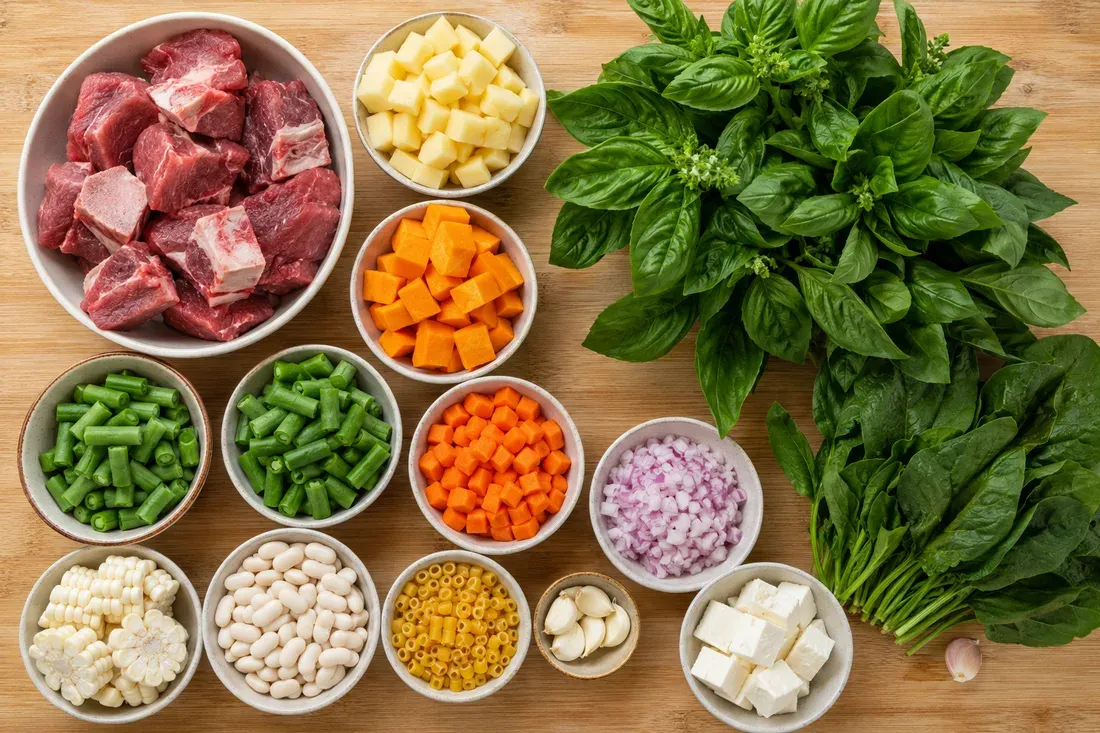
- 600 g beef shank or chuck, bone in if possible, in chunks
- 2.5 liters water
- 2 potatoes, cubed · 1 cup squash, cubed · 1 carrot, diced · 1 cup green beans, cut · 1 cup corn kernels · 1 cup fava or white beans
- 150 g short noodles or broken spaghetti
- 1 onion, diced · 3 garlic cloves, minced · oil, salt, pepper
The green:
- 1 big bunch basil (leaves) · 50 g spinach · 100 g queso fresco · 1 garlic clove · splash of broth
Method
- The beef base. Beef in cold water, to a boil, skim honestly, then a gentle simmer 50–60 minutes until tender. (Highland clocks: add 15.)
- Aderezo and roots. Sweat onion and garlic in oil; into the pot with potatoes, squash and carrot. 12 minutes.
- The quick crowd. Green beans, corn, favas and the noodles; cook until the pasta is just done. Salt the broth boldly.
- Blend the green meanwhile: basil, spinach, cheese, garlic and enough broth to move the blender. Loose cream, not paste.
- The transformation. Pot off the heat; green in; stir and watch the soup change nationality. Taste, season, rest 3 minutes.
- Serve with extra cheese crumbled over and bread that's prepared to work.
Troubleshooting, from experience
The green turned khaki. The pesto boiled. Off the heat means off the heat — and reheat leftovers below a simmer for the same reason.
The noodles drank the soup overnight. They always do; it's their nature. Loosen with broth when reheating, or cook the noodles separately if you're a meal-prepper.
Flat flavor. Under-skimmed, under-salted, or boneless beef. The bone is the budget umami; ask the butcher for shank.
What to serve it with
Menestrón is a complete lunch with bread; in the full criollo rotation it alternates with caldo and sopa de quinua as the week's soups. A spoonful of ají sauce at the table is welcome heresy, and arroz con leche afterward closes the kind of cold-day meal this soup was invented for.
Questions people ask
Can I make menestrón without beef? Yes, though you lose the broth that carries it. Build a strong vegetable stock, add a piece of hard cheese rind while it simmers, and be generous with the pesto at the end. It becomes a different, lighter soup rather than a lesser one.
Why does my pesto turn the soup dull instead of green? It went in too early. The basil cooks and loses its color within a minute of real heat. The cream goes in off the heat, at the very end, and the pot should never boil again afterward.
Is this just Peruvian minestrone? It started that way. The Genoese who arrived on the coast in the 1800s brought the soup, and Peru added beef and its broth, swapped in whatever the Andes grew, and moved the pesto from the garnish into the pot. The result is heartier than its ancestor and green all the way through.
Can I make it ahead? The soup, yes — it improves overnight. The pesto, no. Blend that fresh and stir it into each reheated pot, or you will be eating the dull version you were warned about.

Junior Quintana learned to cook from his mother, Lina, in Junín, in the central Peruvian Andes — a kitchen where chicha morada simmered every Sunday and there were always native potatoes with cheese and choclo on the table. He started Andean Kitchen to share the food he grew up with, in English and without shortcuts: every recipe cooked and tested at home, where it's really made. His favorite dish is, and probably always will be, pachamanca. See how we cook, test and photograph.
Did you cook this?
Tell me how it went — including what did not work. I read every one, and with your permission I will put it on this page, with your first name, for whoever comes next.