
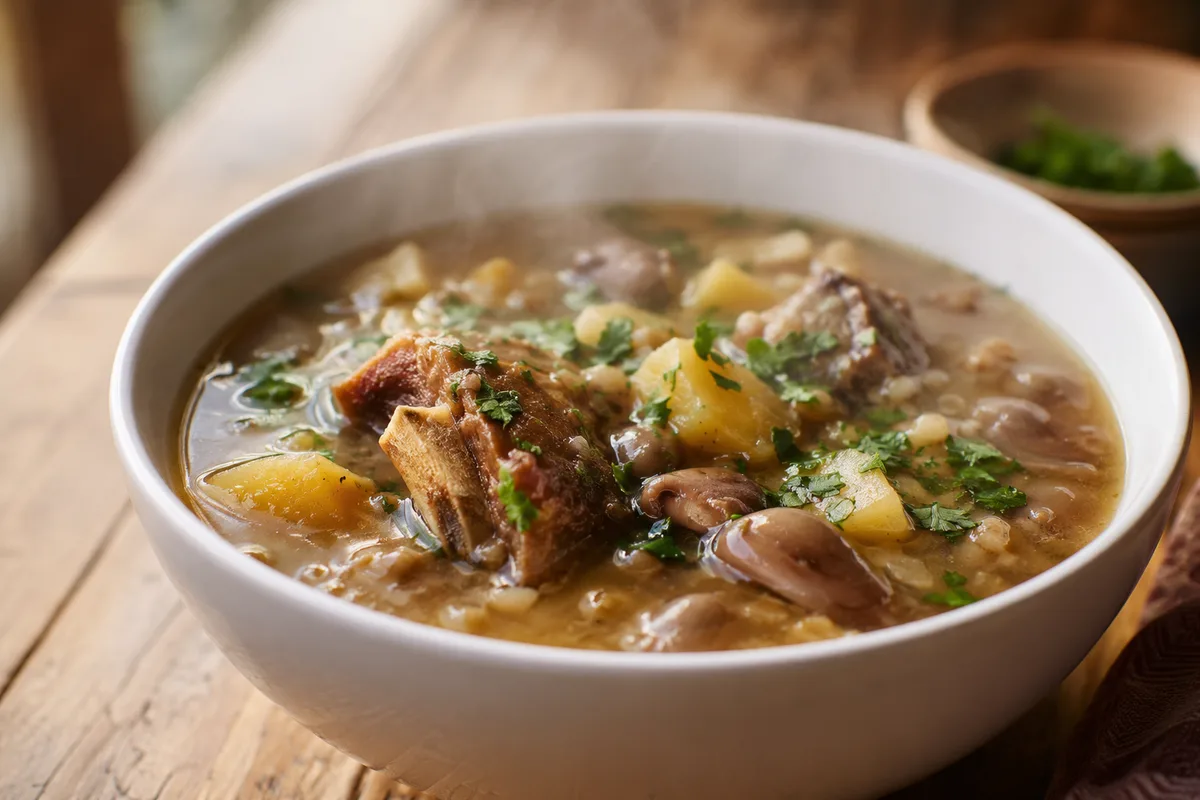
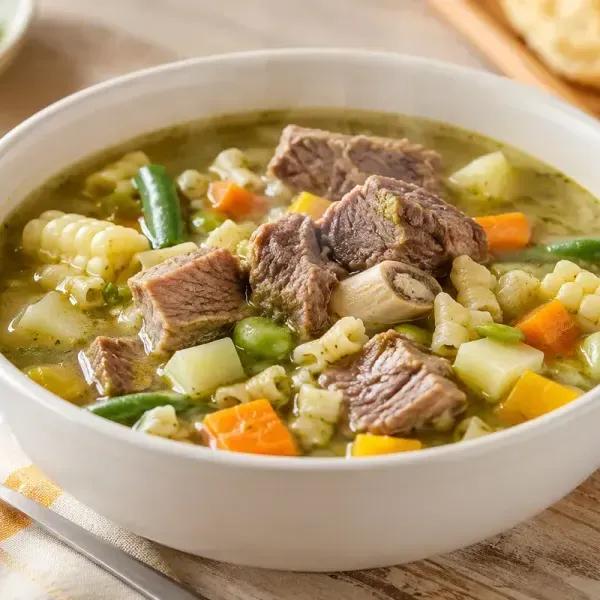
Chairo comes from Puno, on the shores of Lake Titicaca, one of the highest and coldest inhabited regions in Peru, and it's built to answer exactly that climate — lamb, chuño (freeze-dried potato), cracked wheat and fava beans simmered together into a thick, warming soup finished with fresh mint. Chuño itself is an ancient preservation technology, potatoes freeze-dried through repeated nights of altiplano frost, and it gives the soup a distinct, slightly tangy depth that fresh potato doesn't replicate.
The dish is shared with Bolivia's own altiplano region just across the lake, a reminder that the border here is more political than culinary — the same harsh geography produces the same kind of resourceful, warming food on both sides.
Chairo isn't ours. It belongs further south, to Puno and the altiplano, where the cold makes an argument and the soup answers it. We learned it the way most things travel in the sierra: from a neighbor who had family down there and who never once stopped telling us our chuño was the wrong kind — the word comes straight from Quechua, ch'uñu, and she pronounced it like a correction. She was probably right. We kept making it anyway, thick enough to earn the name we give the good ones: sopa de cuchara parada, a soup the spoon can stand up in.
Chuño needs real rehydration before it goes in
Chuño arrives dried hard as a small stone, and it needs a proper soak — often overnight — to soften enough to peel and use. Skipping or rushing this step leaves tough, unpleasant pieces in the finished soup rather than the tender bite chuño should have once properly rehydrated.
Chuño isn't just dried potato. It's an entirely different texture and flavor, and it needs to be treated on its own terms.
Mint goes in at the very end, uncooked
Fresh mint stirred in right before serving keeps its bright, cooling quality intact against the heavy, warming broth — cooked into the soup earlier, it turns muted and loses the contrast that makes the final bowl work. It's a small addition, but the timing matters.
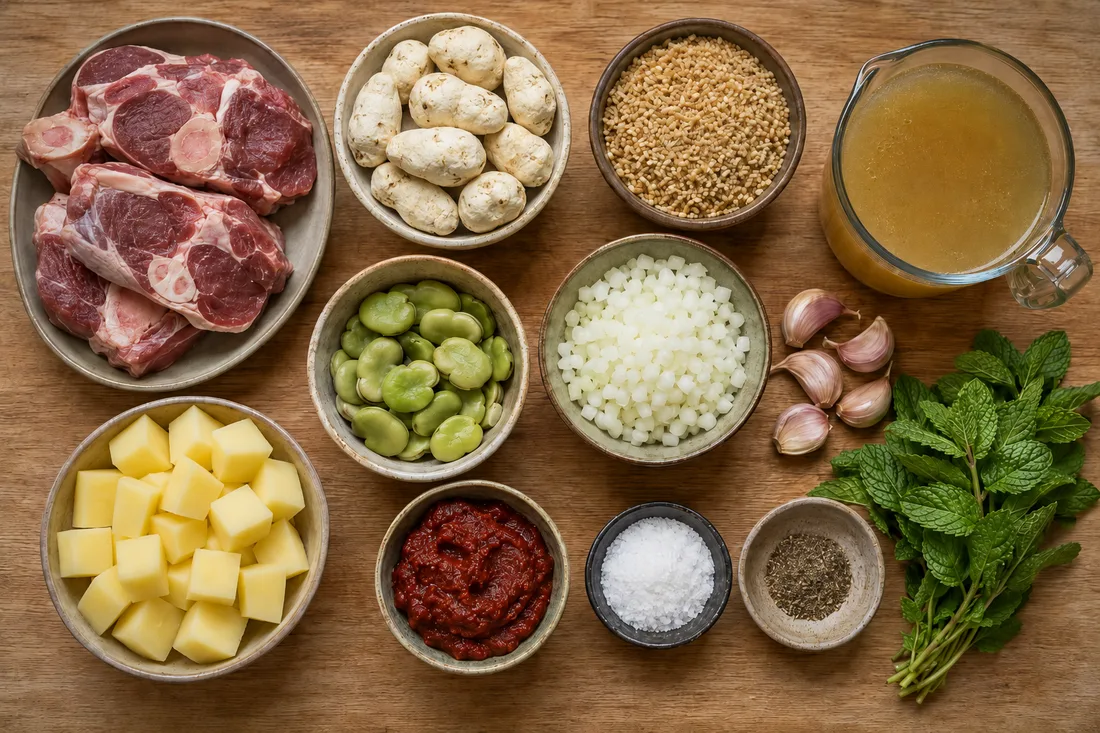
Chuño, and what to do if you cannot find it
This is the honest obstacle. Chuño is potato that spent its nights outdoors on the altiplano — frozen after dark, thawed and pressed under the sun by day, over and over for a week until every drop of water is gone and what remains keeps for years. It is one of the oldest preservation methods still in daily use anywhere, and it does not taste like potato. It tastes faintly sour, almost mineral, and that is the flavor the soup is built around.
There is no true substitute, and pretending otherwise would be doing you a disservice. What there is:
- Black chuño from a Peruvian or Bolivian grocery. The real thing. Sold dried and rock-hard; it needs an overnight soak and then the skins rub off between your fingers.
- Tunta, sometimes sold as white chuño. The same technique with a soaking stage added, so it comes out pale and milder. Easier on a palate meeting it for the first time.
- Nothing, and a different soup. If neither is available, use waxy potato and accept that you are making a lamb and wheat soup rather than chairo. It will be good. It will not be this.
The lamb, and what else works
Lamb is what Puno puts in it, on the bone, cheap cuts that reward a long simmer — neck, shoulder, ribs. Beef shank works and is easier to find, though the soup loses some of its particular sweetness. What does not work is a lean, quick-cooking cut: chairo wants two hours of collagen breaking down into the broth, and a loin will only turn to string.
The recipe
Ingredients
- 500g lamb, bone-in, cut into pieces
- 1 cup chuño, rehydrated and peeled
- 1/2 cup cracked wheat
- 1/2 cup shelled fava beans
- 1 onion, diced · 3 garlic cloves, minced
- 2 tbsp ají panca paste
- 2 potatoes, cubed
- 6 cups broth or water
- 2 tbsp oil · salt · pepper · chopped mint, to finish
Method
- Brown the lamb in oil. Set aside.
- Build the base. Cook onion and garlic, stir in ají panca paste.
- Simmer. Return the lamb, add broth, chuño and wheat, simmer covered 40 minutes.
- Add potato and favas, simmering another 15-20 minutes. Finish with mint.
Troubleshooting, from experience
Chuño stayed tough. Not rehydrated long enough. Give it a proper overnight soak if possible.
Lamb came out tough. It needed more time. Give it the full simmer before adding the quicker-cooking vegetables.
Mint tastes muted. Added too early. Stir it in only at the very end, off the heat.
What to serve it with
Chairo is a complete meal in the bowl, ideally eaten hot on a genuinely cold day, which in Puno is most days.
Questions people ask
How long does chuño need to soak? Overnight is standard, and twelve hours is not too long. It arrives hard as gravel and it has to soften enough that the skin rubs away under your thumb. Rushing this is the single most common way to ruin the soup — under-soaked chuño stays gritty no matter how long the pot simmers afterward.
Is chuño the same as freeze-dried potato from a camping store? No. Commercial freeze-drying removes the water in a vacuum and leaves the flavor intact. The altiplano method uses frost, sun and pressure over about a week, and it changes the potato — the result is sour and dense in a way the camping version is not.
Can I make chairo without lamb? Beef shank is the usual stand-in and it works. Keep to a cut with bone and connective tissue, and give it the full simmer. What you lose is a specific sweetness that lamb fat brings to a soup this heavy.
Why is the mint added at the end? Because it is the only bright thing in the bowl. Simmered, it turns muted and disappears into the broth. Torn in off the heat, it cuts through everything else — which is exactly the contrast a soup this dense needs.

Junior Quintana learned to cook from his mother, Lina, in Junín, in the central Peruvian Andes — a kitchen where chicha morada simmered every Sunday and there were always native potatoes with cheese and choclo on the table. He started Andean Kitchen to share the food he grew up with, in English and without shortcuts: every recipe cooked and tested at home, where it's really made. His favorite dish is, and probably always will be, pachamanca. See how we cook, test and photograph.
Did you cook this?
Tell me how it went — including what did not work. I read every one, and with your permission I will put it on this page, with your first name, for whoever comes next.