
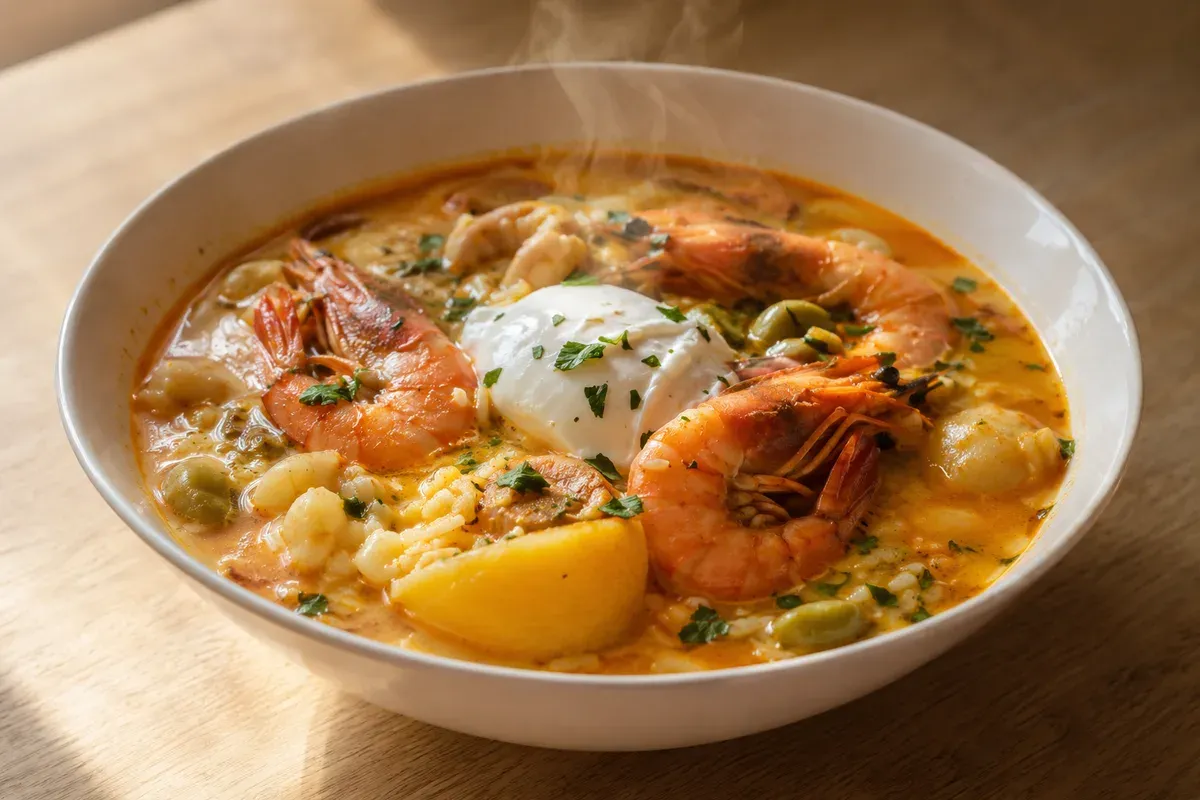
Arequipa, Peru's proud southern city, maintains a whole calendar of soups — a different chupe for each day of the week in its traditional picanterías — and Friday's is the king: chupe de camarones, a red-gold chowder of river shrimp so generous it ends the meal rather than starting it. Into one pot go shrimp stock made from the shells, potatoes, rice, corn, fava beans, milk, fresh cheese and a poached egg per person; out comes the dish many Peruvians name when asked what they'd eat last. It is not subtle. It is not quick. It is worth every minute, and the home version below honors it without requiring an Arequipa picantería's hundred-year-old pot.
One geography note for honesty: the original uses camarones de río, the river prawns of Arequipa's valleys, whose heads carry an intense coral. Outside Peru — and even here in the central highlands — the working substitute is whole, shell-on, head-on shrimp, the largest you can find. The heads are not optional decoration; they're the flavor budget.
I've eaten chupe de camarones exactly twice in Arequipa itself, both times ordered like a dare, and both times I understood by the second spoonful why the picanterías reserve it for Fridays only. Here in Junín we don't have river shrimp, so the version that reaches our table leans on frozen shrimp and a longer simmer of the shells — less coral, more patience, and still worth the whole afternoon.
The shell stock is the dish
Everything that makes a chupe taste like more than vegetable soup with shrimp on top happens in the first twenty minutes: heads and shells simmered and pressed into a stock that turns sunset-orange with shrimp coral and fat. The tails, meanwhile, wait peeled in the fridge for the final three minutes — because shrimp meat cooks in moments and turns to erasers if it rides along for the whole simmer. One ingredient, two destinies, perfect timing: that's the architecture.
The shells are not trash with a soup attached. The soup is shells, finally understood.
The crowd in the pot
The base is the familiar Peruvian engine — onion, garlic, and here a double chile signature: ají amarillo for fruit and ají panca (the dark, raisiny dried chile from our anticuchos) for the deep red color and gentle smoke. Then the abundance: rice to thicken, potatoes because this is still Peru, corn and favas for sweetness and bite. The finish is pure picantería: evaporated milk and queso fresco swirled in off the heat — the same serrano dairy finish as our sopa de quinua, scaled up to celebration — and an egg poached directly in the simmering broth for each bowl.
The recipe
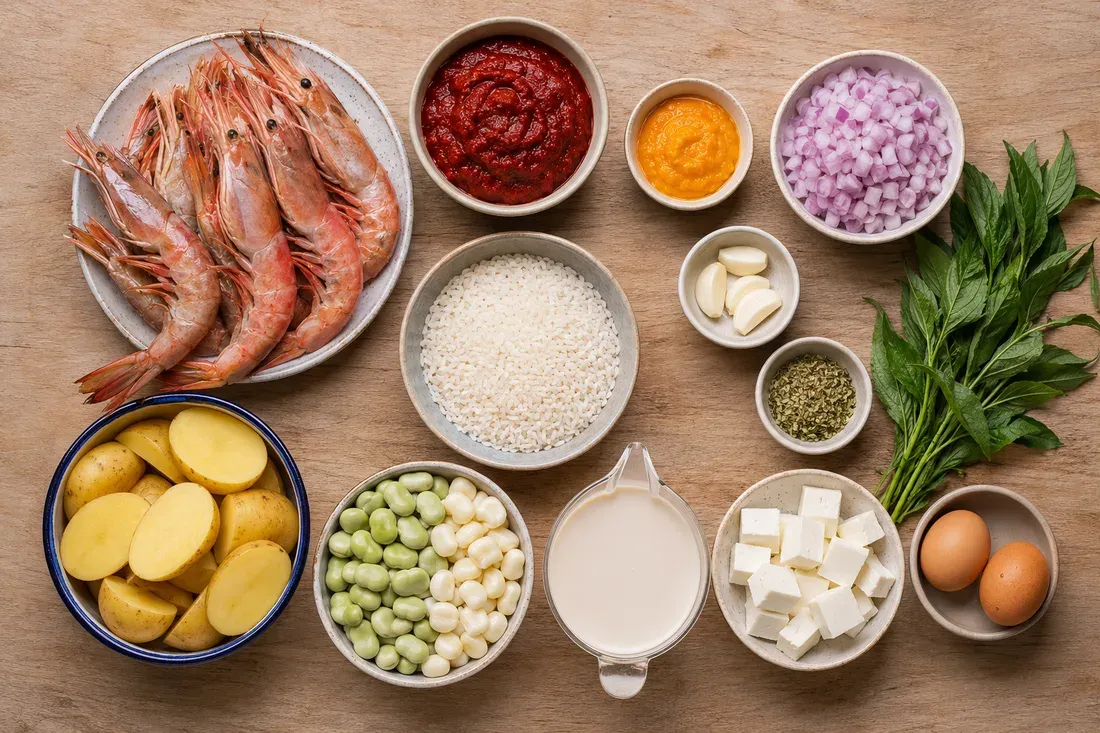
Ingredients
- 1 kg whole shell-on shrimp, head-on if at all possible, the bigger the better
- 2.5 liters water
- 3 tbsp ají panca paste · 1 tbsp ají amarillo paste
- 1 red onion, diced · 4 garlic cloves, minced · 1 tsp dried oregano
- 100 g rice
- 4 yellow potatoes, halved
- 1 cup fava beans (frozen are fine) · 1 cup corn kernels or thick choclo rounds
- 200 ml evaporated milk
- 120 g queso fresco in cubes
- 6 eggs
- Vegetable oil · salt · huacatay or oregano leaves to finish
Method
- Divide the shrimp. Peel; tails to the fridge, heads and shells to the pot.
- Coral stock. Shells and heads in the water, simmer 20 minutes, pressing the heads against the pot with a spoon to release the coral. Strain, pressing the solids goodbye. The stock should be orange and smell like the ocean's good mood.
- Aderezo. Oil, onion 5–6 minutes; garlic, both ají pastes and oregano, 3–4 more, until brick-red and glossy.
- Build. Stock in, then rice and potatoes. Gentle simmer, 15 minutes.
- The crowd. Favas and corn, 8 minutes more. Salt to taste — slightly bold, the dairy will soften it.
- Eggs in the pool. Crack each egg into a cup and slide it into a calm corner of the simmer. 3–4 minutes for set whites, runny yolks.
- Tails, then dairy, then done. Shrimp tails in for 2–3 minutes until just pink and curled. Off the heat: milk, then cheese cubes. Huacatay on top. Serve each bowl with its egg riding the surface like it owns the place.
Troubleshooting, from experience
The shrimp are rubbery. They went in early or stayed late. Two to three minutes, at the end, no exceptions — set a timer if your conversation runs long.
The broth tastes thin. Headless shrimp, usually. Reinforce next time with a spoonful of shrimp or fish bouillon in the stock — picantería purists will forgive what they don't witness.
The milk curdled. It hit a rolling boil. Dairy enters off the heat and the pot doesn't return to the flame; reheat leftovers gently and below a simmer.
What to serve it with
Nothing — that's the point; chupe is the whole Friday. A spoonful of salsa criolla on top is welcome, chicha morada handles the table, and if you're building the full Arequipa fantasy, a pisco sour before and nothing after but a nap.

Junior Quintana learned to cook from his mother, Lina, in Junín, in the central Peruvian Andes — a kitchen where chicha morada simmered every Sunday and there were always native potatoes with cheese and choclo on the table. He started Andean Kitchen to share the food he grew up with, in English and without shortcuts: every recipe cooked and tested at home, where it's really made. His favorite dish is, and probably always will be, pachamanca. See how we cook, test and photograph.
Did you cook this?
Tell me how it went — including what did not work. I read every one, and with your permission I will put it on this page, with your first name, for whoever comes next.