
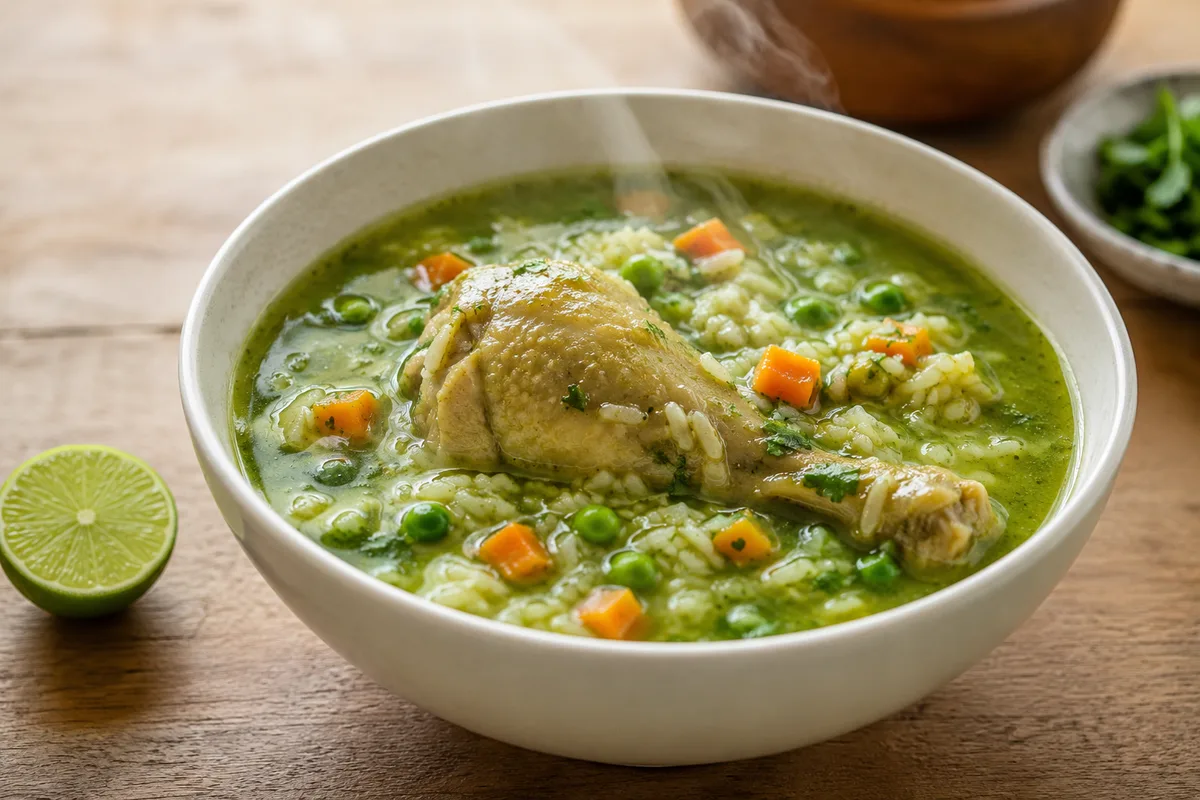
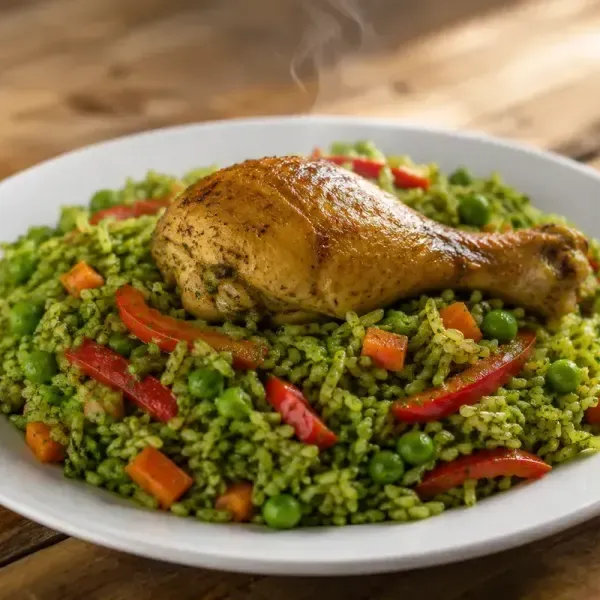
Aguadito de pollo sits in the same family as caldo de gallina — chicken simmered low and slow into a broth that does most of the work — but it takes a sharp left turn by cooking rice directly in that broth until the whole pot thickens into something closer to a loose risotto than a clear soup. The color comes from the same cooked-down cilantro base that shows up in arroz con pollo and seco de res, though aguadito keeps things brothier than either of those.
It's a dish reached for on a cold, damp day or after a rough night, the kind of food that asks nothing of the person eating it except a spoon and an appetite.
In our house aguadito was the soup that appeared when somebody wasn't well, and also the soup that appeared at two in the morning when a party had gone long. Peruvians call a dish like that a levanta muertos — a raiser of the dead — and nobody says it as a joke. That says something about how we think about being unwell. My mother made hers thick enough that the spoon had to work for it, and she never measured the cilantro — she just kept adding until the pot went green.
Rice cooks in the broth, not beside it
Unlike a soup where rice is added as a garnish or cooked separately, aguadito's rice goes directly into the simmering chicken broth and releases its own starch as it cooks, which is exactly what thickens the whole pot into its characteristic looser-than-soup, thicker-than-broth texture. Stir it occasionally in the final stretch to keep the rice from settling and scorching on the bottom of the pot.
The starch that thickens aguadito isn't added — it's the rice doing that job on its own, right there in the pot.
Cilantro at the end, the same rule as seco de res
The blended cilantro base goes in only during the final five minutes, the same timing principle behind seco de res's green sauce — enough heat to mellow the raw edge, not so much that it turns bitter or muddy. Skipping straight to a fully cooked-down cilantro sauce misses the brighter, fresher note that a shorter cook time preserves here.
How much cilantro, honestly
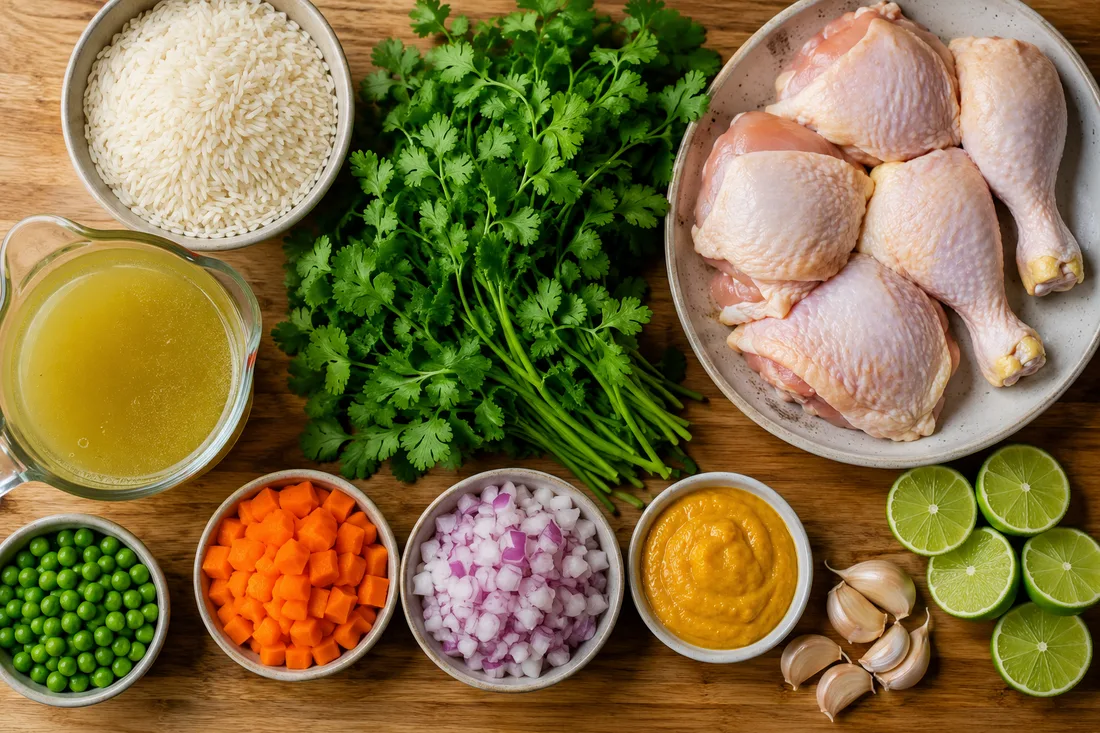
More than feels reasonable. This is the single thing people get wrong the first time: a modest handful gives you chicken and rice soup with a green tint, not aguadito. A proper pot takes a full large bunch — stems included, they carry more flavor than the leaves — blended with a little broth into a thick green liquid.
The way to know is by color. When the blended cilantro goes in, the pot should turn genuinely green, not pale. If it looks like broth with herbs floating in it, there is not enough in there yet.
The chicken, and using what you already have
Bone-in pieces are what the soup wants — thighs, drumsticks, backs. The bones are where the broth comes from, and a broth built on breast alone tastes thin no matter how long it simmers.
That said, this is a dish Peruvian kitchens make out of what is left. Yesterday roast chicken works: use the carcass to build the broth, then shred the meat in at the very end so it warms rather than cooks again. It is arguably the better version, and it is certainly the more common one.
The recipe
Ingredients
- 1 kg bone-in chicken pieces (thighs and drumsticks)
- 3/4 cup rice
- 2 cups cilantro leaves and tender stems, blended with a splash of water
- 1 onion, diced · 4 garlic cloves, minced
- 2 tbsp ají amarillo paste
- 1 cup peas · 1 carrot, diced
- 6 cups chicken broth
- 2 tbsp oil · salt · pepper · ground cumin
- Lime wedges, to serve
Method
- Brown the chicken in oil on all sides. Set aside.
- Build the base. Cook onion and garlic until soft, then stir in the ají amarillo paste for a couple of minutes.
- Simmer the chicken. Return it to the pot with the broth, and simmer covered 20 minutes until cooked through.
- Add rice, carrot and peas, simmering uncovered 15-18 minutes until the rice is tender. Stir in the cilantro in the last 5 minutes. Serve with lime.
Troubleshooting, from experience
Soup is too thin. Not enough rice, or it hasn't had enough time to release its starch. Simmer a few extra minutes uncovered.
Rice scorched on the bottom. Heat was too high or it wasn't stirred often enough in the final stretch. Keep it at a gentle simmer and check in periodically.
Color turned dull, not bright green. The cilantro was added too early and cooked down too long. Add it only in the final 5 minutes.
What to serve it with
Aguadito is a complete meal in the bowl. A wedge of lime squeezed in at the table and a little chopped ají amarillo on top are the only additions it really needs.
Questions people ask
Why did my aguadito turn out brown instead of green? The cilantro cooked too long. It goes in during the final five minutes — enough heat to lose its raw edge, not enough to oxidize. Simmered from the start, it turns muddy and bitter and the color goes with it.
Is aguadito a soup or a rice dish? Somewhere in between, deliberately. The rice cooks directly in the broth and releases its starch, which thickens the pot into something looser than a risotto and thicker than a soup. If the spoon does not have to work a little, keep going.
Can I make it with turkey or fish? Yes — aguadito de pavo turns up after Christmas, built on the leftover turkey, and coastal kitchens make it with fish. The method does not change: bone-in for the broth, rice cooked in it, cilantro at the end.
What can I use instead of cilantro? Nothing, honestly. Cilantro is not an accent here, it is the dish. If you are among the people who taste soap, this is not the recipe to convert you — try caldo de gallina instead, which is built on the same broth without the green.

Junior Quintana learned to cook from his mother, Lina, in Junín, in the central Peruvian Andes — a kitchen where chicha morada simmered every Sunday and there were always native potatoes with cheese and choclo on the table. He started Andean Kitchen to share the food he grew up with, in English and without shortcuts: every recipe cooked and tested at home, where it's really made. His favorite dish is, and probably always will be, pachamanca. See how we cook, test and photograph.
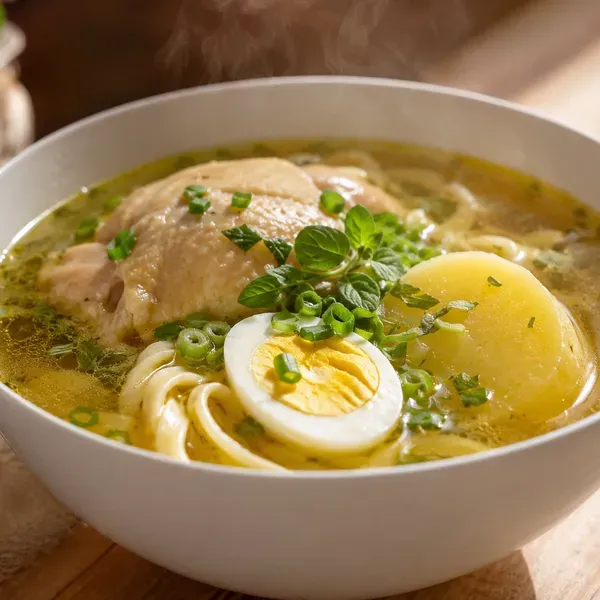
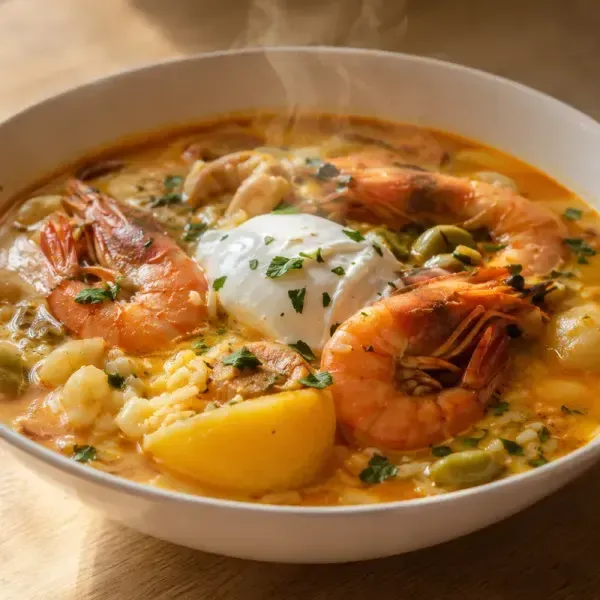
Did you cook this?
Tell me how it went — including what did not work. I read every one, and with your permission I will put it on this page, with your first name, for whoever comes next.