
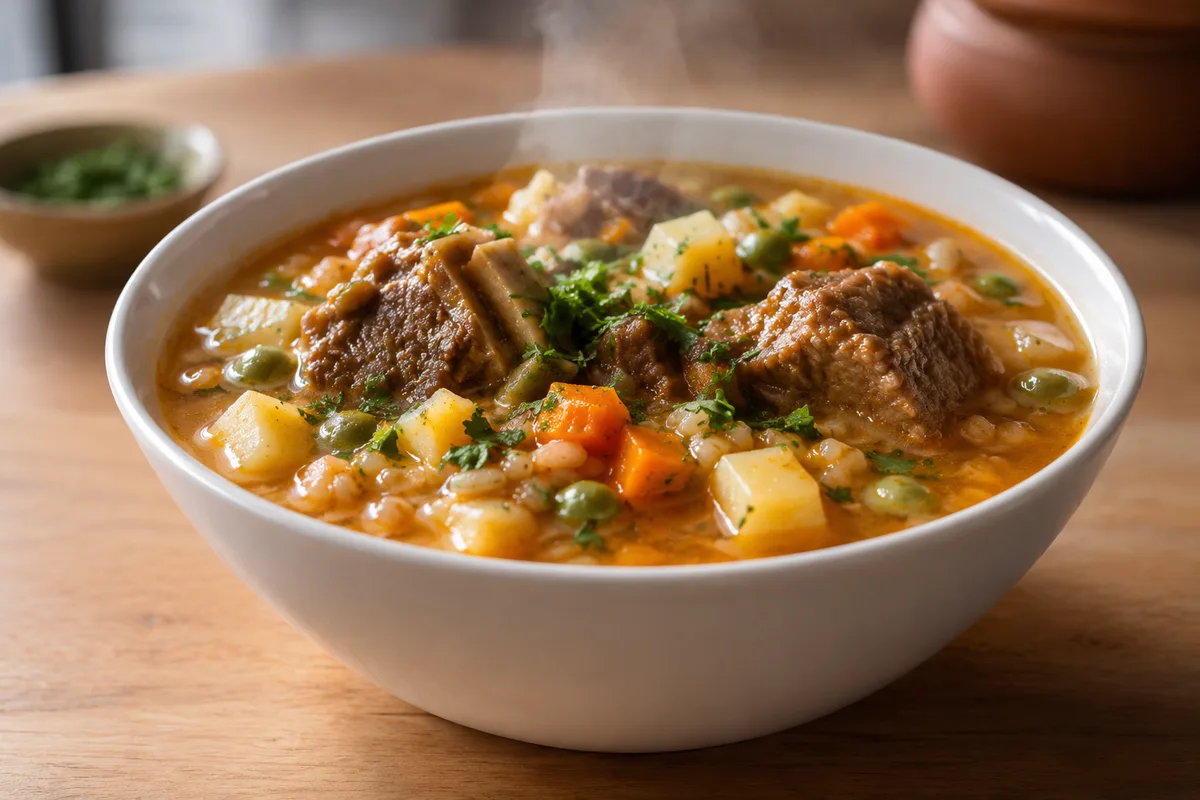
Chaque is Arequipa's answer to a hearty highland soup — cracked wheat, beef and vegetables simmered together in an ají panca broth until the whole pot turns thick enough to eat with a fork as much as a spoon — a sopa de cuchara parada, the compliment paid to any soup dense enough to stand a spoon up in. It belongs to the same family of substantial Arequipeño soups as chupe de camarones, built for real appetite rather than a light starter before a bigger meal.
Wheat isn't a common base for Peruvian soups outside this region — most lean on potato, rice or corn — which makes chaque a genuine marker of Arequipa's specific agricultural and culinary history, distinct from the rest of the southern sierra.
I ate my first chaque in Arequipa, at a table where everyone else already knew what was coming and I did not. It arrived thick enough that the spoon did not want to move, which I have since learned is the entire point. I am from Junín and this is not my family soup — but I have thought about that bowl more than once since, which is the honest measure of a good one.
Rinse the cracked wheat before it goes in
Cracked wheat carries a fair amount of loose starch and dust from milling, and a quick rinse under cold water before it hits the pot keeps the finished broth cleaner and less gluey than it would be otherwise. It's a small step that's easy to skip but noticeably improves the final texture.
The wheat is doing double duty here — grain and thickener at once. A quick rinse keeps it from turning the broth into paste.
Vegetables go in after the wheat has had real time
Cracked wheat needs a genuine 25-30 minutes to soften properly, longer than most vegetables need — adding the potato and carrot too early risks them turning to mush by the time the wheat is finally tender. Staggering the additions, wheat first and vegetables later, keeps every component at its right texture.
Which wheat to buy
What Arequipa uses is trigo pelado or mote de trigo — wheat berries with the outer husk removed, cracked coarse. It is sold dry, it keeps for a year, and it is the reason the soup thickens the way it does.
Outside Peru, coarse bulgur is the closest easy substitute and behaves almost identically, though it softens a little faster — start checking it at twenty minutes rather than thirty. Pearl barley also works and gives a similar body, but it takes longer and turns the broth slightly cloudier.
What does not work is fine bulgur or couscous. Both dissolve into the broth within minutes and leave you with a thick beige soup and nothing to chew on, which is the opposite of the point.
Why Arequipa eats this on a Monday
Chaque belongs to a system, not just to a menu. Arequipa keeps a soup for each day of the week, and Monday is chaque — a working, clearing-out soup made from what the weekend left behind, heavy enough that nothing else is needed after it.
That explains the ingredient list, which reads like an inventory rather than a recipe: wheat, potato, squash, beans, cabbage, whatever else is in the house. Nobody shops specially for chaque. The wheat is what turns a pot of odds and ends into something that holds a spoon upright.
It also explains the quantity. This is not a starter. A bowl of chaque is lunch, and Arequipeños will tell you that anyone who eats it as a first course has misunderstood the arrangement.
The recipe
Ingredients
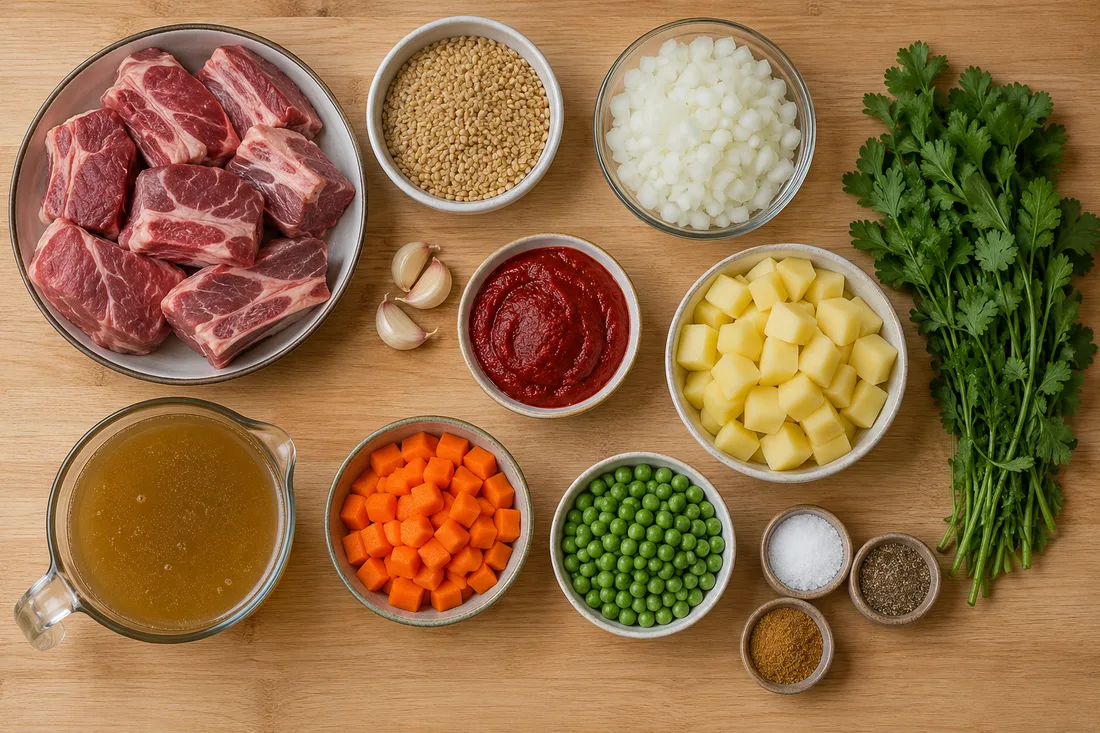
- 500g beef short rib or stew meat, cut into chunks
- 1 cup cracked wheat (trigo pelado), rinsed
- 1 onion, diced · 3 garlic cloves, minced
- 2 tbsp ají panca paste
- 2 potatoes, cubed · 1 carrot, diced
- 1/2 cup peas
- 6 cups beef broth or water
- 2 tbsp oil · salt · pepper · ground cumin
- Chopped huacatay or cilantro, to finish
Method
- Brown the beef in oil. Set aside.
- Build the base. Cook onion and garlic, stir in ají panca paste.
- Simmer. Return the beef, add broth and wheat, simmer covered 25-30 minutes.
- Add vegetables, simmering another 10-15 minutes. Finish with huacatay or cilantro.
Troubleshooting, from experience
Soup turned gluey. The wheat wasn't rinsed before adding. Give it a quick rinse to remove loose starch.
Vegetables turned to mush. Added too early. Give the wheat its head start before the potato and carrot join.
Wheat stayed hard. Not enough simmering time, or the heat was too low. It genuinely needs the full 25-30 minutes.
What to serve it with
Chaque is a full meal in the bowl, needing nothing more than a wedge of lime and, if you like, a little extra ají on the side.
Questions people ask
What wheat do I actually buy? Peeled wheat berries, sold as trigo pelado or mote de trigo. Pearled or hulled wheat berries from a health food shop are the same thing. What will not work is bulgur or cracked wheat, which are pre-cooked and dissolve into mush instead of staying whole.
Do I have to soak the wheat overnight? It helps and it is not obligatory. Soaked, it cooks in about forty minutes; unsoaked, closer to an hour and a half. What you cannot do is shorten it — undercooked wheat berries stay chalky in the middle and no amount of simmering afterward fixes the texture.
Why is my chaque thin? Either not enough wheat, or it was not cooked long enough for the starch to come out. The thickening is not added, it is released — the wheat has to break down slightly at the edges. Give it more time before you reach for anything else.
Can I make it without meat? Yes, and it holds up better than most meat soups do. The body comes from the wheat and the squash, not the beef. Arequipa uses beef and tripe when they are on hand, but the vegetables are what the soup is actually built on.

Junior Quintana learned to cook from his mother, Lina, in Junín, in the central Peruvian Andes — a kitchen where chicha morada simmered every Sunday and there were always native potatoes with cheese and choclo on the table. He started Andean Kitchen to share the food he grew up with, in English and without shortcuts: every recipe cooked and tested at home, where it's really made. His favorite dish is, and probably always will be, pachamanca. See how we cook, test and photograph.

Did you cook this?
Tell me how it went — including what did not work. I read every one, and with your permission I will put it on this page, with your first name, for whoever comes next.