
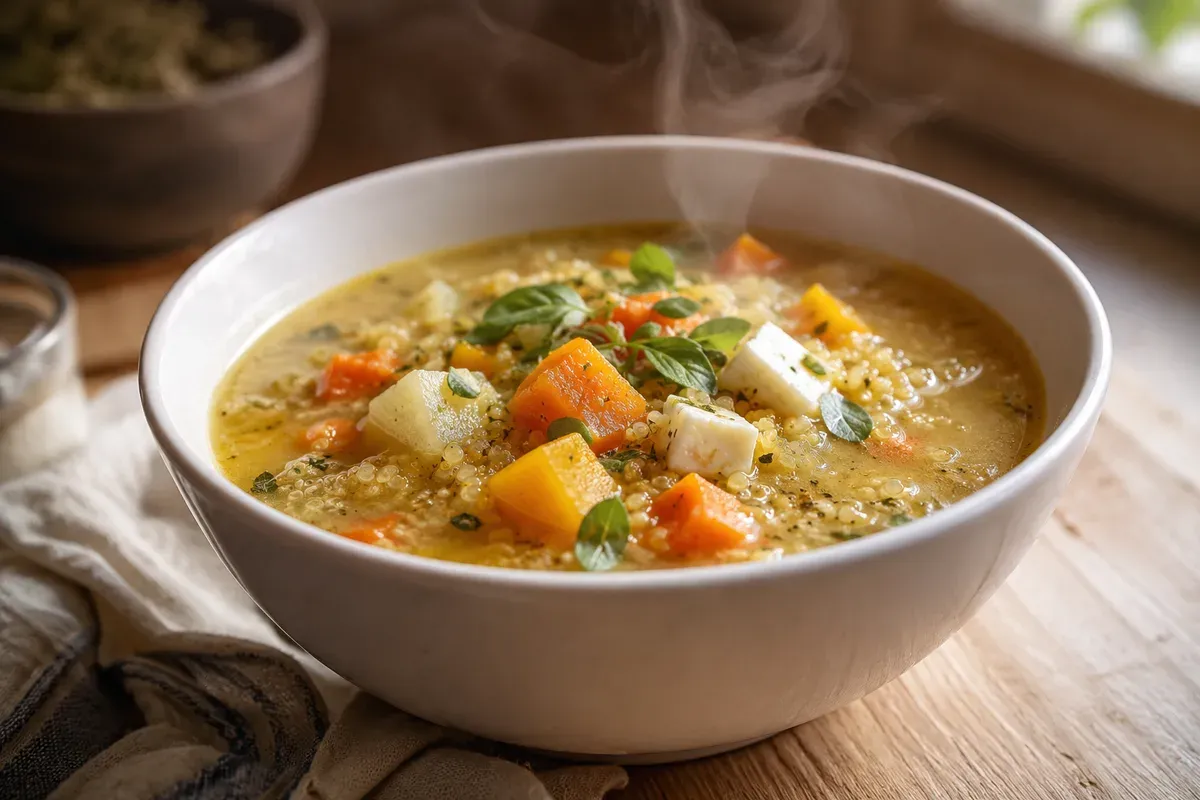
Long before quinoa became a wellness-aisle celebrity — kinwa, its old Quechua name, long before the West renamed it — it was, and remains, the Tuesday soup of the Andes. In highland homes like ours, sopa de quinua isn't an occasion; it's infrastructure. The pot starts with the same aderezo that begins half of Peruvian cooking, takes whatever vegetables the market offered, welcomes a potato because every Andean soup welcomes a potato, and ends with the sierra's signature flourish: a swirl of evaporated milk and cubes of fresh cheese melting into the broth. Total cost, very little. Total time, under an hour. Nutrition, complete — quinoa carries all nine essential amino acids, which is why the crop sustained Andean civilizations for five thousand years before the rest of the world noticed.
This is the home version, written from the altitude where the grain actually grows. It assumes nothing except that you rinse your quinoa — and if you don't know why that step is non-negotiable, our companion guide on how to cook quinoa so it never tastes bitter explains the science. Short version: skip the rinse and the soup will taste faintly of soap. Nobody wants Tuesday soap soup.
Here it really is a weekly thing, and it starts at the market: you buy the quinoa by the scoop and then walk the vegetable aisle taking whatever looks good that morning — lo que esté fresquito, whatever is freshest, which is how most Peruvian cooks decide what they are making. A sprig of huacatay usually gets tucked in for free. At home it's rarely the same twice: some weeks with squash, some with just carrot and potato, with shredded chicken when there's a carcass to use up and meatless when there isn't. That's the whole point of this soup — it bends to whatever the week handed you.
The architecture of an Andean soup
Nearly every soup of the sierra is built on the same three-act structure, and learning it here unlocks dozens of others. Act one, the aderezo: onion sweated in oil, then garlic, then — in the full-flavor version — a spoonful of ají amarillo, cooked until the oil turns gold. Act two, the body: broth, the grain, hardy vegetables, and always a potato, added in order of cooking time. Act three, the finish: off the heat, evaporated milk and queso fresco, plus a fresh herb — huacatay (wakatay in Quechua, the Andean black mint) if you can find it, oregano or parsley if you can't. The dairy finish is what marks a soup as serrana; it turns the broth faintly creamy and rounds the quinoa's earthiness.
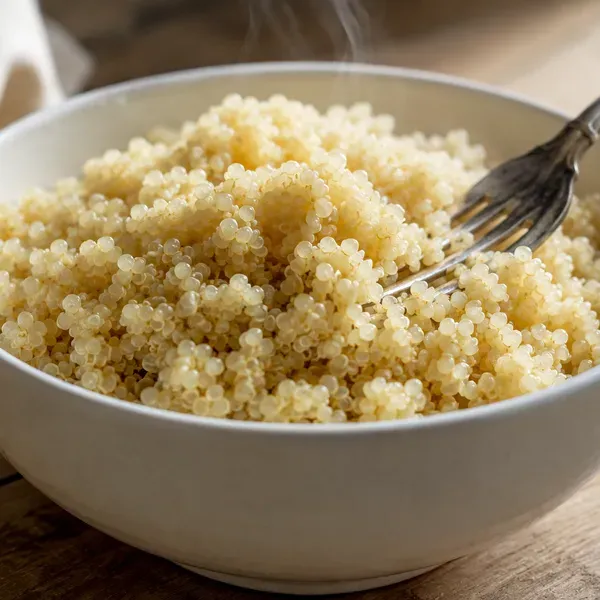
Quinoa is done when it tells you: each grain pops a tiny white spiral, like a comma. No spiral, not done.
Timing the quinoa
Quinoa needs about 25 minutes of total simmering in a soup — a little longer than the package promises for plain cooking, because it's competing with vegetables for the heat. Add it before the potatoes, which need only 15. You're looking for the visual cue above: the germ ring detaching as a white spiral around each grain. Overcooked quinoa doesn't ruin a soup, but it dissolves into cloudiness; caught at the spiral, the grains stay distinct and slightly popping under the tooth.
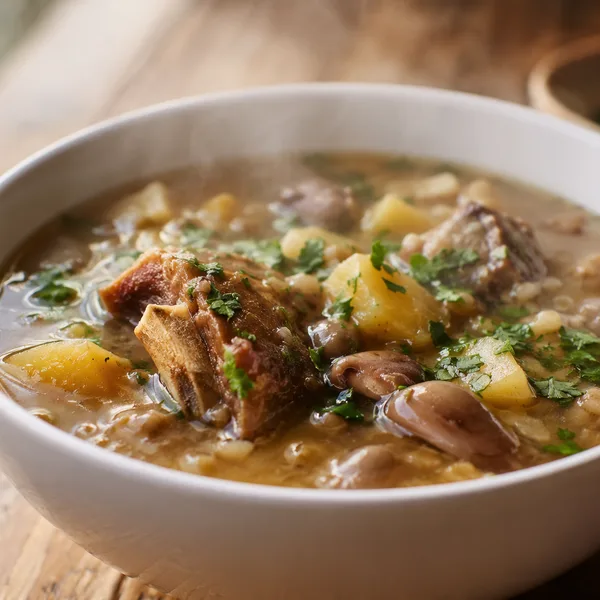
One altitude note, since we live it: above 3,000 meters water simmers around 90 °C, so everything here runs 5–10 minutes longer than sea-level instructions. If you cook in the mountains, trust the spiral, not the clock — the same advice we gave for caldo de gallina.
The recipe
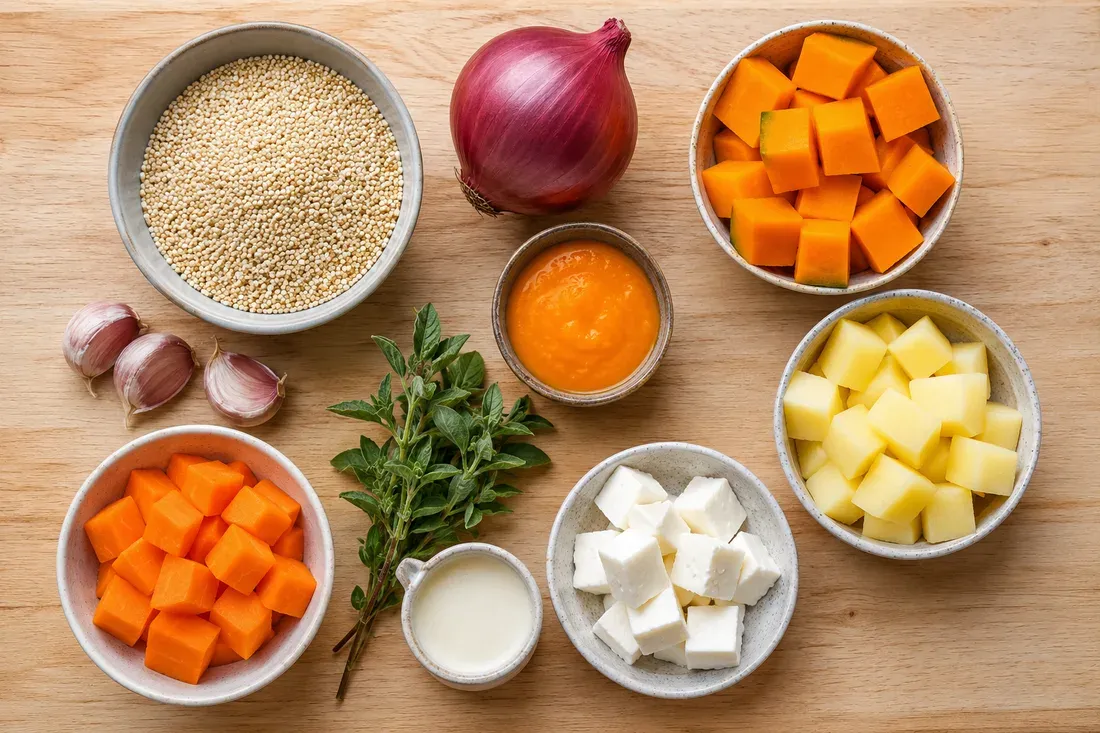
Ingredients
- 200 g quinoa, rinsed until the water runs clear (seriously)
- 2 tbsp vegetable oil
- 1 red onion, fine dice
- 3 garlic cloves, minced
- 1 tbsp ají amarillo paste — optional, traditional, recommended
- 2 carrots, diced · 1 cup diced squash (or 2 celery stalks)
- 2 medium potatoes, peeled, in 2 cm cubes
- 1.8 liters chicken or vegetable broth
- 1 sprig huacatay, or a small handful of oregano or parsley
- 120 ml evaporated milk · 100 g queso fresco in cubes
- Salt and pepper
Method
- Rinse the quinoa in a fine sieve under the tap, rubbing with your fingers, until no foam appears and the water runs clear — 1 to 2 minutes that decide the whole soup.
- Aderezo. Oil over medium heat; onion 5–6 minutes to translucent; garlic 1 minute; ají paste 2–3 minutes more, until the oil glows.
- Body. Carrots and squash in, stir a minute, then the broth. Bring to a simmer and add the quinoa. 10 minutes.
- Potatoes and herbs. Add them and simmer 15 minutes more, until the potato yields and the quinoa shows its spiral.
- The serrano finish. Off the heat: evaporated milk, then the cheese cubes — they should soften, not melt away. Season, rest 2 minutes, serve hot enough to fog glasses. Miskisazo, as we say in the Quechua of Junín — exquisite.
Troubleshooting, from experience
The soup tastes bitter or soapy. The rinse was skipped or rushed. There's no fixing it in the pot — only diluting. Next time, rinse like you mean it (the quinoa guide shows exactly how).
The broth turned thick and cloudy overnight. Normal — quinoa keeps absorbing. Leftover sopa de quinua is officially a stew; loosen with broth or water when reheating, or enjoy it spoon-standing thick, which plenty of households prefer.
The cheese disappeared. It went in while the pot was still on the flame. Queso fresco joins off the heat, in cubes big enough to survive.
What to serve it with
In the sierra this soup is a first course at lunch — a segundo like ají de gallina follows — or, with bread, the whole of dinner. Add shredded chicken from a caldo and it's a complete meal in one pot. And a spoonful of salsa criolla on top, dropped in at the table, wakes the entire bowl.

Junior Quintana learned to cook from his mother, Lina, in Junín, in the central Peruvian Andes — a kitchen where chicha morada simmered every Sunday and there were always native potatoes with cheese and choclo on the table. He started Andean Kitchen to share the food he grew up with, in English and without shortcuts: every recipe cooked and tested at home, where it's really made. His favorite dish is, and probably always will be, pachamanca. See how we cook, test and photograph.
Did you cook this?
Tell me how it went — including what did not work. I read every one, and with your permission I will put it on this page, with your first name, for whoever comes next.