
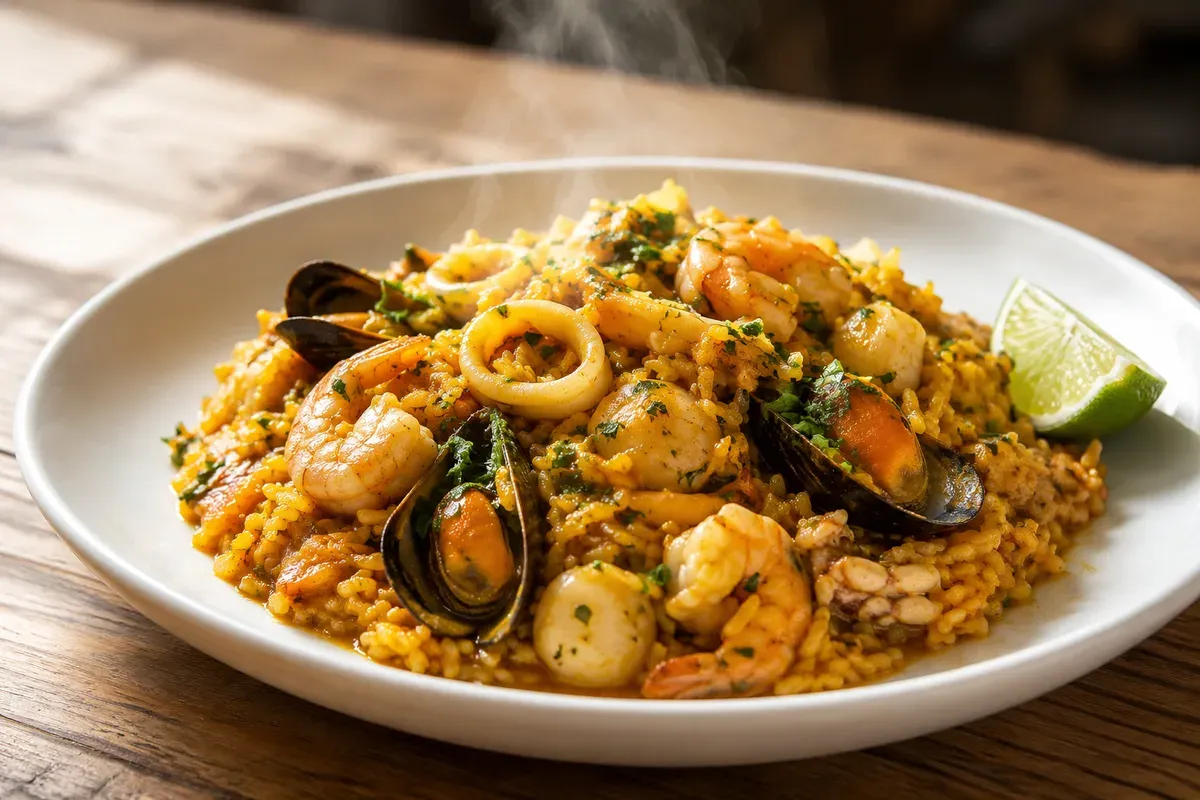
In a Peruvian cevichería the menu has two acts: the cold opener — ceviche or tiradito — and the hot second act, where arroz con mariscos reigns. It looks like a cousin of paella and eats like nothing of the sort: the rice is cooked beforehand and then fried into a red-gold sauce of double ají, wine and butter, so every grain comes out separate, glossy and stained, with the seafood draped through it still tender because it cooked in waves, not in a marathon. It's the dish for when the lunch is going well and nobody wants to leave.
The day-old-rice trick is the heart of the home version: cold cooked rice (yes, exactly like fried rice — the chifa logic of lomo saltado's ancestry applies here too) holds its grain under the tossing where fresh rice turns to risotto's sad cousin. Cook the rice in the morning or use last night's; the dish then takes twenty-five minutes flat.
Up here at 3,200 meters we don't have a cevichería on every corner — the seafood comes in by truck, packed in ice, and it's usually gone from the Saturday market by mid-morning. I fell properly for this dish on a trip down to the coast, at a hole-in-the-wall cevichería where the cook fried the rice right in the same pan the aderezo had just left, no resting, no ceremony, just heat and confidence.
Waves, not marathons
Mixed seafood has mixed clocks: squid wants two minutes (or forty — nothing in between), shrimp wants three, mussels and scallops barely more. The method respects each: squid into the sauce first, the rest two minutes later, rice last, everything off the heat before doubt sets in. The butter folded in with the rice is the cevichería gloss — Peruvian coastal cooking is not shy about it — and the final squeeze of lime at the table does for this dish what it does for everything on this site.
Seafood doesn't reheat and it doesn't wait. The rice tolerates everything; the squid forgives nothing.
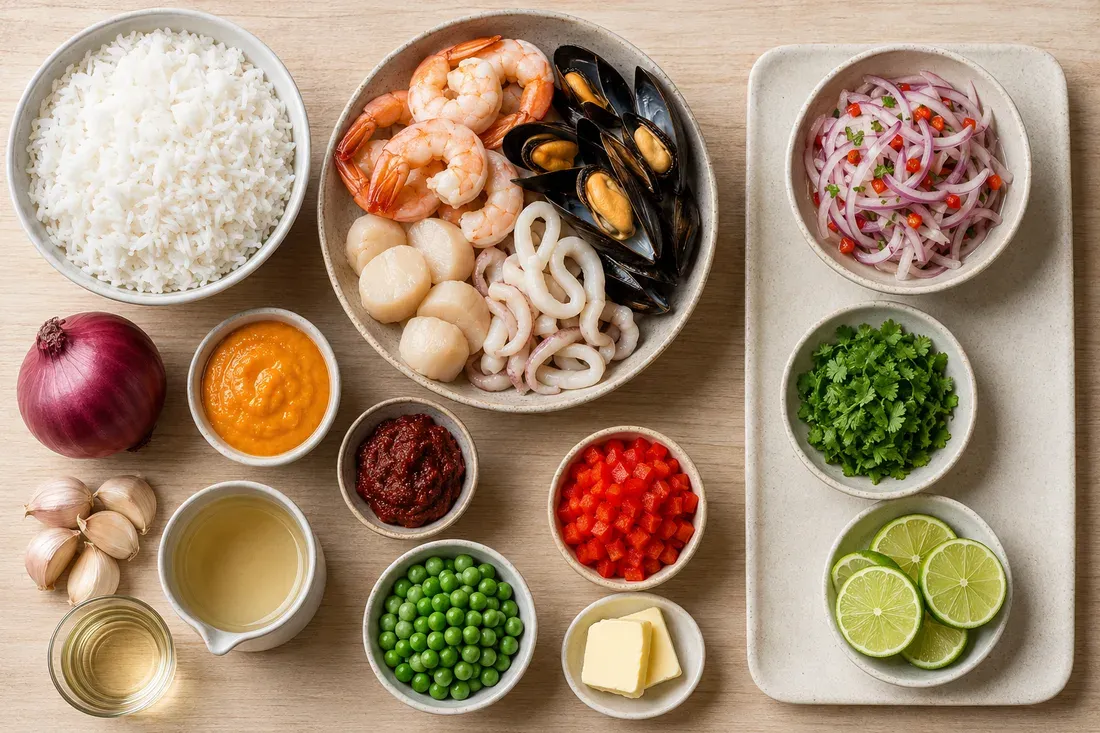
The double ají, and why both
The color and most of the flavor come from two chile pastes doing different jobs. Ají amarillo brings the fruity, bright heat and the yellow-orange base. Ají panca brings the dark, smoky, barely-hot depth underneath. Together they make the red-gold the dish is known for; alone, neither gets there.
If you can only find one, use ají amarillo and accept a brighter, shallower sauce. Substituting with paprika or generic chili powder does not work — those bring color without the fruit, and the sauce ends up tasting flat and dusty.
Buying the seafood, and why frozen is fine
This is a dish for a mixed bag, and outside a coastal city the frozen mix is not a compromise — most of it was frozen on the boat, which is fresher than seafood that spent two days on ice in a display case.
- Thaw it properly. Overnight in the fridge, then drained and patted genuinely dry. Wet seafood steams in the pan and releases water into a sauce you just spent time building.
- Squid is the one to watch. Two minutes or forty — there is nothing usable in between. Three minutes gives you rubber bands.
- Skip the pre-cooked mixes. Anything already cooked will be overcooked by the time the rice is hot. Buy it raw.
The recipe
Ingredients
- 4 cups cooked white rice, cold — yesterday's is the gold standard
- 600 g mixed seafood: shrimp, squid rings, mussels and/or scallops (good frozen mixes work)
- 3 tbsp ají amarillo paste · 1 tbsp ají panca paste
- 1 red onion, fine dice · 4 garlic cloves, minced
- ½ cup white wine · ½ cup fish broth
- ½ cup peas · 1 red bell pepper, diced
- 2 tbsp butter · vegetable oil · salt · pepper
- To serve: chopped cilantro, lime wedges, salsa criolla
Method
- Aderezo. Widest pan you own. Oil, onion 5 minutes; garlic and both ají pastes 3–4 more, until red-gold and glossy.
- Deglaze. Wine in, reduce by half. Broth, peas and pepper, 2 minutes.
- Wave one. Squid, 2 minutes.
- Wave two. Shrimp and mussels/scallops, 2–3 minutes, until the shrimp just curl.
- The rice. Cold rice and butter in; toss over high heat 2 minutes until every grain is coated, stained and hot through. Season with conviction.
- Out, now. Cilantro over, lime beside, criolla on top. Seafood rice is a sprint with a delicious finish line.
Troubleshooting, from experience
Rubbery squid. It rode through all the waves. Two minutes, first in, and trust the residual heat.
Gummy rice. Fresh warm rice was used. Day-old or morning-cooked-and-cooled, always.
Pale and flat. Timid ají or no panca. The double paste is the color and half the flavor; the other half is the wine reduction you may have rushed.
What to serve it with
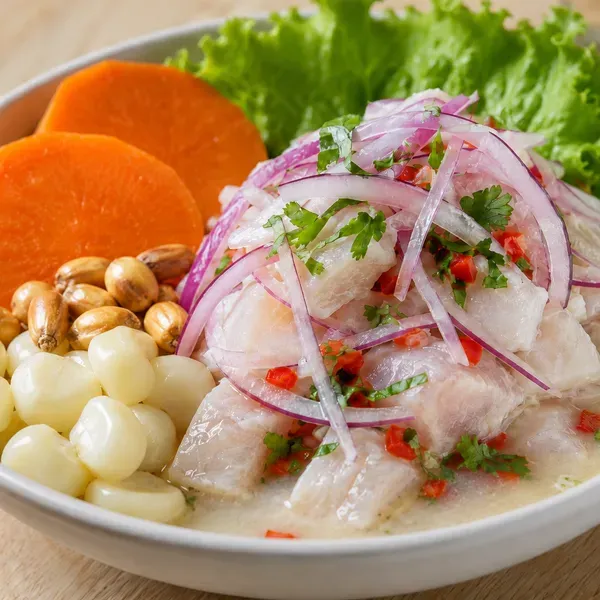
It is act two: ceviche or leche de tigre before, chicha morada throughout, and if the lunch has fully committed, a pisco sour opened the whole affair. Your cevichería menu at home is now complete.
Questions people ask
Is this the same as paella? It looks related and cooks nothing like it. Paella cooks raw rice in the broth until it absorbs everything. Arroz con mariscos fries already-cooked, cold rice into a finished sauce, which is why the grains stay separate and glossy rather than creamy.
Can I use fresh rice? It will clump. Cold, day-old rice has dried out enough that the grains stay distinct under the tossing — the same physics as chaufa. Cook it in the morning if you did not cook it last night.
What seafood should I use? Whatever the mix has: shrimp, squid, mussels, scallops. What matters is adding them in waves rather than all at once, because their clocks are different. Squid first into the sauce, everything else two minutes later.
Does it reheat? The rice does. The seafood does not — it turns tough on the second pass. If you know there will be leftovers, undercook the seafood slightly on the first round.

Junior Quintana learned to cook from his mother, Lina, in Junín, in the central Peruvian Andes — a kitchen where chicha morada simmered every Sunday and there were always native potatoes with cheese and choclo on the table. He started Andean Kitchen to share the food he grew up with, in English and without shortcuts: every recipe cooked and tested at home, where it's really made. His favorite dish is, and probably always will be, pachamanca. See how we cook, test and photograph.
Did you cook this?
Tell me how it went — including what did not work. I read every one, and with your permission I will put it on this page, with your first name, for whoever comes next.