
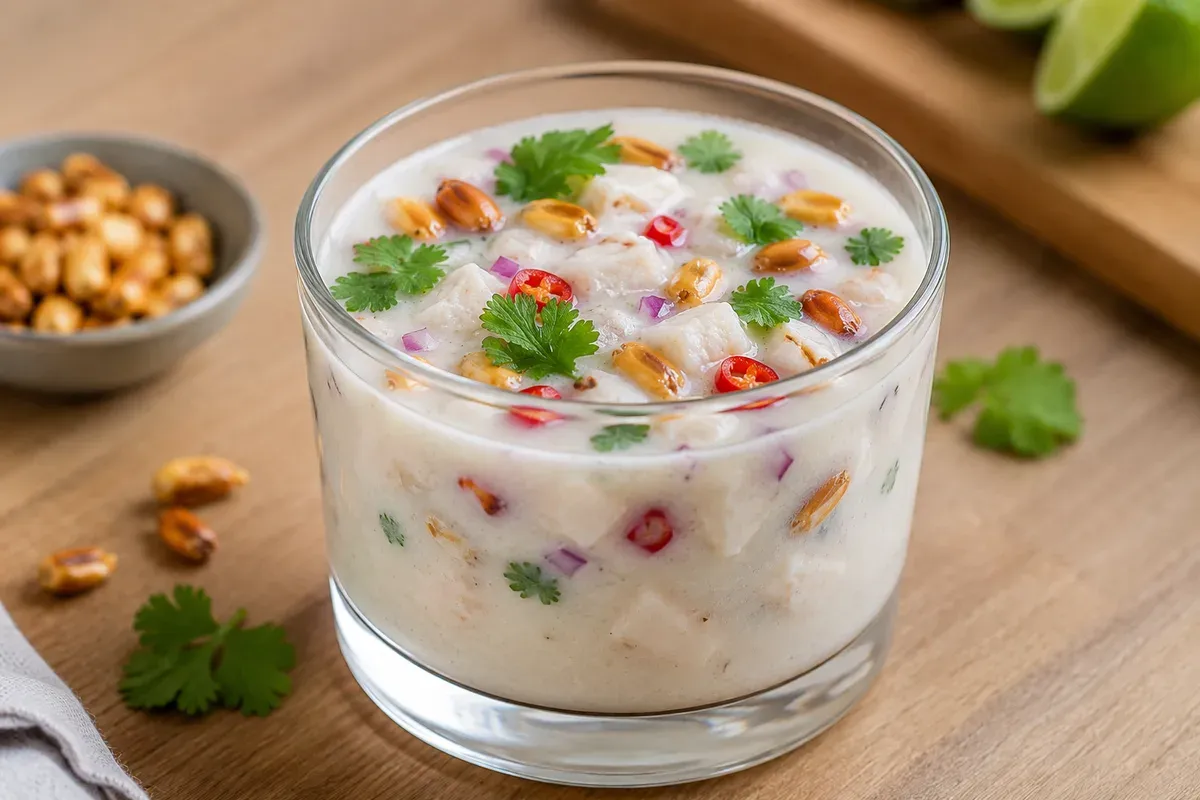
Every great dish has a byproduct that connoisseurs fight over — the crust corner, the pan drippings, the last spoon of sauce. Peru institutionalized its version. Leche de tigre, "tiger's milk," began as the cloudy, electrified liquid left at the bottom of a ceviche bowl: lime juice transformed by fish, onion, ají and salt into something more than the sum of its acids. At some point a cevichería poured it into a glass, charged for it, and a national institution was born. Today it's a dish in its own right — blended deliberately, strained, served ice-cold in a small glass, sometimes crowned with a few cubes of fish or a fried-seafood garnish — and it carries a folk reputation as Peru's definitive hangover cure, sold with a wink as levantamuertos: raiser of the dead.
(On that last point, our honest position: a cold, salty, gingery, vitamin-bright glass after a long night genuinely feels like rescue, but the magic is hydration and electrolytes wearing a tiger costume. We make no medical promises. It still works.)
Up in the sierra we don't have a cevichería on every corner the way the coast does, so for me leche de tigre is a bit of an event — a trip down to the coast, or the little glass passed around at a party before the anticuchos hit the grill. I take mine poured over the fish rather than straight, and with an extra hit of ají, because if it doesn't make you blink it isn't pulling its weight. And yes, the morning-after version is real; we don't ask questions.
From byproduct to blueprint
Here's the useful secret: cevicherías don't wait for ceviche to produce leche de tigre — they blend it on purpose, and that deliberate version is also the backbone of their ceviche itself. A splash of pre-blended leche de tigre over freshly limed fish is how restaurants achieve in five minutes the depth a home bowl gets only at the end. Master this little recipe and you've upgraded every ceviche you'll ever make, gained a stunning party shooter, and acquired the base for tiradito, which we'll publish soon.
Ceviche is the dish. Leche de tigre is the engine, finally given its own seat.
What goes in, and why
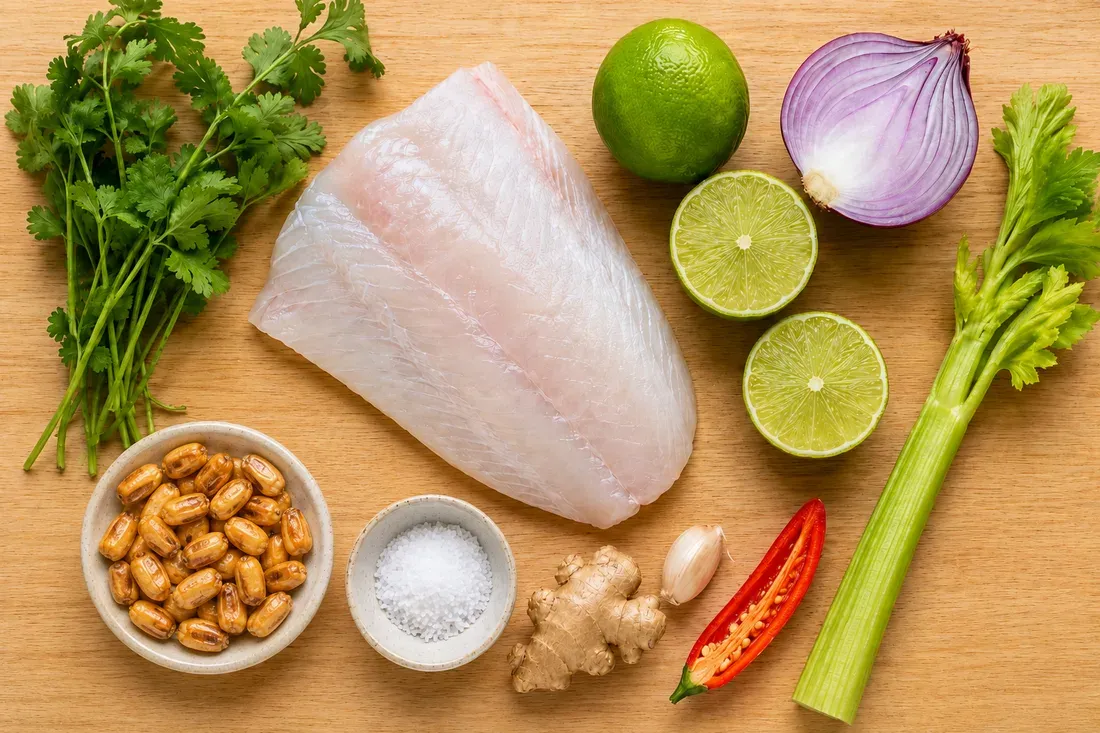
Fresh lime juice is the body; a small amount of raw fish (trimmings from your ceviche fillet are traditional and thrifty) gives it the savory, faintly creamy depth that plain seasoned lime can't fake. Because it's eaten raw, use the same very-fresh or commercially-frozen fish you'd use for ceviche — the freshness rules there apply here too. Ginger and garlic are the cevichería signature — small amounts, big effect. Celery adds the cool green note most people can't identify and all people miss when absent. Ají limo brings the heat (habanero substitutes well, as in our ceviche), cilantro stems bring perfume without turning the glass green, and the ice cubes in the blender are non-negotiable: they keep the blend cold against the blade's friction and temper the acid's edge.
Everything is pulsed briefly — long blending makes it bitter and foamy — then strained. The strain is what separates a silken leche de tigre from fibrous lime sludge; don't skip it, causa.
The recipe
Ingredients
- 150 g very fresh white fish — trimmings or a small fillet (same freshness law as ceviche)
- Juice of 8 limes (~200 ml), squeezed at the last minute, never to the bitter end
- ½ small red onion, roughly chopped
- 1 small celery stalk, chopped
- 2 cm fresh ginger, peeled
- 1 small garlic clove
- ½ ají limo or a small piece of habanero — calibrate to your audience
- 4–5 cilantro stems (save the leaves for garnish)
- 3–4 ice cubes · salt with conviction
Method
- Blend cold and brief. Everything into the blender. Short pulses, about 20 seconds total — stop while it's still liquid, before it turns to foam.
- Strain. Fine sieve, light pressure with the back of a spoon. What passes is silk; what stays is mulch.
- Taste like it matters. Cold mutes; the glass should taste almost too intense — salty, sour, fierce. Correct salt now.
- Serve instantly, in small chilled glasses. Optional crowns: a few cubes of fish or cooked shrimp in the glass, cilantro leaves, a ring of ají. As a ceviche booster, spoon it over just-limed fish at the two-minute mark.
Troubleshooting, from experience
Bitter. Over-blended, or the limes were squeezed to their bitter last drops. Both habits, once corrected, never return.
Thin and watery. Not enough fish, or no ice in the blend (warmth flattens it). The fish is what makes it "milk."
Too fierce to finish. That's almost the job description, but for gentler company: more fish, a touch more ice, and serve it over seafood rather than alone.
What to serve it with
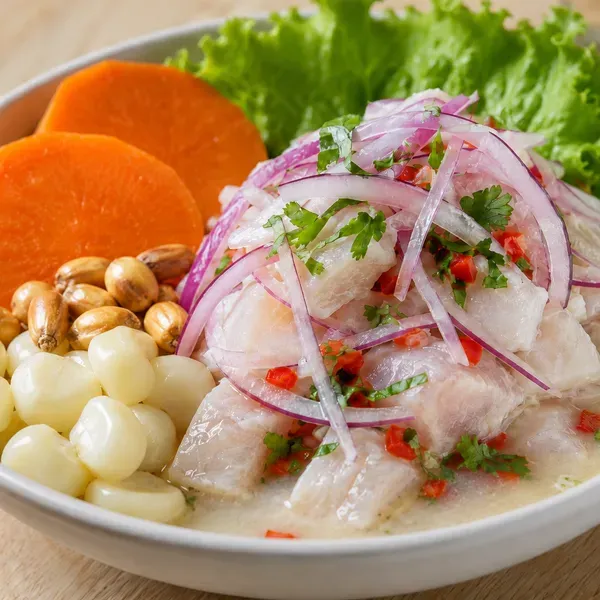
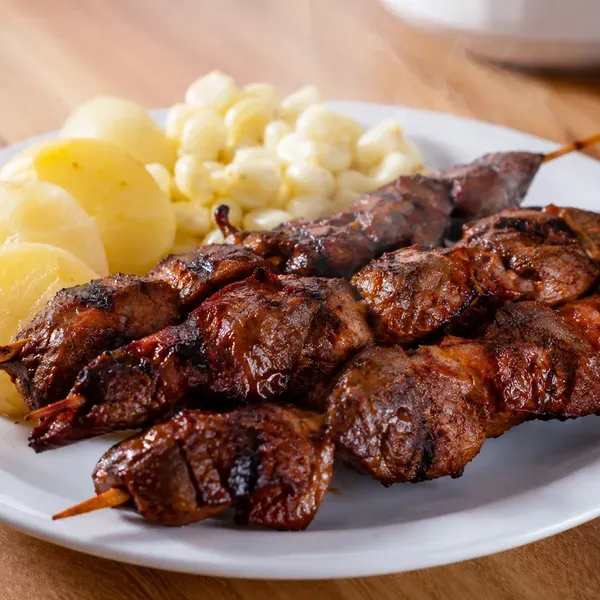
As the opening shot before a ceviche it's practically redundant and entirely correct. At a party, small glasses of leche de tigre beside anticuchos off the grill is the coast and the street corner shaking hands. And the morning after the party — well, levantamuertos earned its name somehow. Chicha morada for the table; this one's for the survivors.

Junior Quintana learned to cook from his mother, Lina, in Junín, in the central Peruvian Andes — a kitchen where chicha morada simmered every Sunday and there were always native potatoes with cheese and choclo on the table. He started Andean Kitchen to share the food he grew up with, in English and without shortcuts: every recipe cooked and tested at home, where it's really made. His favorite dish is, and probably always will be, pachamanca. See how we cook, test and photograph.
Did you cook this?
Tell me how it went — including what did not work. I read every one, and with your permission I will put it on this page, with your first name, for whoever comes next.