
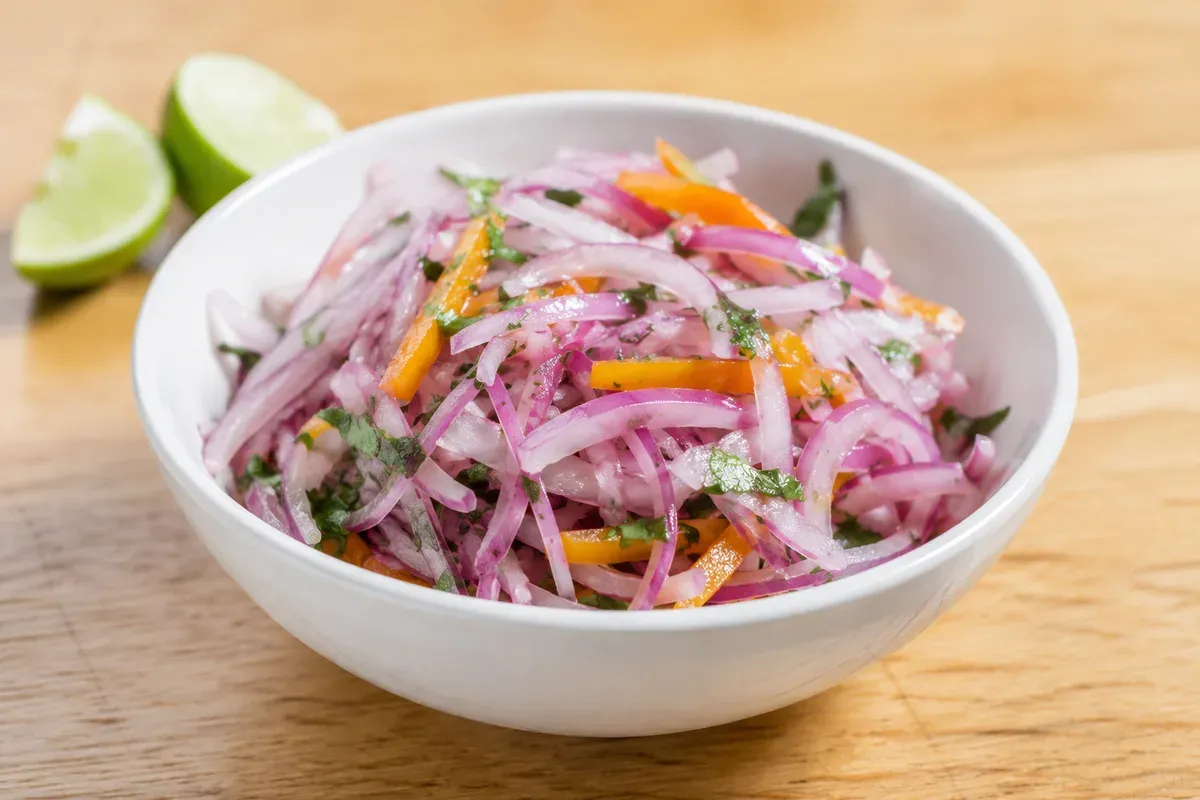
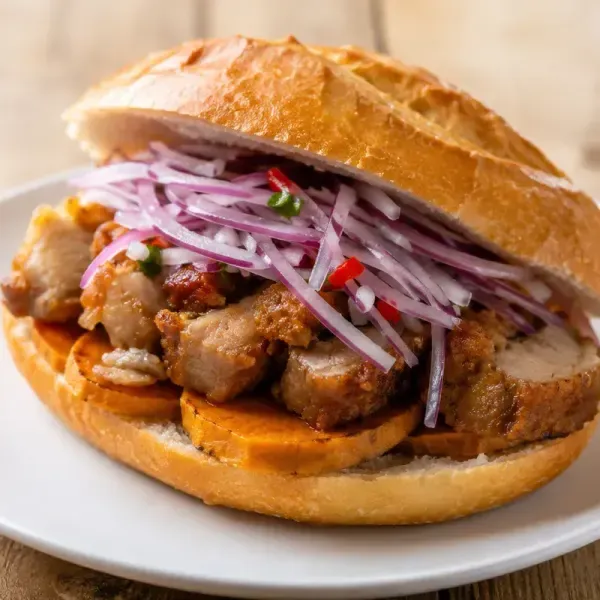
Every cuisine has a reflex condiment — the thing the cook makes without thinking while the main dish finishes. In Peru it's salsa criolla: red onion sliced into the finest possible julienne, shocked in cold water, then dressed with lime, a thread of ají, cilantro and salt. Five ingredients, five minutes, and it lands on more Peruvian plates than any sauce in the country. It cuts through fried food, wakes up beans and rice, crowns sandwiches, and provides the acid-and-crunch counterpoint that rich dishes like ají de gallina quietly beg for.
Precisely because it's so simple, the details are the whole recipe. There are exactly three, and Peruvian home cooks enforce them with the seriousness of constitutional law.
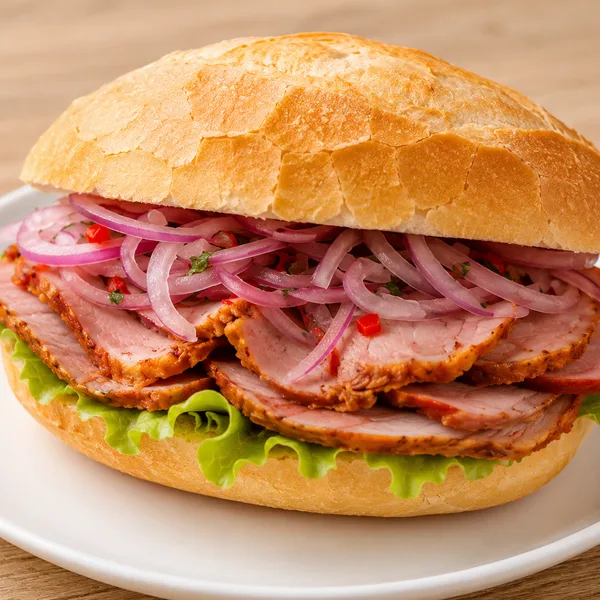
In our house the bowl of criolla is half the meal. It rides on the Sunday pan con chicharrón, on the beans, on the rice, on whatever came out of the frying pan — and when someone asks for "a little more," they mean a taipá heap of it, piled high. We make it al toque, right at the table and never before: my mother would sooner serve the chicharrón cold than the criolla limp.
Rule one: the julienne must be fine
Salsa criolla is not chopped onion. It's onion cut a la pluma — "like a feather" — slices so thin they bend. Halve the onion pole to pole, lay it flat, and slice with the grain as thinly as your knife and patience allow. Thick-cut criolla tastes harsh and chews like raw onion, because that's what it is. Thin-cut criolla turns silky in the lime within minutes. The knife work isn't decoration; it's the texture of the dish.
Rule two: the cold-water shock
Five minutes in very cold water (some households add ice, some a splash of vinegar) pulls out the sulfurous bite and leaves the onion crisp, sweet and ready to absorb the lime. Skip the soak and the salsa shouts; soak too long and it goes limp and mute. Five minutes, drain well, pat dry — wet onion dilutes the dressing.
Salsa criolla is a knife skill and a bowl of cold water wearing a recipe as a disguise.
Rule three: dress at the last minute
Lime starts softening the onion on contact, which is lovely for the first hour and fatal by the third. Keep the soaked, dried onion ready in the fridge and toss it with lime, ají, cilantro and salt only when the food hits the table. (This is also why bottled or day-old criolla doesn't exist in Peru: it's not a preserve, it's a freshness delivery system.)
Which onion, and what to do without red
Red onion, and it is not interchangeable. Peruvian red onion is sharper and firmer than most, and it holds its crunch under the lime where a sweet onion goes limp. It is also, obviously, where the color comes from — a criolla made with white onion looks like something else entirely.
If red is genuinely unavailable, white onion works better than yellow, and either one needs a longer cold-water soak — ten minutes rather than five — to pull the harshness down. Sweet varieties such as Vidalia are the worst choice here: they collapse and turn the salsa watery.
What it goes on, which is nearly everything
Salsa criolla is not a side dish, it is a correction. It goes wherever a plate needs acid and crunch, and in Peru that is most plates.
- On fried things. Pan con chicharrón, papa rellena, anything that came out of oil. This is its main job.
- On beans and rice. A heap of it turns a plain plate into a meal.
- Beside rich sauces. Ají de gallina and ocopa both quietly need it.
- On grilled meat. Anticuchos come with it more often than not.
The recipe
Ingredients
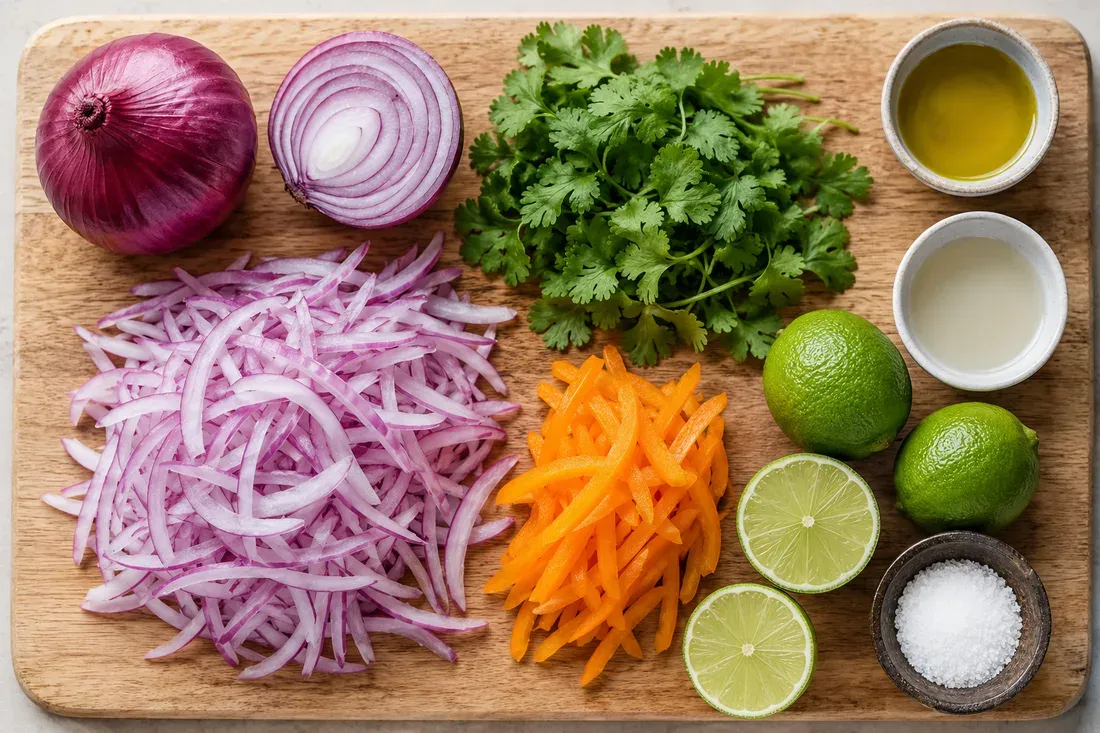
- 1 large red onion, in the finest julienne you can manage
- Juice of 2 limes
- ½ ají amarillo in fine strips — or a pinch of minced ají limo for more fire
- Small handful of cilantro leaves, roughly chopped
- ½ tsp salt
- Optional: 1 tsp neutral oil for gloss, a few drops of vinegar in the soaking water
Method
- Slice fine. Pole-to-pole halves, then julienne with the grain, as thin as a feather.
- Shock. Five minutes in very cold water. Drain thoroughly, pat dry.
- Dress at service. Toss with lime, ají, cilantro and salt. Taste — it should be bright, salty and just shy of too acidic, because it's seasoning whatever it lands on.
Everything it belongs on
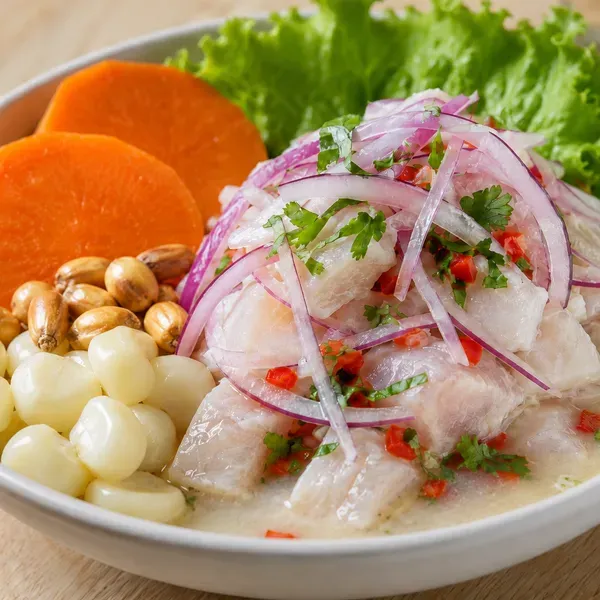
The canonical landing zones: pan con chicharrón (where it's legally required), tamales, arroz con pato, fried fish, lentils and beans over rice, grilled anticuchos, and as the fresh counterweight beside ají de gallina or a heavy Sunday lomo saltado. Once it's in your reflexes you'll start putting it on food from every cuisine — eggs, burgers, roast chicken — and you'll be right every time.
Troubleshooting, from experience
Too harsh. Cut thicker than a feather, or the soak was skipped. Both fixable next time; for now, five more minutes in the lime mellows it.
Limp and watery. Dressed too early, or the onion went into the bowl wet. Criolla is made at the table, from dry onion.
Questions people ask
Can I make it ahead? The onion, yes — soak, drain and dry it, and keep it in the fridge. The dressing, no. Lime starts breaking the onion down on contact, and by the third hour the salsa is limp. Toss it together when the food reaches the table.
How thin does the onion really need to be? Thin enough to bend. Cut a la pluma, with the grain, as fine as your knife allows. This is not fussiness — thick-cut criolla chews like raw onion because that is exactly what it is, while thin-cut turns silky in the lime within minutes.
What chile should I use? A thread of ají limo or a little rocoto, seeded and minced fine. It should be a background note, not the point. If neither is available, a small amount of any fresh hot chile does the job; what you want is a thin line of heat, not a burn.
Is the cold-water soak really necessary? Yes, and five minutes is enough. It pulls out the sulfurous bite and leaves the onion crisp and ready to take the lime. Skip it and the salsa shouts; soak it too long and it goes limp and mute.

Junior Quintana learned to cook from his mother, Lina, in Junín, in the central Peruvian Andes — a kitchen where chicha morada simmered every Sunday and there were always native potatoes with cheese and choclo on the table. He started Andean Kitchen to share the food he grew up with, in English and without shortcuts: every recipe cooked and tested at home, where it's really made. His favorite dish is, and probably always will be, pachamanca. See how we cook, test and photograph.
Did you cook this?
Tell me how it went — including what did not work. I read every one, and with your permission I will put it on this page, with your first name, for whoever comes next.