
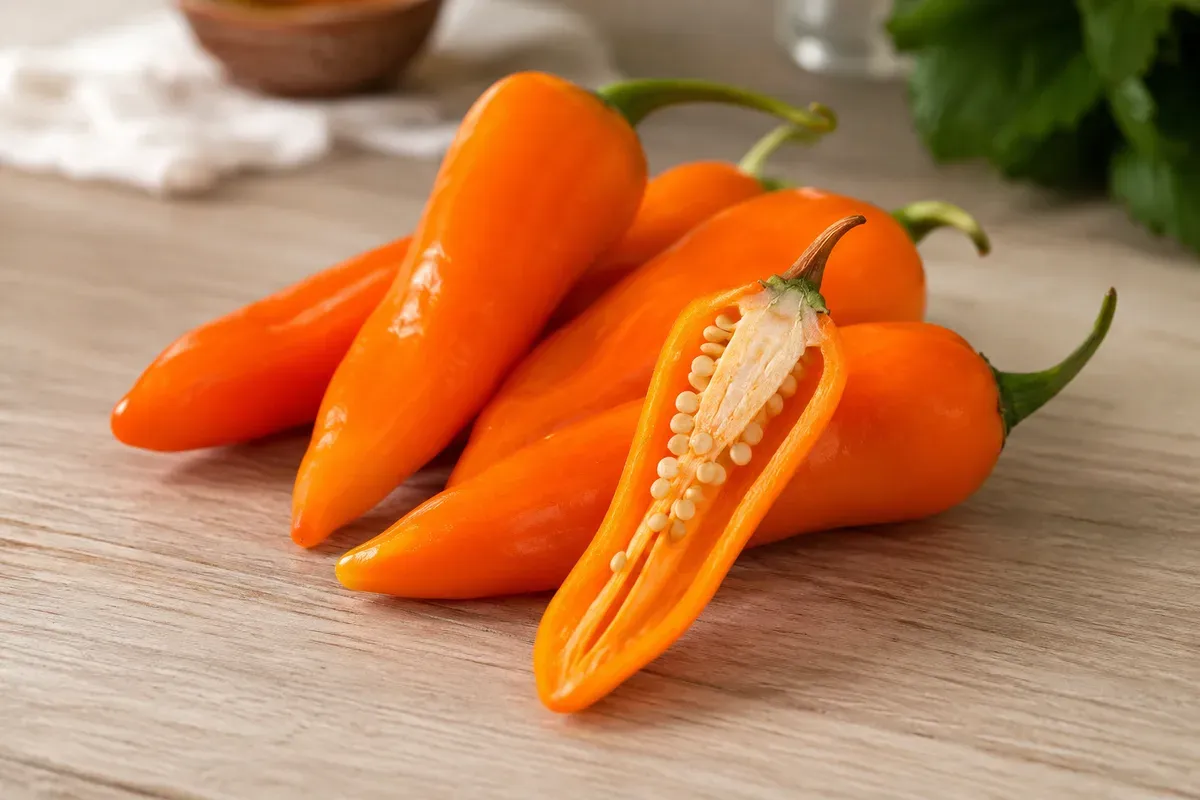
If Peruvian cuisine had to be reduced to one ingredient, it wouldn't be the potato, the lime, or even the fish. It would be ají amarillo. This golden-orange chile is the base of papa a la huancaína, the soul of ají de gallina, the heat in causa, the brightness in a proper leche de tigre, and the quiet background note in dozens of stews and sauces that don't even mention it by name. Peruvian food historians like to say the country's cooking rests on a trinity — ají amarillo, red onion, garlic — and of the three, only the ají is irreplaceable.
This guide covers what it actually is, what it tastes like, how Peruvian kitchens handle it, where to find it abroad, and — because we know why most of you searched for this page — an honest ranking of substitutes, including when you simply shouldn't bother substituting.
In our market in Junín, ají amarillo is sold in glossy little pyramids, and choosing it is half the craft: you want pods that are firm and heavy, a deep orange rather than pale yellow, with taut skin that hasn't begun to wrinkle. We buy ours from the same casera — the trusted seller you come back to for years — who always tips a couple of extra chiles into the bag as a yapita, the little free bonus that's a point of pride in any Peruvian market. She'll also tell you, unasked, which batch is hotter that week.
What is ají amarillo, and what does it taste like?
Ají amarillo (Capsicum baccatum) is a chile native to the Andes, domesticated thousands of years before the Spanish arrived. Long before the Spanish word ají, these chiles were uchu in Quechua. It appears painted on Moche pottery and woven into pre-Inca textiles. The pods grow 10–15 cm long and ripen from green to a deep golden orange; the "yellow" in the name refers to the color it turns when cooked into sauces.
The flavor is the reason no other chile truly replaces it: medium heat (30,000–50,000 Scoville, roughly jalapeño-and-a-half territory) wrapped in something distinctly fruity — closer to passion fruit or mango skin than to the grassy heat of a serrano. When blended into a sauce it turns creamy and sunny rather than sharp. That fruit-plus-fire combination is the signature taste of Peruvian food.
Other chiles bring heat. Ají amarillo brings heat that tastes like fruit — and that difference is Peruvian cuisine.
How Peruvian kitchens prepare ají amarillo
Three standard moves, depending on how much heat you want — and in a Peruvian kitchen they happen quickly and without fuss:
- Seeded and deveined. The default. Slice lengthwise, scrape out seeds and the pale veins (that's where most of the heat lives), and you keep the fruit flavor with gentle warmth.
- Blanched. For silky sauces like huancaína, the cleaned chiles are boiled briefly — once, twice, even three times with fresh water — to mellow them further before blending.
- Sautéed into aderezo. Minced or blended ají cooked slowly with onion and garlic in oil is the aderezo, the flavor base that starts half the savory recipes in Peru, the way mirepoix starts French ones.
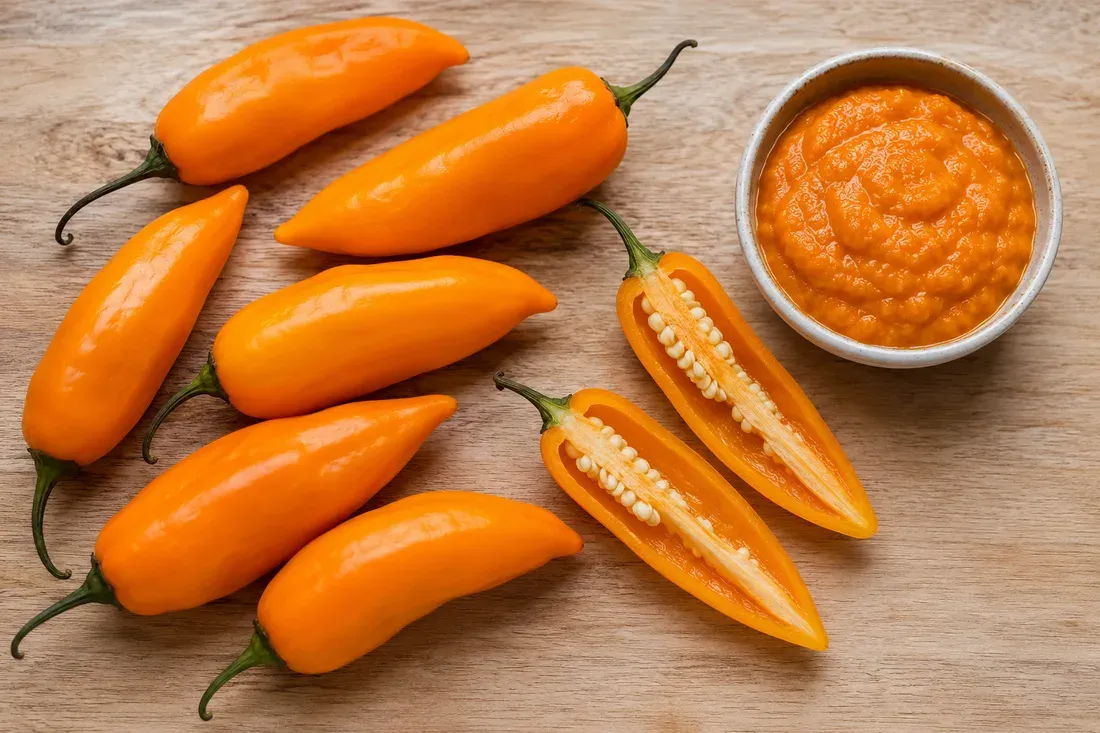
Where to buy ají amarillo outside Peru, ranked
- Frozen whole chiles. The best option abroad. Latin American groceries often stock them; the flavor survives freezing remarkably well. Thaw, clean, use like fresh.
- Jarred ají amarillo paste. The practical workhorse — shelf-stable, consistent, and what many Peruvian expats actually use. One tablespoon of paste ≈ one fresh chile. Check the label: the good ones list ají, salt and little else.
- Dried (ají mirasol). Sun-dried ají amarillo has its own name and a deeper, raisiny character. Excellent in stews; rehydrate in hot water for 20 minutes before blending. It's a sibling, not a clone — recipes that call for mirasol mean mirasol.
- Seeds for your garden. The long game. The plant is generous in warm climates, and a single productive season will change your cooking.
Ají amarillo substitutes, honestly ranked
Sometimes there is genuinely no ají to be found. Here is the truth about your options, best to worst:
- Ají amarillo paste — not really a substitute, the actual ingredient in another form. If you can get the jar, stop reading here.
- Habanero (a small amount) + yellow bell pepper. The closest flavor hack: habanero shares the fruity character, the bell pepper dilutes it to the right heat and adds the color and body. Ratio: 1 bell pepper to ¼–½ habanero, cleaned.
- Scotch bonnet, same trick. The Caribbean cousin of habanero; works identically.
- Hungarian wax / banana pepper + a pinch of cayenne. Right look, decent body, but you lose the fruit. Acceptable in cooked sauces.
- Jalapeño or serrano. Last resort. Right heat range, wrong personality — green and grassy where ají is golden and fruity. Your dish will be fine; it just won't be Peruvian.
And one honest caveat: for the dishes where ají amarillo is the dish — huancaína sauce above all — substitution shows. For those, it's worth waiting until you can find the paste online before attempting the recipe.
Recipes that depend on ají amarillo
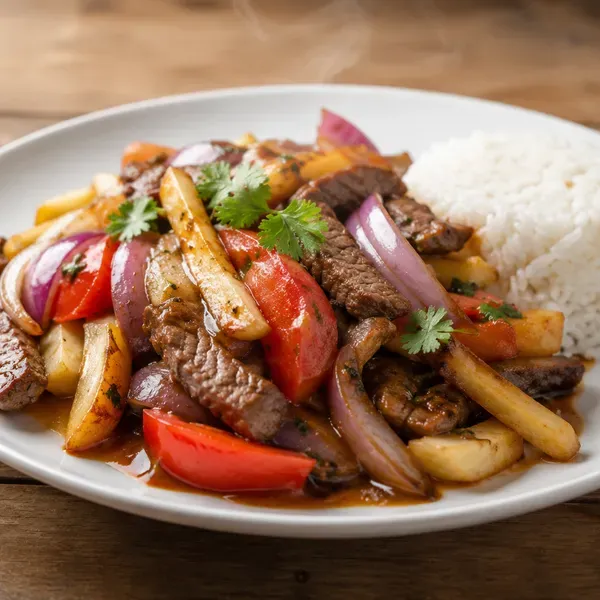
It runs straight through the Sunday table. Papa a la huancaína is barely a dish without it; ají de gallina takes its color and half its name from it; causa limeña is yellow potato whipped with lime and this chile and very little else. Lomo saltado uses it sliced into the stir-fry, and leche de tigre leans on it for the sharp edge behind all that lime. Pour a glass of chicha morada and you have most of a Peruvian lunch.

Junior Quintana learned to cook from his mother, Lina, in Junín, in the central Peruvian Andes — a kitchen where chicha morada simmered every Sunday and there were always native potatoes with cheese and choclo on the table. He started Andean Kitchen to share the food he grew up with, in English and without shortcuts: every recipe cooked and tested at home, where it's really made. His favorite dish is, and probably always will be, pachamanca. See how we cook, test and photograph.
Did you cook this?
Tell me how it went — including what did not work. I read every one, and with your permission I will put it on this page, with your first name, for whoever comes next.