
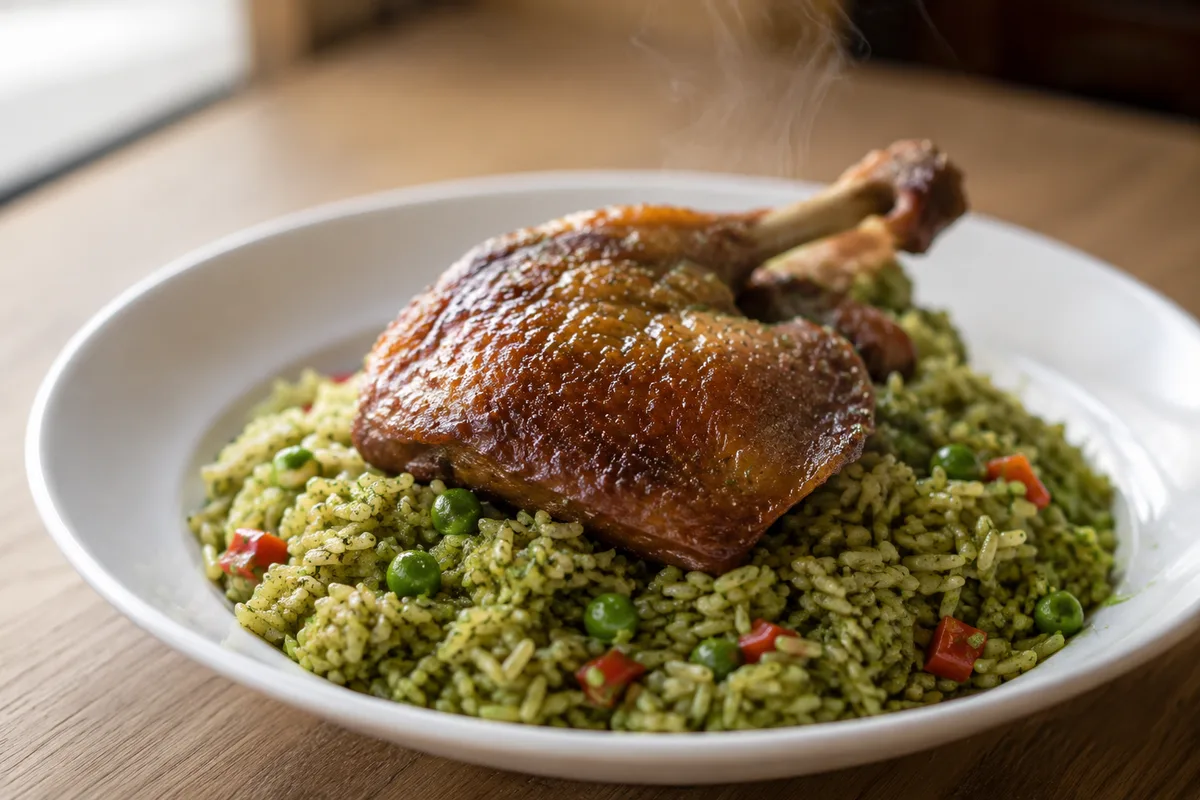
Arroz con pato comes from Lambayeque, on Peru's north coast, and it belongs to the same green-rice family as arroz con pollo — cilantro blended straight into the cooking liquid, rice absorbing that color and flavor as it cooks until it comes out graneado — every grain loose and separate, the only standard a Peruvian applies to a plate of rice. It is emphatically norteño — northern, and the north will tell you so. Note the herb, too: what the rest of the world calls cilantro is culantro here, and in this dish it isn't a garnish but the cooking liquid itself. But swap the chicken for duck, add a cup of dark beer to the braise, and the whole dish shifts into something richer and more particular to its home region, less an everyday dinner than a dish built around a Sunday table or a proper celebration.
Duck takes longer and needs more patience than chicken does — more fat to render, more time to turn tender — but that extra effort is exactly what separates arroz con pato from its more common cousin.
Chiclayo is a long way from Junín, and I'd be lying if I told you this was a dish from my childhood. I ate it properly for the first time as a guest in the north, where they poured what was left of the beer that hadn't gone into the pot and then watched to see whether I had noticed that the culantro was doing all the work. I had. You couldn't miss it.
Render the fat before anything else happens
Duck carries far more fat under its skin than chicken does, and browning it skin-side-down in a dry pot — no oil added at first — renders a good portion of that fat out before the braise even starts. Skipping this step leaves both the duck greasy and the finished rice swimming in fat it doesn't need; patience here pays off directly in the final texture.
The duck doesn't need oil to brown. It brings its own, if you give it the time to render out first.
Dark beer, not a splash of anything lighter
The dark beer in the braise isn't a garnish measure — it contributes real malty depth that a lighter lager or a splash of wine doesn't replicate, standing up to the richness of the duck fat rather than getting lost in it. If dark beer genuinely isn't available, a stout works, but skipping it for water leaves the dish noticeably flatter.
Buying the duck, and what to do without it
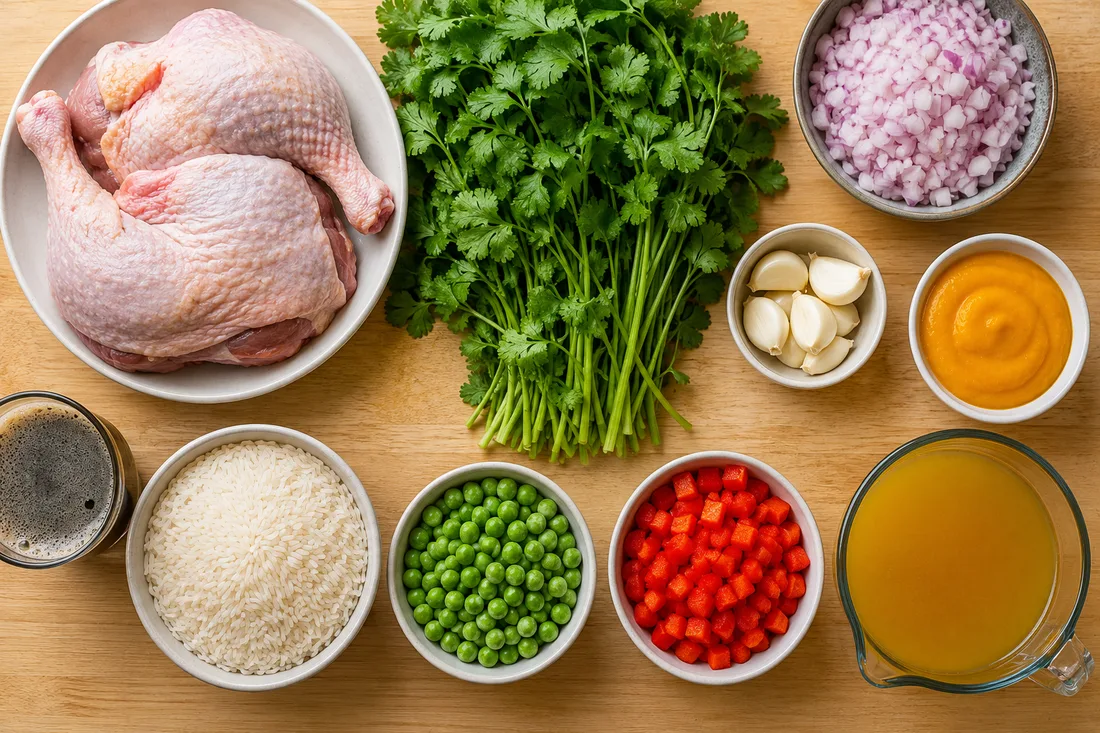
Leg quarters are what this dish wants — dark meat with fat under the skin and enough connective tissue to reward a braise. A whole duck cut into pieces works too. What does not work is breast alone: it is lean, it cooks in minutes, and by the time the rice is done it will be dry.
- Fresh or frozen duck legs. Most supermarkets carry them now, and Chinese groceries almost always do. Frozen is fine — thaw fully and dry the skin before browning.
- Chicken thighs. The honest fallback. You will have made a very good arroz con pollo with beer in it, which is a fine dinner and not this dish.
Whatever you use, do not discard the rendered fat. It carries the whole flavor of the dish into the rice, and pouring it away is the most common way to end up wondering why the result tasted thin.
The recipe
Ingredients
- 4 duck leg quarters
- 2 cups cilantro leaves and tender stems, blended with a splash of water
- 1 onion, diced · 4 garlic cloves, minced
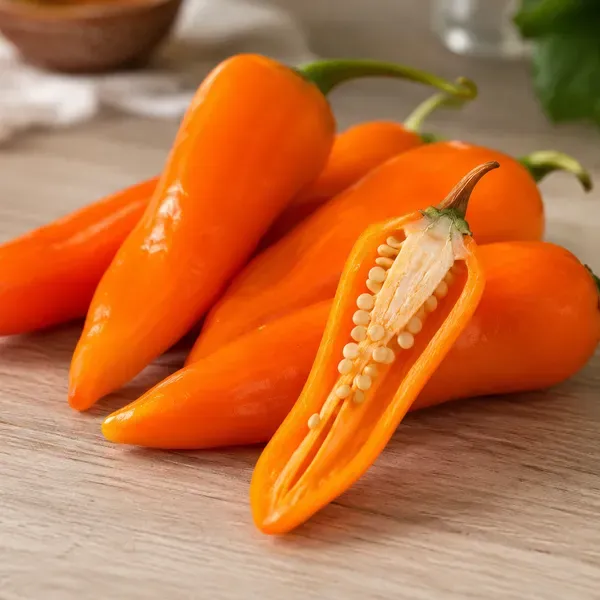
- 2 tbsp ají amarillo paste
- 1 cup dark beer
- 1 1/2 cups rice
- 1/2 cup peas · 1 red bell pepper, diced
- 3 cups broth (from browning the duck or chicken stock)
- 2 tbsp oil · salt · pepper · ground cumin
Method
- Render and brown the duck, skin-side down first, in a dry pot until much of the fat has rendered. Remove and set aside.
- Build the base. Pour off most of the fat, cook onion and garlic in a little of it, then stir in the ají amarillo paste.
- Braise. Return the duck, add beer and broth, simmer covered 30-35 minutes until tender.
- Finish the rice. Remove the duck. Stir the cilantro, rice, peas and bell pepper into the liquid. Nestle the duck back on top, cover, and cook on low 18-20 minutes until the rice is tender.
Troubleshooting, from experience
Duck came out tough. It needed more time in the braise. Duck legs are forgiving of extra simmering, unlike breast meat — give it the full 30-35 minutes.
Rice is greasy. Not enough fat was poured off after browning the duck. Leave just enough to cook the onion, and skim any excess before adding the rice.
Rice stayed hard at the bottom. The liquid ratio was off, or the heat was too high, evaporating liquid before the rice finished cooking. Keep it at a gentle simmer with the lid on.
What to serve it with
A side of salsa criolla cuts through the richness of the duck, and a cold beer alongside is only appropriate given how much of it is already in the pot.
Questions people ask
Why render the fat first? Duck carries far more fat under the skin than chicken, and browning it skin-side-down in a dry pot pulls a good part of it out before the braise starts. Skip it and you get greasy duck and rice swimming in fat it does not need.
What beer should I use? A dark one — a stout or a dark lager. The malt stands up to the duck fat where a light lager disappears into it. If dark beer is genuinely unavailable, use less liquid rather than substituting water, which leaves the dish noticeably flatter.
What does graneado mean? Every grain loose and separate, which is the only standard a Peruvian applies to a plate of rice. It comes from getting the liquid right and then leaving the pot alone — stirring rice while it cooks is how you get the opposite.
Is culantro the same as cilantro? In Peru, yes — culantro is simply what we call it. Note that in some Caribbean cooking the word refers to a different herb entirely, so if a recipe elsewhere calls for culantro it may not mean this. Here it is the same green bunch, and in this dish it is the cooking liquid rather than a garnish.

Junior Quintana learned to cook from his mother, Lina, in Junín, in the central Peruvian Andes — a kitchen where chicha morada simmered every Sunday and there were always native potatoes with cheese and choclo on the table. He started Andean Kitchen to share the food he grew up with, in English and without shortcuts: every recipe cooked and tested at home, where it's really made. His favorite dish is, and probably always will be, pachamanca. See how we cook, test and photograph.
Did you cook this?
Tell me how it went — including what did not work. I read every one, and with your permission I will put it on this page, with your first name, for whoever comes next.