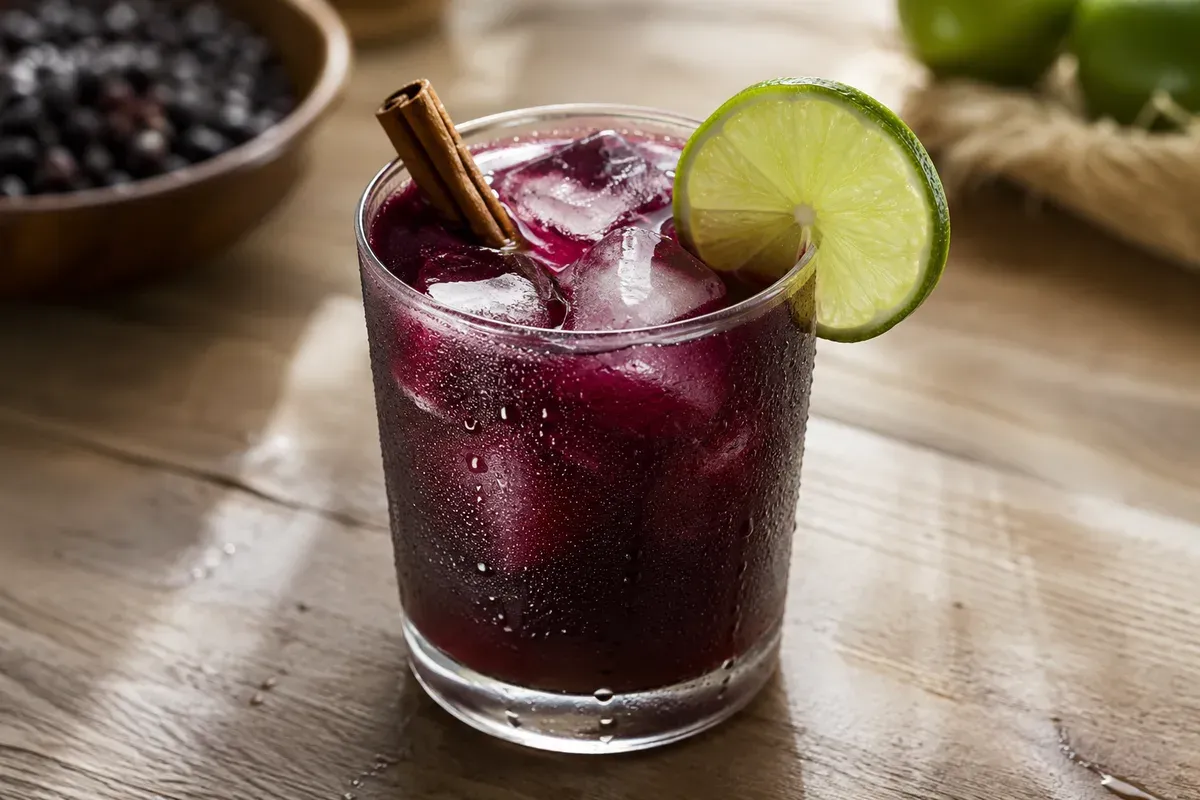
Before Coca-Cola reached Peru, before lemonade, before ice itself was common in the Andes, there was chicha morada. Peruvians have been steeping purple corn into a sweet, spiced, violently violet drink since long before the Incas — archaeologists have found traces of it in pottery over a thousand years old. Today it sits in a pitcher on practically every Peruvian family table on Sundays, served alongside everything from ceviche to arroz con pollo. And yet outside Peru, most recipes treat it like an exotic curiosity, when it's actually one of the easiest drinks in the world to make: you simmer things in a pot, you strain, you chill.
What the quick recipes skip, though, is why each thing goes in the pot. The pineapple skin isn't garnish logic — it's acidity and aroma. The quince isn't optional — it's body. And the lime goes in at the very end for a reason that's pure chemistry. Get those three details right and your chicha will taste like Peru. Skip them and you'll have purple sugar water.
In our house in Junín, chicha morada means Sunday. The pot goes on while lunch is still being argued about, and the smell of cinnamon reaches the front door before anyone is called to eat. We buy our maíz morado from the same casera — the market vendor you keep going back to until she practically counts as family — and she always drops an extra cob into the bag as a yapa, the little something-for-free that every Peruvian market runs on. How sweet we make it depends entirely on who's holding the spoon.
What purple corn actually is
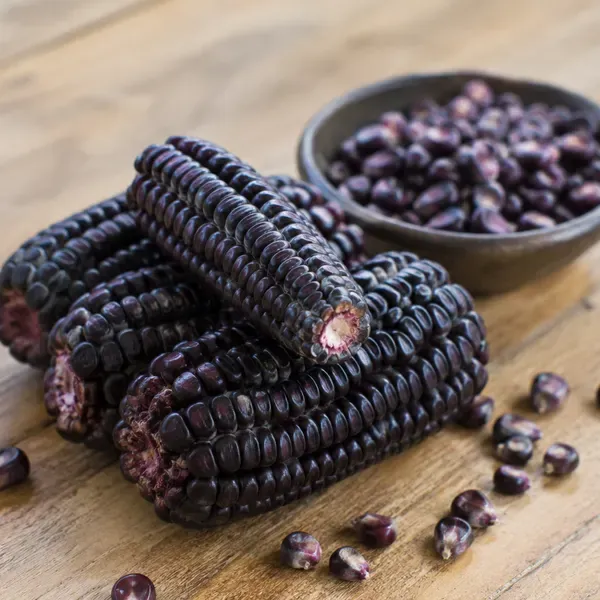
Maíz morado is a variety of corn native to the Andes that produces ears of a purple so deep it looks dyed. It isn't. The color comes from anthocyanins — the same family of pigments found in blueberries and red cabbage — concentrated in both the kernels and, crucially, the cob. That's why chicha morada is always brewed with whole ears or kernels-plus-cob: the cob releases as much color and flavor as the corn itself. The taste is gently earthy and barely sweet on its own; the personality of the drink comes from what you simmer alongside it.
Finding maíz morado outside Peru
This is the only genuinely hard part, and it's getting easier every year. In order of preference: whole dried purple corn from a Latin American grocery (sold in bags, often labeled "maíz morado"), online retailers that ship dried ears, or — as a respectable shortcut — bottled chicha morada concentrate from Peruvian brands, which you dilute and brighten with fresh lime. Avoid powdered instant mixes; they taste like grape candy and would make any Peruvian grandmother quietly leave the room.
One bag of dried corn (around 400 g) makes a generous pitcher and can often be simmered a second time for a lighter batch, which is exactly what thrifty Peruvian households do.
The cob gives as much as the kernels. Brewing chicha with the kernels alone, my grandmother would say, is usuchychuanmi kayta — in the Quechua spoken around Junín, you're wasting half the drink.
The supporting cast
Pineapple skin and core. The classic move. You're not putting fruit flesh in the pot — you're using the washed skin and core, which carry intense aroma and a touch of acidity without making the drink taste like pineapple juice. It's also a beautiful piece of zero-waste cooking that predates the term by a few centuries: make this the same day you cut a pineapple for something else.
Quince (membrillo). The traditional fruit, common in Andean markets. It adds body and a floral note. Outside Peru, a green apple is the accepted substitute — close enough that nobody will protest.
Cinnamon and clove. The warm backbone. Two sticks and five cloves is the family standard; add more clove than that and, as we say in Junín, hampi çhakçhawanmy — it starts tasting like medicine.
Lime, always off the heat. Anthocyanins are pH-sensitive: acid makes the purple brighter and redder, but heat plus acid dulls the color and turns the flavor harsh. So the lime juice goes in only once the chicha is strained and cool. This is the single most common mistake in foreign recipes.

The recipe
Ingredients
- 400 g dried purple corn (3–4 ears with their cobs, or bagged kernels plus cob pieces)
- 3 liters of water
- Skin and core of 1 pineapple, scrubbed well before peeling
- 1 quince, quartered — or 1 green apple
- 2 cinnamon sticks
- 5 whole cloves
- Juice of 2–3 limes, to finish
- Sugar to taste — start with ½ cup (100 g)
- To serve: ice, and finely diced apple or pineapple (optional but classic)
Method
- Load the pot. Rinse the corn and add it to your largest pot with the water, pineapple skin and core, quince, cinnamon and cloves.
- Simmer, uncovered, 45 minutes. Bring to a boil, then lower to a steady simmer. The liquid will darken from violet to a deep, almost black purple. It's done when some kernels have split open and the kitchen smells like cinnamon and fruit.
- Strain and cool. Strain into a pitcher, pressing nothing — pressing the solids clouds the drink. Let it cool to room temperature. (Save the corn: it can be simmered once more with 2 liters of fresh water for a lighter second batch.)
- Sweeten, then acidify. Stir in sugar to taste while slightly warm so it dissolves. Add the lime juice only when fully cool, just before serving. Watch the color shift brighter as the acid hits — that's the anthocyanins reacting.
- Serve cold. Over plenty of ice, with a spoonful of diced apple or pineapple in each glass if you want the full Sunday-lunch presentation.
Troubleshooting, from experience
It tastes flat or watery. Almost always under-simmered corn or missing acidity. Give it 10 more minutes on the stove next time, and check that you added enough lime — the drink should be refreshing, not just sweet.
The color is dull brown-purple instead of vivid violet. Either the lime went in while the chicha was hot, or the corn was old. Acid plus heat dulls the pigment permanently; there's no rescuing the color, though the flavor survives.
It's too sweet / not sweet enough. Peruvian households argue about this constantly, which tells you there's no single right answer. Sweeten in stages and taste cold — chilled drinks need more sugar to taste equally sweet.
What to serve it with
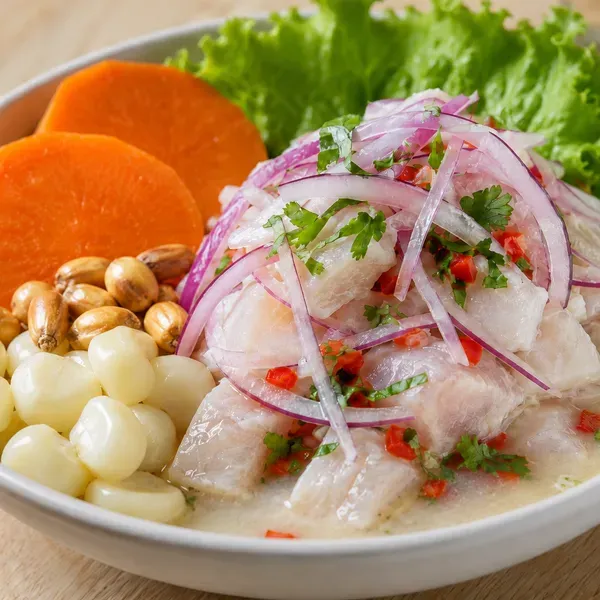
Everything — that's the point of chicha morada. It's the default companion to ceviche (the sweetness against the lime heat is perfect), arroz con pollo, anticuchos and any family lunch. Leftover chicha also has a second life: reduce it with cornstarch, more sugar and dried fruit, and you get mazamorra morada, the purple pudding that shares its soul. We'll cover that one soon.
¡Añañáw, Upyanapaq misk´i misk´i! — as we'd put it in the Quechua spoken around Junín: what a delicious, tasty drink. Salud.

Junior Quintana learned to cook from his mother, Lina, in Junín, in the central Peruvian Andes — a kitchen where chicha morada simmered every Sunday and there were always native potatoes with cheese and choclo on the table. He started Andean Kitchen to share the food he grew up with, in English and without shortcuts: every recipe cooked and tested at home, where it's really made. His favorite dish is, and probably always will be, pachamanca. See how we cook, test and photograph.
Did you cook this?
Tell me how it went — including what did not work. I read every one, and with your permission I will put it on this page, with your first name, for whoever comes next.