
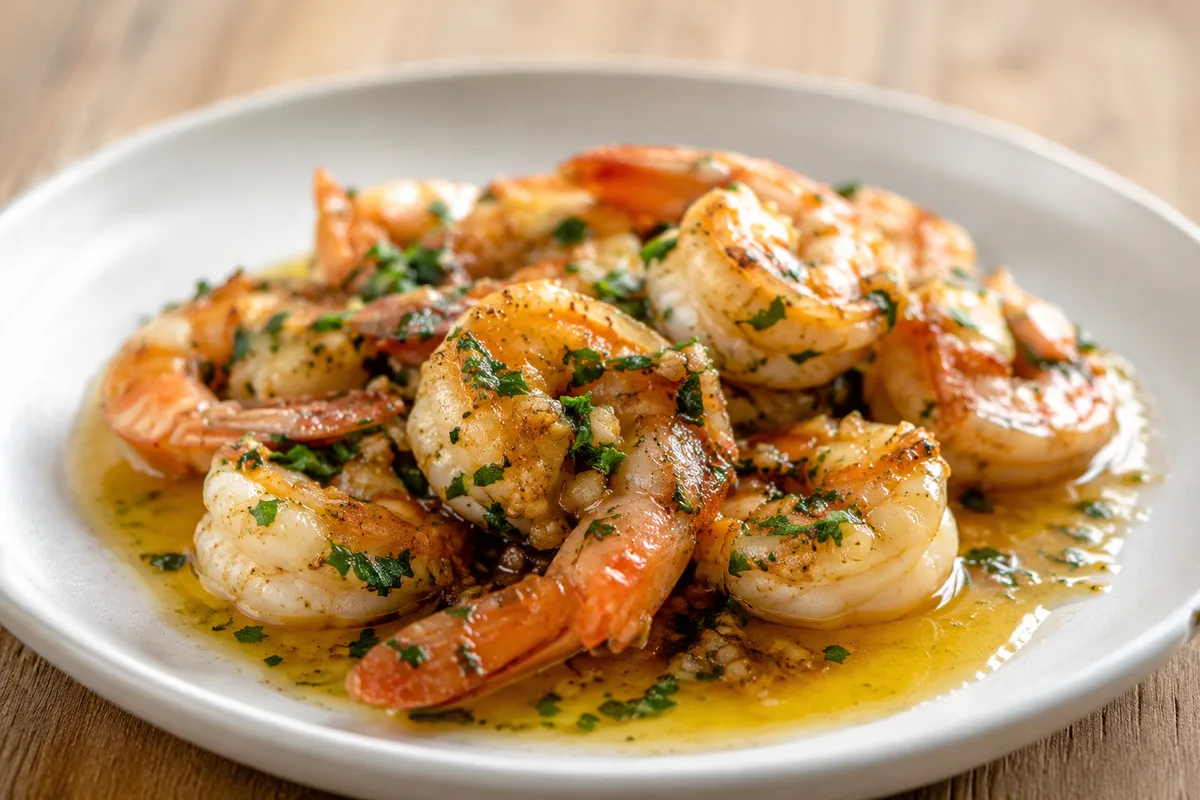
The Camaná and Tambo river valleys near Arequipa are famous across Peru for their freshwater shrimp — the same shrimp that fills chupe de camarones — and camarones al ajillo is the simplest possible way to let that shrimp be the entire point of a dish rather than one component in a larger chowder. Garlic, butter, a splash of white wine, seared hard and fast: there's nothing to hide behind here, which is exactly the appeal when the shrimp itself is genuinely good.
It's a quick dish, closer to a Spanish gambas al ajillo in technique than anything distinctly Peruvian in method, but the shrimp itself and the accompanying ají amarillo option keep it rooted firmly in Arequipa.
We are sierra people and river shrimp is not our everyday food, so the first time I ate these properly was in a picantería — the Arequipa institution, usually run by women, where the chicha is house-made and the portions assume you walked there. The woman who served us said the shrimp had come up that morning from Camaná, and then watched to make sure I understood that this mattered. It did. I have had shrimp since that cost three times as much and tasted like less.
Don't let the garlic brown
Garlic turns bitter fast once it starts to brown, and camarones al ajillo depends on that garlic staying golden and fragrant rather than crossing into burnt territory — keep the heat at a level where the garlic sizzles gently rather than aggressively, and add the shrimp the moment it's fragrant.
Burnt garlic ruins this dish faster than anything else could. Watch it like you'd watch toast.
The shrimp cook in barely two minutes
River shrimp are small and cook through remarkably fast — a minute or two per side is genuinely enough, and pulling them the moment they turn pink prevents the rubbery texture that overcooked shrimp always develops. This is a dish where everything moves quickly once the pan is hot.
Which shrimp, and when
The shrimp that made this dish famous is camarón de río, the freshwater shrimp of the Camaná, Ocoña and Majes valleys — smaller than sea shrimp, sweeter, and with a head worth sucking rather than discarding. Peru protects them with a closed season every year, a veda during which fishing them is illegal so the population can spawn. If you are in Peru and someone offers you river shrimp during the veda, that shrimp was taken illegally; the honest kitchens simply take the dish off the menu for those months and put it back when the season opens.
Outside Peru you will be cooking with sea shrimp, and that is fine — this dish survives the swap better than most. Buy them shell-on and as large as your budget allows, since the shells are where most of the flavor hides and they protect the flesh from the hard, fast heat this recipe demands. Pre-peeled shrimp cook faster than you can react and turn rubbery in the time it takes to reach for the wine.
Shell on, and what to do with the heads
Cook them shell-on if you possibly can. The shells hold most of the flavor and they shield the flesh from heat this fast and this hard — peeled shrimp go from raw to rubber in the time it takes to reach for the wine. Peeling at the table is part of the dish, not an inconvenience it failed to solve.
And keep the heads. In a river shrimp the head holds the tomalley, which is where the sweetness concentrates, and sucking it is not a party trick — it is the best mouthful on the plate. If you are cooking sea shrimp with the heads on, the same applies. If the heads bother you, pull them before cooking and simmer them in the wine for two minutes first; you get the flavor without the confrontation.
The recipe
Ingredients
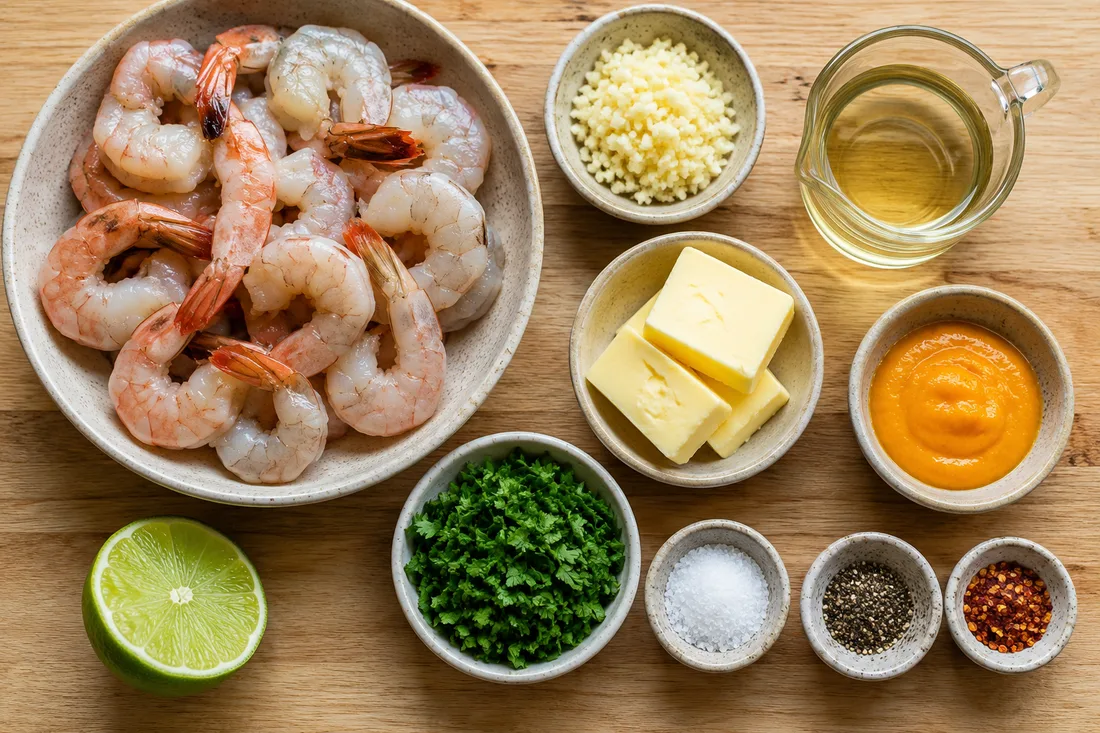
- 500g river shrimp or large shrimp, peeled, tails on
- 6 garlic cloves, minced
- 1/4 cup butter
- 1/4 cup white wine
- 1 tbsp ají amarillo paste (optional)
- 2 tbsp chopped parsley
- Juice of 1/2 lime
- Salt · pepper · chili flakes (optional)
Method
- Season the shrimp with salt and pepper.
- Cook the garlic in butter briefly until fragrant, not browned.
- Sear the shrimp in a single layer, 1-2 minutes per side.
- Add wine and ají if using, then finish with parsley and lime. Serve immediately.
Troubleshooting, from experience
Garlic turned bitter. It browned too much. Keep the heat moderate and watch it closely.
Shrimp came out rubbery. Overcooked. Pull them as soon as they turn pink, no longer.
Sauce broke or looked greasy. The pan was too hot when the wine went in. Add it off the highest heat and let it bubble gently.
What to serve it with
Crusty bread to soak up the garlic butter, or a side of white rice for a fuller meal.
Questions people ask
Can I use frozen shrimp? Yes, and most people outside Peru will. Thaw them overnight in the fridge and dry them thoroughly — wet shrimp steam instead of searing and release water into a pan that has thirty seconds to do its job. Buy them shell-on and raw, never pre-cooked.
What is the veda and why does it matter? A closed season when fishing river shrimp is illegal in Peru so the population can spawn. If someone offers you camarón de río during those months, it was taken illegally. Honest kitchens simply take the dish off the menu and put it back when the season opens.
My garlic keeps burning. What am I doing wrong? The pan is too hot before the garlic goes in. It should sizzle gently, not aggressively, and it needs maybe forty seconds before the shrimp join it. Garlic turns bitter the moment it browns, and no amount of butter afterward rescues that.
What do I serve it with? White rice and bread, and the bread is doing real work — there will be garlic butter left in the pan and leaving it there is not an option anyone in Arequipa would recognize.

Junior Quintana learned to cook from his mother, Lina, in Junín, in the central Peruvian Andes — a kitchen where chicha morada simmered every Sunday and there were always native potatoes with cheese and choclo on the table. He started Andean Kitchen to share the food he grew up with, in English and without shortcuts: every recipe cooked and tested at home, where it's really made. His favorite dish is, and probably always will be, pachamanca. See how we cook, test and photograph.
Did you cook this?
Tell me how it went — including what did not work. I read every one, and with your permission I will put it on this page, with your first name, for whoever comes next.