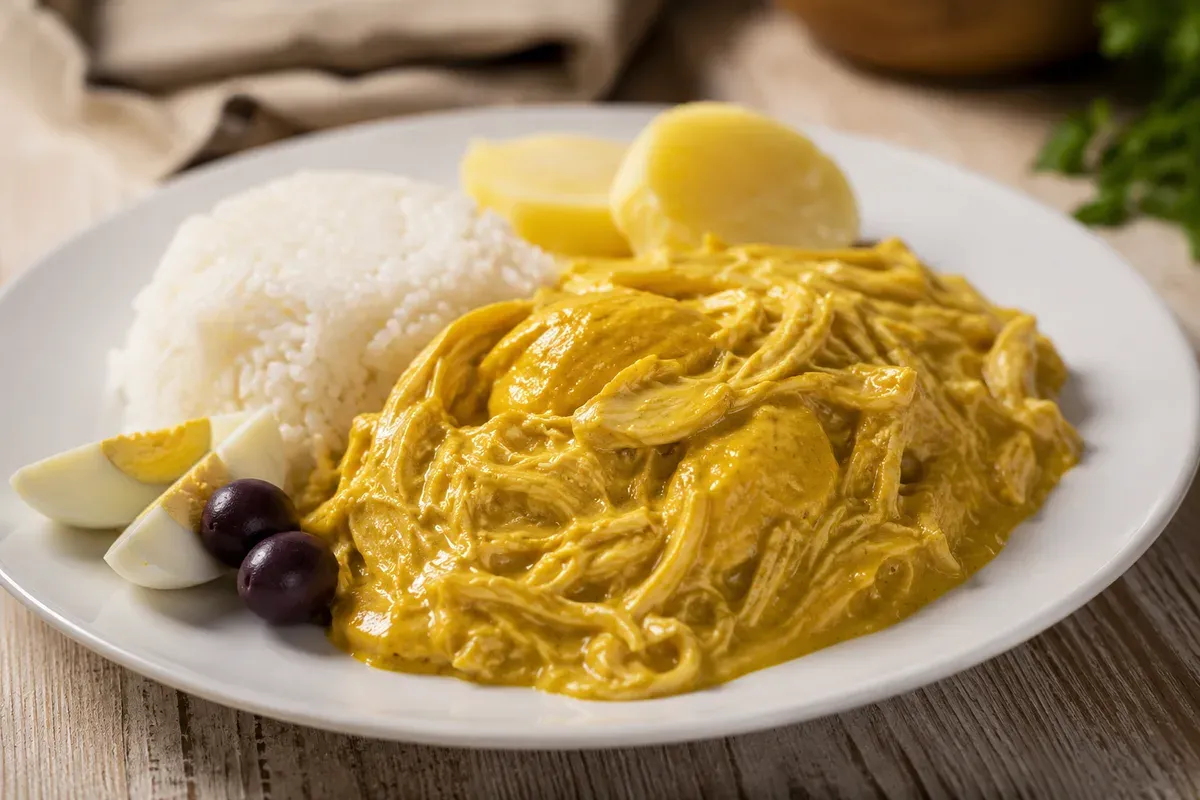
Ask Peruvians abroad which dish they'd cross an ocean for and ají de gallina wins more often than ceviche. It's the country's definitive comfort food: chicken pulled into ribbons and folded into a velvet sauce of ají amarillo, milk-soaked bread, walnuts and Parmesan, served over rice with a slice of boiled potato underneath catching the sauce. The dish descends from Spanish manjar blanco by way of colonial Lima — a medieval European cream dish that the Peruvian pantry slowly conquered, one golden chile at a time, until it became something Spain wouldn't recognize and Peru couldn't live without.
It is also, like all cream-based classics, easy to make badly. The failure modes are predictable — gluey sauce, raw-tasting chile, dry chicken — and every one of them is preventable. Let's walk through the three decisions that matter.
In our house, ají de gallina is the dish you make when someone matters — a birthday, a visit, a Sunday you want to mean something. When there's time, my family still poaches a real gallina, because the broth an older bird gives makes a sauce a supermarket breast simply can't; on a busy weeknight, nobody's too proud to use chicken breast and call it a triumph anyway. The one rule that never gets written down is the shredding: by hand, into ribbons, while you talk. A knife is cheating.
Gallina or pollo: the name vs. the weeknight
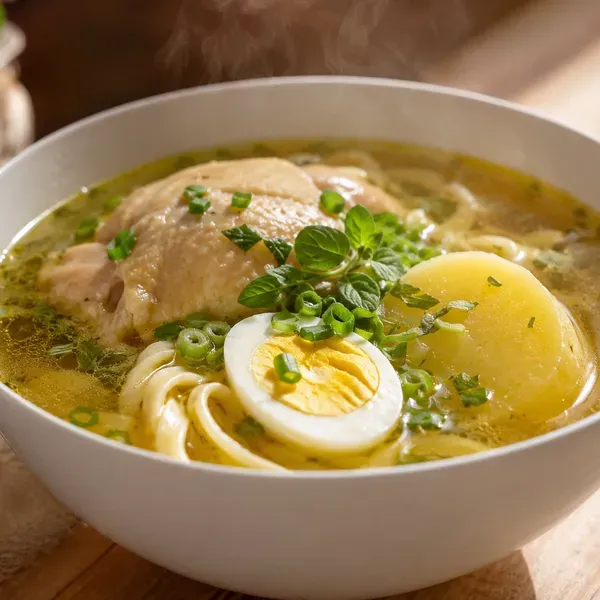
The name says gallina — hen — and as we explained in our caldo de gallina guide, an older bird simply has more to give: deeper flavor, better texture in the shred. The traditional version poaches a hen and uses that golden broth to build the sauce. The honest modern reality is that most Peruvian households now make it with chicken breast for speed, and it's still wonderful — the sauce carries the dish. Our advice: chicken on a weeknight, hen when you're cooking to impress someone Peruvian. Either way, shred by hand into ribbons, never chop with a knife; the irregular strands hold the sauce the way cubes never will.
The bread question (and the cracker myth)
The sauce's body comes from white bread soaked in evaporated milk and blended smooth — a direct inheritance from its medieval ancestor. Plain white sandwich bread or a soft roll, crusts off, is correct. Some shortcut recipes online use soda crackers because they're already in the pantry from huancaína; resist that. Crackers make ají de gallina taste flat and slightly industrial, and the dish loses the gentle sweetness the bread provides. The two yellow sauces of Peru are cousins, not twins, and the bread is one of the things that keeps them distinct. Ojito with that one, causa — "careful, pal," as we'd say here.
Huancaína is a sauce you pour. Ají de gallina is a sauce you build — and the building material is bread, not crackers.
The aderezo sets the floor
Like half the savory dishes in Peru, this one begins with an aderezo: onion and garlic cooked low and patient in oil until soft, sweet and golden — eight unhurried minutes, not three impatient ones. The ají amarillo (briefly sautéed if fresh, straight from the jar if paste) joins the party blended with the bread and milk. From there the only rule is low heat and a wooden spoon: a hard boil splits the milk and turns silk into curds. The sauce is done when it's thick enough to mound softly on the rice but loose enough to settle — adjust with the reserved poaching broth, a splash at a time.

The recipe
Ingredients
- 1 kg chicken breast (or a small hen for the traditional version), poached, broth reserved
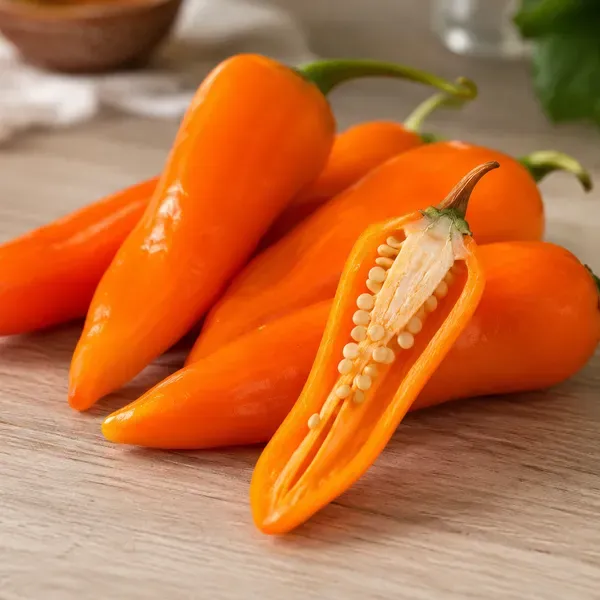
- 5 fresh ají amarillo, seeded and deveined — or 5 tbsp ají amarillo paste
- 4 slices white sandwich bread, crusts removed
- 1 cup evaporated milk
- 1 large red onion, finely diced
- 3 garlic cloves, minced
- 50 g walnuts or pecans, finely ground
- 40 g Parmesan, grated
- 3 tbsp vegetable oil · salt · pepper
- To serve: white rice, boiled yellow potato in thick slices, hard-boiled egg quarters, black olives
Method
- Poach and shred. Simmer the chicken in salted water until just done — 15–18 minutes for breast. Reserve every drop of broth. When cool enough to handle, shred by hand into ribbons.
- Make the cream. Soak the bread in the evaporated milk 5 minutes. If using fresh ají, sauté the cleaned chiles 2–3 minutes in a little of the oil. Blend bread, milk and ají until completely smooth.
- Build the aderezo. In a wide pan, cook the onion in the remaining oil over medium-low until soft and golden, ~8 minutes. Garlic in for the final minute.
- Marry them. Pour the ají cream into the aderezo. Cook over low heat, stirring often, 10 minutes — it will thicken and deepen in color. Loosen with broth whenever it tightens past "softly mounding."
- Finish gently. Fold in chicken, walnuts and Parmesan. Warm through 5 minutes at a bare simmer — never a hard boil. Season with salt and pepper.
- Plate the canon, good and taipá — a heaped, generous serving. Potato slices down, rice beside, sauce ladled lavishly over the potato, egg and olives on top.
Troubleshooting, from experience
The sauce is gluey. Too much bread for the liquid, or it over-reduced. Whisk in warm broth until it flows again; next time, four slices means four.
It tastes sharp or vegetal. The ají went in raw. Fresh chiles always get their 2–3 minutes in oil first; the difference is night and day.
The sauce broke into curds. It boiled hard after the milk went in. Blend the sauce (without the chicken) for 30 seconds and it usually comes back; then keep the heat humble.
What to serve it with
The plate is already complete — rice, potato, egg, olive — so the additions are liquid and bright: a pitcher of chicha morada, and a little salsa criolla on the side if you want a fresh, acidic counterpoint to all that cream. Leftovers are legendary: ají de gallina thickens overnight into the filling for empanadas and the topping for tostadas, and many Peruvians will tell you day two is the best day — miskisazo, as we say in the Quechua of Junín: downright exquisite.

Junior Quintana learned to cook from his mother, Lina, in Junín, in the central Peruvian Andes — a kitchen where chicha morada simmered every Sunday and there were always native potatoes with cheese and choclo on the table. He started Andean Kitchen to share the food he grew up with, in English and without shortcuts: every recipe cooked and tested at home, where it's really made. His favorite dish is, and probably always will be, pachamanca. See how we cook, test and photograph.
Did you cook this?
Tell me how it went — including what did not work. I read every one, and with your permission I will put it on this page, with your first name, for whoever comes next.