

At dusk, Peruvian street corners change shifts: the emolienteros of dawn give way to the anticucheras of night, and the smell of ají panca hitting charcoal becomes the city's evening perfume. Anticuchos are skewers of beef heart — yes, heart, and we'll get to that — and the name may even come from Quechua: anti, the Andes, and uchu, chile. They're marinated in a brick-red paste of dried chile, vinegar, garlic and cumin, grilled ferociously fast, and served with a boiled potato or a round of corn pushed onto the end of the stick. They cost little, feed deeply, and carry one of the most important stories in Peruvian food.
That story is Afro-Peruvian. In colonial Peru, enslaved Africans were left the cuts the landowners discarded — offal, including the heart — and from that injustice built one of the country's defining flavors: the marinade's vinegar-and-spice logic, the mastery of fire, the transformation of the spurned cut into the celebrated one. October's Señor de los Milagros processions (the same purple month as mazamorra morada) are still anticucho high season, and the anticuchera with her decades-seasoned grill remains one of the most respected figures of Peruvian street food. When you cook this dish, you're cooking that history; it deserves to be named.
The anticuchera near us only appears once the sun is down — a single bulb over the grill and a line that forms itself. Two skewers and a potato for about the price of a bus ride, salsa criolla heaped on top, ají sauce so fierce you ask for it anyway. October, the purple month, is her busy season, and the smoke off that grill is, to me, the actual smell of a Peruvian night. You don't sit down for anticuchos; you stand at the cart, burn your fingers, and order one more.
The heart of the matter
First-timers expect beef heart to taste like liver. It doesn't — heart is a working muscle, not a filter organ, so its flavor is deep, clean beef, just more so; its texture, trimmed and cooked correctly, lands between sirloin and a very good steak tip. The two rules: trim ruthlessly (all surface fat, silverskin and internal veins must go — your butcher will do this if you ask) and cook it fast and hot. Heart has almost no internal fat; past medium it turns to rubber, which is the source of every bad anticucho story ever told.
Buying it abroad is easier than you'd think: any butcher with whole-animal supply, halal butchers, and Latin or Asian markets. It's also one of the cheapest cuts in the case, which is the whole point of its history. That said, plenty of Peruvian families grill "anticuchos de carne" with sirloin or tri-tip in the same marinade — a legitimate variation, pe (the little "you know" we tack onto the end of everything), and the right training wheels if heart needs a second date.
Heart is not an exotic ingredient in Peru. It's Tuesday. The exotic part is how good it is.
Ají panca: the other chile
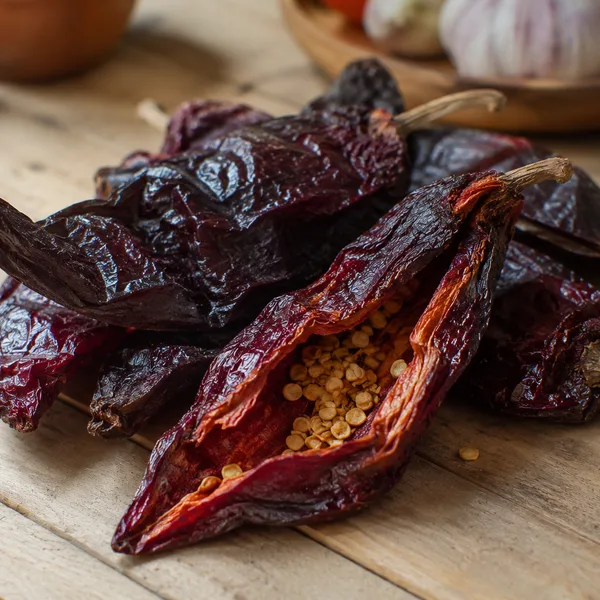
The marinade's soul is ají panca — the sun-dried, deep-red cousin in the Peruvian chile family, with almost no heat and a flavor of berries, smoke and raisin. Where ají amarillo is the bright fresh note of Peruvian cooking, panca is its dark, grilled bass line, and anticuchos are its signature song. Abroad: jarred panca paste sits next to the amarillo paste in Latin groceries; failing that, rehydrated ancho chiles blended with a splash of vinegar are a genuinely close substitute (the two share that dried-fruit darkness).
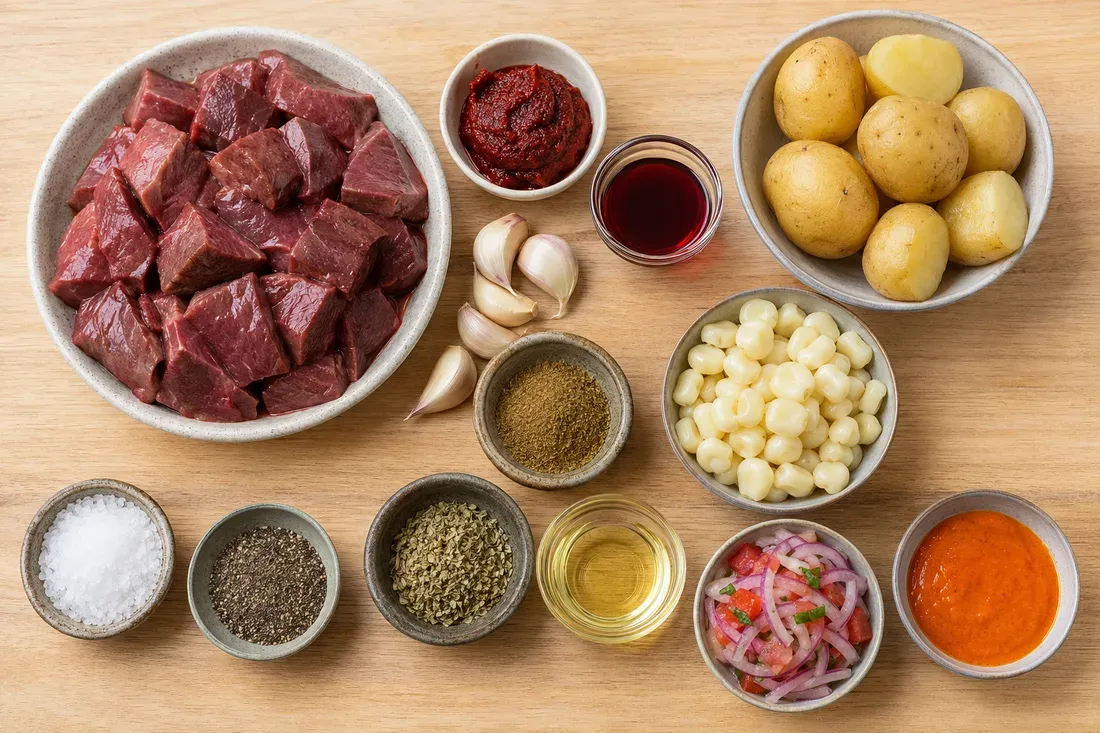
The recipe
Ingredients
- 1 kg beef heart, fully trimmed, in 3 cm pieces — or sirloin/tri-tip
- 5 tbsp ají panca paste
- 4 tbsp red wine vinegar
- 4 garlic cloves, ground to a paste
- 1 tsp ground cumin · 1 tsp dried oregano
- 1 tbsp vegetable oil · salt · black pepper
- Optional: 1 tbsp ají amarillo paste, for brightness
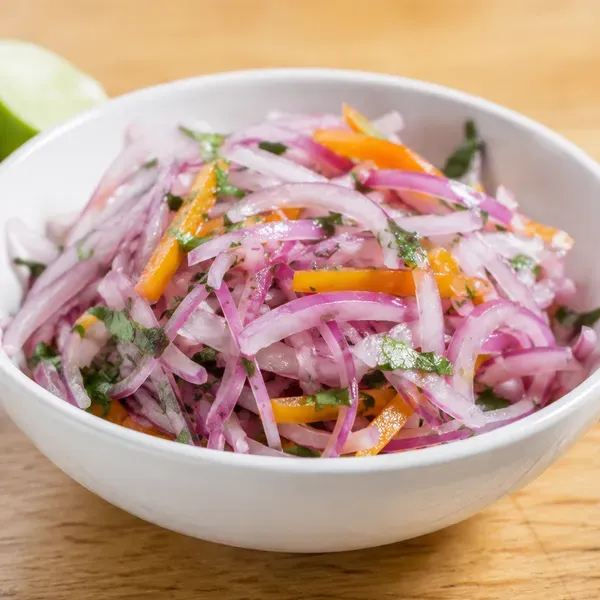
- To serve: boiled potatoes, choclo corn, salsa criolla, ají sauce
- Equipment: metal skewers, or wooden ones soaked 30 minutes
Method
- Make the marinade. Panca, vinegar, garlic, cumin, oregano, oil, salt, pepper — stir to a thick, spreadable paste. It should smell like the street corner already.
- Marinate seriously. Coat every piece and refrigerate, covered: 3 hours minimum, overnight for the real thing. The vinegar seasons deep and tenderizes lightly.
- Skewer flat. 4–5 pieces per skewer, threaded so each piece lies flat — flat pieces char evenly, cubes char on two faces and steam on four. Keep the leftover marinade as your basting sauce.
- Fire, properly. Charcoal at full glow or your grill pan smoking. 2–3 minutes per side, brushing with marinade at each turn, until the outside is charred at the edges and lacquered red-brown, the center just pink. This is al toque cooking — pull them right now or lose them. Total cooking time should frighten you slightly.
- Serve off the fire. Onto plates with potato and corn, salsa criolla over, ají sauce beside. Anticuchos are eaten hot, fast, and ideally standing.
Troubleshooting, from experience
Rubbery. Overcooked — there is no other cause. Heart goes from perfect to tire in about ninety seconds; pull it at just-pink and let the residual heat finish.
Livery taste. Trimming was incomplete (the veins carry that flavor) or the marinade was rushed. Both fixes are upstream.
No grill. A cast-iron pan or plancha at maximum heat, kitchen window open, does an honorable job. The broiler, skewers close to the element, is plan C. What can't be substituted is the heat itself — anticuchos at medium temperature are just sad stew on sticks.
What to serve it with
The street format is the recipe's serving suggestion: potato, corn, criolla, ají. As a backyard party plan, anticuchos before a big pot of something — or simply more anticuchos — with chicha morada for the kids and beer for the grill crew. And if heart won your household over, the same marinade does beautiful things to chicken thighs and mushrooms, a secret every Peruvian griller knows and none admits. Miskisazo — downright exquisite, as we say in the Quechua of Junín.

Junior Quintana learned to cook from his mother, Lina, in Junín, in the central Peruvian Andes — a kitchen where chicha morada simmered every Sunday and there were always native potatoes with cheese and choclo on the table. He started Andean Kitchen to share the food he grew up with, in English and without shortcuts: every recipe cooked and tested at home, where it's really made. His favorite dish is, and probably always will be, pachamanca. See how we cook, test and photograph.
Did you cook this?
Tell me how it went — including what did not work. I read every one, and with your permission I will put it on this page, with your first name, for whoever comes next.