
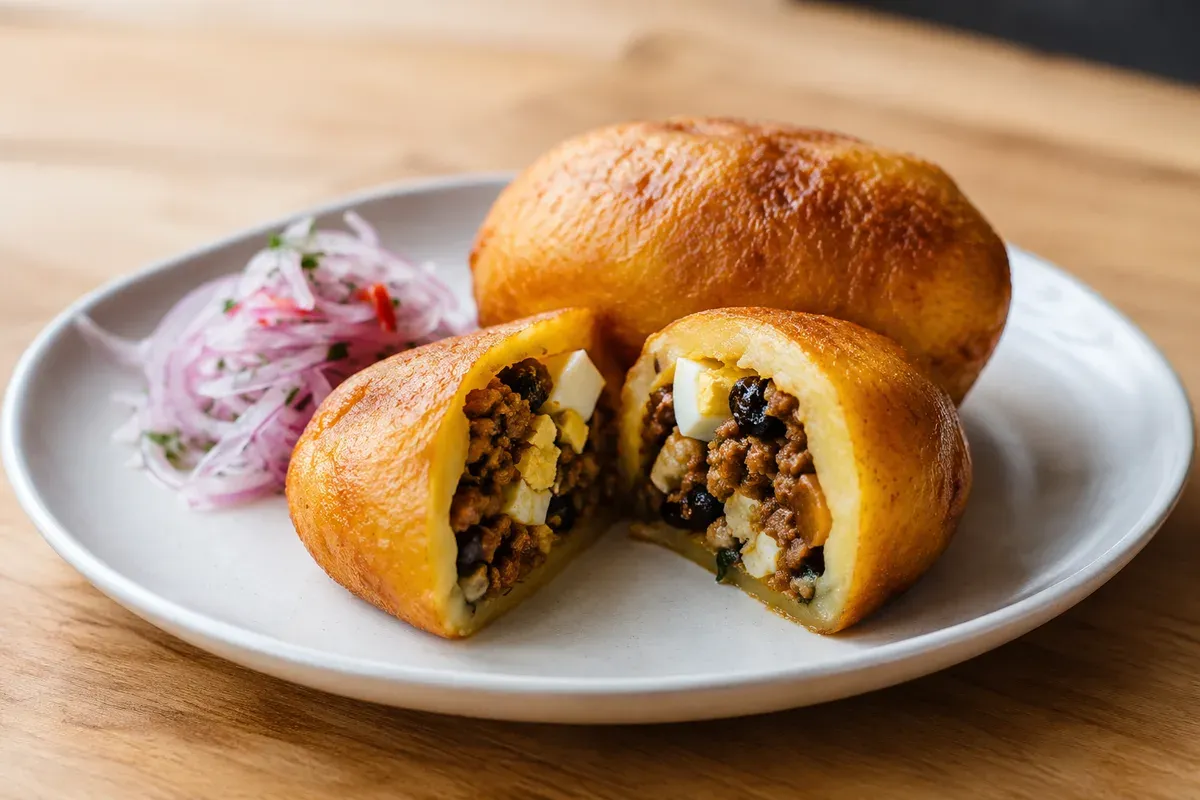
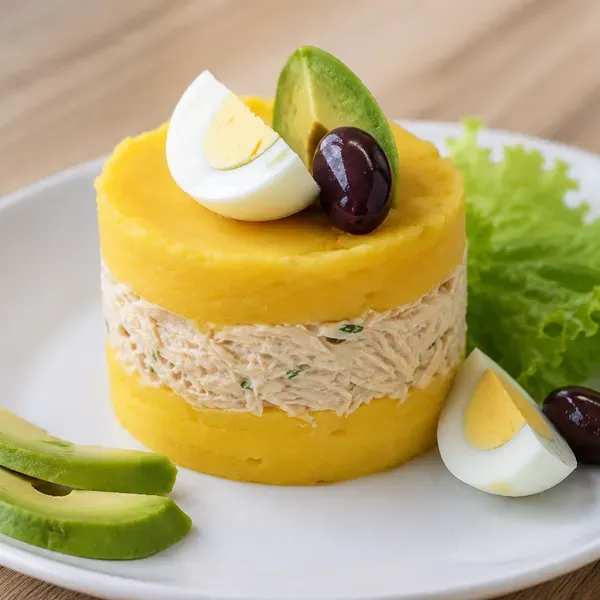
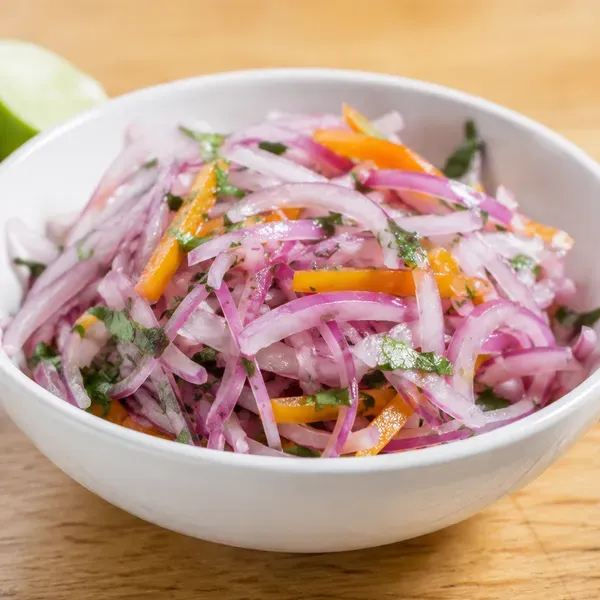
Take the potato-dough intelligence of causa, swap the cold layers for a hot spiced-beef heart, seal it into an oval and fry it golden: that's papa rellena, the great champion of what Peru calls comida al paso — food eaten standing up, on the way to somewhere else — and a dish that converts skeptics of "stuffed potato" in exactly one bite. The crust shatters, the mash steams, the filling — beef, raisins, olive, a nugget of boiled egg, the same baroque crew as rocoto relleno — delivers, and the spoonful of salsa criolla on top does its acidic duty. It's also the canonical destiny of leftover mashed potatoes, which is how most Peruvians meet their first homemade one.
My grandmother made hers a size bigger than anyone else's, on the logic that a papa rellena worth frying was worth being unable to finish in one sitting — a philosophy I've inherited and won't apologize for.
The physics of not bursting
Every papa rellena that exploded in the oil broke one of four rules, so here are all four: the dough comes from floury potatoes riced hot (the causa law) and gets a yolk for binding; the dough is chilled before shaping so it handles firm; the filling goes in completely cold (hot filling steams and pops the seam); and the seal is genuinely sealed — pinched, smoothed, no filling peeking, then floured so the crust sets fast on contact with properly hot oil. Follow all four and the oil holds no terrors.
Causa is the potato as architecture. Papa rellena is the potato as ambush.
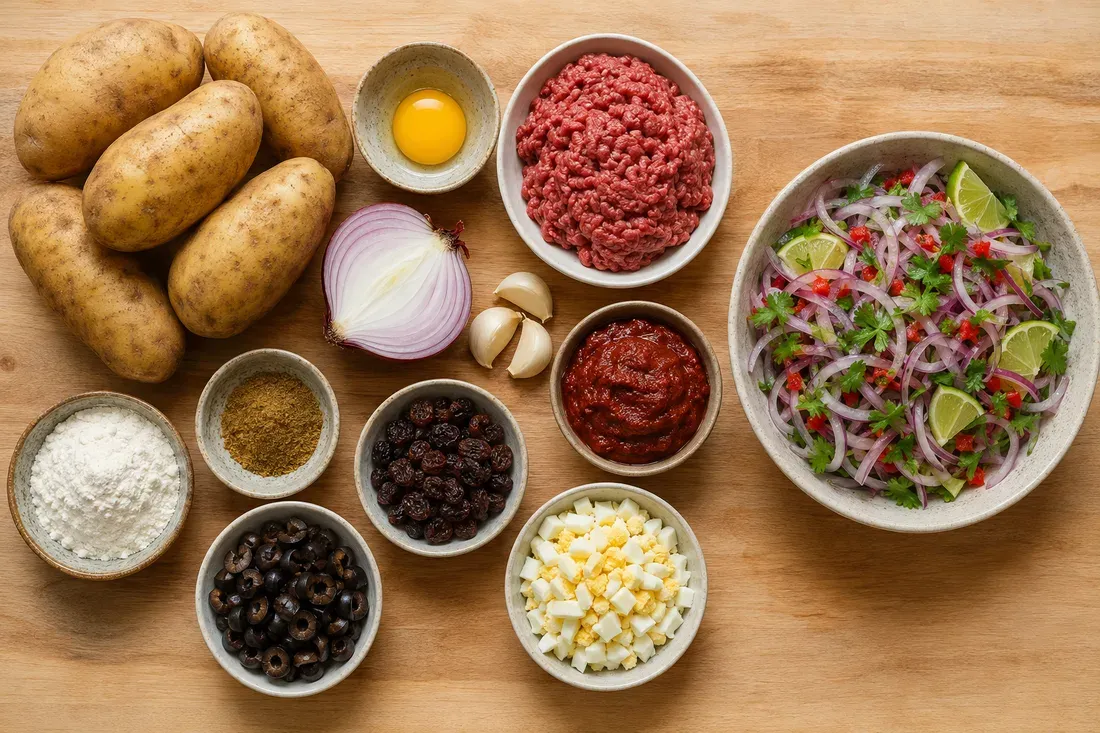
Which potato, and why it decides everything
The dough has to hold together around a wet filling and then survive hot oil, and that is entirely a question of starch. Use a floury, dry-fleshed potato — russet or Idaho abroad, papa amarilla or papa huayro at home. Rice or mash it while it is genuinely hot, because cooled potato turns gluey the moment you work it.
What fails is the waxy kind. Red or new potatoes hold too much water, the dough never firms up, and the whole thing slumps in the pan before the crust can set. If your mash looks wet, it is wet: spread it in the pan over low heat for a minute or two and let the steam leave before you add the yolk.
Making them ahead, and freezing
These are better made in advance than in a hurry, and they freeze genuinely well — which is why so many Peruvian kitchens keep a bag of them.
- A day ahead. Shape them, dust with flour, and keep them covered in the fridge. Cold dough handles better and holds its seal in the oil.
- Frozen raw. Freeze them shaped and spread apart on a tray, then bag them once solid. Fry from frozen over slightly lower heat so the middle warms before the crust darkens.
- Already fried. They keep three days in the fridge and come back well in a hot oven. What does not work is the microwave, which turns the crust to leather.
The recipe
Ingredients
- 1 kg floury potatoes (the usual suspects), boiled in their skins
- 1 egg yolk · salt · white pepper
- 300 g ground beef
- ½ onion, diced · 2 garlic cloves · 1 tbsp ají panca paste · ½ tsp cumin
- ¼ cup raisins · 8 olives, chopped · 1 hard-boiled egg, chopped
- Flour for hands and dusting · oil for shallow frying (~2 cm deep)
- Salsa criolla, non-negotiable escort
Method
- Dough. Peel hot, rice, season with yolk, salt and white pepper. Knead briefly, then 20 minutes in the fridge.
- Filling. Aderezo, beef and cumin until dry and crumbly; raisins, olives, egg folded in. Cool fully — fridge if needed.
- Shape. Floured hands; a ball of dough flattened on your palm, a generous spoon of filling centered, dough closed over and sealed into a smooth oval. Repeat; flour each lightly.
- Fry in hot oil (a crumb of dough should sizzle at once), 2–3 at a time, turning, until deep golden everywhere — 4–5 minutes each. Drain on a rack.
- Serve hot, split open, criolla piled on. The first one belongs to the cook, by law.
Troubleshooting, from experience
It burst. Hot filling, weak seal, or cold oil — see the four rules; one of them is winking at you.
The dough cracked while shaping. Too dry — work in a teaspoon of oil — or the wrong potato.
Greasy. Oil not hot enough; the crust must seal on contact, not marinate.
What to serve it with
One is a starter, two are lunch with salad, and a platter of them next to anticuchos is a party that planned itself. Leftover filling, should the universe permit such a thing, is tomorrow's chaufa mix-in.
Questions people ask
Why did mine burst in the oil? One of four things: the filling went in warm, the seal was not fully pinched shut, the dough was too wet, or the oil was not hot enough to set the crust on contact. Cold filling, sealed seam, dry dough, hot oil — all four or it opens.
Can I bake them instead of frying? You can, and they will be pleasant, but they will not be papa rellena. The shattering crust is the whole contrast against the soft mash inside, and an oven gives you a firmer skin rather than a crisp one. Brush them with oil and bake hot if you go that way.
What potato should I use outside Peru? Russet or Idaho — anything floury and dry. Avoid waxy red or new potatoes, which hold too much water for a dough that has to survive hot oil.
Is the filling the same as rocoto relleno? Nearly. Beef, onion, raisins, olives and boiled egg is the standard criollo filling and it turns up across several dishes. The proportions shift from cook to cook, and the argument about how many raisins is a real one.

Junior Quintana learned to cook from his mother, Lina, in Junín, in the central Peruvian Andes — a kitchen where chicha morada simmered every Sunday and there were always native potatoes with cheese and choclo on the table. He started Andean Kitchen to share the food he grew up with, in English and without shortcuts: every recipe cooked and tested at home, where it's really made. His favorite dish is, and probably always will be, pachamanca. See how we cook, test and photograph.
Did you cook this?
Tell me how it went — including what did not work. I read every one, and with your permission I will put it on this page, with your first name, for whoever comes next.