
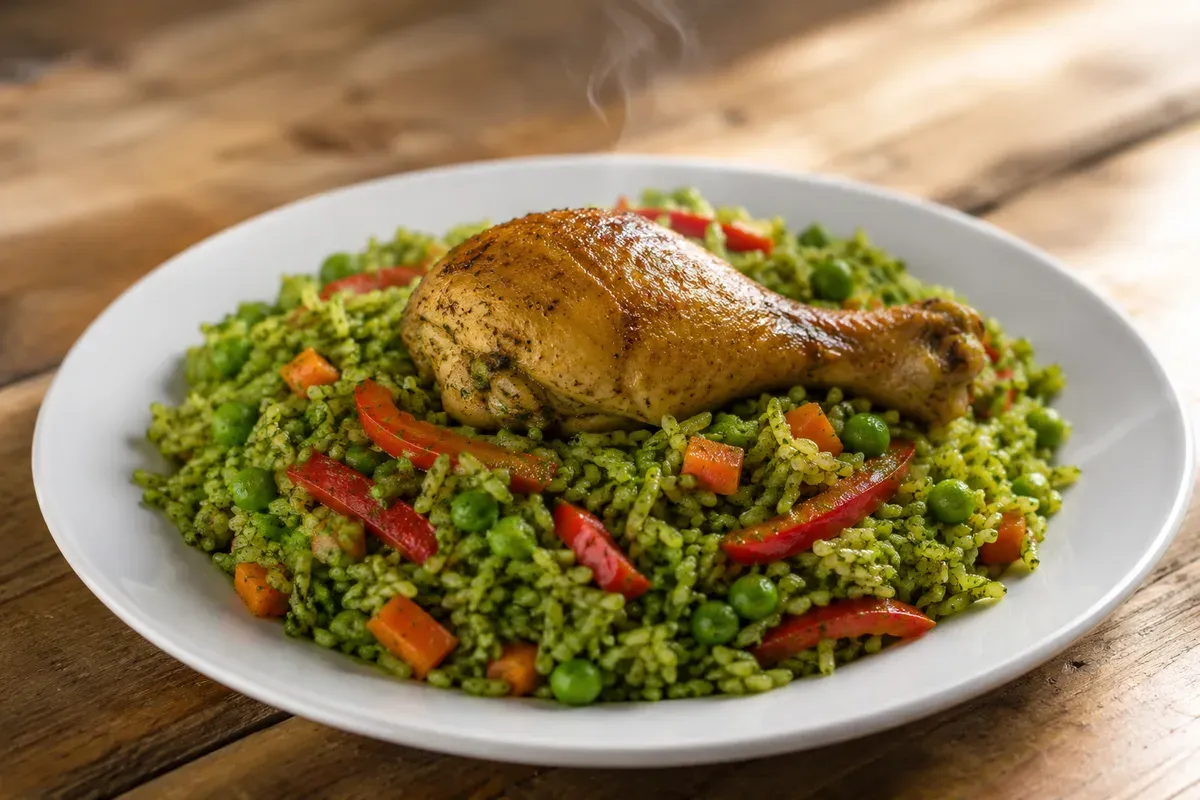
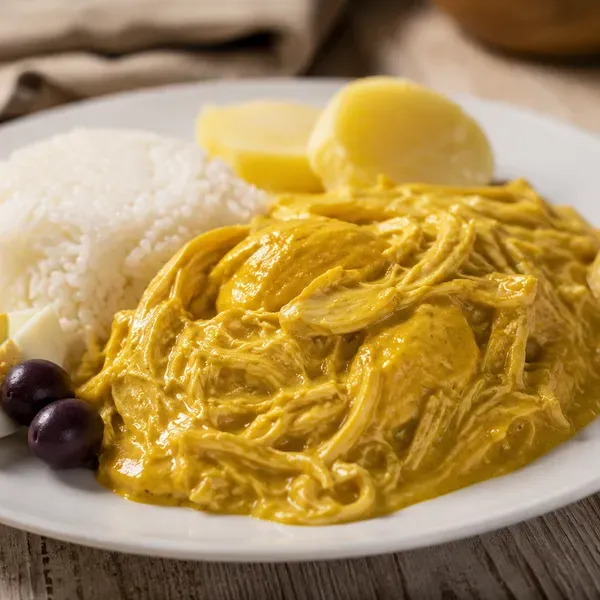
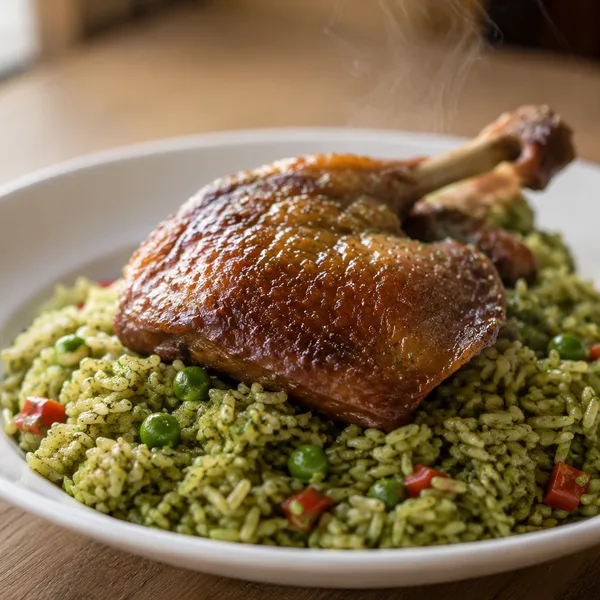
Every Latin American country has an arroz con pollo, and every Peruvian will tell you — politely, but with total conviction — that ours is the green one, and the green one is correct. The color isn't food dye or a token herb garnish: it's an entire bunch of cilantro, blended into a purée and fried into the base, so that every grain of rice cooks in green broth and tastes of it. Add ají amarillo for warmth, a glass of dark beer in the braise (the worst-kept secret of every Peruvian household), and chicken that browned properly before it ever met liquid, and you have the Sunday lunch that competes with ají de gallina for the family's loyalty.
The dish is forgiving in spirit and specific in technique. The two failure modes are universal: rice that's merely stained green instead of seasoned green (the purée wasn't fried), and rice that's mush (the liquid wasn't measured). Both are solved below, permanently.
We're publishing this one on July 28th on purpose: Fiestas Patrias, Peru's Independence Day, is exactly the kind of long, everyone's-coming holiday that a pot this size was built for.
Sundays at home it was always with beer in the pot and a leg quarter for whoever got to the table first — my mother never measured the cilantro, she just kept blending until the color looked right, which after enough Sundays is its own kind of precision.
Why the green must be fried
Raw blended cilantro tastes raw — grassy, thin, slightly soapy to some palates. The Peruvian move is to treat the purée like a chile paste: into the hot aderezo it goes, and it fries for several minutes until it darkens from bright lawn-green to deep bottle-green and the raw smell turns savory. That frying is the difference between rice that's green-flavored and rice that's just green-colored. (A handful of spinach in the blend is the home cook's insurance: it deepens the color and keeps it stable through the long cook without changing the flavor.)
Stained rice is a souvenir. Seasoned rice is the dish.
The beer question
A cup of dark beer in the braise is near-universal in Peruvian homes: its gentle bitterness balances the cilantro's sweetness and the malt adds depth the broth alone can't. The alcohol cooks off in the simmer. If you'd rather skip it entirely, replace it with broth and add a teaspoon of vinegar at the end for the missing edge — a respectable house variation, not a compromise.
The rice math
Peruvian rice is cooked by absorption and measured like a science: 1.5 parts liquid to 1 part long-grain rice, in this case green braising broth topped up with stock. The chicken comes out before the rice goes in — it finishes resting while the rice cooks, then returns on top — because chicken sitting in cooking rice steams its skin sad and crowds the grains. Measure the green liquid after the braise; the recipe tells you exactly how.
The recipe
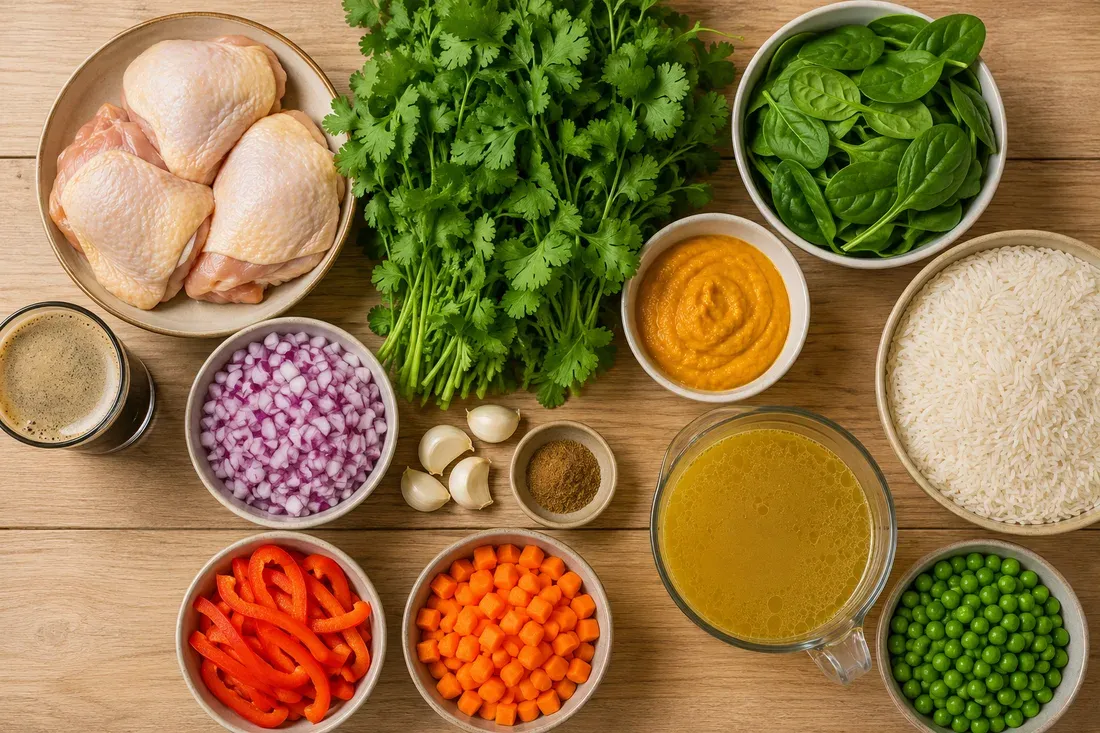
Ingredients
- 6 chicken thighs or leg quarters, skin on
- 1 large bunch cilantro (~100 g leaves and tender stems)
- 50 g spinach leaves
- 2 tbsp ají amarillo paste
- 1 red onion, fine dice · 4 garlic cloves, minced
- 1 cup dark beer — or broth plus 1 tsp vinegar at the end
- 3 cups long-grain rice, rinsed until the water runs clearish
- ~4 cups chicken broth
- 1 cup peas · 1 carrot, small dice · 1 red bell pepper in strips
- Vegetable oil · salt · pepper · 1 tsp ground cumin
Method
- Blend the green. Cilantro, spinach and a splash of broth to a smooth purée. Set aside.
- Brown like you mean it. Season the chicken with salt, pepper and cumin. In your widest pot, oil over medium-high; chicken skin-down until deeply golden, then the other side. Remove. Don't crowd; do it in two rounds.
- Aderezo. In the same fat: onion 5–6 minutes, garlic 1, ají amarillo 2–3 more, until the oil glows.
- Fry the green. Purée in; stir-fry 3–4 minutes until it darkens and smells cooked, not cut.
- Braise. Beer in, reduce by half. Chicken back with broth to barely cover; gentle simmer, lid ajar, 15 minutes. Remove the chicken to rest.
- Measure, then rice. Measure the green liquid in the pot and adjust with broth to 4½ cups. Taste — it should be slightly oversalted, since the rice will absorb it. Stir in rice, carrot and pepper; boil 2 minutes uncovered, then lid on, lowest flame, 18–20 minutes. Peas in for the last 5.
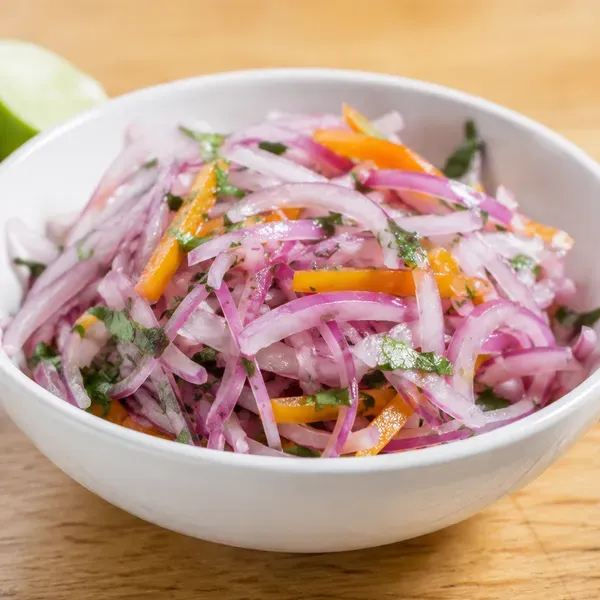
- Rest and reunite. Off heat, lid on, 5 minutes. Fluff, chicken on top, and to the table with salsa criolla — its acidity is this dish's law-mandated companion.
Troubleshooting, from experience
Pale, sad green. Small cilantro bunch or skipped spinach. The blend should look excessive going in; the rice dilutes it.
Mushy rice. Unmeasured liquid — the braise reduced less than you guessed. Measuring at step 6 is the whole game; never eyeball it.
Bitter edge. Too many thick cilantro stems, or the beer was very hoppy. Tender stems only, and a malty dark lager over an IPA, always.
What to serve it with
Salsa criolla on top is canonical; a slice of causa or huancaína before it makes the full Sunday spread, with chicha morada sweating in the pitcher. Leftover green rice, fried next morning with an egg on top, is a breakfast Peruvians don't write about because we're too busy eating it.

Junior Quintana learned to cook from his mother, Lina, in Junín, in the central Peruvian Andes — a kitchen where chicha morada simmered every Sunday and there were always native potatoes with cheese and choclo on the table. He started Andean Kitchen to share the food he grew up with, in English and without shortcuts: every recipe cooked and tested at home, where it's really made. His favorite dish is, and probably always will be, pachamanca. See how we cook, test and photograph.
Did you cook this?
Tell me how it went — including what did not work. I read every one, and with your permission I will put it on this page, with your first name, for whoever comes next.