

Half the world makes rice pudding; Peru's edition is recognizable from across the room. It's creamier than most, because it leans on the national two-milk doctrine — evaporated for body, condensed for sweetness — and it's perfumed unmistakably with cinnamon, clove and a strip of citrus peel simmered with the rice from the start. But its true Peruvian credential is social: arroz con leche rarely appears alone. Its destiny is the clásico combinado — one cup, half white arroz con leche, half deep-purple mazamorra morada — the dessert duo sold from the same cart, scooped in the same motion, and beloved enough that Peruvians abroad describe it with the look people reserve for missing relatives. We published the mazamorra weeks ago; this article completes the marriage.
The carrito outside my old school sold the combinado for less than a sol, and the vendor knew without asking who wanted extra mazamorra and who wanted the raisins picked out first. My house came down firmly on the side of raisins — my mother still throws in a fistful whenever nobody's counting.
The infusion comes first
The single technique that elevates this above generic rice pudding: the spices don't flavor the milk — they flavor the rice. Cinnamon sticks, cloves and citrus peel go into the water at minute one, so the grains absorb the perfume as they cook and the dairy arrives later to a rice that already tastes like dessert. Medium or short grain is the right rice (it releases the starch that makes the cream); long grain stays aloof and the pudding never quite binds.
Two milks, one job each: evaporated builds the body, condensed signs the sweetness. Sugar from a bag is for countries without the doctrine.
The raisin referendum
Every Peruvian family holds a permanent, unresolvable position on raisins in arroz con leche. We're not going to fix this in an article. The recipe lists them as optional; add them with the condensed milk so they plump, or omit them and enjoy the moral certainty of your faction. (The clásico combinado is mercifully neutral territory: the mazamorra brings its own dried fruit, so both parties get theirs.)
The two milks, and what to do without them
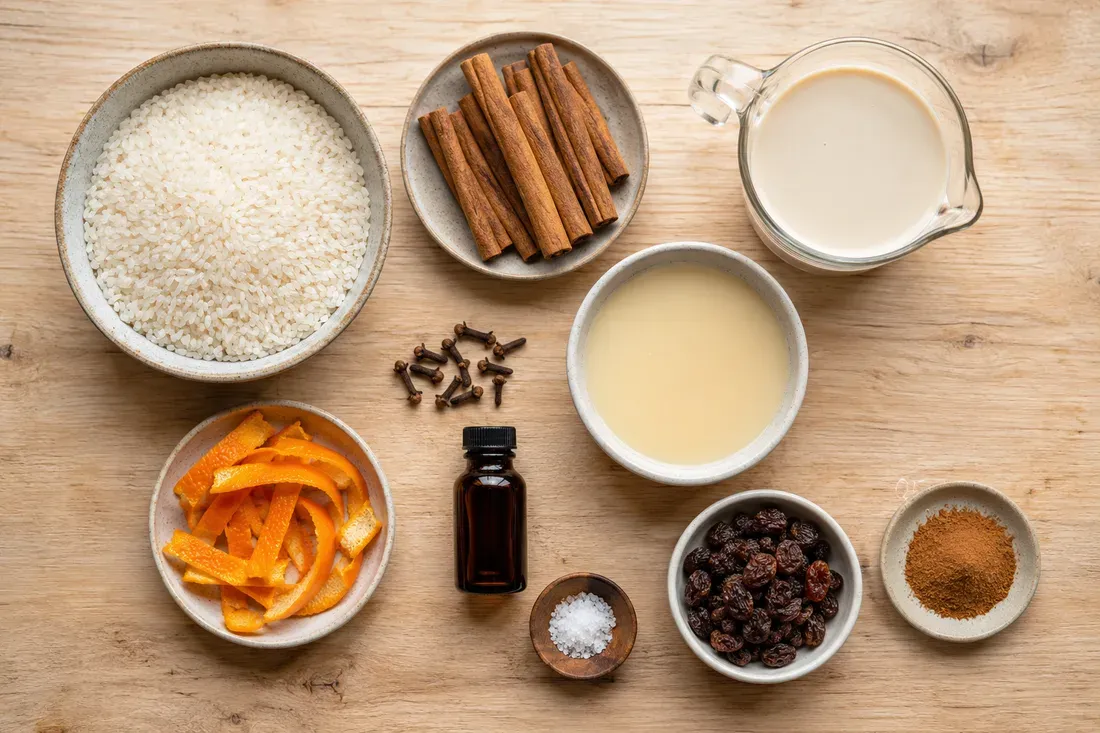
Peru builds this on a pair of cans rather than on fresh milk and a bag of sugar, and the two do different jobs: evaporated milk gives body and a faint cooked-dairy note, condensed milk brings the sweetness already dissolved. That is why the pudding comes out creamier than most versions.
- No evaporated milk? Simmer whole milk down by about a third and let it cool. Close enough, and it takes twenty minutes you can spend on the rice.
- No condensed milk? Whole milk plus sugar, added gradually and tasted. You lose a little of the thickness the condensed brings, so give the pudding a few extra minutes.
- Neither? Whole milk, cream and sugar makes a good rice pudding. It will not be the Peruvian one, and that is fine.
Why the rice matters
Use medium or short grain. Those grains release the starch that makes the pudding bind into cream rather than sitting in it, and no amount of stirring gets long grain to do the same. Arborio works, and it is often the easiest to find outside a Latin grocery.
Do not rinse the rice. Every other Peruvian rice dish starts with rinsing; this one does not, because the surface starch you would wash away is the thickener.
The recipe
Ingredients
- 200 g medium or short-grain rice
- 1 liter water
- 2 cinnamon sticks · 4 cloves
- 2 strips orange or lime peel (no white pith)
- 400 ml evaporated milk
- 200 ml sweetened condensed milk
- 1 tsp vanilla
- Pinch of salt
- Optional and politically charged: ½ cup raisins
- Ground cinnamon, to serve
Method
- Infused rice. Rice, water, cinnamon, cloves, peel and salt to a boil, then a gentle simmer, partly covered, ~20 minutes — rice fully tender, water mostly gone. Fish out the peels and whole spices.
- First milk. Evaporated milk in; gentle simmer, stirring often (the bottom is where puddings go to burn), 15 minutes.
- Second milk. Condensed milk, vanilla, and the raisins if your household ratified them. 5–10 minutes more, stirring, until creamy but still loose — it thickens dramatically as it cools, so stop one stage earlier than instinct says.
- Serve warm in winter, chilled in summer, cinnamon-dusted always. For the clásico combinado: one ladle of this, one ladle of mazamorra morada, same cup, no stirring — the border is the beauty.
Troubleshooting, from experience
It set like cement in the fridge. It was cooked to "perfect" while hot. Loosen with a splash of evaporated milk and a gentle stir; next time, stop while it still pours reluctantly.
It scorched on the bottom. Dairy plus distraction. Low flame, frequent stirring, heavy pot — and if it catches, decant without scraping and the soup survives.
Bland. The infusion was rushed or the peel skipped. The spices need the full rice-cooking stage, not a courtesy cameo.
What to serve it with
Its soulmate is mazamorra morada in the combinado; its natural habitat is after a big lunch of lomo saltado or ají de gallina, when the table wants something sweet that doesn't require sitting up straight. With a hot glass of emoliente on a cold highland night, it's dessert and blanket in one sitting.
Questions people ask
Why do the spices go in the water and not the milk? So the rice absorbs them. Cinnamon, cloves and citrus peel simmering with the grains from minute one means the rice itself tastes of dessert by the time the dairy arrives. Spices added to the milk later only perfume the surface.
Does it thicken as it cools? A great deal, so stop cooking while it still looks slightly loose. If it firmed up more than you wanted in the fridge, stir in a splash of milk when you serve it.
Raisins or no raisins? A permanently unresolved question in Peruvian households and we are not going to settle it here. Add them with the condensed milk so they plump, or leave them out. Both positions have defenders and neither is going to change its mind.
What is the clásico combinado? One cup, half arroz con leche and half purple mazamorra morada, scooped side by side and sold from the same cart. It is how most Peruvians eat both, and it is the single thing Peruvians abroad describe with the most feeling.

Junior Quintana learned to cook from his mother, Lina, in Junín, in the central Peruvian Andes — a kitchen where chicha morada simmered every Sunday and there were always native potatoes with cheese and choclo on the table. He started Andean Kitchen to share the food he grew up with, in English and without shortcuts: every recipe cooked and tested at home, where it's really made. His favorite dish is, and probably always will be, pachamanca. See how we cook, test and photograph.
Did you cook this?
Tell me how it went — including what did not work. I read every one, and with your permission I will put it on this page, with your first name, for whoever comes next.