
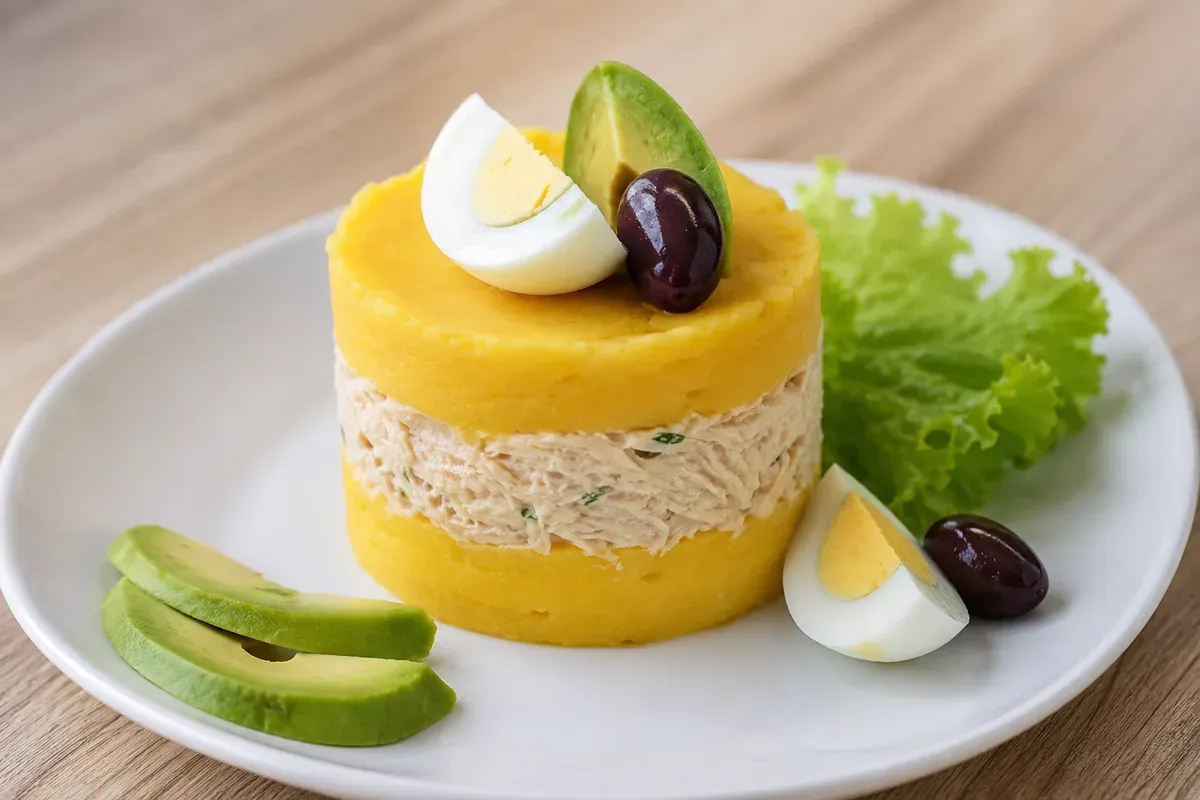
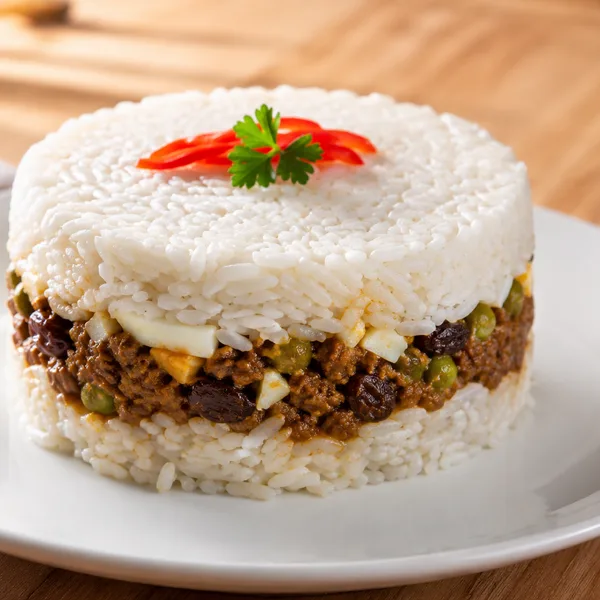
Only Peru would look at a boiled potato and decide it deserved architecture. Causa limeña is cold mashed potato — but mashed potato seasoned electric-yellow with ají amarillo and sharpened with lime, then pressed into layers around a creamy filling and slices of avocado, chilled, unmolded and cut like a cake. It's served at every celebration and every corner menú, it asks for no oven and no luck, and it might be the single best argument for Peru's claim as the potato's homeland: a dish where the tuber isn't the side, the starch, or the filler. It's the star, the structure and the color scheme.
The name comes with stories — the most repeated ties it to the independence wars, when women raised funds selling the dish "por la causa," for the cause; another version traces it to the Quechua kausay, "that which sustains life," an old name for the potato itself. Pick the story you like; Peruvians keep both in rotation.
In our house causa is chicken, not tuna — a hill some families will happily die on — and it appears at every birthday and fiesta because it travels well and looks like you tried harder than you did. We go heavy on the ají, the dough almost orange, because a pale causa is a sad causa. And here's the lovely thing: we eat it with the same word we'd use for the friend next to us. In Peruvian slang causa means "pal," brother, mate. The dish that feeds you and the person you share it with carry the same name — that's about as Peruvian as it gets.
The potato decides everything
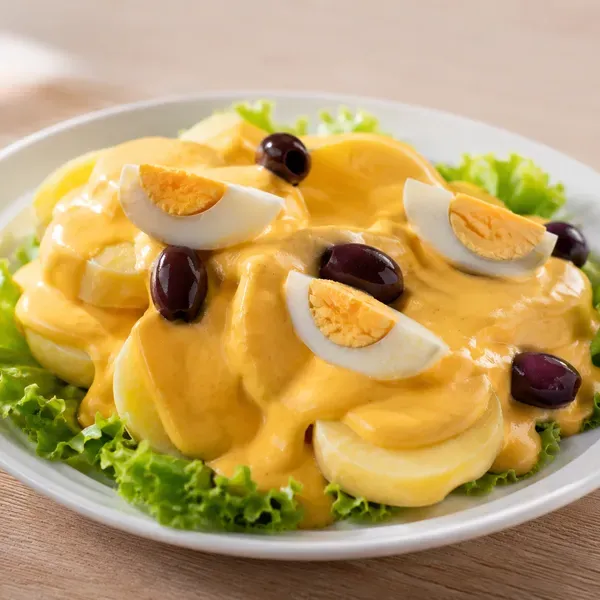
Causa stands or collapses on the potato variety. You need a dry, floury, golden-fleshed potato: papa amarilla in Peru, Yukon Gold abroad (the same casting call as our papa a la huancaína). Waxy salad potatoes make a gluey dough; bone-dry russets make a crumbly one. Two non-negotiable techniques regardless of variety: boil them in their skins so they don't drink water, and rice or mill them while hot — cold potato turns gummy under pressure. A potato masher works if you're thorough; a blender or food processor never, unless wallpaper paste was the goal.
The dough: taste like it's the whole dish, because it is
Ají amarillo paste for color and its fruity warmth, lime for the spark, oil for suppleness, salt with confidence and white pepper for seasoning that doesn't speckle the gold. Knead briefly — just to combine — and then taste seriously: the potato will be eaten cold, and cold mutes seasoning, so the warm dough should taste slightly over-vivid. If it tastes polite now, it will taste like nothing from the fridge. Yalpay kayta — remember this, as we say in the Quechua of Junín.
Season the dough until it's almost too much. Cold is coming for your flavor, and cold always collects.
Fillings: the classics and the line
The two canonical fillings are shredded chicken or tuna, each bound with mayonnaise, a little fine-diced red onion, lime and salt. Avocado joins as its own layer in nearly every version. Coastal variations swap in shrimp or crab and nobody objects; that's still causa. The dish has also become a canvas for cheffy reinvention — octopus causas, quinoa causas, deconstructed causas in glasses — which can be wonderful, but the home benchmark remains the one in this recipe: potato, filling, avocado, potato, in proportions where the potato wins.
The recipe
Ingredients
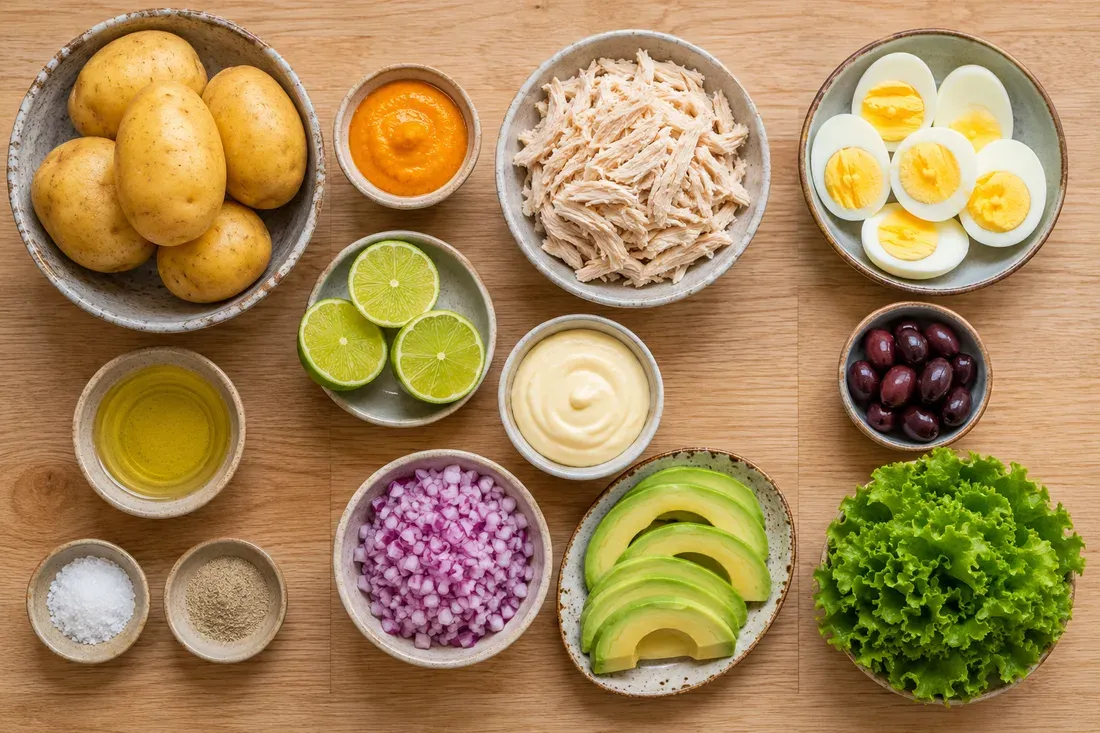
- 1 kg yellow potatoes (papa amarilla or Yukon Gold)
- 3–4 tbsp ají amarillo paste
- Juice of 2–3 limes
- 4 tbsp vegetable oil
- Salt · white pepper
Filling and assembly:
- 300 g cooked shredded chicken, or 2 cans of tuna, drained
- 4 tbsp mayonnaise · ¼ red onion in fine dice · lime and salt to taste
- 2 ripe avocados, in slices, with a squeeze of lime
- To garnish: 2 hard-boiled eggs, black olives, lettuce leaves
Method
- Boil in skins until a knife slides through, 20–25 minutes. Peel hot (a fork to hold, a knife to peel — highland hands skip the fork) and rice or mill immediately. Let cool to warm.
- Season the dough. Ají paste, lime, oil, salt, white pepper. Knead one minute to a smooth, pliable, uniformly golden dough. Taste and push it to vivid.
- Mix the filling. Chicken or tuna with mayo, onion, lime, salt. It should be moist enough to spread, not wet enough to slide.
- Assemble. Line a loaf pan or springform with plastic wrap (or oil a ring mold). Press in half the dough, level it flat. Filling in an even layer, then the avocado slices. Remaining dough on top, pressed gently and smoothed with a wet spatula.
- Chill at least 30 minutes — the rest sets the layers for clean slices.
- Unmold and serve cold. Slices cut with a wet knife, on lettuce, with egg quarters and olives. A ribbon of salsa criolla alongside never hurt anyone.
Troubleshooting, from experience
The dough is gummy. Wrong potato (too waxy), boiled without skins, or mashed cold. The texture can't be reversed — but pressed into a pan and pan-fried in slices the next day, gummy causa becomes excellent potato cakes. Peruvian kitchens waste nothing.
The slices collapse. Filling too wet, or no chill time. Drain tuna firmly, go easier on the mayo, and respect the half hour of fridge.
It tastes bland from the fridge. The cold tax, as warned. Rescue at the table: a squeeze of lime over each slice and a few grains of coarse salt.
What to serve it with
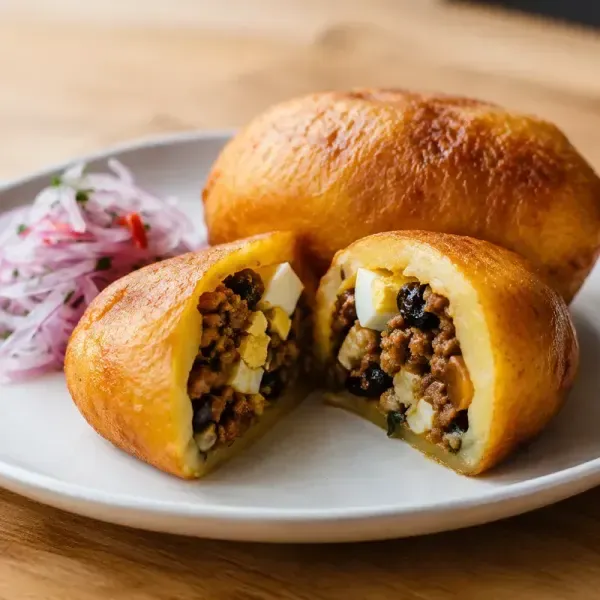
Causa opens a Sunday lunch the way huancaína does — and the two argue politely for the same slot before a main like ají de gallina or lomo saltado, with chicha morada in the pitcher as the bajativo — the drink that helps it all go down. In summer, a bigger slice with a salad is the whole meal: the rare party dish that's also weekday food.

Junior Quintana learned to cook from his mother, Lina, in Junín, in the central Peruvian Andes — a kitchen where chicha morada simmered every Sunday and there were always native potatoes with cheese and choclo on the table. He started Andean Kitchen to share the food he grew up with, in English and without shortcuts: every recipe cooked and tested at home, where it's really made. His favorite dish is, and probably always will be, pachamanca. See how we cook, test and photograph.
Did you cook this?
Tell me how it went — including what did not work. I read every one, and with your permission I will put it on this page, with your first name, for whoever comes next.