
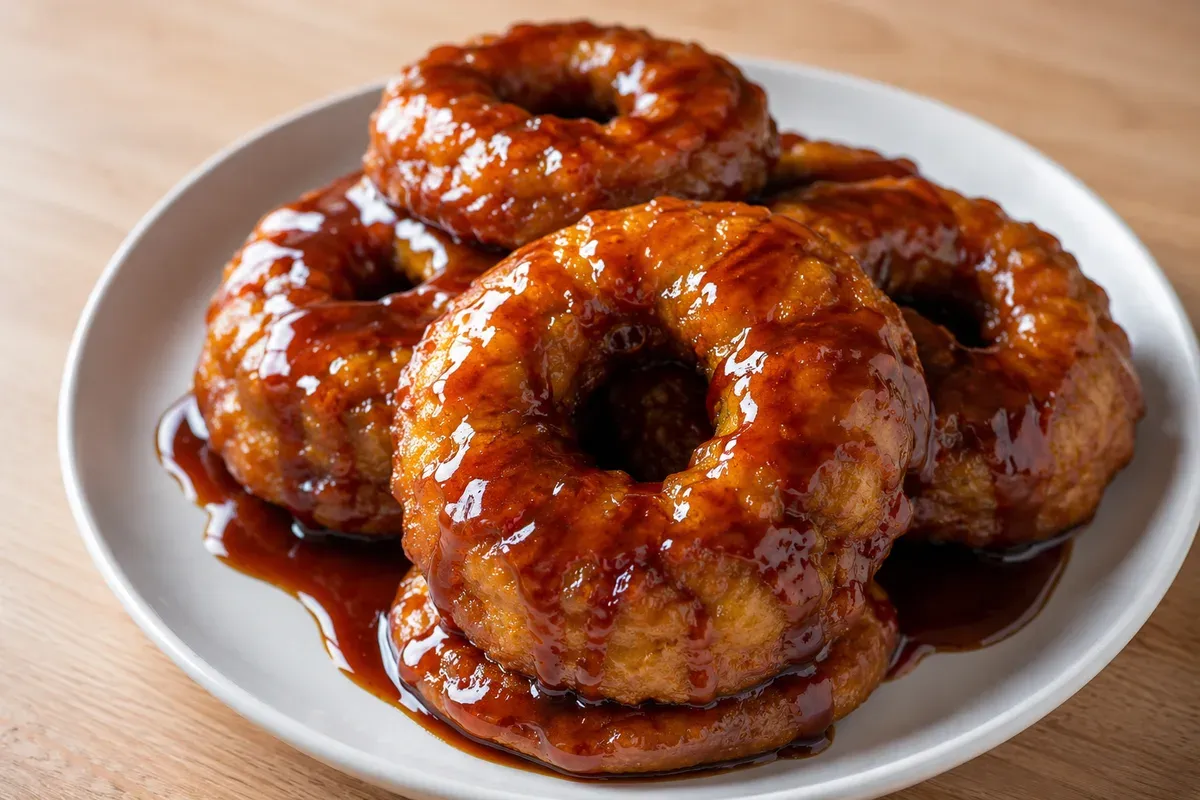
Every country fries dough and calls it happiness; Peru's version just happens to be better engineered. Picarones are rings of yeasted dough built on a purée of squash and sweet potato, fried to order and drowned in chancaca — a dark syrup of raw cane sugar, spices and orange peel. The vegetables aren't a health gesture: they're structure. They keep the crumb moist and custardy inside while the outside crisps, which is why a good picarón stays tender long after a regular doughnut would have turned to cardboard.
In Peru you rarely make them at home, because the picaronera at the corner does it better: one hand perpetually wet, grabbing dough, flicking a perfect ring into the oil in one motion that takes years to learn. But the home version is absolutely achievable — you just need to accept a sticky dough, learn the wet-hand trick, and not fear the fryer. This recipe walks you through all three.
Here, picarones belong to the cold months and the holidays. They show up at New Year and at every town fiesta, the smell of frying dough and warm chancaca pulling a line down the street. That flick of the wrist the picaronera makes look effortless? It takes years of agarrarle la maña — "getting the knack," as we say. Making them at home isn't about matching her; it's about bringing a little of that street corner into your own kitchen.
The dough: stickier than feels right
The biggest mental hurdle for bakers is that picarón dough is wrong by bread standards: so soft and wet it can't be kneaded on a counter, only beaten in the bowl by hand or with a spoon until elastic. That hydration, plus the vegetable purée, is what gives the open, airy crumb. If your dough is firm enough to roll, you've added too much flour, and your picarones will be bready instead of light.
The anise is non-negotiable — it's the perfume that says "picarón" before you've taken a bite. Traditional recipes steep anise seeds in the vegetables' cooking water; ground anise stirred into the dough works just as well.
If the dough doesn't stick to your hands, it's not picarón dough yet.
Chancaca: the syrup is half the dish
Chancaca is unrefined whole cane sugar sold in dense blocks — the same product known as panela in Colombia and piloncillo in Mexico, either of which works perfectly abroad. Melted with cinnamon, clove and orange peel (and, in traditional kitchens, a fig leaf, which adds a faint coconut note), it becomes a syrup that is deep and almost smoky rather than simply sweet. Brown sugar is an emergency substitute that will get you 70% of the way; maple syrup, tempting as it is, takes the dish somewhere else entirely.
The recipe
Ingredients
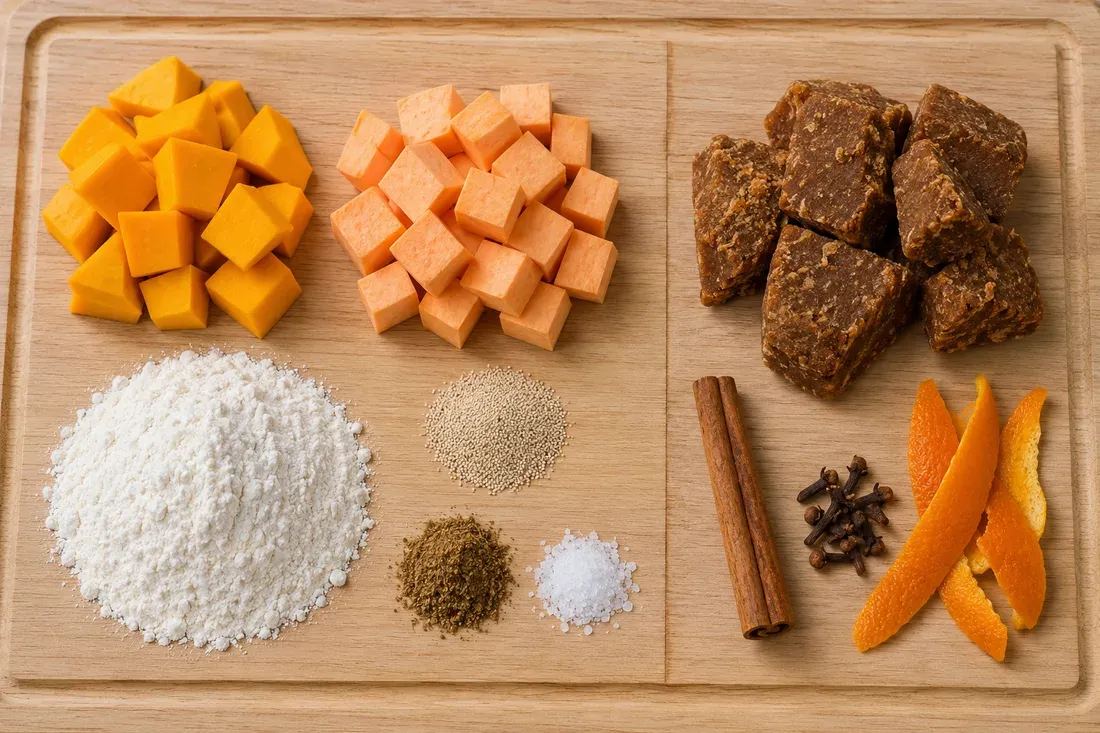
- 300 g squash (zapallo macre in Peru; butternut works great), peeled and cubed
- 300 g sweet potato (camote), peeled and cubed
- About 500 g all-purpose flour — add by feel, see method
- 10 g dry yeast + 1 tbsp sugar
- ½ tsp ground anise, or 1 tsp anise seeds steeped in the cooking water
- Pinch of salt
- Neutral oil for deep frying (at least 1 liter)
For the chancaca syrup:
- 400 g chancaca, panela or piloncillo, chopped
- 1½ cups water · 1 cinnamon stick · 2 cloves · 2 strips orange peel · 1 fig leaf (optional, traditional)
Method
- Cook the vegetables. Boil squash and sweet potato until completely soft, 15–20 minutes. Reserve the cooking water. Mash to a smooth purée and let cool to warm.
- Wake the yeast. Dissolve yeast and sugar in ½ cup of the warm (not hot) cooking water. Wait 10 minutes until foamy.
- Build the dough. Mix purée, yeast mixture, anise and salt. Add flour a cup at a time, beating hard with your hand or a sturdy spoon. Stop when you have a very soft, sticky, stretchy dough that pulls in ropes — you may not need all the flour. Beat 5 more minutes to develop elasticity.
- Rise. Cover and leave somewhere warm for 1–2 hours, until doubled and visibly bubbly. (In a cold highland kitchen this can take longer — hawkalla kay, as we say in the Quechua of Junín: be patient, not more yeast.)
- Make the syrup. Simmer all syrup ingredients 20 minutes until slightly thickened — it thickens more as it cools. Strain and keep warm.
- Shape and fry. Heat oil to 180 °C (a scrap of dough should sizzle and rise immediately). Set a bowl of water beside you. With wet fingers, scoop an egg-sized piece of dough, poke your thumb through the middle, stretch gently into a ring, and slide it into the oil. Fry 1–2 minutes per side to a deep golden brown. Re-wet your hands every single time.
- Serve immediately. Drain for a few seconds, stack 3–4 per plate, and pour warm syrup over generously. Eat them calientitos — the diminutive doing the work, meaning properly hot and straight from the pan. Picarones wait for no one.
Troubleshooting, from experience
The rings sank and stayed dense. Under-risen dough or oil not hot enough. The dough must be visibly bubbly before frying, and the oil must sizzle on contact.
Dark outside, raw inside. Oil too hot. Drop to 175 °C and fry a few seconds longer per side.
I can't shape rings — the dough just sticks. Wetter hands. Not damp: dripping. And don't aim for perfect circles; street picarones are gloriously irregular, and the craggy bits hold the most syrup.
What to serve them with
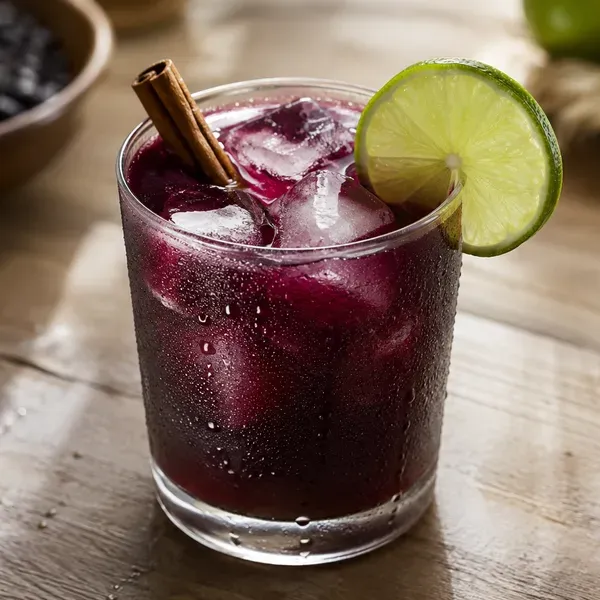
Picarones are an event on their own, but in Peru they close big plates: after lomo saltado on a Sunday, or alongside a cold glass of chicha morada — fried dough, dark syrup and purple corn is about as Peruvian as an afternoon gets. If you're new to the pantry behind these recipes, start with our guide to ají amarillo.

Junior Quintana learned to cook from his mother, Lina, in Junín, in the central Peruvian Andes — a kitchen where chicha morada simmered every Sunday and there were always native potatoes with cheese and choclo on the table. He started Andean Kitchen to share the food he grew up with, in English and without shortcuts: every recipe cooked and tested at home, where it's really made. His favorite dish is, and probably always will be, pachamanca. See how we cook, test and photograph.
Did you cook this?
Tell me how it went — including what did not work. I read every one, and with your permission I will put it on this page, with your first name, for whoever comes next.