
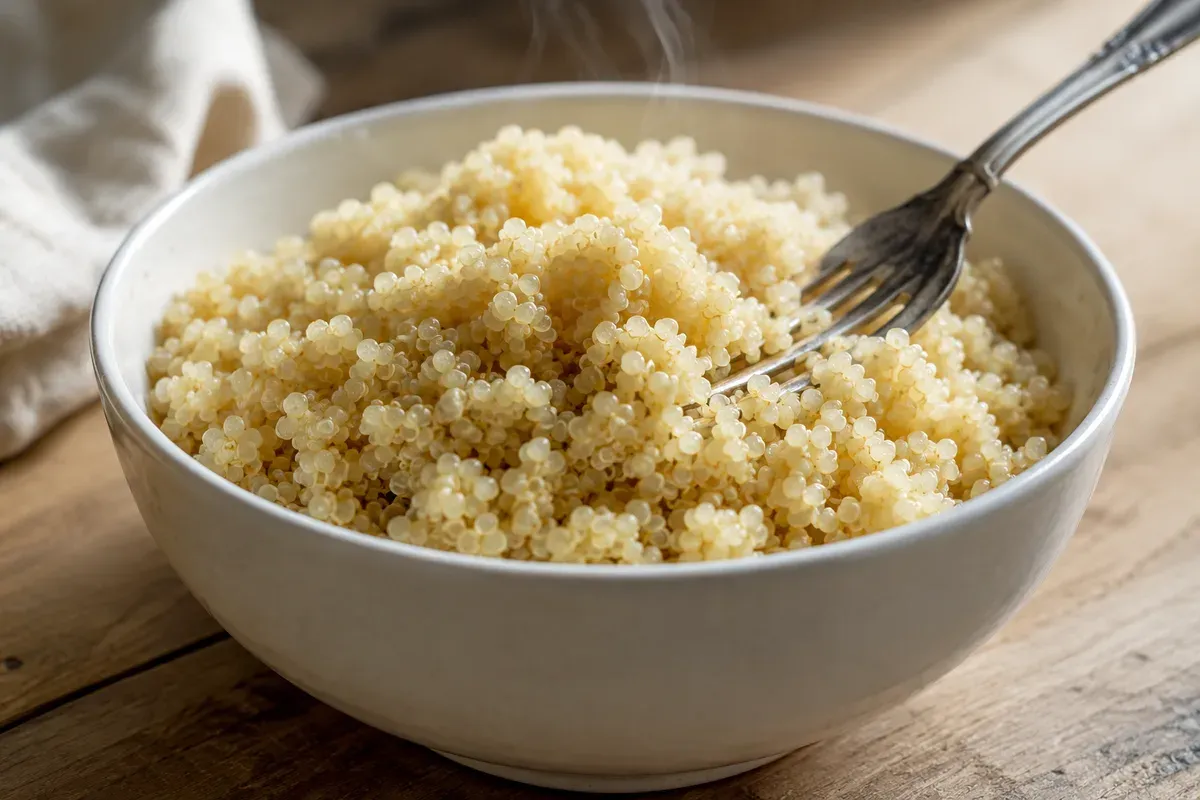
Quinoa — kinwa, its name in Quechua — has a public-relations problem that quinoa didn't create. Half the world tried it once, found it bitter or soggy or both, and decided the Andes had been overhyping their grain for five thousand years. The Andes were not. The bitterness has a name, a purpose and a thirty-second fix; the sogginess is a ratio error printed on half the packages sold abroad. We grow up eating quinoa weekly here in the highlands — in soup, in breakfast porridge, under a stew — and nobody, ever, eats it bitter. Here's the whole method, with the reasons attached.
At our market the quinoa sits in open sacks — white, red, black, and the speckled mix — sold by the kilo and bien barata, dirt cheap, stacked next to the potatoes like the staple it is rather than the luxury it became abroad. My family buys white for soup and the darker grains for stews, where their firmer chew holds up. Nobody here calls it a superfood; we call it lunch.
Why quinoa is bitter: saponins
Every quinoa seed grows wearing a coat of saponins — bitter, soapy-tasting compounds the plant produces to discourage birds and insects from eating its future. Brilliant for the plant; terrible on your plate. Saponins are water-soluble, which is the entire trick: they rinse off. Most commercial quinoa is sold "pre-washed," but the claim is optimistic — processing removes some saponins, transport and storage leave residue, and the only reliable test is your own tap. If rinsing your quinoa produces foam — and it usually does — that foam is saponin, and every bubble of it was headed for your dinner. ¿Intyindikichu manachu? — "got it, or not?", as we'd say in the Quechua of Junín.
If the rinse water foams, that foam is the bitterness leaving. Keep going until it stops.
How to rinse quinoa properly
Fine-mesh sieve (the grains escape through a colander), cold running water, and — this is the part people skip — your fingers actively rubbing the grains against the mesh for one to two minutes. Passive rinsing rinses passively. You're done when two things are true: no foam, clear water. In traditional households the quinoa is rubbed in a bowl through several changes of water instead; same chemistry, more nostalgia.
The ratio: 1 to 1.5, not 1 to 2
Package instructions abroad love the rice ratio — one cup quinoa, two cups water — and that ratio is where mushy quinoa comes from. Quinoa is smaller than rice and cooks faster; it needs 1 part quinoa to 1.5 parts liquid. The extra half cup on the package label doesn't get absorbed so much as it waterlogs. Broth instead of water upgrades everything, especially if the quinoa is headed somewhere savory.
The Andean upgrade: toast first
The step that separates highland quinoa from everyone else's: after rinsing and draining, the wet quinoa goes into the dry pot over medium heat for three or four minutes, stirring, until it dries out and starts to smell like toasted nuts. This little toast deepens the flavor remarkably and helps the grains stay separate. It's the same instinct as toasting rice for pilaf — and it's how the grain is treated in the place that's been cooking it longest.
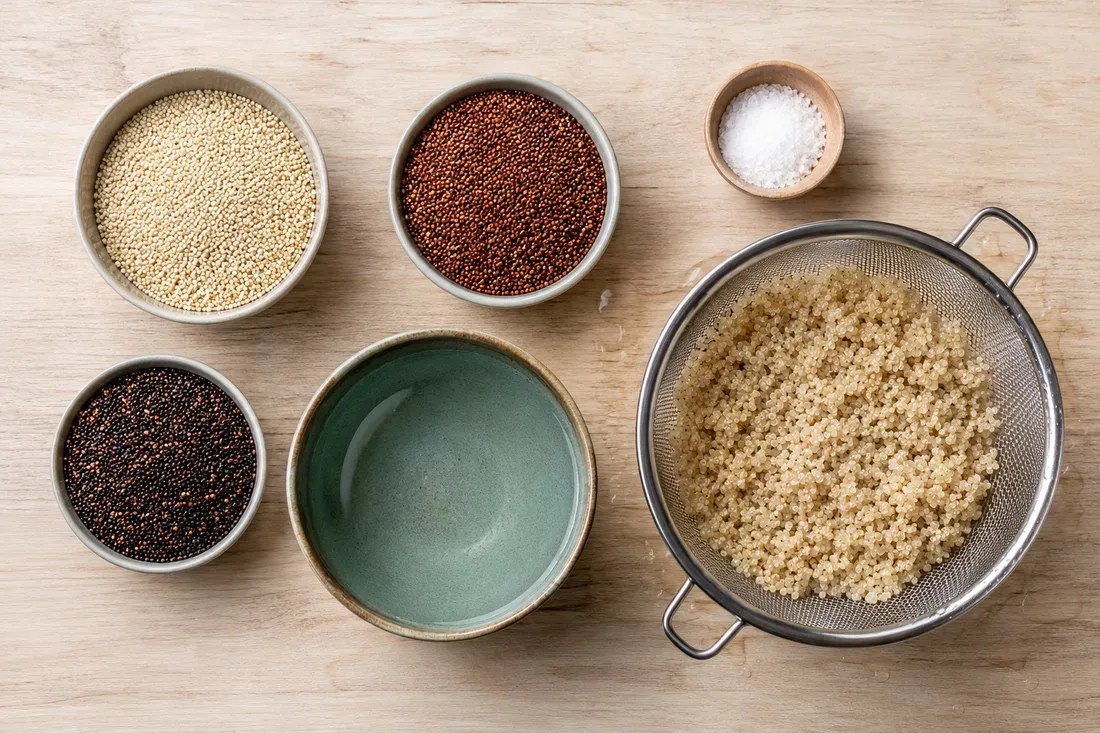
The method
Ingredients
- 200 g (1 cup) quinoa — white for fluffy, red or black for chewier and nuttier
- 360 ml (1½ cups) water or broth
- ½ tsp salt
Steps
- Rinse in a fine-mesh sieve, rubbing with your fingers under cold water, 1–2 minutes — until no foam and clear water. Drain well.
- Toast. Wet quinoa into the dry pot, medium heat, stirring 3–4 minutes until dry and nutty-smelling.
- Simmer. Add liquid and salt, bring to a boil, drop to the lowest flame, lid on, 15 minutes. No peeking, no stirring.
- Rest. Off the heat, lid on, 5–10 minutes — the rest finishes the absorption and firms the grains. Fluff with a fork. Every grain should display its white spiral — simple as that, causa.
Quinoa troubleshooting, from experience
Still bitter after cooking. The rinse lost. There's no post-cook fix; pair it with something assertive today (a stew, ají de gallina's sauce) and rinse harder tomorrow.
Mushy. The 1:2 ratio strikes again, or the lid came off into a boil. Salvage by spreading the quinoa on a tray to steam off — it firms surprisingly well.
Crunchy centers. Underdone or the flame too high (liquid evaporated before absorbing). Add 3 tbsp water, lid back on, 5 more minutes on low.
At altitude. Our daily reality: above 3,000 meters, count on 20–22 minutes of simmer instead of 15. The spiral, as always, is the truth.
Where to take it next
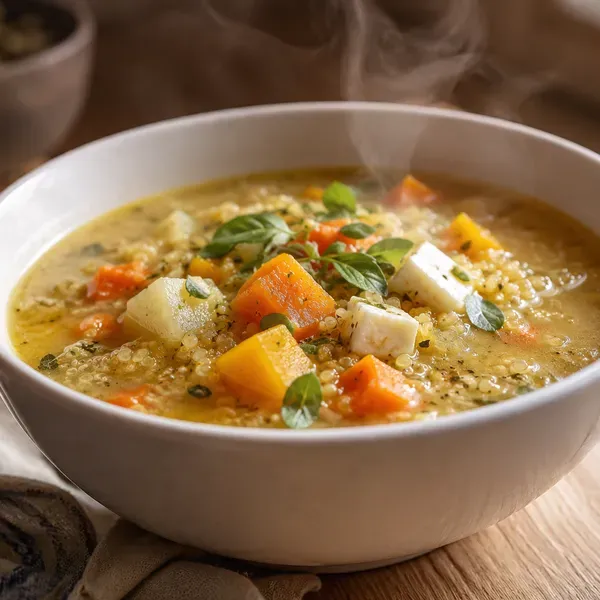
Cooked quinoa is a week of breakfasts and sides, but its oldest job is soup: our sopa de quinua is the everyday dish this guide was written to serve. It also slips under lomo saltado in place of rice for a fully Andean plate, and holds a salsa criolla better than most grains. Once the rinse is reflex, quinoa stops being a health food and becomes what it's always been here: groceries.

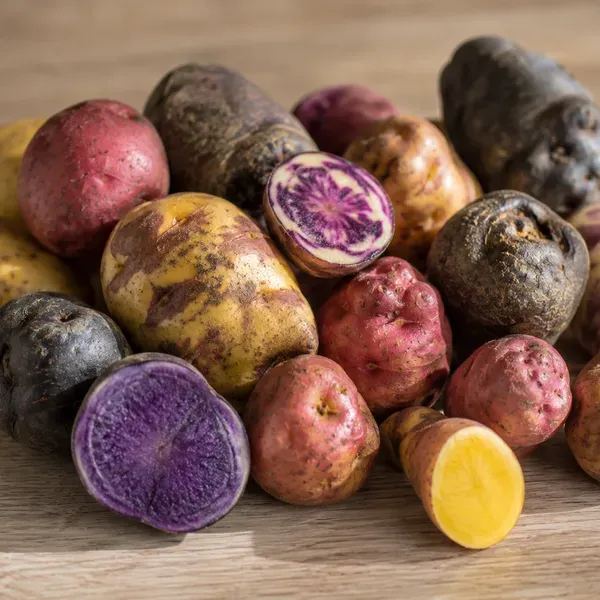
Junior Quintana learned to cook from his mother, Lina, in Junín, in the central Peruvian Andes — a kitchen where chicha morada simmered every Sunday and there were always native potatoes with cheese and choclo on the table. He started Andean Kitchen to share the food he grew up with, in English and without shortcuts: every recipe cooked and tested at home, where it's really made. His favorite dish is, and probably always will be, pachamanca. See how we cook, test and photograph.

Did you cook this?
Tell me how it went — including what did not work. I read every one, and with your permission I will put it on this page, with your first name, for whoever comes next.