
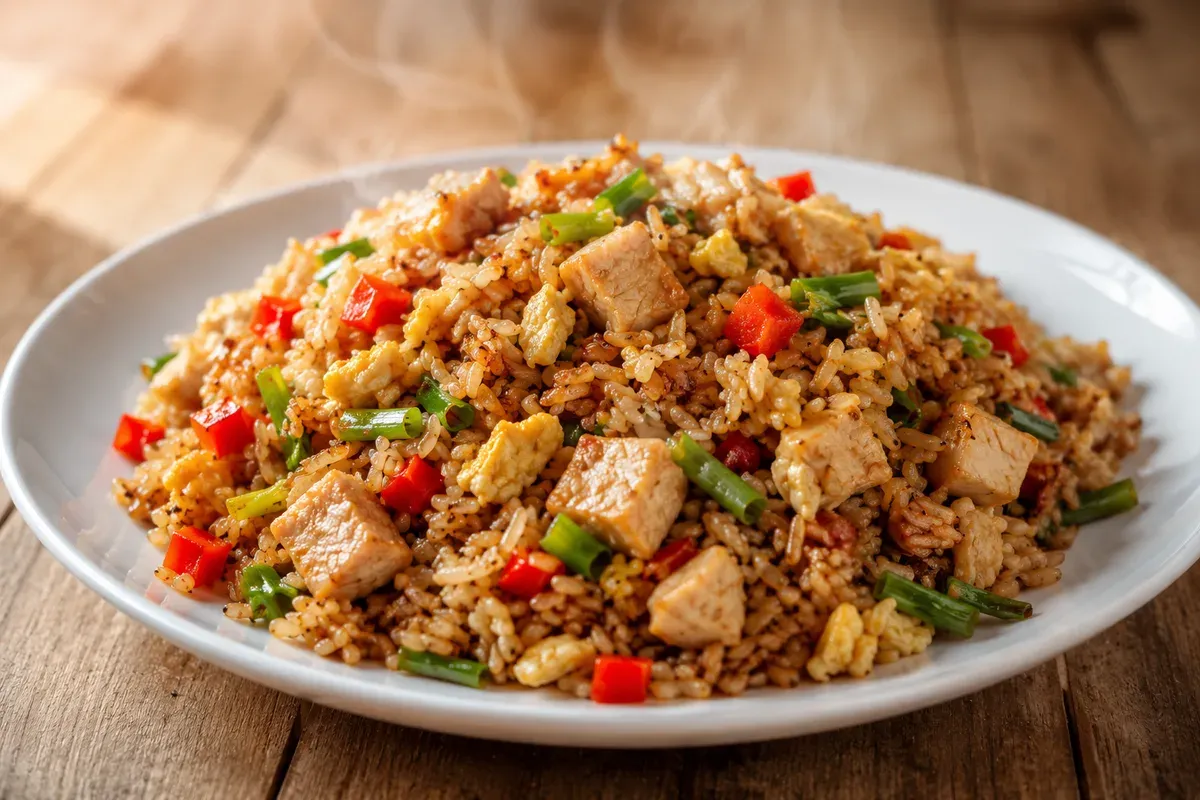
Our homepage promised you the chifa story, and arroz chaufa is its everyday chapter. The Cantonese immigrants who gave Peru lomo saltado also gave it the chifa — the Chinese-Peruvian restaurant, named from the Cantonese for "to eat rice" — and chaufa is the chifa's heartbeat: fried rice rebuilt with Peruvian appetite. Today there are chifas in towns too small for a pharmacy, soy sauce (sillao) lives in every Peruvian pantry, and "un chaufa" is the national answer to the question of what to do with yesterday's rice.
Every neighborhood chifa has its regular, and at mine the cook doesn't ask anymore — pollo chaufa, extra scallion, the ticket already half-written before I sit down. That's the real chifa contract: you don't so much order as show up and trust the wok to remember you.
The two laws of chaufa
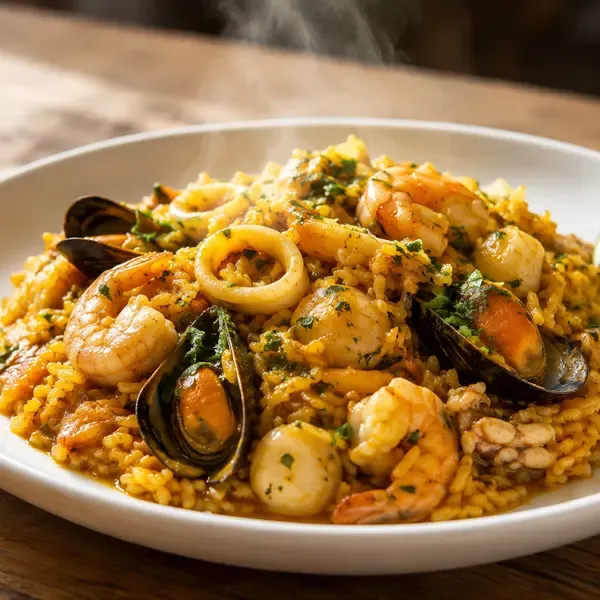
Law one: yesterday's rice. The same physics as our arroz con mariscos — cold, dry, day-old grains separate and char; fresh rice steams into a clump with ambitions of porridge. Law two: maximum heat, minimum time. The wok (or your widest pan) should be smoking before anything lands, and the whole dish takes twelve minutes including hesitation. The signature touches are the egg ribbon — a thin omelet rolled and sliced, folded in at the end rather than scrambled into the rice — and soy sauce poured down the hot metal so it toasts on contact, the same flame moment lomo saltado taught you.
Chaufa is not a recipe so much as a reflex: cold rice, hot metal, and whatever the fridge confesses.
Which sillao to buy
Not all soy sauce behaves the same in a wok, and Peruvian sillao is its own thing — a little sweeter and less aggressively salty than what most kitchens abroad have on the shelf. If you are shopping outside Peru:
- Chinese light soy sauce. The closest match and the one to reach for. It is thinner and saltier than dark soy, which is what you want here.
- Japanese shoyu. Works, but it is saltier and more fragrant. Start with two thirds of what the recipe says and taste before adding more.
- Dark or thick soy sauce. Avoid it on its own. It is molasses-heavy and will turn the rice muddy brown without adding the salt the dish needs.
What every chifa does differently
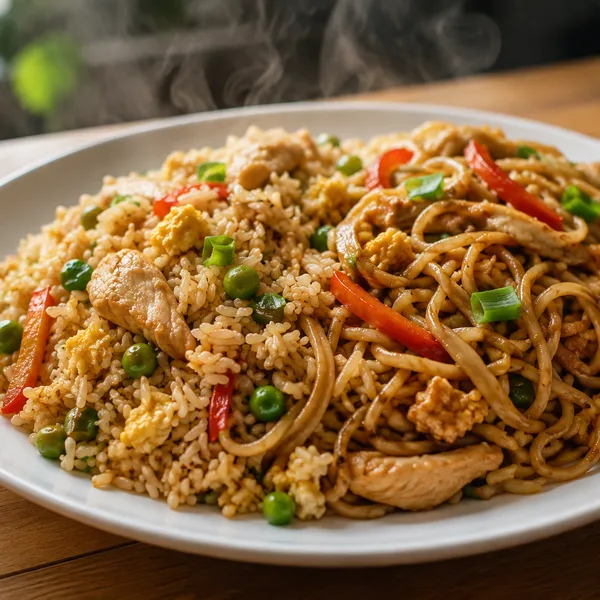
Chaufa is a category, not a recipe, and the menu board proves it. Chaufa de pollo is the default. Chaufa de carne swaps in beef. Chaufa mixto takes both and usually adds shrimp. Chaufa de mariscos goes all seafood. And the aeropuerto puts chaufa on half the plate and noodles on the other.
What none of them change is the base: cold rice, the egg ribbon, scallion, and soy sauce hitting hot metal. Everything above that line is negotiable and every chifa negotiates it differently.
The recipe
Ingredients
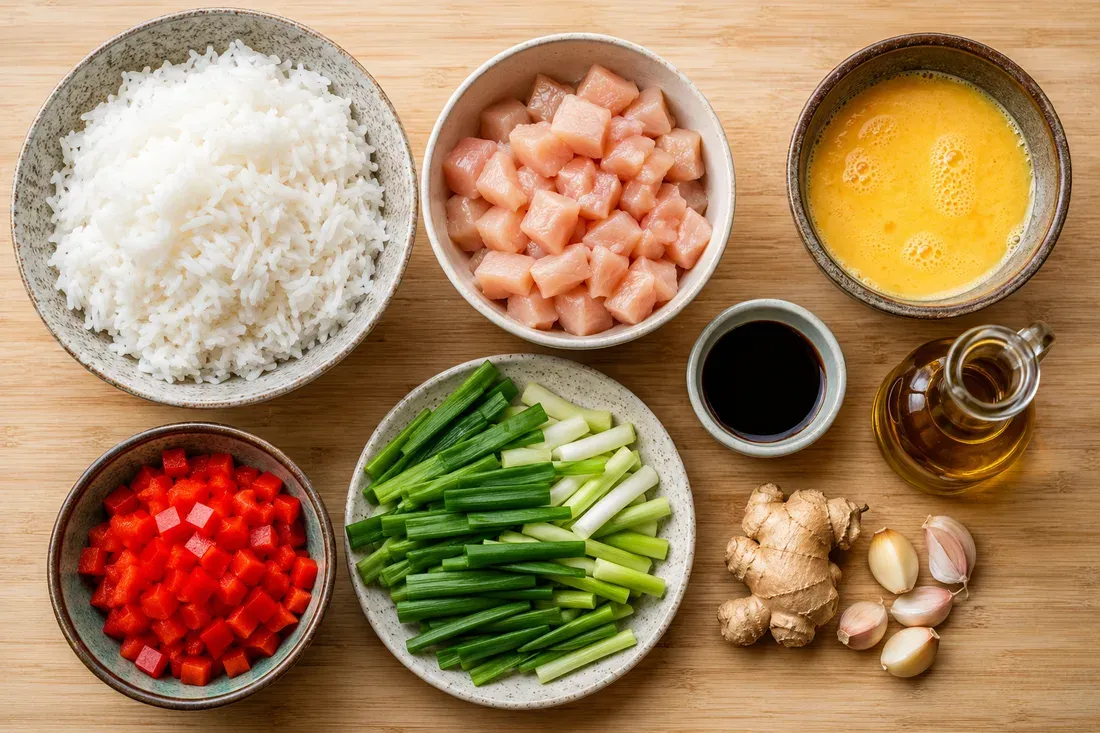
- 4 cups cooked rice, cold, day-old, clumps pre-broken with wet hands
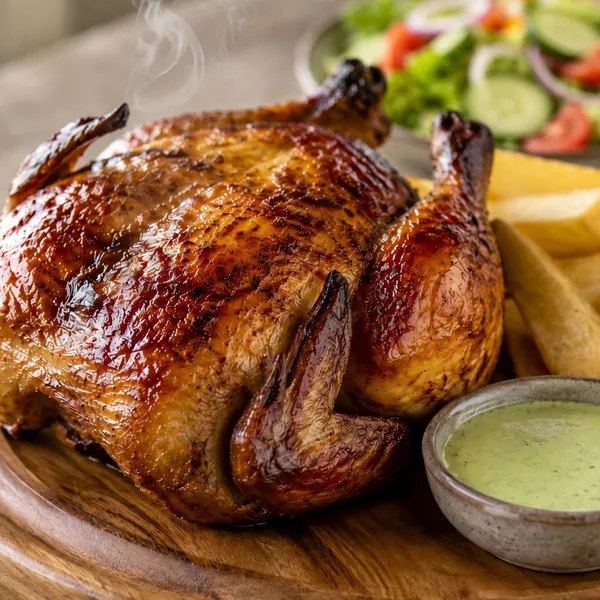
- 300 g chicken breast in small dice — or shredded leftover pollo a la brasa, the great chaufa upgrade
- 3 eggs, beaten
- 4 tbsp soy sauce (sillao) · 1 tsp sesame oil
- 2 cm ginger, minced · 2 garlic cloves, minced
- 1 cup scallions in 2 cm batons · 1 red bell pepper, diced
- Vegetable oil · pinch of sugar · black pepper
Method
- Egg ribbon first. Thin omelet in the hot oiled wok, rolled, sliced into ribbons, reserved.
- Sear the chicken, 2 minutes over everything your stove has. Ginger and garlic, 30 seconds.
- Rice in. Break, toss, press against the metal, toss again — 3 minutes until grains separate and catch char freckles.
- The pour. Soy sauce down the hot side, sesame oil, sugar, pepper. Toss 1 minute while it toasts and coats.
- Finish. Scallions, bell pepper, egg ribbons; 30 seconds; plates. Chaufa cools like gossip spreads — fast — so eat accordingly.
Troubleshooting, from experience
It's mushy. Fresh rice or low heat — the two original sins, usually together.
It's salty. Sillao brands vary wildly; add the last spoonful only after tasting.
No wok smoke flavor. The pan was crowded. Two batches beats one sad steam bath.
What to serve it with
Chaufa stands alone or beside its chifa siblings; at home it's the destiny of every leftover on this site — yesterday's pollo, the last of the anticucho meat, even lomo saltado remnants folded in at the end. Chicha morada on the table; the chifa would also offer you Inca Kola, and we would understand.
Questions people ask
Why does my chaufa come out mushy? The rice was too fresh. Warm rice is still full of water and it steams in the pan instead of frying, so the grains stick together. Cook the rice the day before and leave it uncovered in the fridge — the drying out is the whole point, not an accident of leftovers.
What is the egg ribbon and why not just scramble it in? The egg is cooked separately as a thin omelet, rolled and sliced into strips, then folded through at the end. Scrambled into the rice it coats every grain and dulls the texture. Kept as ribbons it stays a distinct thing you can see and bite.
Do I need a wok? No, but you need the widest pan you own and more heat than feels reasonable. The rice has to sit in a thin layer and make contact with hot metal. A crowded pan steams, and a steamed chaufa is just warm rice.
When does the soy sauce go in? Poured around the edge of the hot pan rather than over the rice, so it hits the metal and toasts for a second before it touches anything. That flash of caramelization is most of what separates chaufa from fried rice with soy sauce stirred through it.

Junior Quintana learned to cook from his mother, Lina, in Junín, in the central Peruvian Andes — a kitchen where chicha morada simmered every Sunday and there were always native potatoes with cheese and choclo on the table. He started Andean Kitchen to share the food he grew up with, in English and without shortcuts: every recipe cooked and tested at home, where it's really made. His favorite dish is, and probably always will be, pachamanca. See how we cook, test and photograph.
Did you cook this?
Tell me how it went — including what did not work. I read every one, and with your permission I will put it on this page, with your first name, for whoever comes next.