
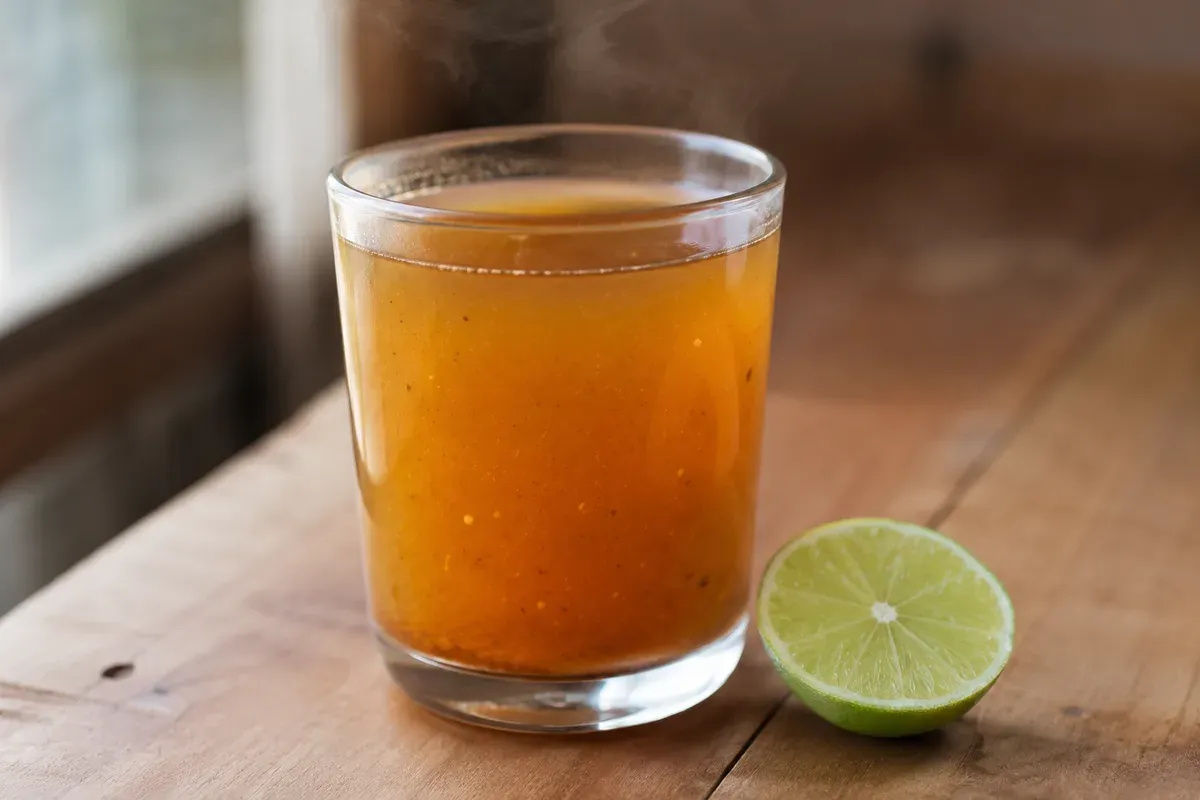
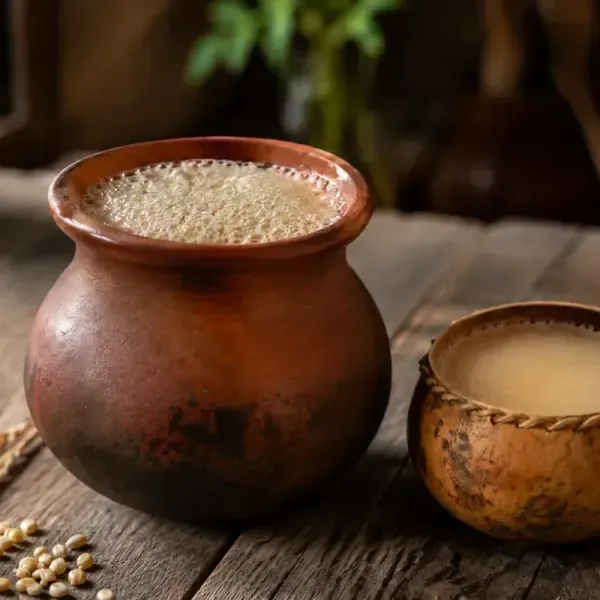
Before Peru's cities wake up properly, the emolienteros are already on their corners: a cart, a row of tall glass bottles glowing amber and green under a bulb, and two or three huge kettles steaming into the cold. For about the price of a bus fare, the emolientero pours a tall glass in a choreography worth arriving early for — a base of hot barley-and-herb brew, a ribbon of slippery aloe, a squirt of lime, maybe alfalfa extract if you ask for it "completo" — stretching the pour high between vessels so it lands frothy. Construction workers drink it at 5 a.m., students at 7, and everyone with a sore throat at all hours. It is breakfast, medicine cabinet and social institution in one glass.
Emoliente barely exists in English-language food writing, which is exactly why we're writing it down. The home version requires nothing exotic beyond a visit to a Latin grocery or herb shop, and the result is one of the most comforting hot drinks we know: silky from flaxseed, toasty from barley, herbal without being medicinal, and bright at the end from the lime.
I still remember walking out of an evening class into that particular bone-deep Andean cold, the bus stop a block away, and ducking over to the emolientero's cart with a friend. One steaming glass each — completo, with the aloe and the lime — and the warmth came back into us al toque, on the spot. If you're ever in Peru on a freezing morning, don't think twice: go find the cart. It's the cheapest comfort there is.
What's actually in the kettle
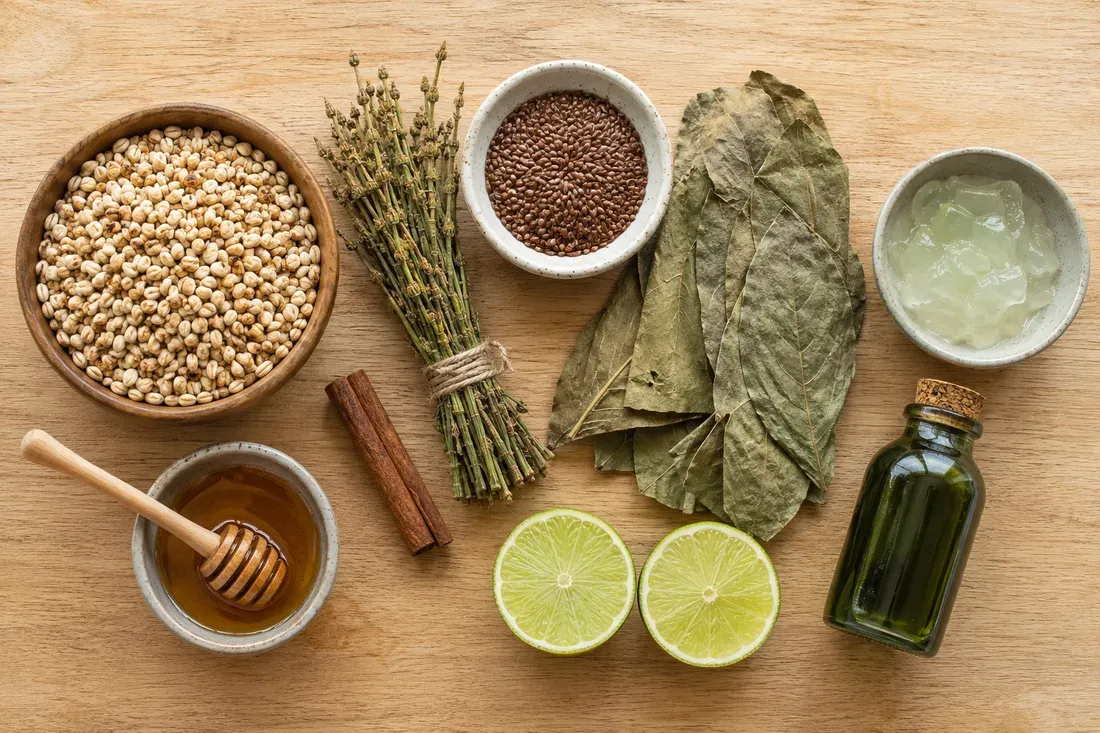
Every emolientero guards a personal formula, but the architecture is shared. The base is toasted barley (cebada), which gives the drink its color and roasty backbone, plus whole flaxseed (linaza), whose soluble fiber turns the brew gently thick and silky — the texture that makes emoliente emoliente (the word itself means "softening, soothing"). The herbal chorus varies: horsetail (cola de caballo) and plantain leaf (llantén) are near-universal; boldo, chanca piedra and others rotate by cart and by what the drinker says ails them. And the finishers go in at the glass, not the kettle: lime always, aloe gel (sábila) for the famous slippery threads, alfalfa extract for the green boost.
The flaxseed is the soul: it's what turns an herbal tea into something with body, almost a warm drink you can chew.
A word of honesty about the health halo: Peruvians attribute everything to emoliente — digestion, liver, kidneys, colds, mood. The herbs in it have long traditions of use, and a warm, hydrating, fiber-rich drink at dawn is genuinely kind to a body; but we make no medical claims here, and if you're pregnant or take medication, check the specific herbs with your doctor as you would any herbal preparation. We drink it because it's delicious and it's ours.
Shopping outside Peru
Everything hides in plain sight: pearled barley in any supermarket, whole flaxseed in the baking or health aisle, and the dried herbs — horsetail, plantain leaf, boldo — at Latin groceries, herbalists or online tea shops. Aloe gel for the glass can be fresh (the clear inner gel of a leaf, rinsed of its yellow latex) or bottled food-grade. None of it is expensive; an emoliente habit costs less than a tea habit.
The recipe
Ingredients
- 100 g barley
- 2 tbsp whole flaxseed
- 2.5 liters water
- 1 small handful dried horsetail (cola de caballo)
- 1 small handful dried plantain leaf (llantén) or boldo — optional, traditional
- 1 cinnamon stick
- Sugar or honey, to taste
- Juice of 2 limes, at the glass
- Optional, at the glass: a spoonful of aloe gel · a splash of alfalfa extract
Method
- Toast the barley in a dry pan, medium heat, stirring, until golden brown and smelling like fresh bread — about 5 minutes. This is the flavor step; pale barley makes pale emoliente.
- Simmer everything. Barley, flaxseed, herbs and cinnamon into the water. Bring to a boil, then a gentle simmer, partly covered, 35–40 minutes. The liquid will turn amber and visibly silky.
- Strain and sweeten while hot, through a fine sieve. Press the solids gently to release the last of the flax silkiness.
- Pour the street way. Glass by glass: emoliente steaming, a strong squeeze of lime (watch it brighten), aloe and alfalfa if you're going completo. Pouring from height between two cups froths it like the cart does.
Troubleshooting, from experience
It's too thick, almost gelatinous. Generous flaxseed or a long simmer. Thin with hot water — carts do exactly this all morning as the kettle reduces.
It tastes like lawn. Heavy hand with the herbs. The barley should lead; herbs are the chorus, not the soloists. Halve them next batch.
It separated in the fridge. Normal — flax settles. Reheat gently and stir; emoliente keeps 2–3 days and reheats beautifully, which is how home drinkers actually manage it.
What to serve it with
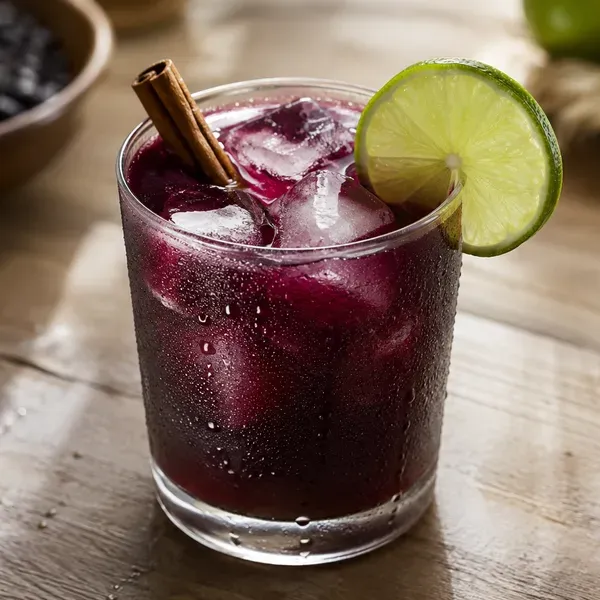
On the street, emoliente partners with pan con chicharrón or a tamal at dawn — and a spoonful of salsa criolla on that chicharrón completes the corner trinity. At home it's the cold-night drink, the cousin of chicha morada for the opposite weather: chicha for the sunny lunch, emoliente for the freezing morning. In the highlands where we live, that means emoliente season never really ends.

Junior Quintana learned to cook from his mother, Lina, in Junín, in the central Peruvian Andes — a kitchen where chicha morada simmered every Sunday and there were always native potatoes with cheese and choclo on the table. He started Andean Kitchen to share the food he grew up with, in English and without shortcuts: every recipe cooked and tested at home, where it's really made. His favorite dish is, and probably always will be, pachamanca. See how we cook, test and photograph.
Did you cook this?
Tell me how it went — including what did not work. I read every one, and with your permission I will put it on this page, with your first name, for whoever comes next.