
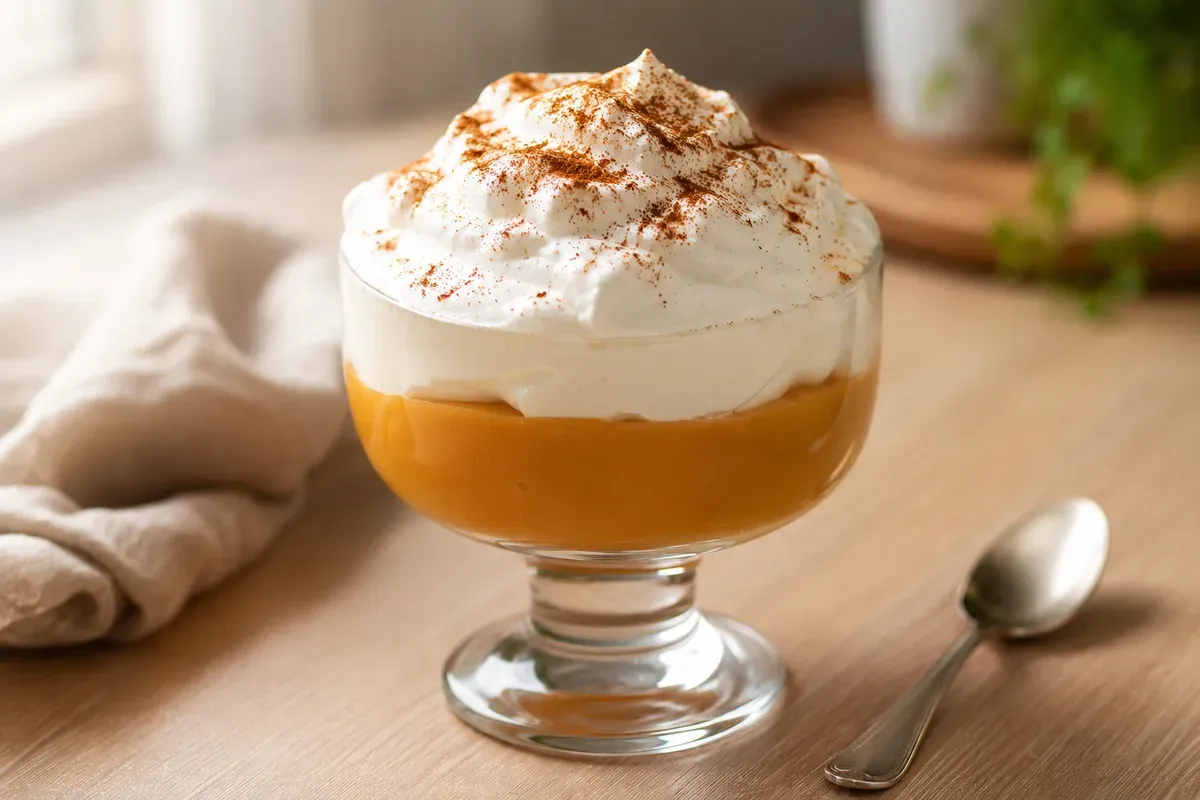
Peru's most romantic dessert comes with its own love story attached. In the 1800s, the Lima writer José Gálvez tasted the dessert his wife Amparo Ayarza made — a golden cream of slow-cooked milks under a cloud of port-wine meringue — and declared it "soft and sweet as the sigh of a woman of Lima." The name stuck: suspiro a la limeña, the limeña's sigh. Whether the story is precisely true matters less than how perfectly it fits: this is a dessert engineered for swooning, served in small glasses because more would be a medical event, and beloved across Peru as the dressed-up finale that picarones are too street-smart to be.
Under the romance sits real technique — two techniques, actually, stacked. The base is manjar blanco, Peru's denser, eggier cousin of dulce de leche, cooked slowly from condensed and evaporated milk and enriched with yolks. The crown is an Italian meringue made with port wine syrup instead of plain sugar syrup — the detail that separates suspiro from every other caramel-and-meringue dessert on the continent. Neither step is hard; both punish impatience, which is why we'll be specific about the moments that matter.
This is not an everyday dessert in a highland house — it's a "we have something to celebrate" dessert, the one that comes out for a baptism or an anniversary, when someone is willing to stand at the pot and stir for half an hour. It is gloriously, unapologetically empalagoso — so sweet it borders on too much — which is exactly why the glasses are small and the meringue is the law. One spoonful past your limit and even a Peruvian sweet tooth quietly puts down the spoon.
The base: manjar blanco is stirring, not stirring trouble
Both milks into a heavy pot, medium-low flame, and then the meditative part: thirty to forty minutes of near-constant stirring while the mixture darkens from cream to pale caramel and thickens until your spoon briefly bares the bottom of the pot. There's no shortcut that doesn't show — high heat scorches the milk sugars and the burnt note never leaves. (Yes, you could open a can of dulce de leche; the yolk-enriched, vanilla-scented result would be a different and lesser dessert, and any limeña would clock it in one spoonful.) The yolks go in off the heat, tempered — a spoonful of hot cream whisked into the yolks first, then everything back together — and the base gets a final gentle few minutes to thicken without ever boiling, because boiled yolks mean sweet scrambled eggs.
"Soft and sweet as the sigh of a limeña" — the rare dessert whose marketing was written by a poet, about his wife.
The crown: meringue with a wine cellar
The port syrup is the signature move. Sugar and port boil together to soft-ball stage — 118 °C on a thermometer, or the old test: a drop in cold water gathers into a soft, pliable ball — and the hot syrup pours in a thin thread into whites at soft peaks while the mixer runs. The result is a meringue that's glossy, stable, faintly blushed and tasting quietly of wine: an adult cloud. No port? A sweet sherry or muscatel stands in honorably. The alcohol largely cooks off in the syrup; what stays is perfume.
The recipe
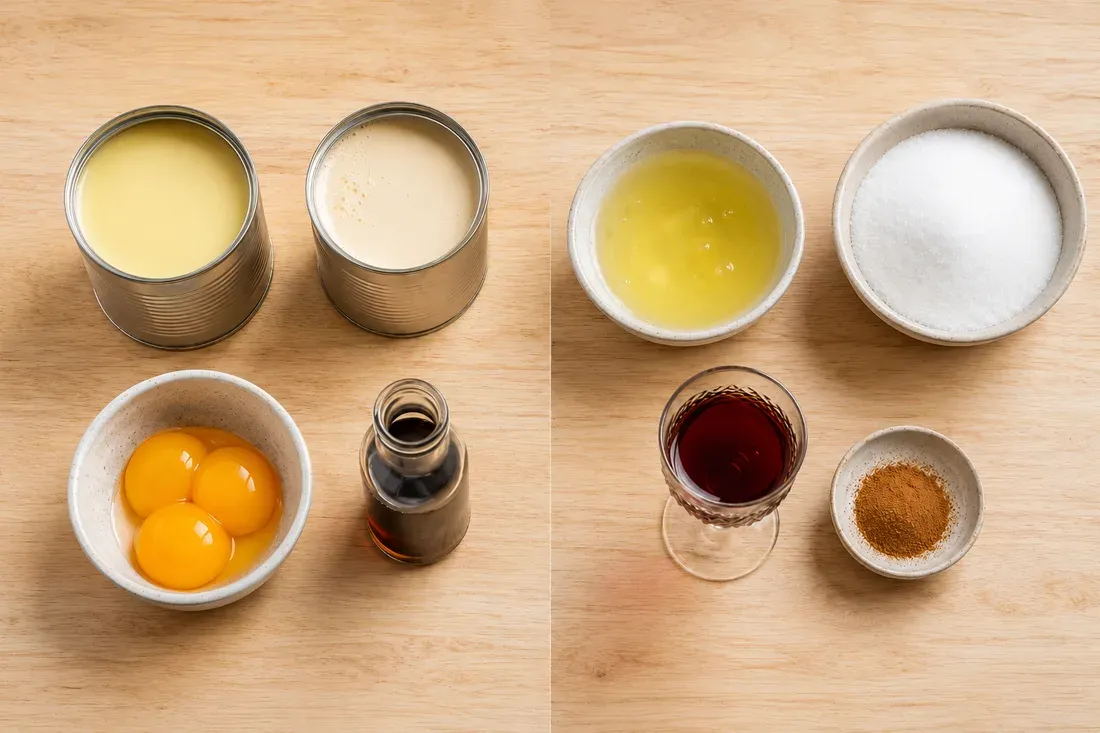
Ingredients
- 1 can (397 g) sweetened condensed milk
- 1 can (410 g) evaporated milk
- 5 egg yolks, lightly beaten
- 1 tsp vanilla
Port meringue:
- 3 egg whites, at room temperature
- 150 g sugar · 80 ml port wine (oporto)
- Ground cinnamon, to finish
Method
- Cook the milks. Both cans into a heavy pot, medium-low. Stir near-constantly 30–40 minutes, scraping the bottom, until thick and pale caramel — the spoon should briefly reveal the pot's floor.
- Temper the yolks. Off the heat: whisk a few spoonfuls of the hot cream into the yolks, then whisk the yolks back into the pot with the vanilla. Return to the lowest flame 3–4 minutes, stirring — thicker, never bubbling.
- Glass and cool. Divide among six small glasses or one shallow dish. Cool to room temperature (a skin may form; tradition is fond of it, plastic wrap pressed on the surface prevents it).
- Port syrup. Sugar and port in a small pot, boiled without stirring to 118 °C / soft-ball.
- The cloud. Whites to soft peaks; hot syrup in a thin stream down the bowl's side with the mixer running; whip on high until glossy, firm and the bowl is barely warm — about 5 minutes.
- Crown and dust. Meringue piled generous and unruly over each glass, cinnamon dusted over. Serve at room temperature or lightly chilled, with small spoons and low expectations of conversation.
Troubleshooting, from experience
The base tastes scorched. The flame won, somewhere around minute twenty. No rescue; lower heat and more scraping next round. A heavy-bottomed pot is half the battle.
Grainy base. The yolks scrambled — heat too high after they joined, or no tempering. Push the cream through a fine sieve while warm; it recovers almost completely.
The meringue weeps or collapses. Syrup short of temperature, or it hit the whites all at once. The thermometer pays for itself in one dessert.
What to serve it with
Suspiro closes the formal Sunday: after a causa opener and an ají de gallina main, it's the velvet curtain. Espresso alongside is the modern habit; in homes, it shares the dessert table with mazamorra morada and lets the guests declare their allegiance. Small glasses, always — the sigh, not the whole conversation.

Junior Quintana learned to cook from his mother, Lina, in Junín, in the central Peruvian Andes — a kitchen where chicha morada simmered every Sunday and there were always native potatoes with cheese and choclo on the table. He started Andean Kitchen to share the food he grew up with, in English and without shortcuts: every recipe cooked and tested at home, where it's really made. His favorite dish is, and probably always will be, pachamanca. See how we cook, test and photograph.

Did you cook this?
Tell me how it went — including what did not work. I read every one, and with your permission I will put it on this page, with your first name, for whoever comes next.