
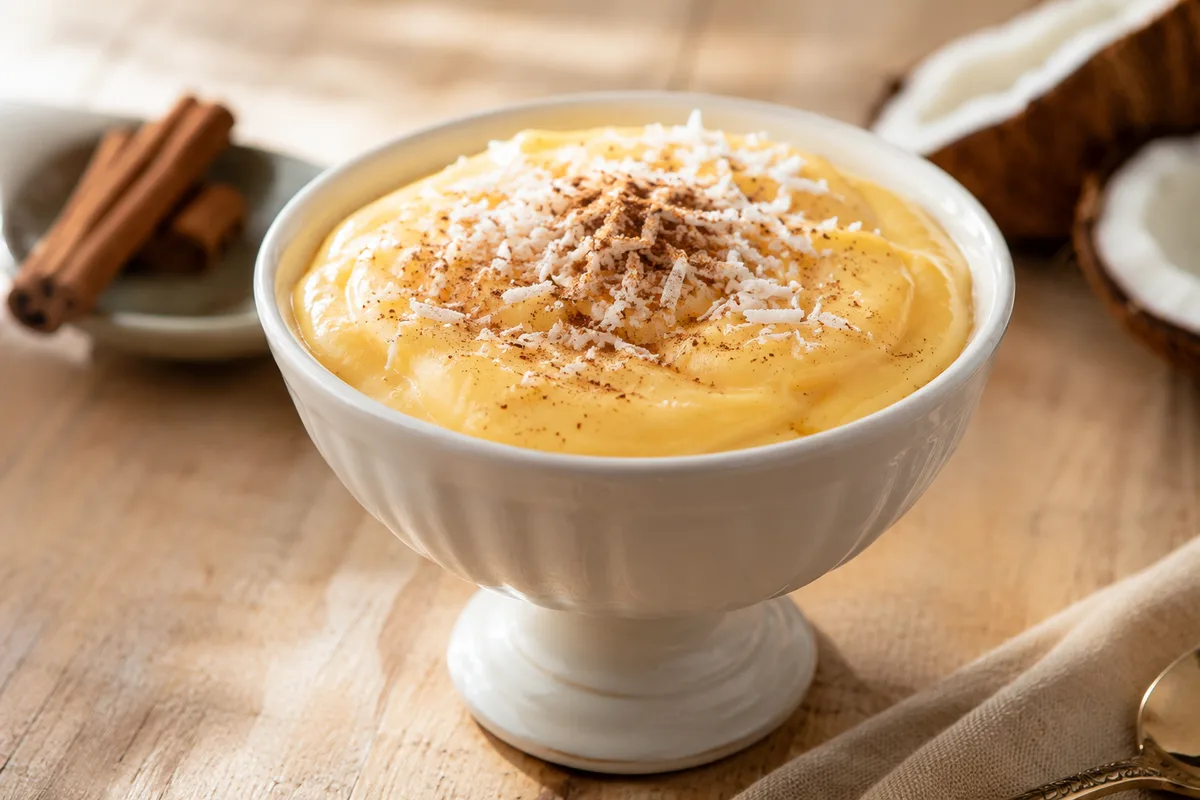
Bienmesabe — bien me sabe, "it tastes good to me" — is about as confident a dish name as exists, and it earns the confidence honestly: shredded coconut cooked with yemas — egg yolks, and a lot of them — and sugar into a thick, custardy set dessert, dense enough to slice cleanly once chilled. Versions of bienmesabe exist across Spain and the Canary Islands, carried to Peru's coast through colonial-era trade, and adapted here with local coconut into something distinctly its own. On this coast it is squarely a dulce, the word we use for the sweets that get made for a date on the calendar rather than for a Tuesday.
It sits alongside cocada as one of the coast's coconut-forward desserts, though bienmesabe's custard base and sliceable texture set it apart from cocada's chewier, candy-like consistency.
Coconut is coastal and we are not. Bienmesabe reached me the way most coastal sweets reach the sierra: in a box, carried by somebody who had been to Lima and felt slightly guilty about it. It never survived long enough for anyone to ask how it was made, which is how I ended up having to look it up years later.
Temper the yolks, don't dump them in
Adding raw egg yolks directly to a pot of hot liquid scrambles them instantly — whisking in a ladleful of the hot coconut mixture first, gradually raising the yolks' temperature, is what prevents that and keeps the custard smooth rather than lumpy.
Tempering isn't an extra step to skip when you're in a hurry. It's the difference between custard and coconut-flecked scrambled egg.
Cook low and stir constantly once the yolks go back in
After tempering, the mixture goes back over low heat and needs constant stirring until it thickens — rushing with higher heat risks curdling the eggs even after tempering. Patience here, roughly eight to ten minutes of steady stirring, is what builds the proper custard texture.
Peruvian bienmesabe is not Spanish bienmesabe
Search the name in English and you'll be handed two unrelated desserts. Spanish bienmesabe — the one from Antequera, and the Canarian version that traveled with it — is built on ground almonds, egg yolk and sugar, closer to a marzipan cream than a custard. It's excellent, and it is not this.
The Peruvian one replaced the almond with coconut, which the coast had and Andalusia did not, and in doing so changed the texture completely: denser, more custardy, sliceable rather than spoonable. Same name, same colonial ancestry, different dessert altogether — the way cecina means one thing in Spain and something else entirely in the Peruvian Amazon.
On this coast it sits on the same table as cocada and the other coconut sweets, and it belongs to the same tradition as frejol colado: sweets built around one cheap ingredient, cooked patiently until nobody would guess how little went into them.
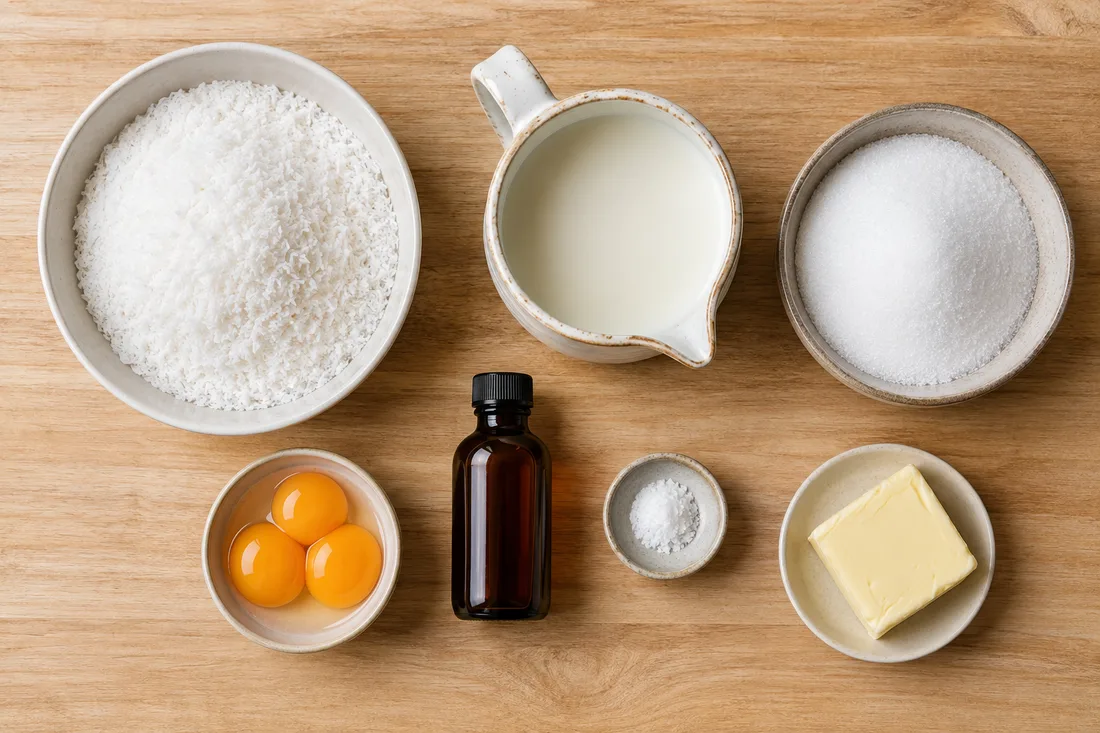
Which coconut to buy
This matters more than it sounds, because the coconut is half the dessert and the wrong bag changes it completely.
- Unsweetened shredded or desiccated coconut. The default and the safe choice. The recipe already carries a great deal of sugar; sweetened coconut pushes it past the point Peruvians call empalagoso.
- Frozen grated coconut. Sold at Latin and Asian groceries and closer to what a coastal kitchen actually uses. Thaw and drain it before it goes in the pot.
- Fresh, grated by hand. Best texture and a real afternoon of work. Worth it once, to know the difference.
What to avoid is sweetened flaked coconut, the kind sold for decorating cakes. It is coated in sugar syrup and it will make the dessert cloying no matter how you adjust the rest.
Chilling, slicing and keeping it
Bienmesabe is not finished when it comes off the heat — it is finished when it is cold. The custard needs at least four hours in the fridge, and overnight is better, to set firm enough to cut cleanly. Warm, it is a thick pudding; chilled, it is a dessert you slice.
It keeps four or five days covered in the fridge. Do not freeze it: the yolk custard separates on thawing and comes back grainy.
The recipe
Ingredients
- 3 cups shredded coconut, unsweetened
- 2 cups milk
- 1 cup sugar
- 6 egg yolks
- 1 tsp vanilla extract
- Pinch of salt
- 2 tbsp butter, for the pan
Method
- Simmer coconut with milk and sugar 15 minutes.
- Temper the egg yolks with a ladleful of the hot mixture.
- Cook the tempered yolks back into the pot over low heat, stirring, 8-10 minutes.
- Chill in a buttered dish at least 2 hours before slicing.
Troubleshooting, from experience
Custard turned lumpy or curdled. The yolks weren't tempered properly, or the heat was too high afterward. Go slowly on both steps.
Never set firmly. Not chilled long enough, or undercooked before chilling. Give it the full 2 hours and confirm it thickened properly on the stove first.
Texture too grainy. Cooked at too high a heat. Keep it low and steady throughout the custard stage.
What to serve it with
Bienmesabe is rich enough to stand entirely on its own, sliced and served chilled.
Questions people ask
My custard went lumpy. What happened? The yolks met the heat too fast. Whisk a ladleful of the hot coconut mixture into the yolks first, slowly, and only then return everything to the pot — and keep the heat genuinely low afterward. Tempering is not an optional step you skip when you are in a hurry.
Can I use fewer egg yolks? You can, and you will get a looser dessert that does not slice. The yolks are the structure here; there is nothing else holding it together. If you want it lighter, make cocada instead, which is the same coconut with a different job.
Is this the same as Spanish bienmesabe? No, despite the shared name and the shared colonial ancestry. The Spanish and Canarian versions are built on ground almonds and eat like a marzipan cream. Peru swapped in the coconut the coast had, and the result is denser, custardy and sliceable — a different dessert wearing the same name.
How long does it need to chill? Four hours minimum, overnight for a clean slice. It firms up considerably as it cools, so judge the texture cold rather than warm — what looks too loose in the pot is usually right once it has set.

Junior Quintana learned to cook from his mother, Lina, in Junín, in the central Peruvian Andes — a kitchen where chicha morada simmered every Sunday and there were always native potatoes with cheese and choclo on the table. He started Andean Kitchen to share the food he grew up with, in English and without shortcuts: every recipe cooked and tested at home, where it's really made. His favorite dish is, and probably always will be, pachamanca. See how we cook, test and photograph.
Did you cook this?
Tell me how it went — including what did not work. I read every one, and with your permission I will put it on this page, with your first name, for whoever comes next.