
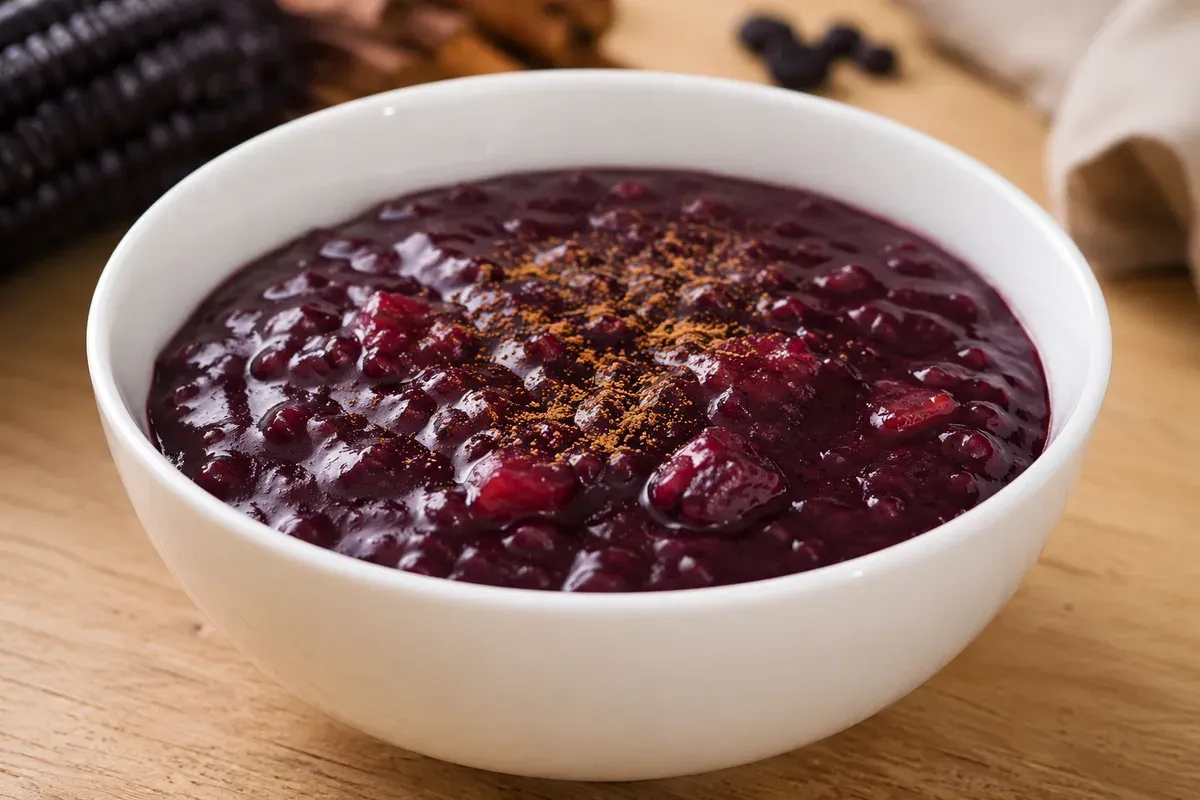
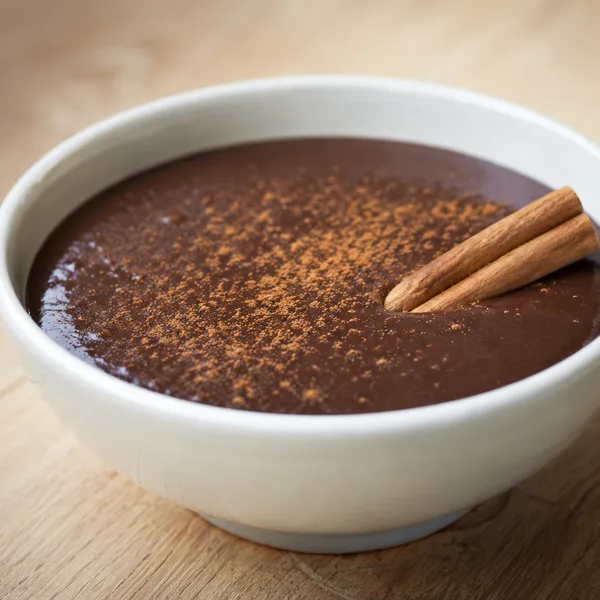
If you've already brewed our chicha morada, you are one pot and one bag of dried fruit away from Peru's most beloved spoon dessert. Mazamorra morada is, at heart, concentrated chicha thickened into a glossy, jiggly pudding, studded with prunes, apricots and pineapple, brightened with lime and dusted with cinnamon. It's sold from carts in every plaza, served in every school lunch, and paired so often with arroz con leche — half purple, half white in the same cup, a duo called the clásico combinado — that the two desserts are practically married.
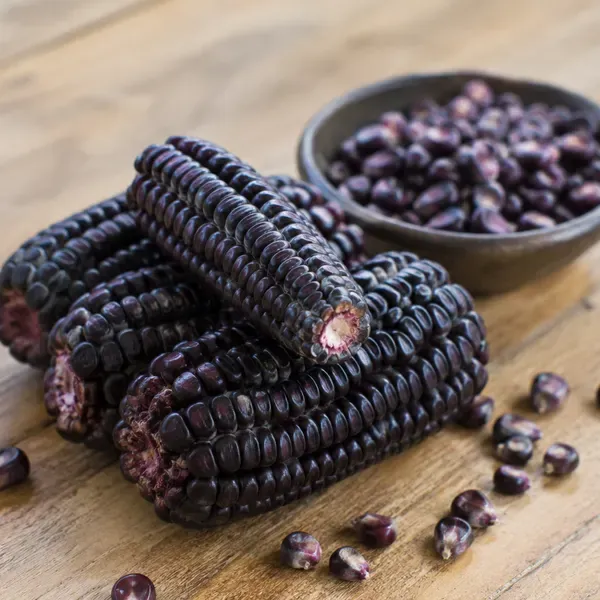
October is its high season: mazamorra purple is the color of the Señor de los Milagros processions in Lima, when the whole city seems to eat it daily. But no Peruvian needs a religious calendar as an excuse. If there's purple corn — kulli, in the old Quechua name — in the house, mazamorra is never far, and at the first warm spoonful the verdict is always the same: añallaw, as we say in the Quechua of Junín — how delicious.
For me mazamorra is a school-lunch memory before it's a recipe: the cup handed over still warm, and the skin set on top — the cook's yapa, the little free bonus — that everyone fought over. In October it comes out by the potful, the same purple as the Señor de los Milagros processions, but honestly any Sunday with leftover purple corn ends here. And we always do the clásico combinado: a ladle of mazamorra and a ladle of arroz con leche side by side in one cup, purple and white, neither willing to be eaten alone.
From chicha to mazamorra: what changes
Three things separate the pudding from the drink. The brew is more concentrated — less water for the same corn, simmered until the color is nearly black-purple. The fruit moves into the pot: dried prunes, apricots and raisins plump in the hot liquid and bleed their sweetness into it, alongside fresh pineapple. And then comes the thickener, where tradition is specific: harina de camote, sweet potato starch, which sets the mazamorra with a distinctive glossy, almost bouncy texture that cornstarch only approximates. Potato starch is the closest substitute abroad; cornstarch works but gives a slightly duller, more opaque set.
Chicha morada is the drink. Mazamorra is what happens when the family decides the drink should be dessert.
The lime, again, at the end
The same anthocyanin chemistry from our chicha article applies here: lime juice added off the heat at the very end shifts the purple brighter and adds the acidic spark that keeps the sweetness from going flat. Add it while the pot is still bubbling and you trade vividness for dullness, permanently.
The recipe
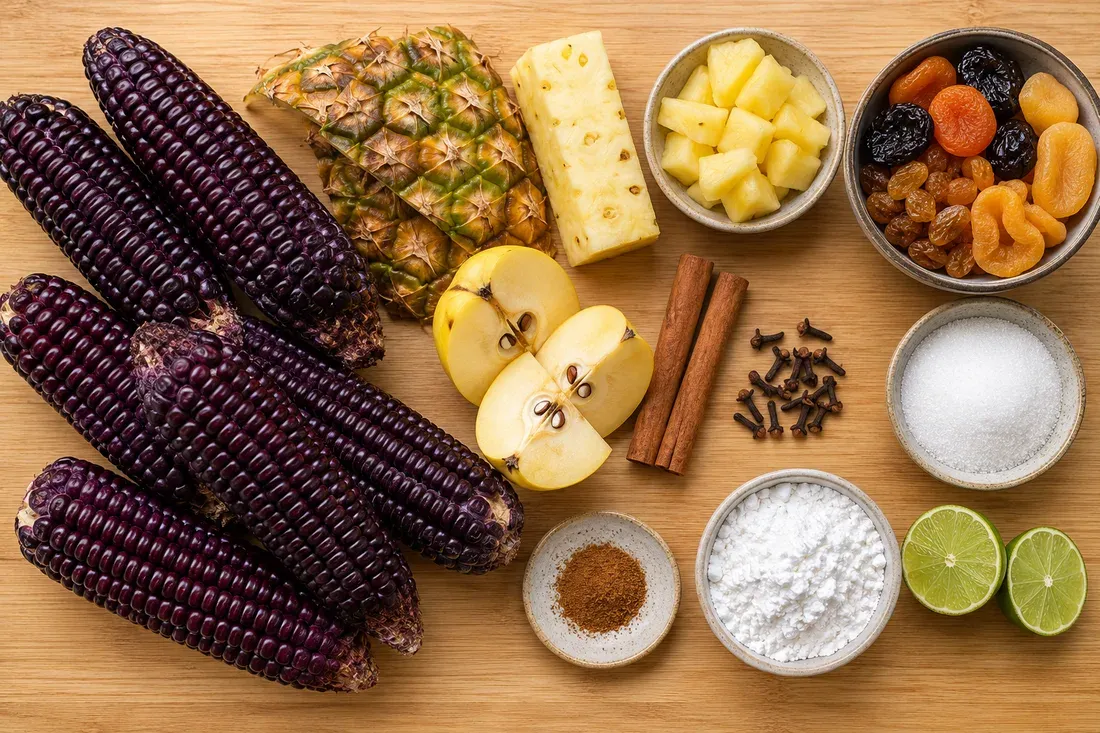
Ingredients
- 400 g dried purple corn (maíz morado)
- 2.5 liters water
- Skin and core of ½ pineapple, washed, plus 150 g of its flesh in small dice
- 1 quince or green apple, quartered
- 2 cinnamon sticks · 4 cloves
- 150 g mixed dried fruit: prunes, apricots, raisins, dried peaches — pitted
- 180 g sugar (¾ cup), adjusted to taste
- 60 g sweet potato starch — or potato starch / cornstarch — dissolved in ½ cup cold water
- Juice of 1 lime, off the heat
- Ground cinnamon, to serve
Method
- Brew strong. Simmer corn, water, pineapple skin and core, quince, cinnamon and cloves, uncovered, 45 minutes. The liquid should be intensely dark. Strain; you want about 1.5 liters of concentrate.
- Plump the fruit. Return the brew to the pot with the dried fruit and diced pineapple. Gentle simmer, 10 minutes.
- Sweeten. Stir in the sugar until dissolved. Taste — it should be a touch sweeter than you want, since chilling mutes sugar.
- Thicken. Stir the starch slurry once more, pour it in while stirring constantly, and keep the pot at a low bubble for 5 minutes. The mazamorra is ready when it's glossy and a spoon dragged through leaves a brief trail.
- Brighten and serve. Off the heat, stir in the lime juice and watch the color wake up. Serve warm in cups, or chilled, always under a dusting of cinnamon — and if there's arroz con leche around, do the clásico combinado and thank us later.
Troubleshooting, from experience
It set like rubber. Too much starch or too long on the heat after adding it. Five minutes of gentle cooking is enough; the pudding firms more as it cools.
It's runny after chilling. The opposite sin: the starch never reached a proper simmer, so it didn't activate fully. Return to the stove, bring back to a low bubble for a few minutes.
A skin formed on top. Tradition says: that's the best part and the cook's privilege. If you disagree, press plastic wrap onto the surface while it cools.
What to serve it with
On its own it closes any lunch; in the clásico combinado it shares the cup with arroz con leche. It is also, logically, the dessert that follows a ceviche lunch with chicha morada on the table — the full purple-corn economy in one meal, which is exactly how a Peruvian Sunday works.

Junior Quintana learned to cook from his mother, Lina, in Junín, in the central Peruvian Andes — a kitchen where chicha morada simmered every Sunday and there were always native potatoes with cheese and choclo on the table. He started Andean Kitchen to share the food he grew up with, in English and without shortcuts: every recipe cooked and tested at home, where it's really made. His favorite dish is, and probably always will be, pachamanca. See how we cook, test and photograph.
Did you cook this?
Tell me how it went — including what did not work. I read every one, and with your permission I will put it on this page, with your first name, for whoever comes next.