
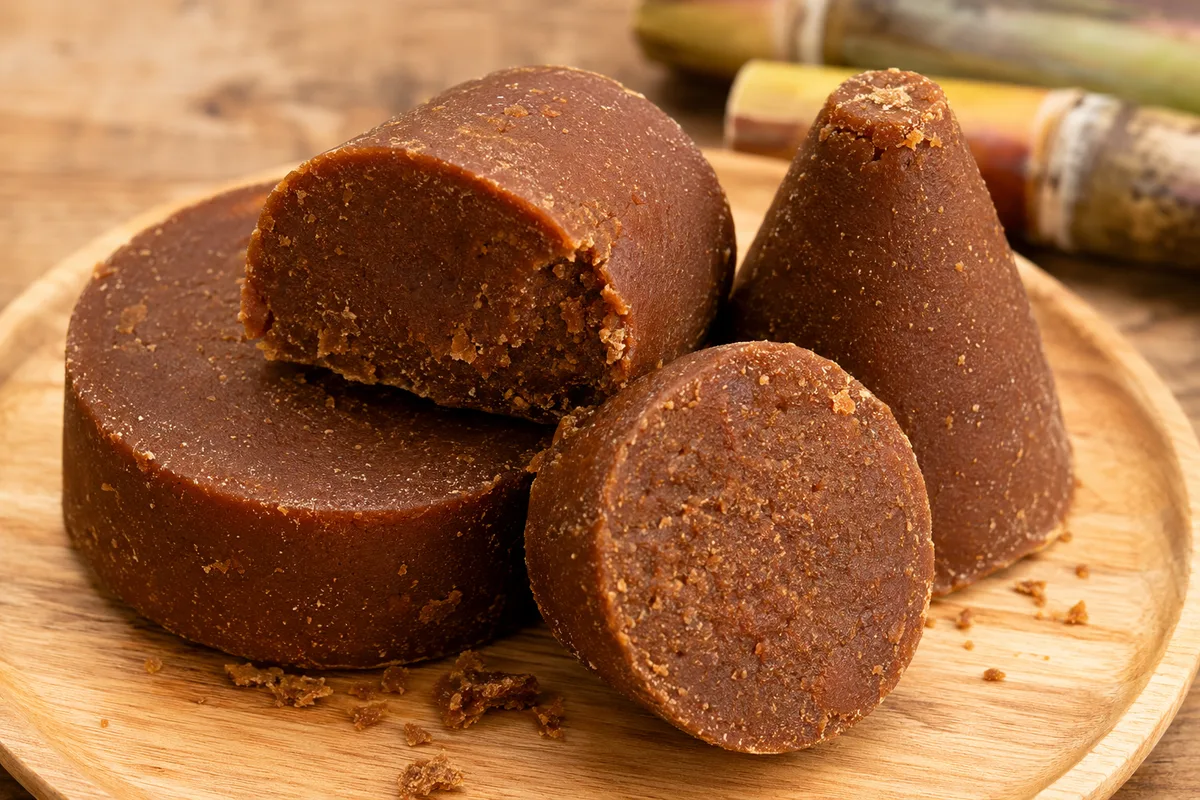
Chancaca is unrefined whole cane sugar, pressed straight from boiled-down sugarcane juice into dense, dark blocks without ever going through the refining process that turns sugar white. It is the same product known as panela in Colombia and piloncillo in Mexico, and it shows up constantly across the Peruvian dulces — the sweets made in a pot rather than an oven — the syrup poured over picarones, the base of turrón de Doña Pepa's glue, and the deep, dark backbone of arroz zambito.
What sets it apart from refined brown sugar is exactly what makes it worth seeking out: brown sugar is refined white sugar with molasses added back in, while chancaca never had anything removed in the first place, keeping a mineral, almost smoky depth that brown sugar can only approximate.
What is chancaca, and what does it taste like?
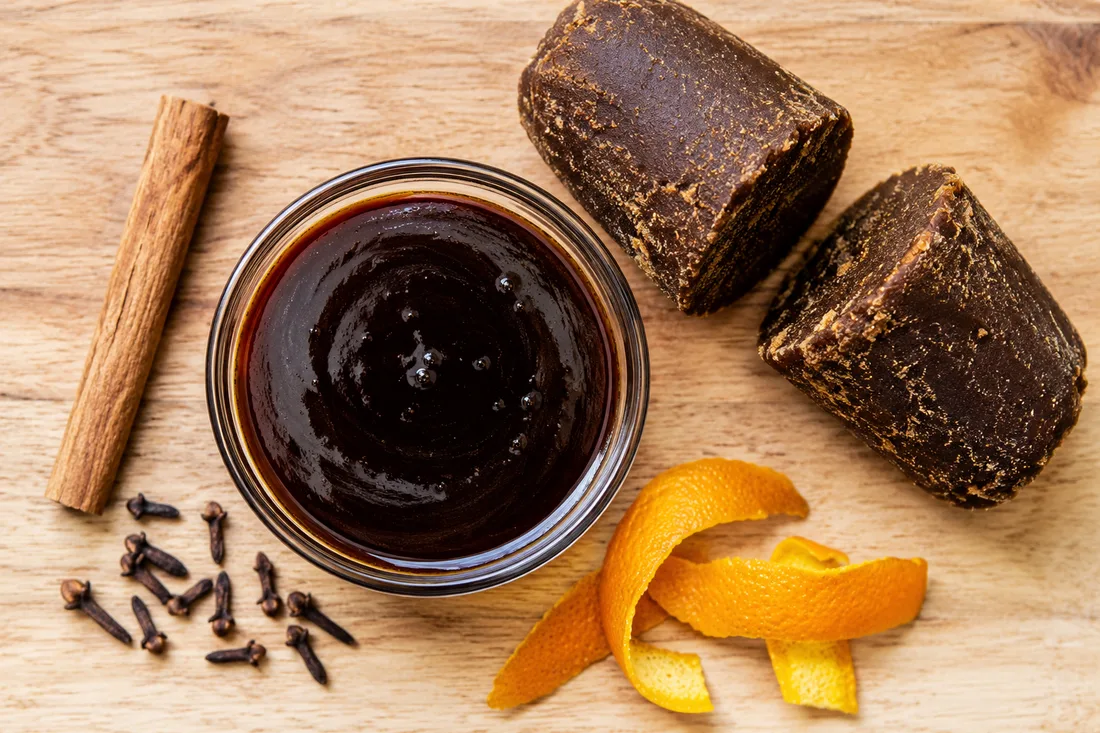
Sold in hard, dense blocks that need to be broken into pieces before use, chancaca dissolves into a deep, molasses-like syrup when melted with water and spices — cinnamon, cloves, orange peel are the classic additions across the desserts that use it. The flavor sits somewhere between brown sugar and molasses, with a mineral, slightly smoky undertone that's genuinely its own.
Chancaca isn't sugar with something added. It's sugar with nothing taken away.
Where the name comes from is genuinely disputed, and anyone who tells you flatly is guessing. One line traces it to Quechua ch'amqay, to crush or grind; another to Nahuatl chiancaca, carried south with the sugarcane trade. Serious people defend both. What nobody argues about is the block itself: in Junín it turns up at the market as a hard brown disc wrapped in paper, and you break it with whatever is heaviest in the kitchen. Melted down with cinnamon and cloves it becomes miel de chancaca — chancaca honey — and that syrup, poured over picarones, is how most Peruvians actually meet it.
How Peruvian kitchens use chancaca
- Melted into syrup. Simmered with water and whole spices, then strained, for pouring over picarones or into other desserts.
- Cooked directly into a dish. Broken into pieces and simmered right into puddings like arroz zambito, dissolving as the dish cooks.
- Chopped small for baking. Finely chopped chancaca can be worked into doughs and batters where a more subtle sweetness and color are wanted.
Chancaca substitutes, honestly ranked
- Panela or piloncillo. Not really a substitute — the same product under a different regional name. If you can find either, use it exactly as chancaca.
- Dark brown sugar with a spoonful of molasses stirred in. The closest approximation using common pantry staples, though a shade less complex.
- Dark brown sugar alone. Workable in a pinch, but noticeably milder and less mineral than the real thing.
For a dish where chancaca's syrup is the whole point — picarones above all — panela or piloncillo, found at most Latin American grocery stores, is worth seeking out before settling for brown sugar.
Where to buy chancaca outside Peru, ranked
- Panela or piloncillo at a Latin American grocery. The same thing under another name, and the easiest to find of everything on this list. Colombian panela comes in round pucks, Mexican piloncillo in small cones. Either one is chancaca.
- Jaggery or gur at an Indian or South Asian grocery. Made the same way from the same cane juice, sold in blocks or discs. Slightly different in flavor depending on region, but it behaves identically in a syrup.
- Online, sold as Peruvian chancaca. More expensive than either of the above for what is the same product. Worth it only if the label matters to you.
Whatever you buy, look for a block that is dark all the way through and hard enough to need a knife or a hammer. If it is soft, crumbly and pale, it has had molasses added rather than never removed, and you are buying brown sugar with a better name.
Recipes that depend on chancaca
Some dishes tolerate a substitute. These three do not really work without it, because the syrup is the dish itself rather than a sweetener in it:
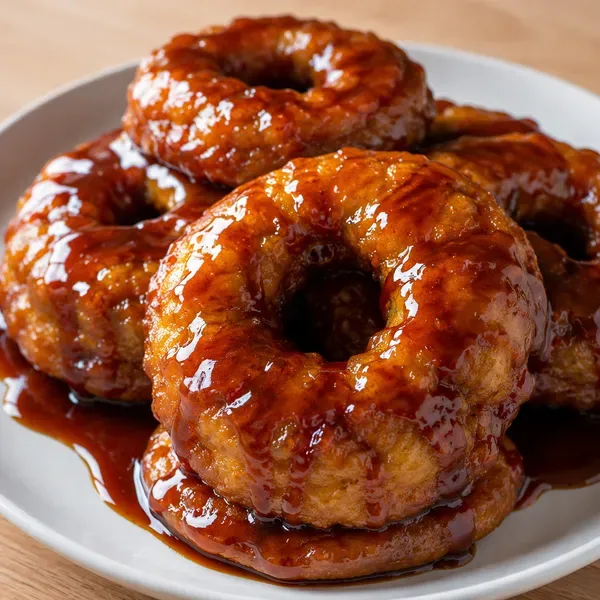
- Picarones. The syrup poured over them is chancaca, cinnamon, clove and orange peel, and nothing else. Brown sugar makes it taste flat.
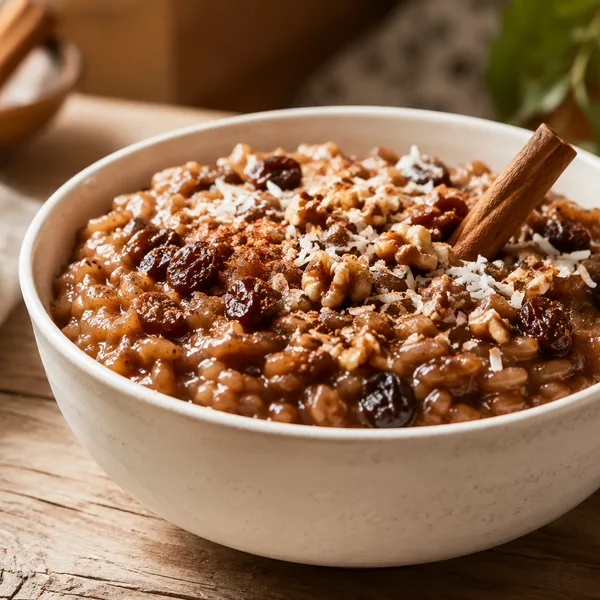
- Arroz zambito. Chancaca is exactly what separates it from ordinary rice pudding — the color, the depth and the name all come from here.
- Turrón de Doña Pepa. The dark syrup holding the biscuit sticks together is chancaca boiled with fruit and spices.
Questions people ask
Is chancaca the same as panela or piloncillo? Yes — the same product under Colombian and Mexican names. Colombian panela comes in round pucks, Mexican piloncillo in small cones. If your grocery has either, you have found chancaca and you can use it exactly as written.
Can I use brown sugar instead? It works and it is noticeably milder. Brown sugar is refined white sugar with molasses added back in; chancaca never had anything removed, which is where its mineral, faintly smoky depth comes from. Add a spoonful of molasses per cup to close some of the gap.
How do I break up the block? With whatever is heaviest in the kitchen. It is genuinely hard — a rolling pin, the flat of a heavy knife, or a hammer through a towel all work. Some cooks grate it. Whatever you do, break it before it goes near a pot, because a whole block takes forever to dissolve.
How long does it keep? Indefinitely, more or less. Kept dry and wrapped it lasts years — the whole point of pressing sugar into blocks was storage. If it hardens further or develops a pale bloom, that is only crystallization and it dissolves out with no harm done.

Junior Quintana learned to cook from his mother, Lina, in Junín, in the central Peruvian Andes — a kitchen where chicha morada simmered every Sunday and there were always native potatoes with cheese and choclo on the table. He started Andean Kitchen to share the food he grew up with, in English and without shortcuts: every recipe cooked and tested at home, where it's really made. His favorite dish is, and probably always will be, pachamanca. See how we cook, test and photograph.

Did you cook this?
Tell me how it went — including what did not work. I read every one, and with your permission I will put it on this page, with your first name, for whoever comes next.