
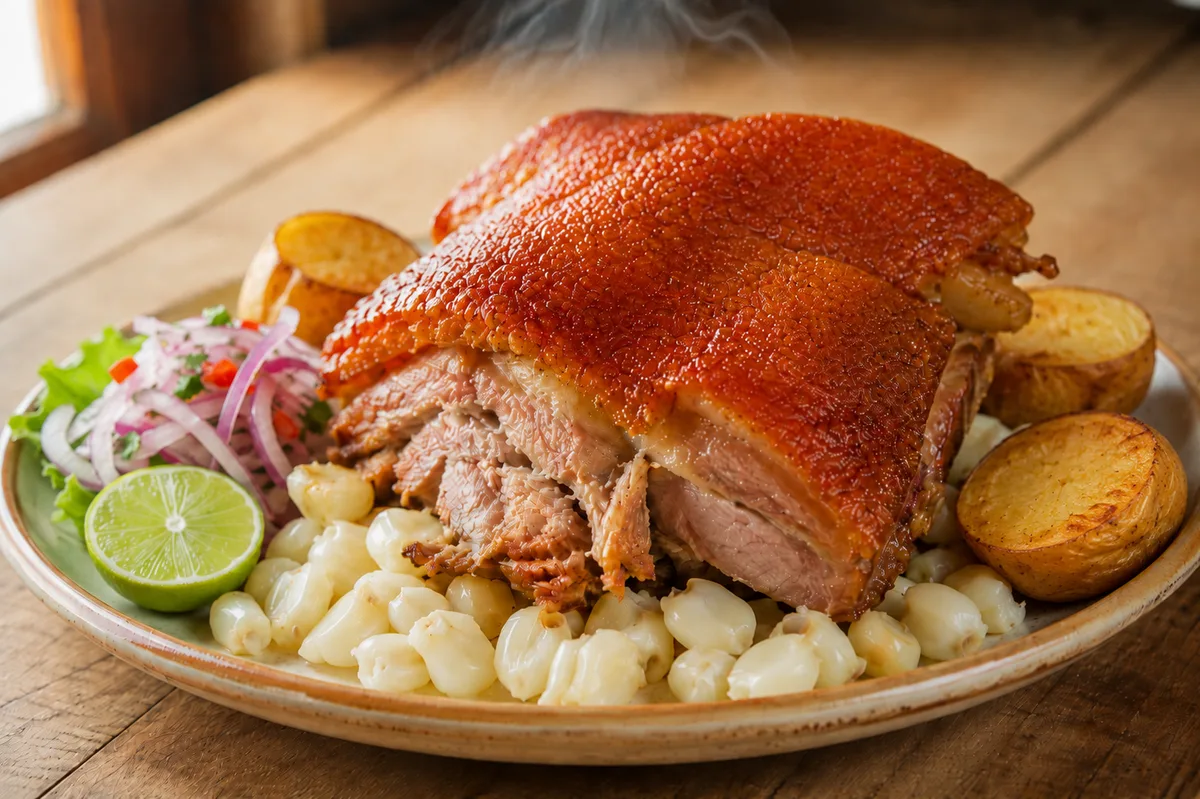
Cuchicanca takes its name from the Quechua word for pig, and it's exactly the kind of dish that name suggests — a large cut of pork, marinated overnight in chicha de jora and ají panca, then roasted slowly for hours until the meat falls apart and the skin crackles. It shows up at Cusco celebrations the way cuy chactado does, food for a fiesta, built to feed a courtyard full of people rather than a quiet family dinner.
It shares its marinade logic with adobo cusqueño, both leaning on chicha de jora and ají panca, but cuchicanca is built around a much larger cut of meat and a genuinely long, slow roast rather than a braise.
I ate this at a fiesta in Cusco where I knew exactly two people and neither of them was doing the cooking. The pig had been in the oven since before I arrived and the whole street knew it. Somebody handed me a plate without asking whether I wanted one, which is how you get fed at a fiesta that is not yours, and I did not have the sense to be embarrassed until later.
Score the skin before marinating
Light scoring across the pork skin, just deep enough to break through without cutting into the meat, lets the marinade penetrate more effectively and helps the skin crisp evenly during the final high-heat stretch of roasting.
Crackling skin doesn't happen by accident at the end. The scoring at the very start sets it up.
Low and slow, then a hot finish
The bulk of the cook happens at a low, steady temperature over more than two hours, which is what breaks down the pork into genuinely tender, falling-apart meat — the final blast of high heat at the end is purely for the skin, and shouldn't happen any earlier or the meat risks drying out before it's tender.
The cut, and how to do it in a home oven
In Cusco this is cooked whole or in enormous pieces, often in a bakery oven borrowed for the day. At home the cut that works is a bone-in pork shoulder or a leg — pierna — with the skin on. The skin is not optional: without it there is no crackling, and without crackling this is just roast pork.
Two to three kilos is the practical size for a domestic oven. Below that the meat dries before it goes tender; much above it and the outside is finished long before the middle.
Dry the skin thoroughly before the final blast of heat — take the pork out, pat the skin with paper, salt it, and only then turn the oven up. Marinade left sitting on the surface steams instead of crisping, which is the single most common reason home cuchicanca comes out of the oven soft on top.
Where the name comes from
Cuchicanca is two Quechua words doing exactly what they say. Kanka is roast — roasted meat, the thing itself and the method at once — and it turns up across Andean cooking wherever something is cooked over or in heat.
Cuchi is pig, and this is the part worth pausing on: Quechua borrowed it from Spanish, because there were no pigs in the Andes before the Spanish brought them. The language had a word for roast long before it had a word for this animal. So the name itself carries the history of the dish — an old Andean technique applied to a new arrival, until the two stopped being distinguishable.
You will also see it written cuchi canca, cuchicanka and cuchi kanka. Nobody is wrong; Quechua reached paper late and by several different hands.
The recipe
Ingredients
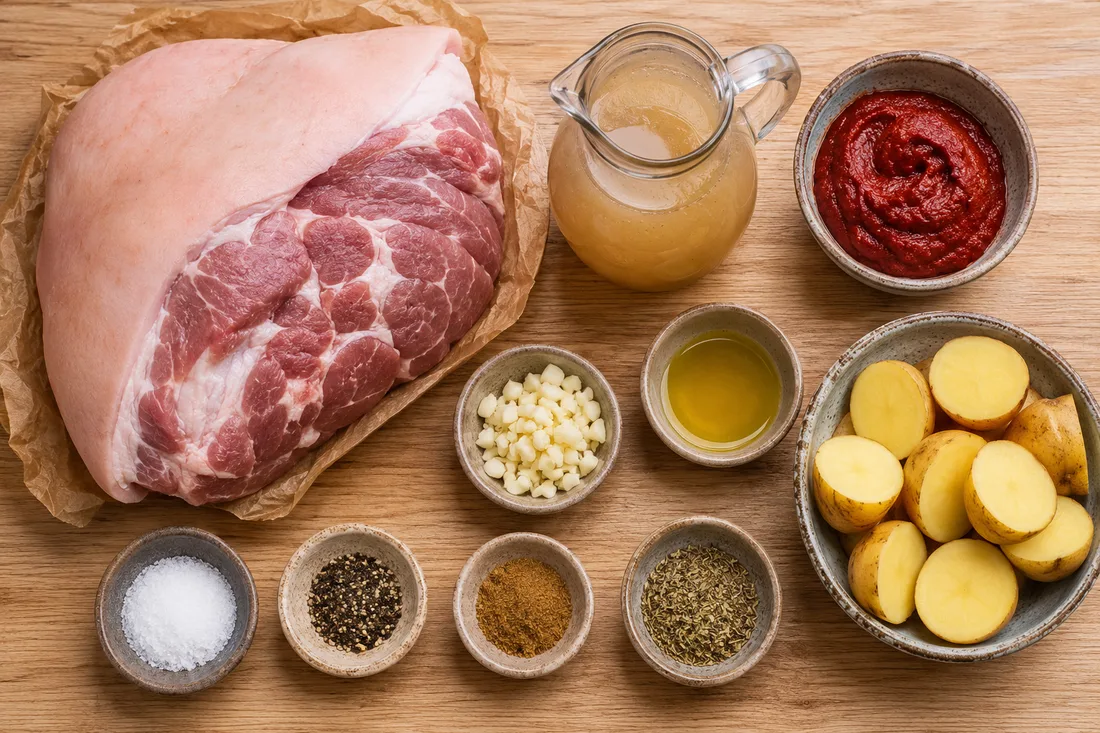
- 1.5 kg pork shoulder or leg, skin on
- 2 cups chicha de jora
- 4 tbsp ají panca paste
- 8 garlic cloves, minced
- 1 tsp ground cumin · 1 tsp oregano
- 2 tbsp oil · salt · pepper
- 4 potatoes, halved, to roast alongside
Method
- Mix the marinade from chicha, ají panca, garlic, cumin, oregano, salt and pepper.
- Rub the scored pork all over. Marinate overnight.
- Roast at 220°C (425°F) for 25 minutes, then 160°C (325°F) for 2 to 2.25 hours with potatoes.
- Crisp the skin at 220°C (425°F) for the final 10-15 minutes. Rest 15 minutes.
Troubleshooting, from experience
Skin didn't crisp. The final high-heat blast was skipped or too short. Give it the full 10-15 minutes at high heat.
Meat came out dry. The high heat happened too early, before the slow roast had time to tenderize. Stick to the low-and-slow-then-hot order.
Marinade flavor didn't come through. Not marinated long enough. Give it the full overnight time.
What to serve it with
The roasted potatoes alongside, plus a fresh salsa criolla to cut through the richness.
Questions people ask
What cut of pork should I ask for? A bone-in leg, pierna, with the skin on. The bone keeps the meat from drying through a long roast and the skin is half the reason anyone is at the table. A shoulder works and gives you a fattier, more forgiving result; a boneless loin does not, and will be dry before the skin has done anything.
Can I make this without chicha de jora? Yes, though it is the ingredient that makes it taste like itself. Dark beer is the closest substitute — a little sweetness, a little sourness, enough acid to work on the meat overnight. What does not work is wine, which pulls the whole thing in a European direction.
How do I get the skin crisp in a home oven? Score it, salt it, and leave it uncovered in the fridge overnight so it dries out. Roast low and long, then finish with fifteen minutes as hot as your oven goes. Skin that has not dried first will bubble and go leathery instead of crackling, no matter how hot you finish it.
Is this the same as chancho al horno? They overlap and they are not identical. Chancho al horno is the general term for roast pork anywhere in Peru. Cuchicanca is the Cusco version with its own marinade and its own occasion — it belongs to festivals, and in the southern Andes people cook it because something is being celebrated, not because it is Sunday.
Junior Quintana learned to cook from his mother, Lina, in Junín, in the central Peruvian Andes — a kitchen where chicha morada simmered every Sunday and there were always native potatoes with cheese and choclo on the table. He started Andean Kitchen to share the food he grew up with, in English and without shortcuts: every recipe cooked and tested at home, where it's really made. His favorite dish is, and probably always will be, pachamanca. See how we cook, test and photograph.
Did you cook this?
Tell me how it went — including what did not work. I read every one, and with your permission I will put it on this page, with your first name, for whoever comes next.