
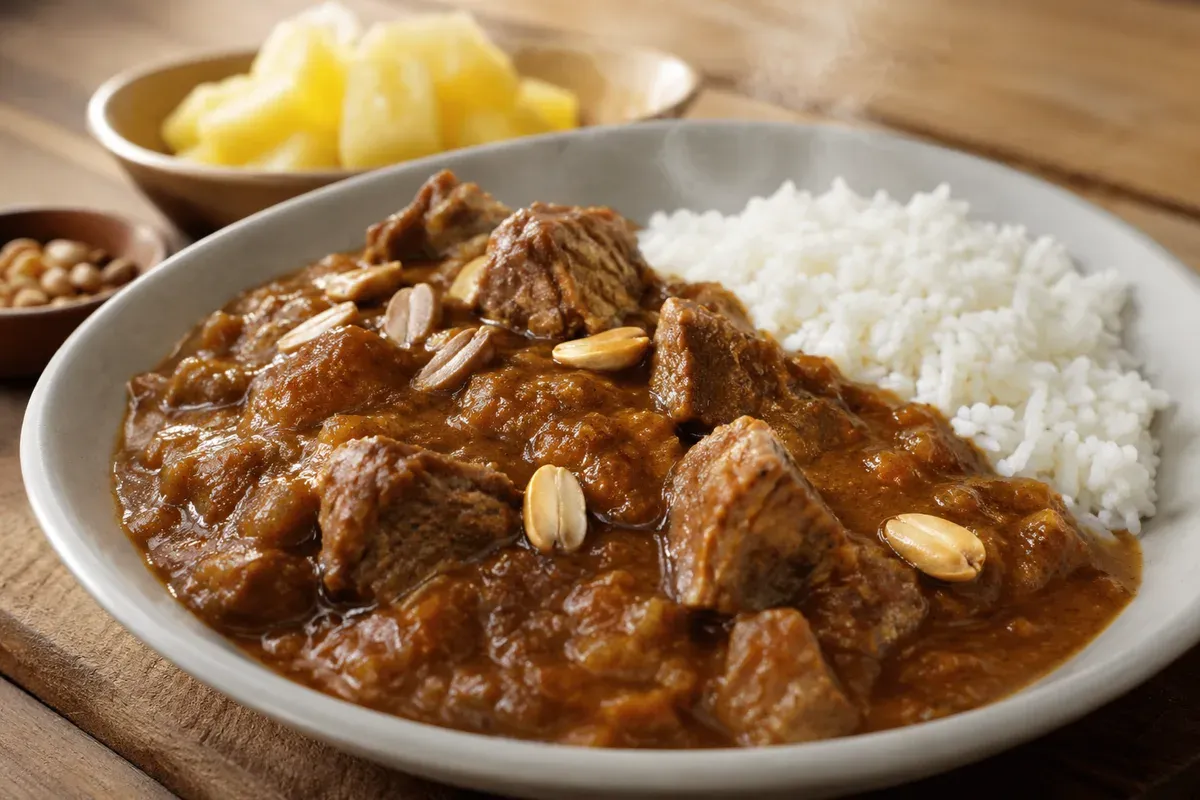
Carapulcra's claim is quietly enormous: built on papa seca — potatoes boiled, cut and sun-dried for storage, a preservation craft as ancient as chuño — it's widely told as one of the oldest dishes still cooked in Peru, with roots reaching back before the viceroyalty. Even the name points that way: it is usually traced to the Quechua qala phurka, roughly "cooked on hot stones", which is how the dish was made long before there were pots for it. The colonial centuries added pork, peanuts and warm spices, the Afro-Peruvian kitchens of the south coast made it theirs (often served with sopa seca, the noodle companion, as the beloved manchapecho — chest-stainer, for what it does to a clean shirt), and the central sierra, our corner, keeps its own highland version simmering at every patron-saint fiesta. A stew this traveled belongs on this site by birthright.
Every patron-saint fiesta in our hills has a pot of carapulcra somewhere near the band, made the serrana way — thicker and less sweet than the coast's chinchana version, no port in sight. The papa seca comes by the kilo from the same casera who's sold it at the Saturday market for as long as I can remember; I couldn't tell you her name, only that hers is never underdone.
Papa seca: the pantry that outlasts winters
Papa seca is sold in bags at any Peruvian market and, abroad, wherever Peruvian groceries exist — small amber nuggets of dried potato that keep for a year and rehydrate into something no fresh potato imitates: toothsome, faintly chewy, drinking the stew like it was built for it (it was). The non-negotiable step is toasting it dry first, until golden and nutty — untoasted papa seca makes a pale, flat carapulcra, and every grandmother on the dish's long route agrees on little else but this.
Fresh potatoes feed the week the harvest came in. Papa seca was invented to feed all the other weeks.
The peanut signature
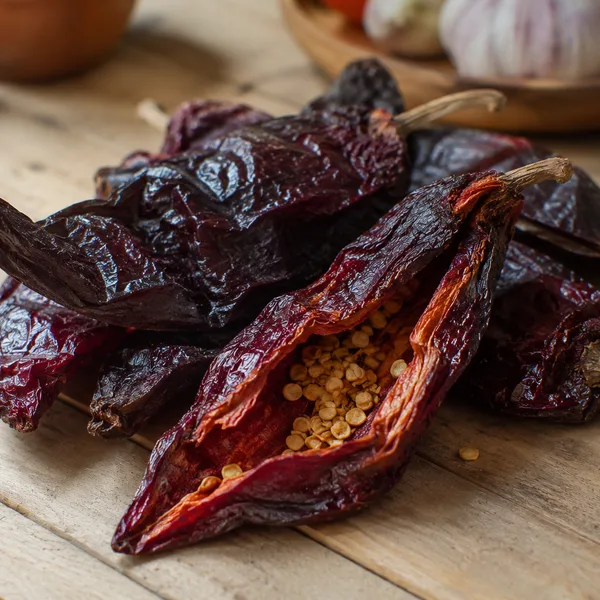
Ground peanuts thicken the stew and whole ones stud it — the same Afro-Peruvian peanut intelligence that shows up across the coastal repertoire — while ají panca colors it deep brick and a clove or two with cinnamon adds the old colonial perfume. Some southern households finish with a splash of port; in the sierra, a dry stew and a wet appetite suffice.
Papa seca, and what happens without it
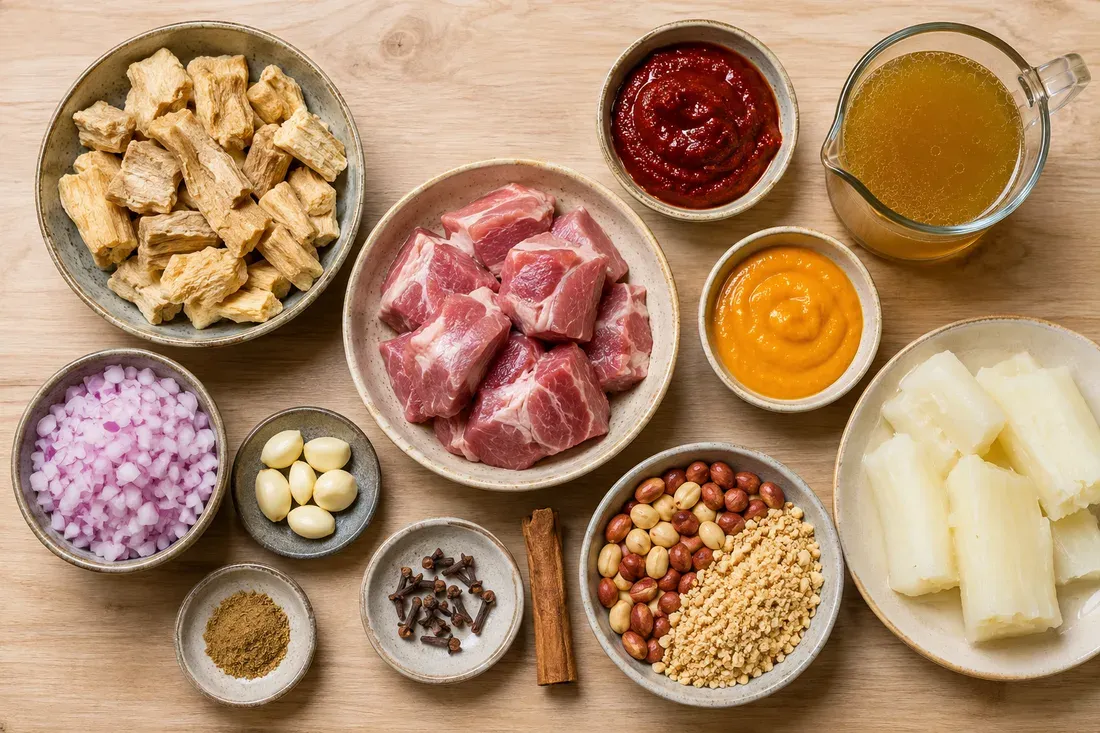
This is the ingredient the dish is named for and there is no clean way around it. Papa seca is potato boiled, cut and dried in the sun until it turns into hard amber nuggets that keep for a year, and rehydrating it gives you something no fresh potato does: toothsome, faintly chewy, and thirsty for the stew around it.
- Papa seca from a Peruvian grocery. Sold in bags, keeps indefinitely in the cupboard, and available anywhere Peruvians have settled. This is the answer.
- Online. It ships well — it is dried potato — and one bag makes the dish several times over.
- Fresh potato. Makes a decent pork and peanut stew. It does not make carapulcra: the texture that gives the dish its name is exactly what fresh potato cannot do.
Whatever you use, do not skip the dry toasting. Papa seca goes into a dry pan until it turns golden and smells nutty, before any liquid touches it. Untoasted, the stew comes out pale and flat, and that is the one point every cook on this dish long route agrees on.
The recipe
Ingredients
- 300 g papa seca
- 600 g pork shoulder in chunks
- 3 tbsp ají panca paste · 1 tbsp ají amarillo paste
- 1 onion, diced · 4 garlic cloves, minced · 1 tsp cumin · 2 cloves · 1 small cinnamon stick
- 80 g roasted peanuts — half ground, half whole
- ~1 liter broth · optional splash of port
- Oil · salt · rice or boiled yuca to serve
Method
- Toast and soak. Papa seca in a dry pan, medium heat, stirring, until golden and nutty — 5 minutes. Then 20 minutes in hot water; drain.
- Brown the pork in oil; set aside. Aderezo in the same pot: onion, garlic, both ají pastes, until the oil glows.
- Stew. Pork back with papa seca, spices and broth to cover. Gentle simmer, stirring now and then (papa seca likes to nap on the bottom), 50–60 minutes, until tender and the stew thick enough to mound.
- Finish. Peanuts ground and whole (and the port if you're southern today), 10 final minutes. Salt, rest 5, serve over rice or with yuca.
Troubleshooting, from experience
It scorched on the bottom. Papa seca settles and sticks. Stir on schedule, heavy pot, and a scorch caught early decants away clean.
The potato is still firm at an hour. Old stock or skipped soak. Add broth and time; papa seca always yields, on its own calendar.
Flat flavor. The toast was skipped. There is no downstream fix for an upstream omission — the grandmothers were right.
What to serve it with
Rice in the sierra, yuca on the coast, and salsa criolla wherever you are. A glass of chicha morada belongs; at a fiesta in our hills, so does the band.
Questions people ask
Do I have to toast the papa seca? Yes, and it is the step people skip. Dry pan, no oil, until it is golden and smells nutty. Untoasted papa seca gives you a pale, flat stew — the toasting is where most of the depth comes from, not from the pork.
How long does papa seca need to soak? After toasting, it goes straight into the stew and rehydrates as it cooks — usually forty minutes to an hour. Unlike chuño, it does not need an overnight soak, because the pieces are much smaller and the drying was gentler.
What is the difference between the coastal and highland versions? The chinchana version from the south coast is sweeter and sometimes finished with a splash of port. The sierra version, which is ours, is thicker, drier and takes no port at all. Both are correct and each region will tell you the other is doing it wrong.
Why is it served with sopa seca? The pairing has its own name — manchapecho, chest-stainer, for what it does to a clean shirt. Carapulcra is dense and the noodles cut through it. On the south coast the two arrive on the same plate and asking for one without the other draws a look.

Junior Quintana learned to cook from his mother, Lina, in Junín, in the central Peruvian Andes — a kitchen where chicha morada simmered every Sunday and there were always native potatoes with cheese and choclo on the table. He started Andean Kitchen to share the food he grew up with, in English and without shortcuts: every recipe cooked and tested at home, where it's really made. His favorite dish is, and probably always will be, pachamanca. See how we cook, test and photograph.

Did you cook this?
Tell me how it went — including what did not work. I read every one, and with your permission I will put it on this page, with your first name, for whoever comes next.