
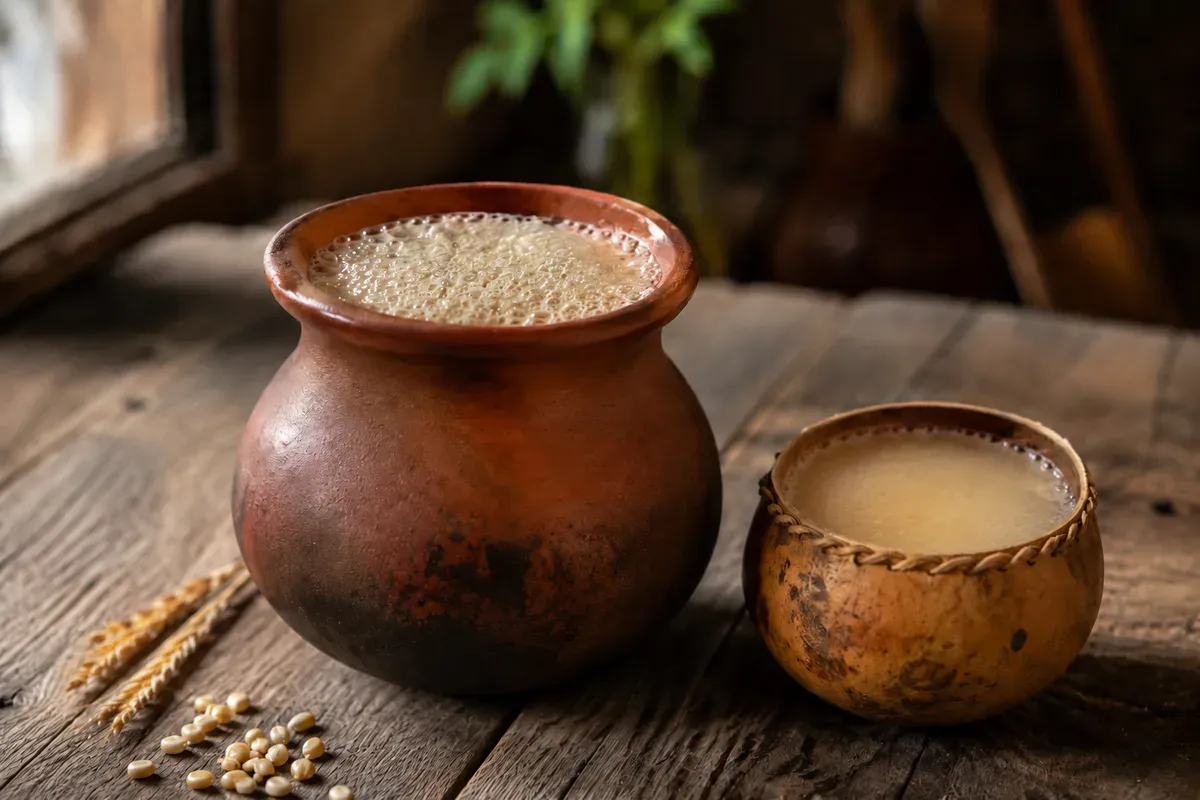
Before Peru drank pisco, before grapes had crossed the Atlantic, the Andes already had their drink: chicha de jora, a cloudy, gently sour, lightly alcoholic beer brewed from sprouted corn. The Inca state took it seriously enough to build an economy around it — chicha sealed agreements, paid labor, opened festivals and was poured onto the earth itself as an offering to Pachamama, a gesture you can still watch today: in highland chicherías, the first splash from every glass goes to the ground before the first sip goes to the drinker. Some traditions don't fade. They just get quieter.
This is a cultural and kitchen guide rather than a brew-at-home tutorial, for an honest reason: real chicha de jora is a living ferment that chicherías master across generations, and a responsible recipe for home fermentation of an alcoholic beverage is beyond what a food blog should improvise. What we can give you is better for most readers anyway: what jora is, how the drink works, where to taste it properly, and the part most food writing misses entirely — chicha de jora's second life as one of Peruvian cooking's essential ingredients.
There are chicherías with the red flag on the road out of town, and every faena — the communal work parties that still get a field plowed or a roof raised in our part of Junín — has a jar of chicha going around by midmorning, poured for whoever's hands are free. My mother made the everyday, unfermented kind at home, but the real jora always came from a caseria's pot, never ours; some things are better left to the people who've done it for thirty years.
What "jora" means
Jora is corn that has been deliberately sprouted: kernels are moistened and kept warm until they germinate, then dried and ground. Any brewer will recognize the move — it's malting, the same enzymatic trick behind barley beer, in which sprouting converts the grain's starch into fermentable sugars. The Andes arrived at it independently, centuries before contact, with corn instead of barley. The ground jora is boiled into a wort, strained, and left to ferment in great earthenware vessels for a few days; the result is amber to gold, faintly sweet, faintly sour, refreshing, and usually modest in alcohol — this was an everyday and ceremonial drink, not a knockout punch.
Malting is supposed to be Europe's gift to beer. The Andes would like a word, and the word is jora.
The chichería and the flag
In highland towns, the chichería announces itself with the oldest bar sign in the hemisphere: a pole over the doorway flying a red flag or a bouquet of flowers — the sign that this house has fresh chicha today. Inside: big glasses called caporales, conversation, often a plate of something fierce to go with it, and the Pachamama splash before every first sip. If your travels take you to Cusco's Sacred Valley, the chicherías of towns like Ollantaytambo are living heritage; closer to our home turf, the tradition runs through the whole central sierra. Drink where the flag flies and the locals already are — the universal rule of fermented things.
The cook's chicha
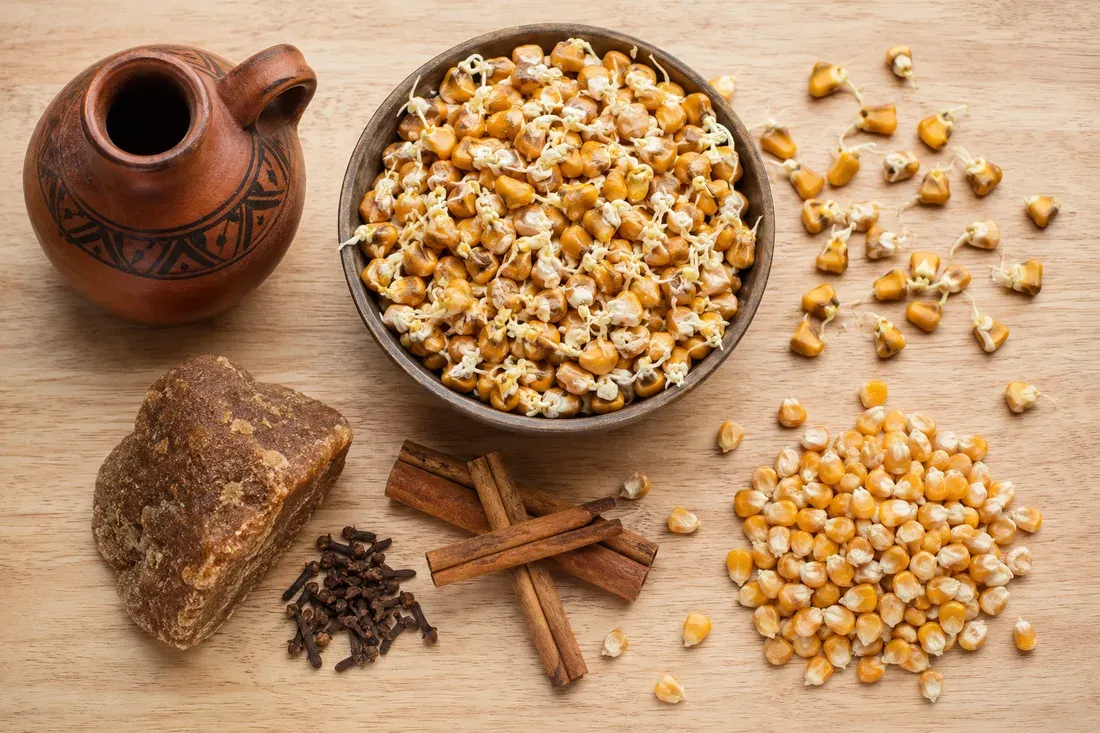
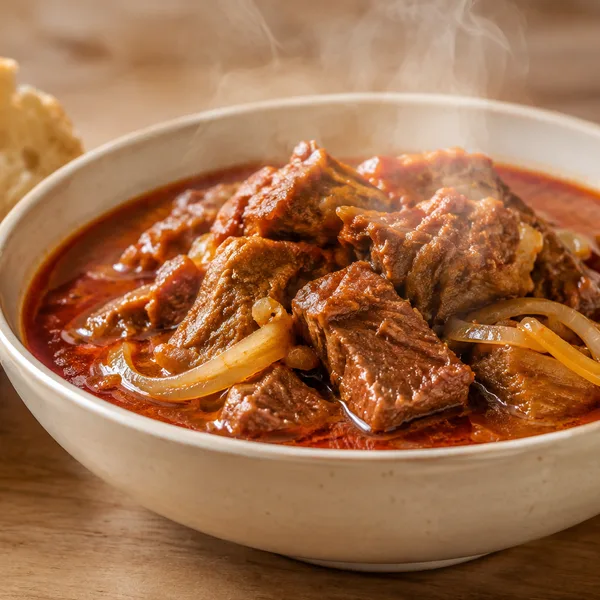
Here's the part that matters even if you never visit a chichería: chicha de jora is a backbone ingredient of criollo cooking. Its gentle acidity and malty depth do for Peruvian braises what wine does for French ones. Adobo arequipeño — pork marinated and braised in chicha — is the flagship; seco de cabrito and many northern stews lean on it the same way. Outside Peru, bottled chicha de jora occasionally appears in Latin groceries; the working substitutes in cooking are a light beer sharpened with a splash of cider vinegar, or dry white wine with a pinch of sugar. Neither is jora; both keep the braise honest until you find the real thing.
Jora, morada, and the family tree
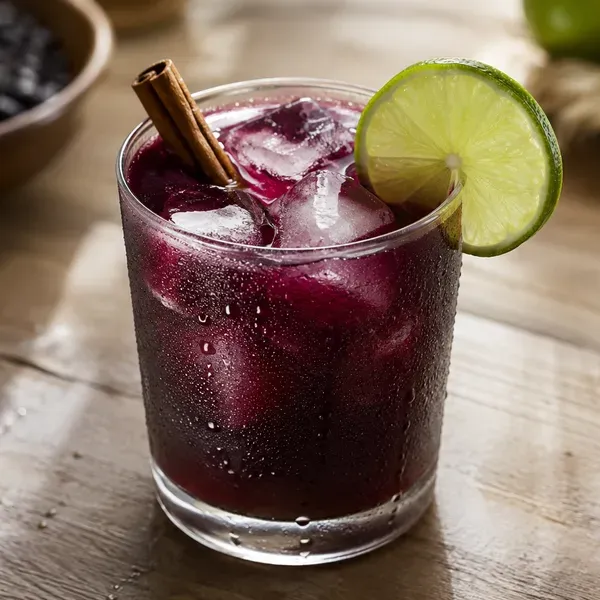
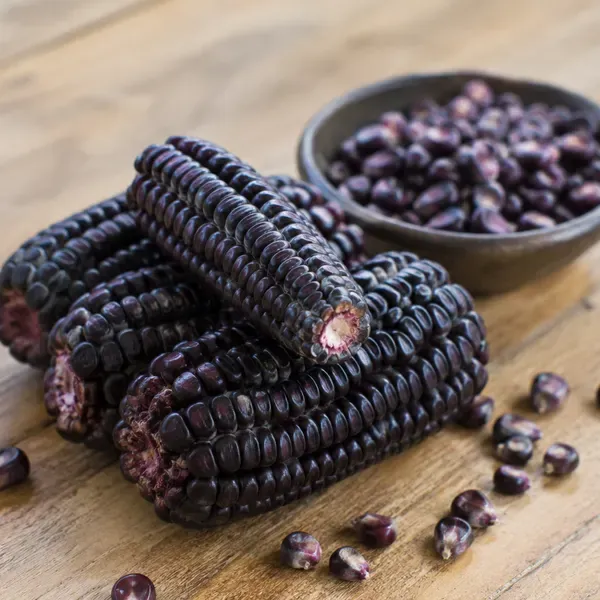
A note that saves dinner-table confusion: chicha de jora and chicha morada share a name and a corn-based soul but are different drinks entirely — jora is fermented and alcoholic, morada is a boiled, unfermented refresher safe for every age at the table. "Chicha," in the Andes, is less a recipe than a category: the great family of corn drinks, of which this site now covers both matriarchs. With this article, the trilogy of maíz morado, morada and jora is complete — corn, in all its Andean destinies.
Tasting notes for the first-timer
Expect cloudiness (it's unfiltered and proud), a sour-cider brightness, corn sweetness underneath, and a freshness that makes sense at altitude under strong sun. Frutillada, the strawberry-fermented variant of the Cusco valley, is the gateway version for skeptics. And the etiquette is simple: accept the glass, pour the first splash to the earth if your hosts do, and don't rush — chicha is a conversation pace, not a shot. (This one's for readers of legal drinking age — the alcohol content is usually modest, but it is real.)
Where this fits on your table
As a drink, chicha de jora belongs to the same celebratory register as pisco sour — heritage in a glass, best enjoyed where it's made. As an ingredient, it points to the recipes we'll cook next on this site: the adobos and secos of the criollo braising tradition. And as a story, it completes what Andean Kitchen set out to show from the first article: that Peruvian food isn't a list of dishes but a five-thousand-year conversation between people and their crops — corn, potatoes, chiles — still going, still delicious, still poured first for the earth.

Junior Quintana learned to cook from his mother, Lina, in Junín, in the central Peruvian Andes — a kitchen where chicha morada simmered every Sunday and there were always native potatoes with cheese and choclo on the table. He started Andean Kitchen to share the food he grew up with, in English and without shortcuts: every recipe cooked and tested at home, where it's really made. His favorite dish is, and probably always will be, pachamanca. See how we cook, test and photograph.
Did you cook this?
Tell me how it went — including what did not work. I read every one, and with your permission I will put it on this page, with your first name, for whoever comes next.