

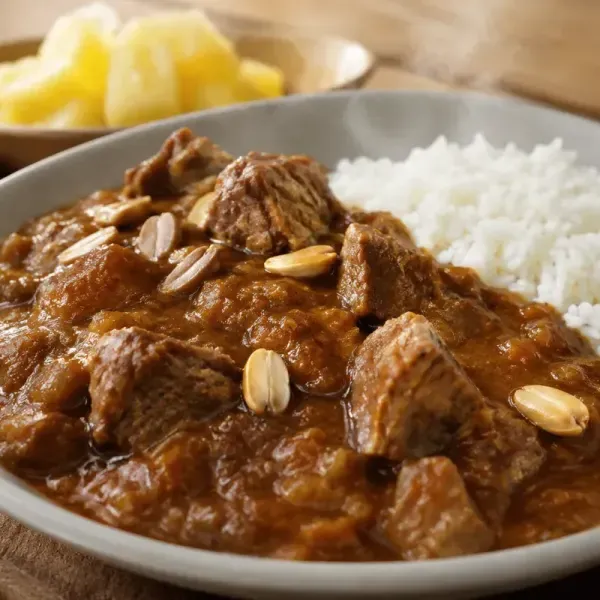
Adobo cusqueño shares its name and technique with adobo arequipeño — pork marinated and slow-cooked in a chicha-based sauce — but the timing is what sets it apart: this version is unmistakably breakfast food in Cusco, eaten early on a Sunday morning by people who are frankly con caña — hungover, in Peruvian — at markets that open de madrugada, before first light, specifically to feed them. The chicha de jora marinade does real work tenderizing the pork overnight, and the ají panca gives the sauce its dark, smoky color.
It's a dish with a genuine social ritual attached — small, unassuming restaurants in Cusco fill up specifically for Sunday morning adobo, a tradition that has as much to do with the timing as the recipe itself.
In Cusco this is breakfast, which takes some explaining to anyone who did not grow up with it. You eat pork stew at seven in the morning, on a Sunday, and nobody finds it strange. Quechua is still spoken on those streets and the pot has a Quechua name in it: t'impuy, to boil, the same root behind the dish called timpu that Cusco eats at Carnival. Our own Sunday in Junín looked different — soup, not stew — but the logic is identical: the day starts with something that took all night to be ready.
The overnight marinade isn't optional here
Because this dish is traditionally started the night before and finished the next morning, the marinade has real time to work into the pork — a shorter marinade genuinely changes the final flavor and tenderness. If you're making this on a compressed timeline, a minimum of a few hours is workable, but the overnight version is noticeably better.
This dish is built around a specific rhythm: marinate at night, cook and eat the next morning. Compress that timeline and something is lost.
Let the sauce reduce uncovered at the end
The final uncovered simmer thickens the sauce from a thin marinade into something that properly clings to the pork — skipping this step leaves the dish soupier and less concentrated in flavor than it should be.
Cusco's adobo and Arequipa's are not the same dish
Peru has two famous pork adobos and they get confused constantly, including by Peruvians. Both marinate pork overnight in chicha de jora, both are Sunday food, both are eaten early. The differences are real but small enough that people argue about them: the Arequipa version leans on ají panca with rocoto in the background and arrives redder and more openly spicy, served in a picantería with bread. Cusco's is gentler and more aromatic, heavier on oregano and cumin, and its broth is thinner — closer to a soup you eat with a spoon than a stew you mop.
We are not going to referee that argument, and neither should you. What is worth knowing is that if you have made one, you can make the other, and the honest way to find out which you prefer is to cook both on two different Sundays and pay attention.

The cut, and why this broth stays thinner
Cusco uses pork with bone in it — ribs, neck, shoulder pieces — and that is part of why the result sits closer to a soup than to a stew. The bones give the broth its body without the reduction that Arequipa pushes for, and the dish is meant to be eaten with a spoon rather than mopped with bread.
The final uncovered simmer still matters, but the goal is different: enough reduction that the sauce clings to the meat, not so much that you lose the broth. If the pot goes thick and glossy, you have made the other adobo — a good dish, and not this one.
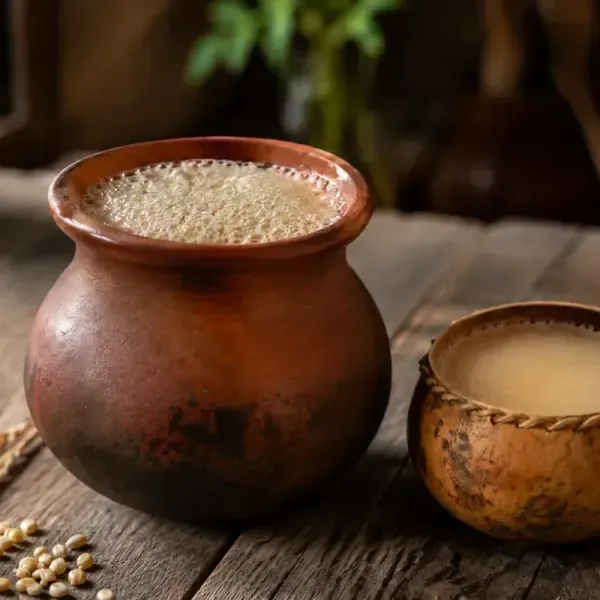
On the chicha de jora and what to use in its place, the Arequipa version covers the substitutes in detail; everything there applies here.
The recipe
Ingredients
- 1 kg pork shoulder, cut into large chunks
- 2 cups chicha de jora
- 3 tbsp ají panca paste
- 6 garlic cloves, minced
- 1 onion, sliced
- 1 tsp oregano · 1 bay leaf
- 2 tbsp oil · salt · pepper
- Crusty bread, to serve
Method
- Marinate the pork overnight with chicha de jora, ají panca, garlic, oregano, salt and pepper.
- Brown the pork in oil in batches the next morning.
- Simmer. Add onion, bay leaf and the marinade. Cover and simmer 1 to 1.5 hours.
- Reduce uncovered another 10-15 minutes before serving.
Troubleshooting, from experience
Pork tastes underseasoned. The marinade was too short. Give it real overnight time if possible.
Sauce too thin. Skipped the final uncovered reduction. Let it simmer uncovered until properly thickened.
Pork not tender enough. Needed more braising time. Pork shoulder is forgiving of a longer simmer — extend it rather than rushing.
What to serve it with
Crusty bread for dipping into the sauce is essential — this is breakfast built around bread, not rice.
Questions people ask
Why is this eaten for breakfast? Because it is cooked overnight and ready at dawn, and because Cusco built a Sunday ritual around it. Small restaurants open before first light specifically for adobo, and the crowd is mostly people who were out late. Pork stew at seven in the morning stops being strange after the first time.
How is it different from adobo arequipeño? Both marinate pork overnight in chicha de jora and both are early Sunday food. Cusco leans on oregano and cumin, comes out gentler and more aromatic, and keeps a thinner broth. Arequipa leans on ají panca, arrives redder and more openly spicy, and is served with bread for dunking.
Can I marinate it for less than overnight? A few hours works and the dish is still good. What you lose is the depth the acidity develops over a full night — it works through the whole piece rather than just the surface. If you are short on time, extend the cooking a little to compensate.
What is t'impuy? Quechua for “to boil”, and the root behind timpu, the dish Cusco eats at Carnival. It is worth knowing because Quechua is still spoken on the streets where this adobo is served, and the pot carries the language in its name.

Junior Quintana learned to cook from his mother, Lina, in Junín, in the central Peruvian Andes — a kitchen where chicha morada simmered every Sunday and there were always native potatoes with cheese and choclo on the table. He started Andean Kitchen to share the food he grew up with, in English and without shortcuts: every recipe cooked and tested at home, where it's really made. His favorite dish is, and probably always will be, pachamanca. See how we cook, test and photograph.

Did you cook this?
Tell me how it went — including what did not work. I read every one, and with your permission I will put it on this page, with your first name, for whoever comes next.