
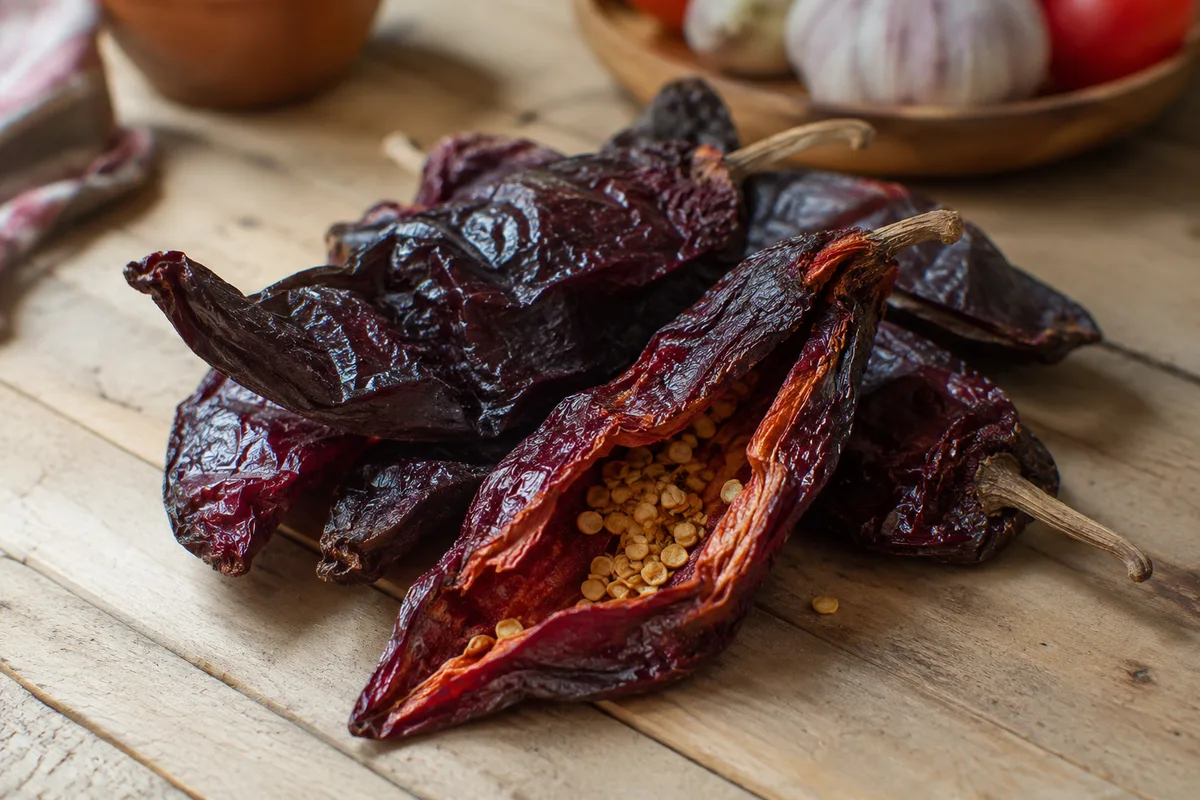
If ají amarillo is the bright, fruity backbone of Peruvian cooking, ají panca is its quieter, deeper counterpart — a dried, deep-red chile with mild heat and a smoky, faintly raisin-like sweetness. It is the backbone of the aderezo — the fried base of onion, garlic and chile that starts perhaps half of Peruvian cooking — and it's what gives dishes like escabeche de pollo and parihuela their reddish-brown color and rounded, mellow warmth, standing in the background of a dish rather than announcing itself the way amarillo often does.
Between the two, Peruvian kitchens reach for panca whenever a dish calls for depth and color without a lot of heat — braises, escabeches, marinades for grilled meat — and reach for amarillo whenever a dish needs brightness and a more forward, fruity spice.
What is ají panca, and what does it taste like?
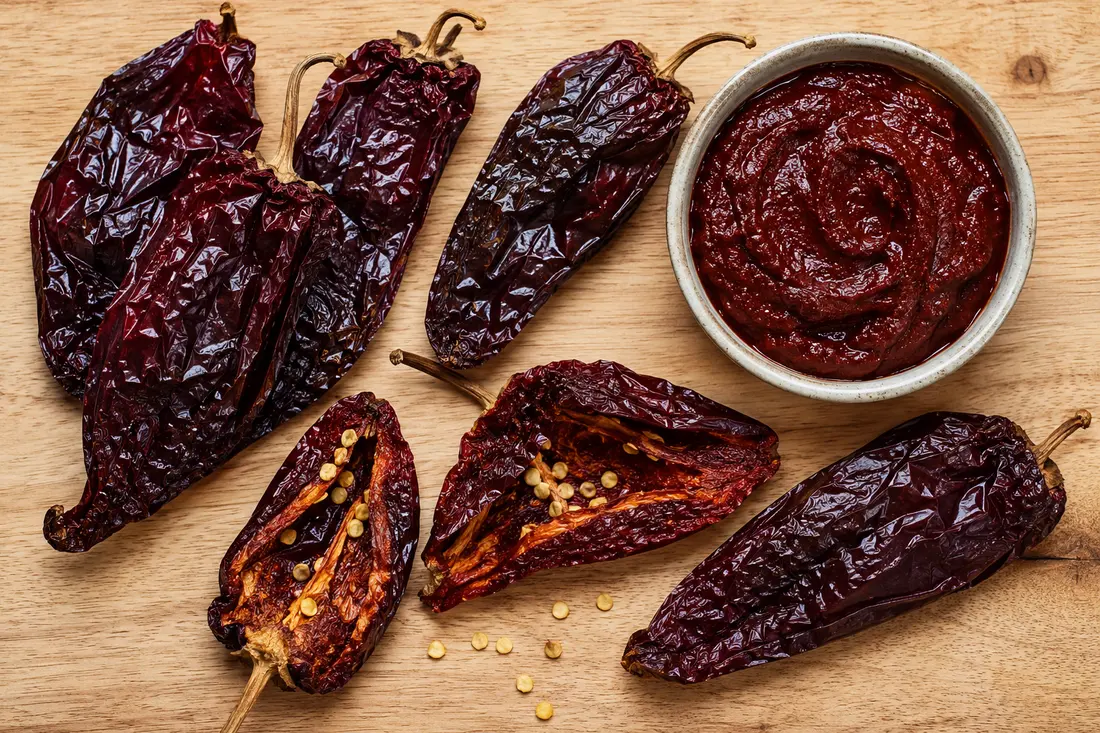
Long before the Spanish arrived with the word ají, chiles like this one were uchu in Quechua, and the Andes had been growing them for thousands of years. Ají panca is the dried form of a specific Peruvian chile, sun-dried until the flesh turns a deep brick-red and wrinkled, similar in appearance to a dried ancho or guajillo chile from Mexican cooking, though the flavor profile is distinctly its own. Its heat is genuinely mild — well below ají amarillo — with a flavor closer to dried fruit and a light smokiness than anything sharply spicy.
Panca isn't chosen for heat. It's chosen for the deep, almost sweet shadow it casts under everything else in a dish.
How Peruvian kitchens prepare ají panca
- Rehydrated and blended. Whole dried pods are soaked in hot water until soft, then seeded and blended into a smooth paste — the most common form it takes in home cooking.
- As a paste, straight from a jar. Pre-made ají panca paste, sold alongside ají amarillo paste, is the practical everyday version most cooks actually reach for.
- Ground into a marinade. For grilled meats, ground or pasted panca mixed with garlic, vinegar and cumin makes a quick, deep-flavored rub.
Where ají panca shows up in Peruvian cooking
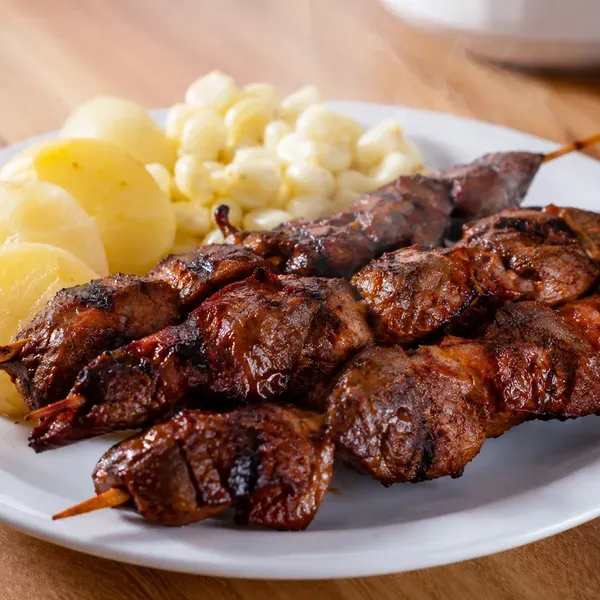
Ají panca is the color and background note in escabeche de pollo, parihuela, and countless marinades for anticuchos and grilled meats — it's a workhorse ingredient rather than the star of any one specific dish, which is exactly why it's easy to underestimate until it's missing.
Where to buy ají panca, and how to keep it
Outside Peru you'll meet ají panca in two forms, and they are not equivalent.
- Whole dried pods, sold in bags at Latin American groceries. Better flavor, and they keep for a year in a sealed jar somewhere dark. You'll need to soak, seed and blend them yourself, which takes twenty minutes of waiting and two of work.
- Jarred paste, sold beside the ají amarillo paste. This is what most Peruvian kitchens actually use on a Tuesday, ours included. Once opened it keeps a few weeks in the fridge; a thin film of oil on the surface makes it last longer.
Buying the pods, look for ones that are still slightly pliable rather than brittle — a pod that cracks when you bend it has been on the shelf too long and will taste of dust. The color should be deep brick red, not brown.
A note on the name: panca is the Peruvian Spanish word for the dry husk or leaf that wraps a corn cob, which is roughly what a dried chile pod looks and feels like. Whether the chile took its name from that resemblance is not something we can prove, so we won't claim it — but it's what every cook we know assumes.
Ají panca substitutes, honestly ranked
- Ají panca paste — the real ingredient in jarred form, and the easiest way to have it on hand outside Peru.
- Dried ancho chile, rehydrated and blended. The closest substitute in body and mild heat, though it lacks panca's particular fruity-smoky character.
- Guajillo, rehydrated. A reasonable second choice, slightly more tannic and less sweet than panca.
- A little tomato paste and smoked paprika. Not a real substitute, but a workable stand-in for color and a hint of smokiness in a pinch.
For dishes where panca is doing real work — escabeche above all — it's worth the wait for the real paste rather than settling permanently for a substitute.
Questions people ask
Is ají panca spicy? Barely. It sits well below ají amarillo and a long way below rocoto. It is chosen for color and for a deep, faintly raisin-like sweetness rather than for heat — which is exactly why it turns up in so many dishes without anyone noticing it is there.
Can I use ancho or guajillo instead? Ancho is the closest: similar body, similar mild heat, though it lacks the particular fruity smokiness panca brings. Guajillo is a reasonable second, slightly more tannic and less sweet. Both are much better than paprika, which gives you color and nothing else.
Pods or jarred paste? The pods have better flavor and keep a year in a sealed jar. The paste is what most Peruvian kitchens actually reach for on a weeknight, ours included. If you buy pods, look for ones still slightly pliable — a pod that cracks when you bend it has been on the shelf too long and will taste of dust.
How is it different from ají amarillo? They do opposite jobs. Amarillo is bright, fruity and forward, and it announces itself. Panca is dark, mild and structural, and it works underneath everything else. Most Peruvian kitchens keep both open at once, and a great many dishes use them together.

Junior Quintana learned to cook from his mother, Lina, in Junín, in the central Peruvian Andes — a kitchen where chicha morada simmered every Sunday and there were always native potatoes with cheese and choclo on the table. He started Andean Kitchen to share the food he grew up with, in English and without shortcuts: every recipe cooked and tested at home, where it's really made. His favorite dish is, and probably always will be, pachamanca. See how we cook, test and photograph.
Did you cook this?
Tell me how it went — including what did not work. I read every one, and with your permission I will put it on this page, with your first name, for whoever comes next.