
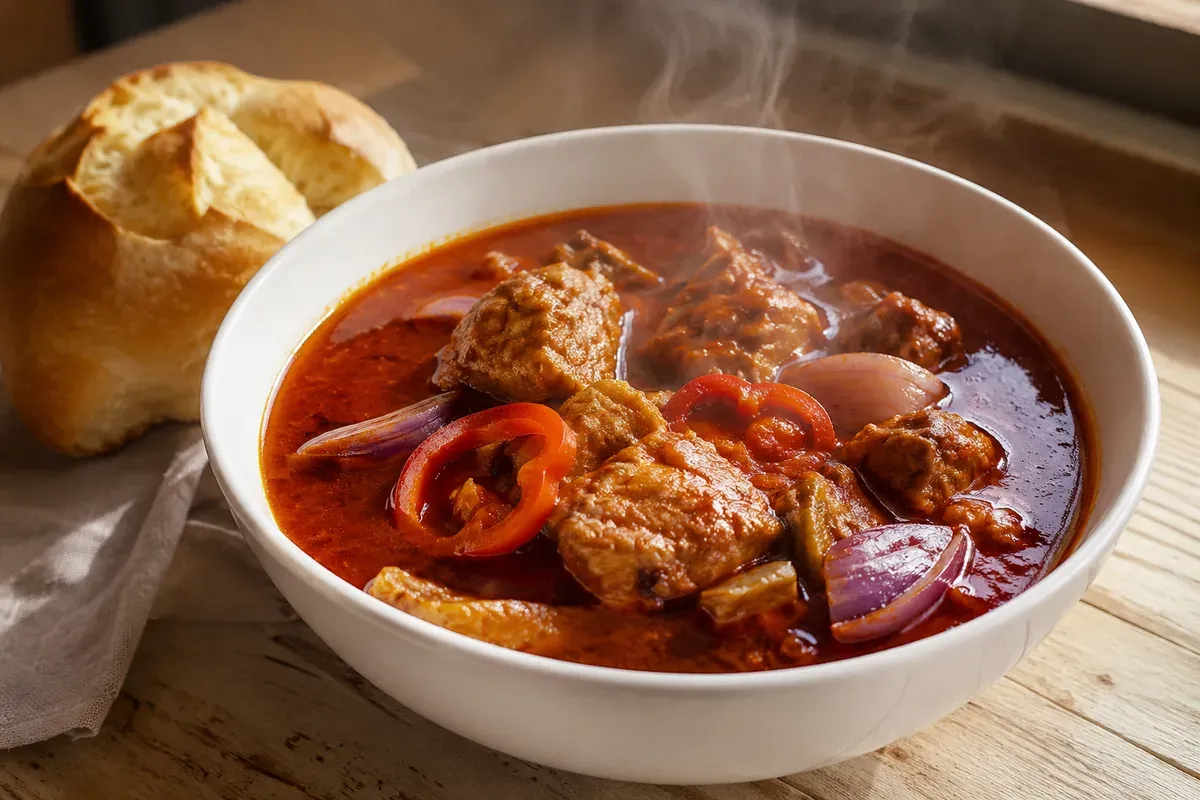
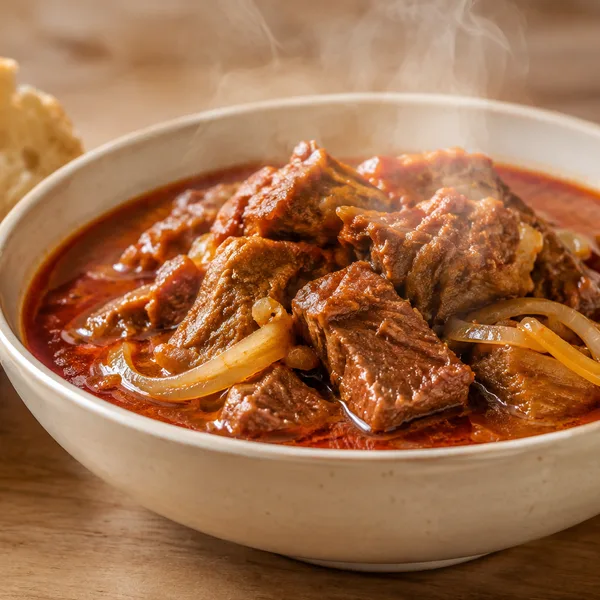
Arequipa eats its grandest pork dish at an hour most cities reserve for regret: dawn on Sunday, when the picanterías open early just for adobo and families arrive straight from — or instead of — early mass. A picantería is not simply a restaurant: it is an Arequipa institution, usually run by women, built around chicha and dishes hot enough to earn the name, and old enough that Peru declared them cultural heritage. The dish is pork shoulder marinated overnight in chicha de jora and ají panca, then braised until it surrenders, served in its red broth with petals of onion and a bread roll whose only job is to dunk. We'll give chicha de jora — the drink itself — its own article soon; for now, here's what it does best: turning a shoulder of pork into Sunday's finest excuse to sleep in.
I've never made the dawn pilgrimage to a picantería in Arequipa, but the logic of this dish isn't foreign to our kitchen either. My mother's chicha de jora went into more than the glass; a spoonful found its way into more than one Sunday braise long before I knew Arequipa had turned the same idea into a ritual with its own opening hours.
The chicha does the work
Chicha de jora is the braise's entire personality: gentle acidity that tenderizes overnight, malty depth that no broth supplies, and a faint sourness that keeps two hours of pork fat honest. Outside Peru, a light beer sharpened with cider vinegar gets you close; bottled chicha from a Latin grocery gets you home. The second pillar is ají panca — the dark chile of anticuchos — which paints the broth brick-red and adds its raisin-smoke bass note without meaningful heat.
Adobo is a marinade that decided to become the soup. Nothing is drained, nothing discarded: the marinade IS the braise.
Low, slow, and the onion at the end
The method is patience in pot form: the pork and its complete marinade go onto the gentlest simmer until the meat yields to a spoon — 90 minutes to two hours, more at our altitude, as always. The onions enter only for the last twenty minutes, in thick petals, so they arrive at the bowl silky but intact; onions cooked from the start dissolve into sweetness and the dish loses its second texture. Traditional houses swear by clay pots; any heavy Dutch oven keeps the faith.
Chicha de jora, and the honest substitutes
The braise is built on chicha de jora, the fermented corn drink, and it is doing three things at once: acidity that tenderizes overnight, malty depth no broth supplies, and a faint sourness that keeps two hours of pork fat honest. Outside Peru:
- Bottled chicha de jora from a Latin grocery. The real thing, and increasingly findable. If you see it, buy two.
- Light beer with cider vinegar. A bottle of lager plus two tablespoons of cider vinegar per cup gets you the acidity and some of the malt. The closest common-pantry answer.
- Dark beer alone. Malty enough, but without the sourness the pork fat needs pushing back against. Add a splash of vinegar anyway.
What does not work is wine or plain broth. Wine brings the wrong kind of acid and its own flavor; broth brings nothing at all and you end up with boiled pork in red water.
The cut of pork
Shoulder, bone in if you can get it. This is a two-hour braise and it needs collagen and fat to break down into the broth — that is where the body comes from. Loin and chops turn dry and stringy no matter how gently you cook them, and no amount of marinade rescues a lean cut from a long simmer.
Cut it into large chunks, not cubes. Small pieces overcook before the broth has finished developing.
The recipe
Ingredients
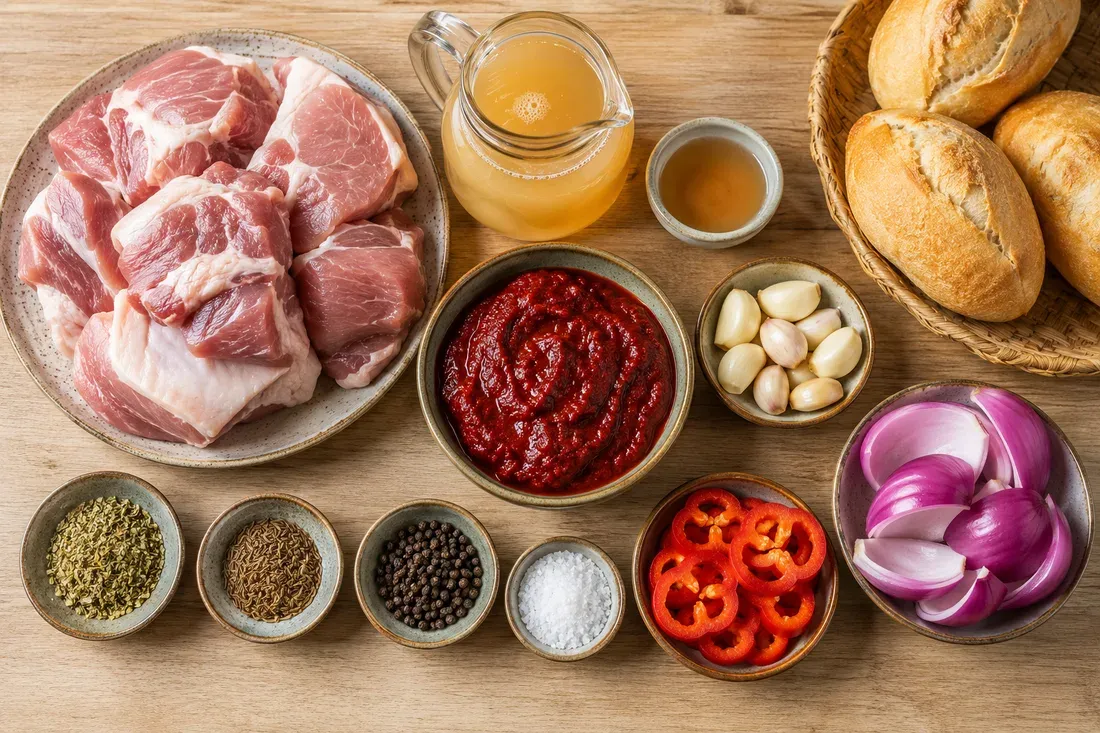
- 1.5 kg pork shoulder, in fist-sized chunks, some fat left on
- 2 cups chicha de jora — or light beer + 2 tbsp cider vinegar
- 4 tbsp ají panca paste
- 6 garlic cloves, ground
- 1 tbsp dried oregano · 1 tsp cumin · 1 tsp black pepper · salt
- 2 red onions in thick petals · 1 rocoto or hot chile in rings (optional, Arequipa says obligatory)
- Crusty rolls — pan de tres puntas if you can dream it, any good roll if you can't
Method
- Tonight: pork plus chicha, panca, garlic and spices in a bowl. Cover, refrigerate, sleep well.
- Tomorrow: everything into a heavy pot, water to barely cover, the gentlest simmer, lid ajar. 1½–2 hours, until spoon-tender. Skim once early.
- Final 20 minutes: onion petals (and rocoto) in. Salt the broth to confident.
- Serve in deep bowls — meat, onions, plenty of broth — with bread and no cutlery pretensions. Sunday optional but recommended.
Troubleshooting, from experience
The pork is tough at 2 hours. It's not done arguing yet — shoulder always concedes, sometimes at hour 2½. Altitude adds time; impatience adds nothing.
The broth is harsh. Vinegar-heavy substitute chicha. Balance with a teaspoon of sugar and ten more minutes.
The onions vanished. They went in at the start. Last twenty minutes — the dish's only strict appointment.
What to serve it with
Bread and the broth are the meal; causa limeña beside it builds the full picantería table, and a glass of chicha morada closes the circle for anyone skipping the fermented version. The dawn schedule we leave to Arequipa and to you.
Questions people ask
Do I have to marinate it overnight? It makes a real difference. Four hours gets you partway; overnight is what lets the acidity work through the whole piece rather than just the surface. If you are short on time, marinate what you can and extend the braise a little instead.
Is adobo arequipeño the same as adobo cusqueño? Related but not the same. Both are pork braised in chicha, and the seasonings and the balance differ by region — Arequipa leans on ají panca and serves it at dawn on Sunday with bread for dunking. They are worth eating side by side rather than treating as one dish.
Why do the onions go in at the end? So they arrive silky but still intact. Onions added at the start dissolve into sweetness and the dish loses its second texture. Twenty minutes in thick petals is enough.
What do I serve with it? A crusty roll, and that is genuinely the tradition — the bread is there to dunk in the broth. Rice works if you want it more substantial, but in Arequipa the bread is not an afterthought.

Junior Quintana learned to cook from his mother, Lina, in Junín, in the central Peruvian Andes — a kitchen where chicha morada simmered every Sunday and there were always native potatoes with cheese and choclo on the table. He started Andean Kitchen to share the food he grew up with, in English and without shortcuts: every recipe cooked and tested at home, where it's really made. His favorite dish is, and probably always will be, pachamanca. See how we cook, test and photograph.
Did you cook this?
Tell me how it went — including what did not work. I read every one, and with your permission I will put it on this page, with your first name, for whoever comes next.