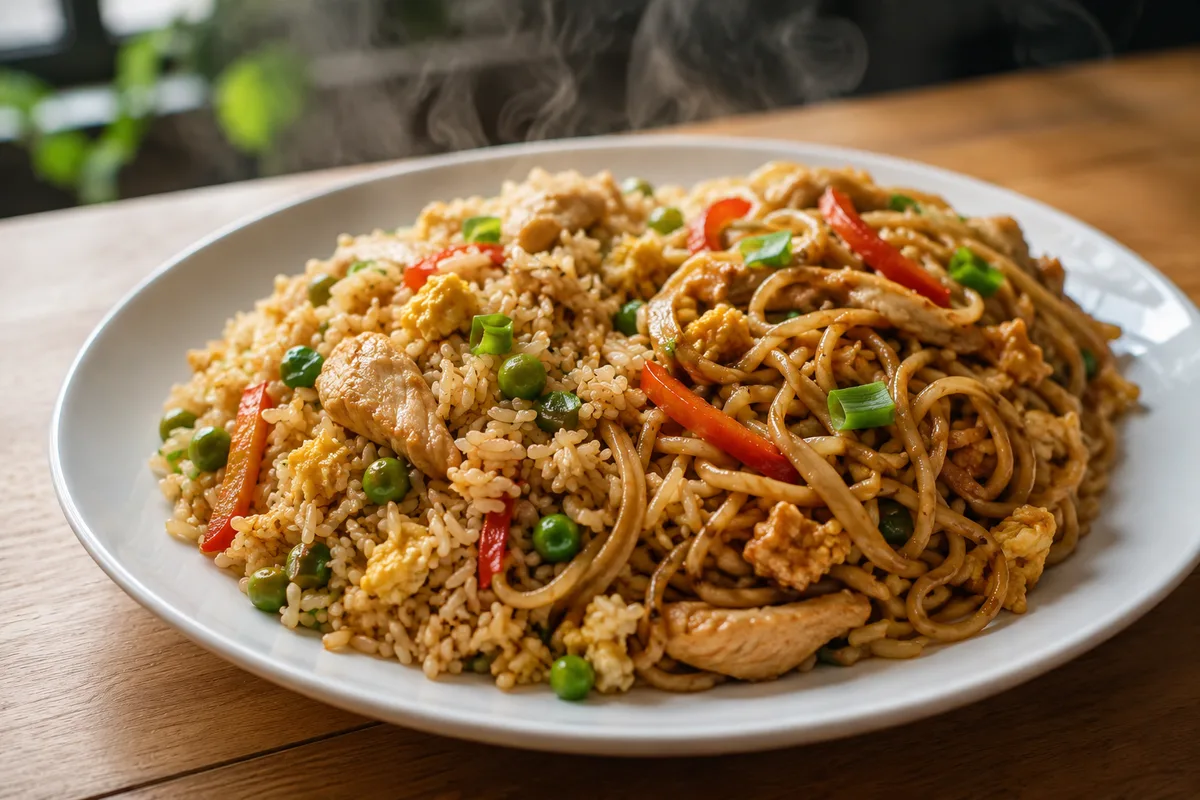
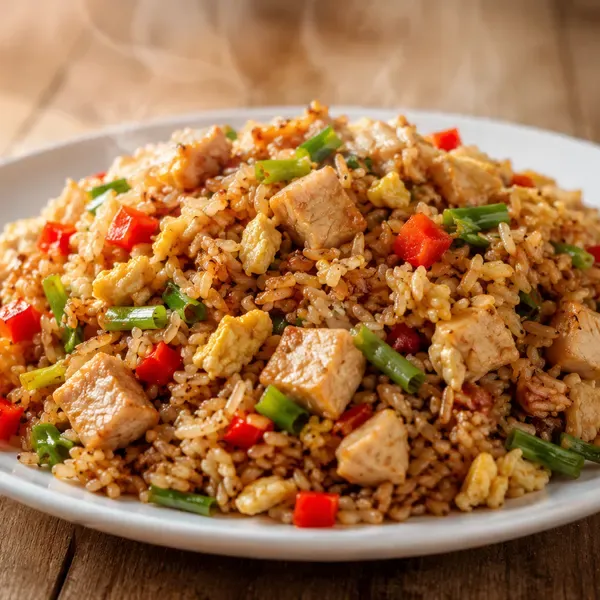
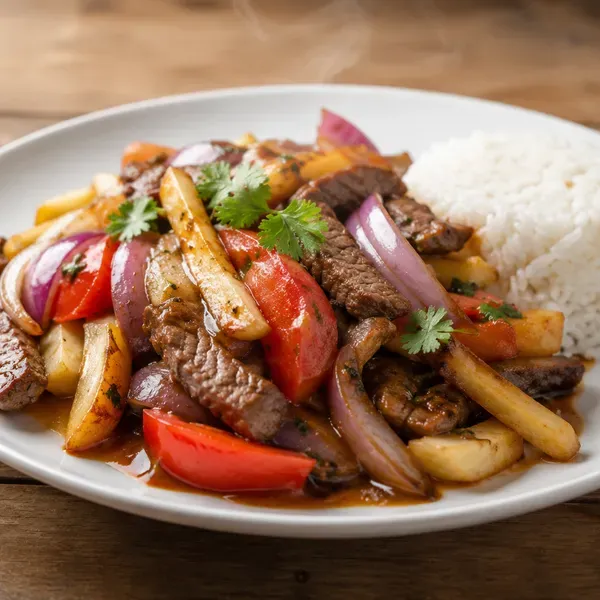
Aeropuerto solves a problem every chifa regular eventually runs into: wanting arroz chaufa and tallarín saltado in the same sitting without ordering two full plates. The solution is exactly what the name suggests — the two dishes served side by side on one plate, like runways meeting at an airport, chicken and vegetables tying the two halves together into something that reads as one dish rather than two leftovers sharing space.
It's less a fixed recipe than a practical chifa habit, born from restaurant kitchens that were already making both components separately and realized customers would rather have both than pick one.
The first time I ordered aeropuerto I was fifteen and genuinely could not choose between chaufa and tallarín saltado. The waiter wrote it down before I finished explaining myself, which tells you how often he'd heard it. Every chifa in Huancayo keeps it on the menu for exactly that customer. (Chifa itself comes from Cantonese — roughly "to eat rice" — and arrived in Peru with the cooks who built these kitchens.) It is not an elegant dish. It's what you order when you have a serious bajón — the specific, undignified hunger that arrives late and refuses to negotiate — and you're hungry in two directions at once.
Two separate cooks, one shared prep
The trick to aeropuerto isn't complexity — it's efficient batching. Cook the chicken, eggs and vegetables once, then split them in two directions: half goes into the rice, half into the noodles. Trying to cook everything twice from scratch defeats the point of a dish built for convenience in the first place.
Aeropuerto isn't two recipes stapled together. It's one prep, split cleanly down the middle.
Keep the rice cold, the noodles freshly tossed
The fried rice side follows the same rule as standalone arroz chaufa — day-old, cold rice fries up separate and distinct, while fresh warm rice turns gummy. The noodle side, on the other hand, wants to be tossed and served promptly, following the same logic as tallarín saltado. Treating both halves by their own separate rules is what keeps the plate from tasting like a compromise.
Chifa is its own cuisine, not Chinese food served in Peru
Chinese workers began arriving on the Peruvian coast in 1849, most of them from Guangdong, and the kitchens they eventually opened did not stay Chinese for long. They cooked Cantonese technique with what the coast actually had — ají, lime, potato, and far more soy sauce than a kitchen back home would have used — and Peruvians ate it until it stopped registering as foreign. What came out the other side belongs to neither country on its own.
You can hear that history in the vocabulary before you taste it. Soy sauce is sillao, ginger is kion, and the fried dumpling is wantán — all three entered Peruvian Spanish from Cantonese and never left. A Peruvian asking for sillao is not reaching for a foreign word. It is simply what the bottle is called here.
What changes from one chifa to the next
Aeropuerto is a habit rather than a fixed recipe, so no two kitchens plate it identically. Chicken is the common version, but pork, beef and mixed seafood all turn up, and some places fold in strips of wantán or drop a fried egg over the join. What never changes is the split: arroz chaufa on one side, tallarín saltado on the other, and nobody stirs the two together.
The name has a second explanation worth knowing. The runway story is the one you hear most often, but plenty of cooks will tell you it is simply what you call a plate with two destinations on it. Neither version is documented anywhere — it is street vocabulary, and street vocabulary rarely leaves a paper trail.
The recipe
Ingredients
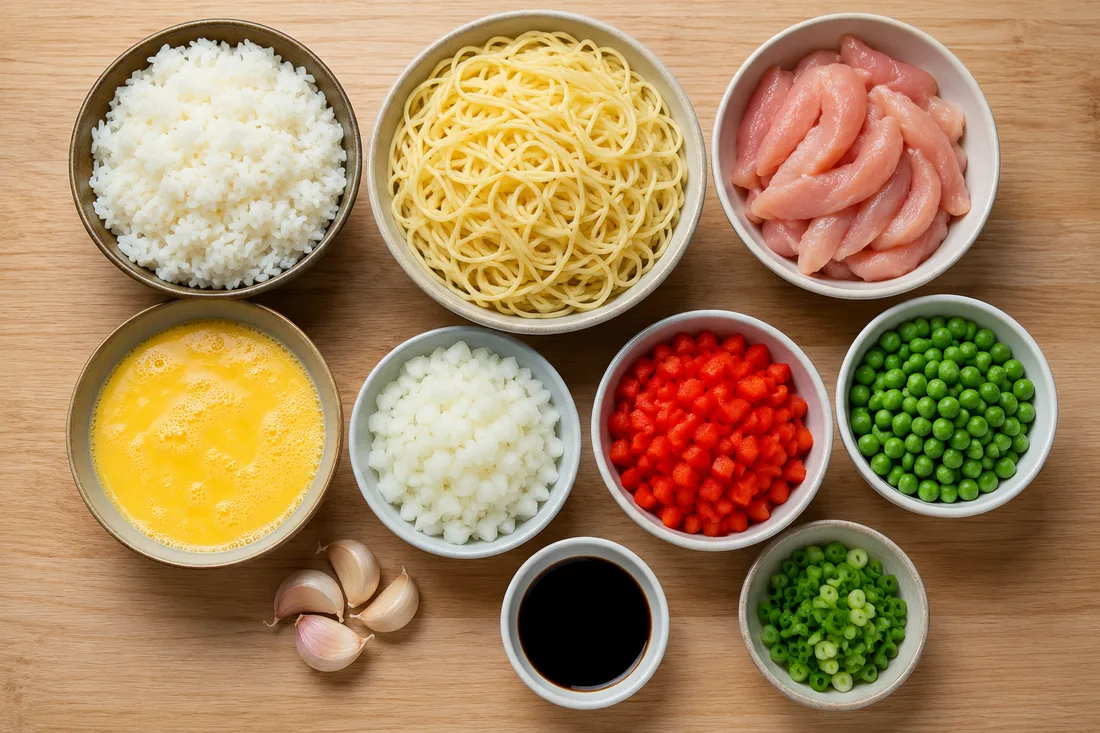
- 2 cups cooked, cooled rice
- 200g spaghetti or egg noodles, cooked
- 300g chicken breast, cut into strips
- 2 eggs, beaten
- 1 onion, diced · 3 garlic cloves, minced
- 1/2 cup diced red bell pepper · 1/2 cup peas
- 4 tbsp soy sauce, divided
- 2 scallions, sliced
- 3 tbsp oil · salt · pepper · ground cumin
Method
- Stir-fry the chicken until cooked through. Set aside.
- Scramble the eggs lightly, set aside, then stir-fry onion, garlic, bell pepper and peas.
- Split everything in two. Toss one portion with rice, eggs and half the soy sauce.
- Toss the other portion with the noodles and remaining soy sauce.
- Plate the rice and noodles side by side, scattered with scallion.
Troubleshooting, from experience
Rice side turned gummy. Fresh, warm rice was used instead of cold, day-old rice. Refrigerate rice overnight before this recipe.
Noodle side clumped. The noodles sat too long after draining without a little oil tossed through. Toss immediately after draining.
Plate tastes uneven, one side blander than the other. Soy sauce wasn't distributed evenly between the two halves. Season each side individually, tasting as you go.
What to serve it with
Aeropuerto is a complete meal on its own — no side needed, since it's already two dishes in one.
Questions people ask about aeropuerto
Is aeropuerto a real dish or just a double order? It is a real menu item with its own name and its own price. Chifas build the two halves from one shared prep rather than plating two full portions side by side, which is what makes it a dish instead of a large order.
Can I use freshly cooked rice? Not for the chaufa half. Warm rice steams instead of frying and the grains clump together. Cook the rice the day before and refrigerate it uncovered — the drying out is the point, not an accident.
What noodles work if I cannot find Chinese egg noodles? Spaghetti works, and it is what plenty of Peruvian home kitchens reach for anyway. Cook it a minute short of the package time, drain it, and toss it with a little oil so it does not clump while the rest of the pan catches up.
Is sillao the same as ordinary soy sauce? Close enough to substitute directly. Peruvian sillao tends to be a little sweeter and less salty than Japanese soy sauce, so if you are using a Japanese brand, start with less and taste before adding more.
Junior Quintana learned to cook from his mother, Lina, in Junín, in the central Peruvian Andes — a kitchen where chicha morada simmered every Sunday and there were always native potatoes with cheese and choclo on the table. He started Andean Kitchen to share the food he grew up with, in English and without shortcuts: every recipe cooked and tested at home, where it's really made. His favorite dish is, and probably always will be, pachamanca. See how we cook, test and photograph.
Did you cook this?
Tell me how it went — including what did not work. I read every one, and with your permission I will put it on this page, with your first name, for whoever comes next.