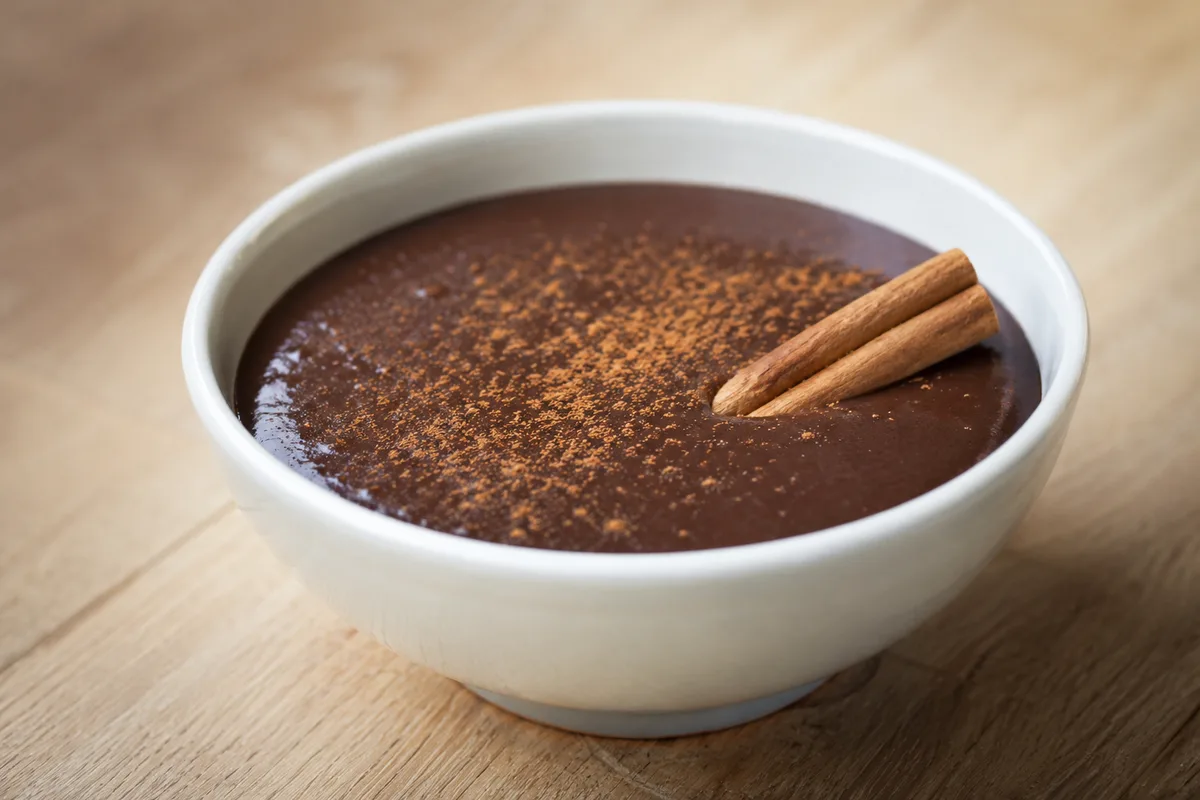
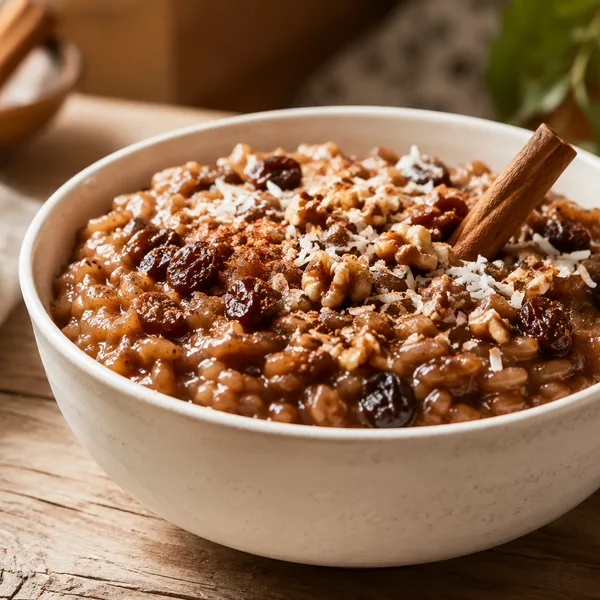
Frejol colado is exactly what the name says — strained, blended beans — turned into something genuinely hard to place if you didn't know the ingredient list going in. Black beans, cooked and blended completely smooth, simmer down with milk, sugar, cinnamon and clove until they take on a thick, glossy texture closer to a fruit butter or dulce de leche than anything you'd associate with beans. It's an Ica specialty, distinctly regional the way sopa teóloga and carapulcra are.
The dish makes more sense once you consider that beans, like chickpeas or even red beans elsewhere, have real natural sweetness and a creamy texture once fully cooked and puréed — frejol colado just leans into that quality rather than treating beans as strictly savory.
We're sierra people and frejol colado is not ours. The first time somebody put a glass of it in my hands I spent two spoonfuls trying to place the flavor and the next three refusing to accept the answer. That reaction is so common in Ica that people hand it over and then wait, watching, for the exact moment the coin drops. Miskisazo, as we say in the Quechua of Junín — and then, quieter: beans?
Blend until genuinely smooth, no shortcuts
Any remaining bean skins or unblended bits show up as an unwelcome grainy texture in the finished dessert — blend thoroughly, adding a splash of milk if needed to get the machine moving, until the purée is completely smooth before it goes anywhere near the pot.
The whole trick of this dessert is texture. If people can tell it's beans by feel, something was rushed at the blending stage.
Stir regularly as it thickens
Like manjar blanco, this mixture can scorch on the bottom of the pot as it reduces, especially in the final stretch — stir it frequently, and more often as it visibly thickens, to keep it smooth rather than burnt. You'll know it's a punto — at its point, the phrase every Peruvian cook uses instead of a timer — when the spoon leaves a track across the bottom of the pot that holds for a second before closing.
When it's eaten, and where it comes from
Frejol colado belongs to the south coast — Ica and Cañete above all — and it belongs to a calendar. It's a dulce de Semana Santa, a Holy Week sweet, sold from trays and glass cases in the streets of those towns in the days before Easter, when meat comes off the menu and the desserts take over. You'll find it the rest of the year too, but that's when it's everywhere at once.
It's also one of the clearest survivals of Afro-Peruvian cooking on this coast: a dessert built from a cheap, filling staple by people who had to make something worth eating out of what was available, and who succeeded so thoroughly that nobody now thinks of it as a compromise. The same instinct runs through carapulcra and through the sopa seca that travels with it.
Traditionally it's served in small glasses or spread thickly on bread, with sesame seeds toasted and scattered on top. A whole plate of it is empalagoso — cloying, the word Peruvians use for a sweetness that defeats you halfway through — and it is meant to be: you take a little, and you take it slowly.
The beans, and whether canned will do
Black beans are the standard, and dried ones give you a cleaner result than canned. Cook them plain — no salt, no aromatics, nothing that will turn up later in a dessert — until they are genuinely soft, well past the point you would stop for a savory dish. Undercooked beans never blend smooth, and grainy is the one texture this dessert cannot survive.
Canned beans work in a hurry. Rinse them thoroughly to get the packing liquid off, and expect to blend a little longer since they are firmer than beans you cooked yourself. What you lose is control over how soft they got.
Some households in Ica use red beans instead, and it is not a mistake — the dessert comes out slightly lighter in color and marginally sweeter. Black is more common and gives the deep near-chocolate look people expect.
The recipe
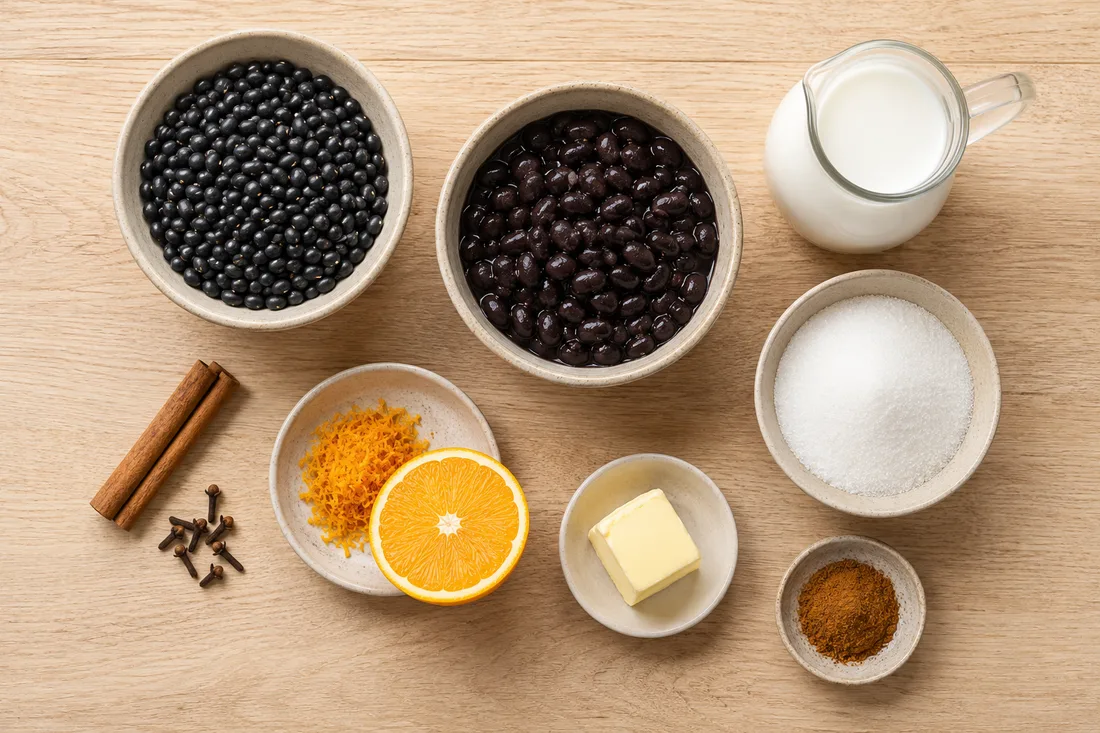
Ingredients
- 3 cups cooked black beans, drained
- 2 cups milk
- 1 cup sugar
- 1 cinnamon stick · 3 cloves
- Zest of 1 orange
- 2 tbsp butter
- Ground cinnamon, to finish
Method
- Blend the beans with a little milk until completely smooth.
- Combine with remaining milk, sugar, cinnamon, cloves and orange zest.
- Simmer, stirring frequently, 35-40 minutes until thick and glossy.
- Finish with butter stirred in, dusted with cinnamon.
Troubleshooting, from experience
Texture came out grainy. The beans weren't blended smooth enough. Blend thoroughly before cooking.
Mixture scorched. Not stirred often enough as it thickened. Increase attention in the final stretch.
Never thickened properly. Not enough simmering time. Be patient — it needs the full 35-40 minutes.
What to serve it with
Frejol colado is a standalone dessert, eaten by the spoonful, warm or chilled — no accompaniment needed.
Questions people ask
Does it actually taste like beans? No, and that is the entire point. Blended completely smooth and cooked down with milk, sugar, cinnamon and clove, it lands somewhere near dulce de leche or a fruit butter. People in Ica hand it over and then watch your face, waiting for the moment you work out what you are eating.
Why is my frejol colado grainy? The beans were undercooked or the blending was rushed. Bean skins and unblended bits show up as grit that no amount of cooking afterward fixes. Cook the beans until they are genuinely soft and blend until the puree is completely smooth, adding a splash of milk to get the machine moving.
How do I know when it is ready? When the spoon leaves a track across the bottom of the pot that holds for a second before closing. Peruvians call it being a punto, at its point, and it is the only measure anyone uses. It thickens further as it cools, so stop slightly before it looks finished.
How is it served? In small glasses, or spread thickly on bread, with toasted sesame scattered over the top. Small portions on purpose — a whole plate is empalagoso, and it is meant to be. You take a little and you take it slowly.

Junior Quintana learned to cook from his mother, Lina, in Junín, in the central Peruvian Andes — a kitchen where chicha morada simmered every Sunday and there were always native potatoes with cheese and choclo on the table. He started Andean Kitchen to share the food he grew up with, in English and without shortcuts: every recipe cooked and tested at home, where it's really made. His favorite dish is, and probably always will be, pachamanca. See how we cook, test and photograph.
Did you cook this?
Tell me how it went — including what did not work. I read every one, and with your permission I will put it on this page, with your first name, for whoever comes next.