
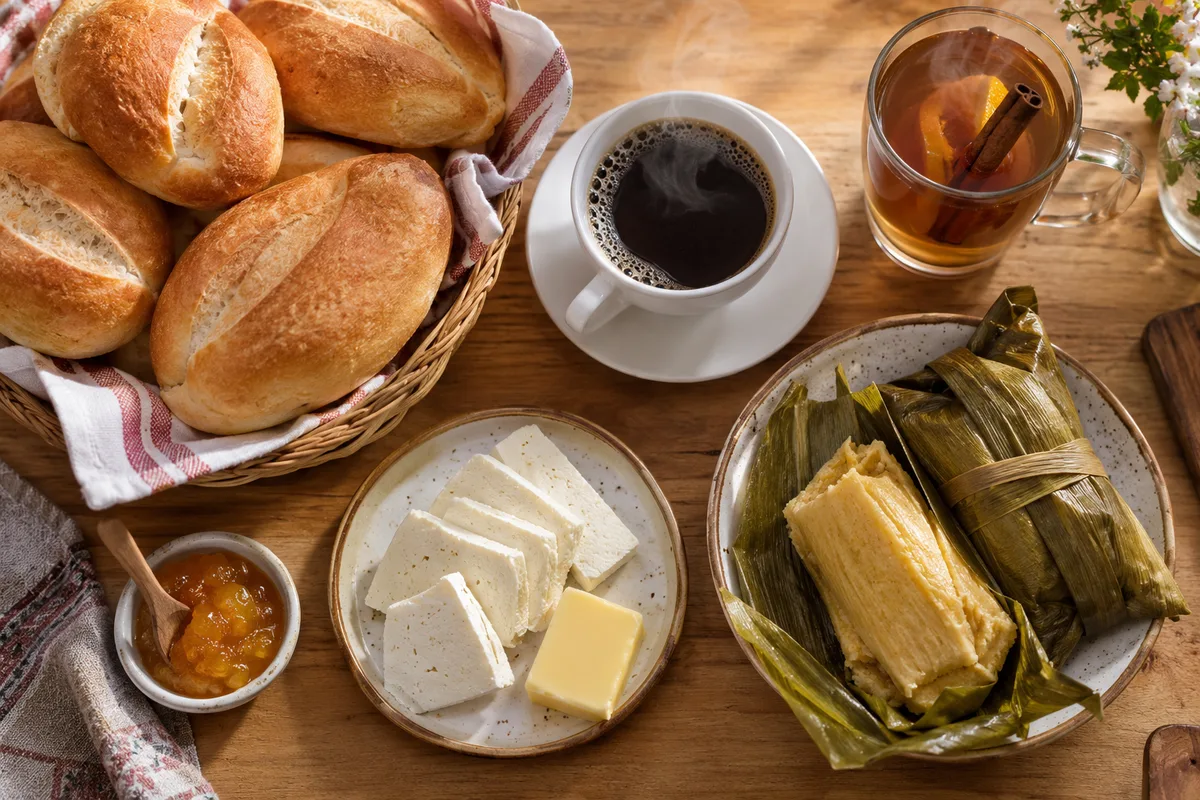
Ask what Peruvians eat for breakfast and you won't get one answer, because a Peruvian breakfast table isn't built around a single dish the way an American one leans on eggs or a British one leans on a fry-up. It's built around a rotation: what the neighborhood bakery had that morning, what's left from a Sunday market run, what the weather calls for, and what a particular household has always done. This page is about the shape of that rotation — what actually lands on the table together, at what hour, and how completely it changes the moment you change altitude.
The everyday version
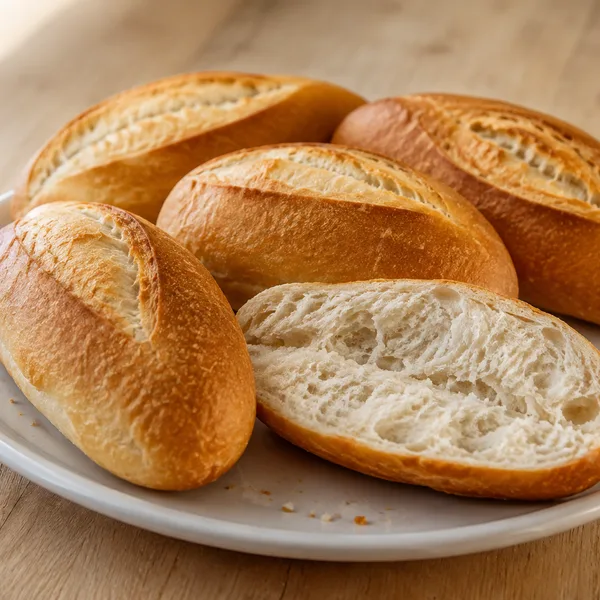
On an ordinary weekday, the table is modest: fresh pan francés bought that morning, butter, maybe a slice of queso fresco, and coffee or a mug of quáker con manzana for anyone who wants something warmer and heartier before school or work. It's fast, it's the same most days, and it's built entirely around bread that's never more than a few hours old.
The weekend version
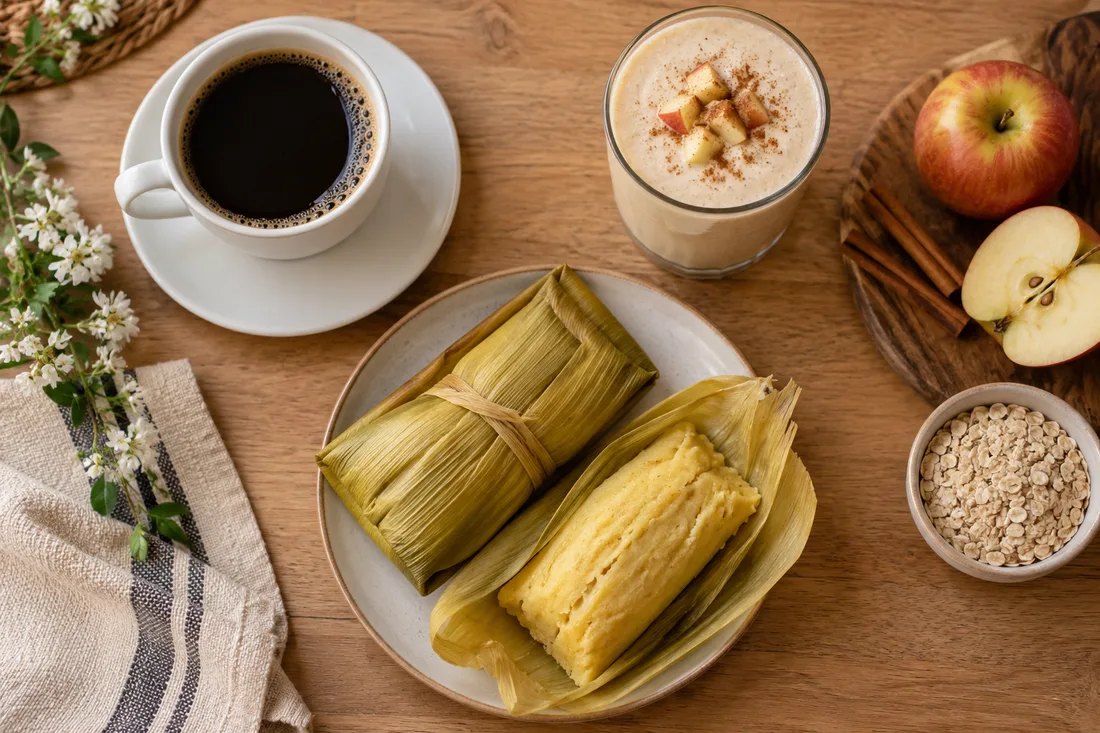
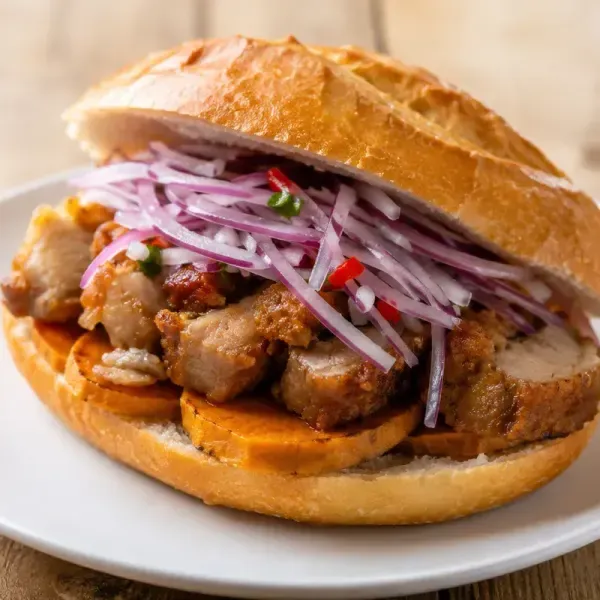
Sunday changes the math entirely. This is when tamales and humitas come out — bought from a seller working the block with a covered basket, or made at home the day before for the whole family — alongside pan con chicharrón for anyone who wants something more substantial. There's more time on a Sunday morning, and the breakfast table expands to match it.
The everyday breakfast is fast because the day demands it. The Sunday breakfast is slow because, for once, nothing does.
The street-corner version
Outside the home entirely, Peru's breakfast culture runs through street vendors as much as kitchens: a cart selling emoliente to office workers on their way in, a woman with a basket of tamales working a specific corner at a specific hour every single day, known by regulars without ever needing a sign. This informal economy of breakfast is as real and as reliable as any bakery, and often the first stop of the day for people who don't have time to cook at all.
Build your own Peruvian breakfast table
There's no wrong combination here — pick based on the day, the weather and how much time you actually have.
- Weekday, fast: pan francés with butter and cheese, plus coffee or quáker con manzana.
- Weekend, slow: tamales or humitas, plus pan con chicharrón if anyone's still hungry.
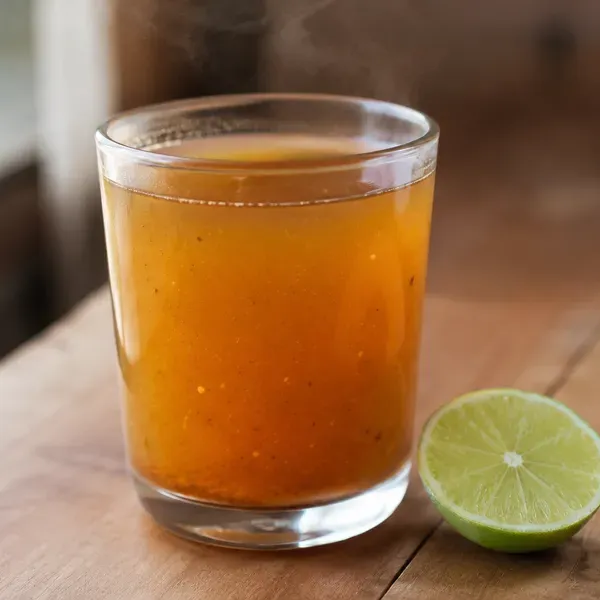
- Cold morning: a mug of emoliente or quáker con manzana, held with both hands.
Breakfast changes with the altitude
The one rule that holds everywhere in Peru is bread plus something warm. What changes is everything else, and it changes with where you are standing.
Up here in Junín, a little over three thousand two hundred meters, the morning is cold most of the year, and the warm drink comes first — before the bread, before anything solid. You hold the mug for a minute before you drink from it. Nobody designed that as a ritual; it is just what your hands want at six in the morning at this altitude. Emoliente, coffee, or a thick mug of quáker, and the bread comes after.
On the coast, in Lima or Trujillo, the morning is mild and the whole thing is lighter and later: pan francés, juice, coffee, out the door. Nobody is warming their hands on anything.
In the Amazon, plantain does the job that bread does in the mountains — fried in rounds, or mashed and pressed into tacacho, with whatever protein the house has that morning. Same structure, a starch and something warm, completely different ingredients.
What a visitor is actually served
If you come to Peru and eat breakfast only in hotels, you will go home thinking a Peruvian breakfast is bread, jam and a fruit plate. That spread does exist and there is nothing wrong with it, but it was built for you. It is not what the household down the street is eating.
The real version is in the market, and it is a stall rather than a restaurant: a pot, a stack of mugs, a basket with a cloth over it, and someone who has been standing in that exact spot since before dawn. You point, you sit on a plastic stool, you eat standing if there is no stool. It costs very little and it will be the best breakfast of the trip.
One thing nobody warns visitors about: for people who started work at five or six, there is a second breakfast in the middle of the morning. If you are offered food at nine and you already ate at seven, that is not a misunderstanding. That is the schedule.
The other thing worth knowing is that breakfast here is rarely sweet the way a cereal bowl is sweet. Sugar turns up in the drink and almost nowhere else. The bread is plain, the cheese is salty, the sandwich — if there is one — has pork and onion in it. A Peruvian child who grew up on this will find most foreign breakfasts oddly like dessert, and a foreign visitor will spend the first morning looking for something sweet and quietly failing to find it.
What to serve it with
The honest answer is: whatever the day and the weather call for, from the list above. That flexibility is the actual point of this guide — a Peruvian breakfast is less a fixed menu than a small, well-stocked pantry of options that a household reaches into differently depending on the morning.

Junior Quintana learned to cook from his mother, Lina, in Junín, in the central Peruvian Andes — a kitchen where chicha morada simmered every Sunday and there were always native potatoes with cheese and choclo on the table. He started Andean Kitchen to share the food he grew up with, in English and without shortcuts: every recipe cooked and tested at home, where it's really made. His favorite dish is, and probably always will be, pachamanca. See how we cook, test and photograph.
Did you cook this?
Tell me how it went — including what did not work. I read every one, and with your permission I will put it on this page, with your first name, for whoever comes next.