
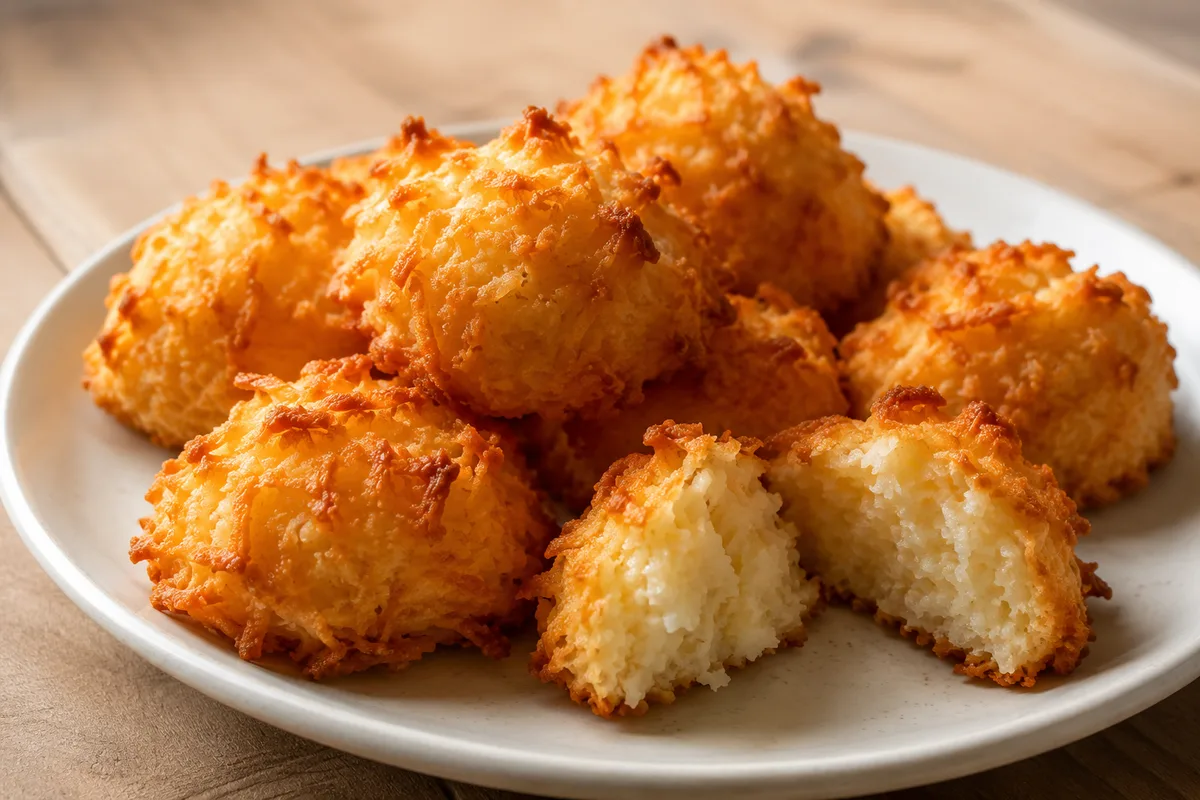
Cocada is beach food in the most literal sense — small mounds of sweetened, chewy coconut candy sold from baskets by vendors walking the sand, calling cocadaaa down the length of the beach along much of Peru's coast, alongside the same Afro-Peruvian communities credited with cau cau and arroz zambito. It's simple by design: coconut, sugar, condensed milk, baked just long enough to set and lightly brown on top. It is a dulce in the plainest sense — a made sweet, sold by the piece, that never needed a bakery.
Versions of cocada exist across much of Latin America and the Caribbean, wherever coconut and Afro-descendant culinary traditions overlap, but the Peruvian coastal version tends toward this baked, slightly chewy style rather than the harder, more brittle candies found elsewhere.
The first cocada I ever ate was handed to me through a bus window in Chincha, wrapped in a twist of paper, by a woman who had already moved on to the next window before I found my change. It was warm from sitting in the sun and it stuck to my teeth for the rest of the trip. I have made it properly since, in a pan, and it is very good — but I have never quite matched a sweet eaten out of paper at a paradero, one of those roadside stops where the bus pauses just long enough for the sellers to appear.
Stir constantly while it thickens on the stove
The coconut mixture needs steady stirring on the stovetop before it ever reaches the oven — condensed milk scorches easily, and a moment of neglect can burn the bottom of the pan while the top still looks unfinished. Ten minutes of real attention here sets up the rest of the recipe to go smoothly.
The stovetop step isn't a formality before baking. It's where the candy's actual texture gets built.
Let it cool before adding the egg yolks
Stirring egg yolks directly into a pan still hot from the stove risks scrambling them on contact — pulling the mixture off the heat and letting it cool for a few minutes first keeps the yolks smooth and properly incorporated, which is what gives the baked cocada its slightly richer, custardy edge.
Fresh coconut or the dried kind
Fresh grated coconut gives the best cocada by a clear margin — more moisture, more fat, and a chew that dried coconut never quite reaches. If you can buy a whole coconut and are willing to crack and grate it, do that.
Desiccated coconut works, and it is what most home kitchens actually use, including ours when the market has nothing. Two things make it behave: buy the unsweetened kind, since the recipe already carries sugar and condensed milk and the sweetened sort turns the whole thing cloying; and soak it for ten minutes in warm milk or water before it goes in the pan, so it stops drinking liquid out of the mixture halfway through cooking.
Frozen grated coconut, sold at most Asian groceries, sits between the two and is the easiest good option. Thaw it and squeeze out the excess water first.
Soft or firm: the same recipe, two minutes apart
Cocada is sold both ways in Peru and neither is the correct one. The difference is nothing but how long you leave the pan on the heat, so decide before you start rather than hoping.
- Soft and chewy. Pull it while the mixture still slumps when you drag a spoon through it. It sets to something like a macaroon and keeps three or four days.
- Firm and candied. Keep going until the spoon leaves a clean trail across the bottom of the pan for a second before it closes. This is the version that survives a week in a tin, and the one street vendors sell.
The line between firm and burnt is short, and coconut catches quickly once the sugar has gone. Stir the whole time and take the pan off the heat a moment before you think you should — it keeps cooking in its own heat for a minute afterward.
The recipe
Ingredients
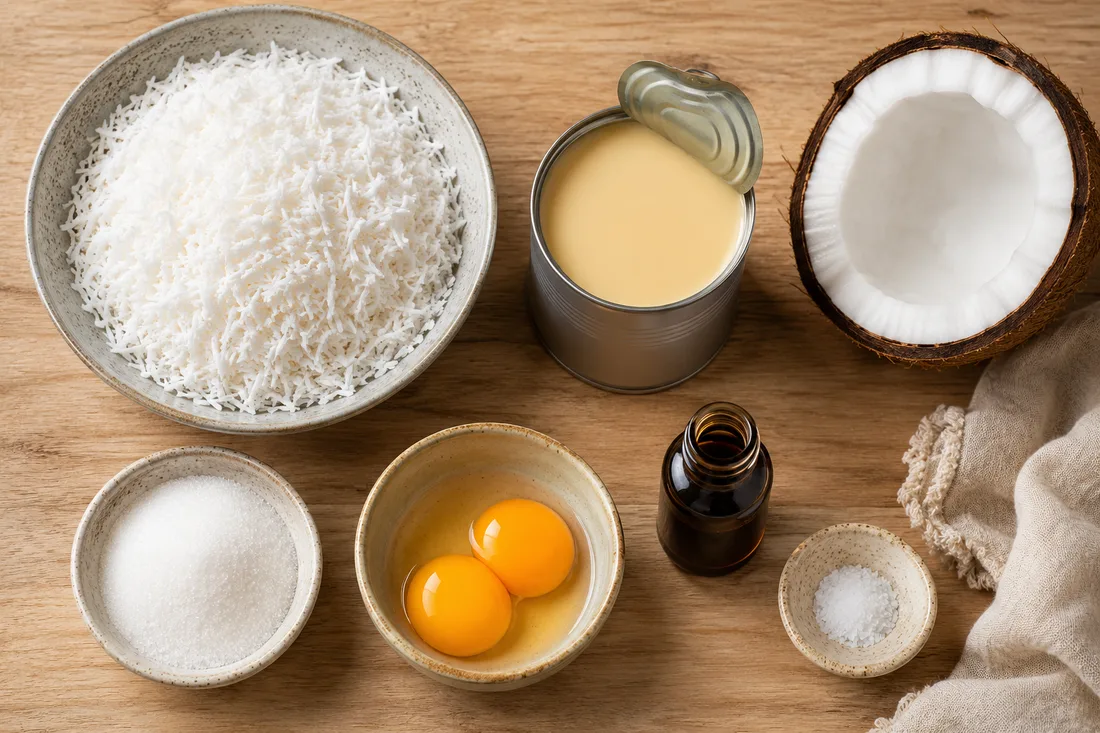
- 3 cups shredded coconut, unsweetened
- 1 can (14 oz) sweetened condensed milk
- 1/2 cup sugar
- 2 egg yolks
- 1 tsp vanilla extract
- Pinch of salt
Method
- Cook on the stove. Combine coconut, condensed milk and sugar, stirring constantly over medium-low heat for about 10 minutes until thick.
- Cool and add yolks. Let cool 5 minutes, then stir in egg yolks, vanilla and salt.
- Shape into small mounds on a lined tray.
- Bake at 180°C (350°F) for 12-15 minutes until lightly golden. Cool completely before removing.
Troubleshooting, from experience
Mixture scorched on the stove. Not stirred constantly. This mixture needs continuous attention, not occasional stirring.
Egg yolks curdled into streaks. Added while the mixture was still too hot. Let it cool a few minutes first.
Cocada spread flat instead of holding its shape. The mixture wasn't cooked thick enough on the stove before shaping. Cook it until it visibly pulls from the sides of the pan.
What to serve it with
Cocada needs nothing beyond itself — it's a standalone sweet, best eaten the way it's sold: straight from the tray, no plate required.
Questions people ask
Fresh coconut or the packaged kind? Fresh gives more flavor and more work; dried unsweetened shredded coconut is what most Peruvian kitchens actually use and it is perfectly honest. What to avoid is sweetened shredded coconut, because the recipe already has its own sugar and you will not be able to pull it back.
Why did my cocada turn out grainy? The sugar crystallized, usually from stirring too early or from sugar left on the side of the pan. Let the sugar dissolve fully before the coconut goes in, and brush the sides down with a wet finger if you see grains. Once it has gone grainy there is no rescuing it.
Do I have to add the egg yolks? No — plenty of versions skip them and stay closer to a plain coconut sweet. What the yolks add is richness and a softer set, closer to a custard than a candy. If you use them, the mixture has to be cool first or you get sweet scrambled egg.
Is Peruvian cocada the same as Colombian or Brazilian cocada? The name is shared across Latin America and the sweets are cousins rather than twins. The Peruvian coastal version leans on the yolks and is often sold soft in paper; the Brazilian one is usually firmer and plainer. Same coconut, different households.

Junior Quintana learned to cook from his mother, Lina, in Junín, in the central Peruvian Andes — a kitchen where chicha morada simmered every Sunday and there were always native potatoes with cheese and choclo on the table. He started Andean Kitchen to share the food he grew up with, in English and without shortcuts: every recipe cooked and tested at home, where it's really made. His favorite dish is, and probably always will be, pachamanca. See how we cook, test and photograph.
Did you cook this?
Tell me how it went — including what did not work. I read every one, and with your permission I will put it on this page, with your first name, for whoever comes next.