
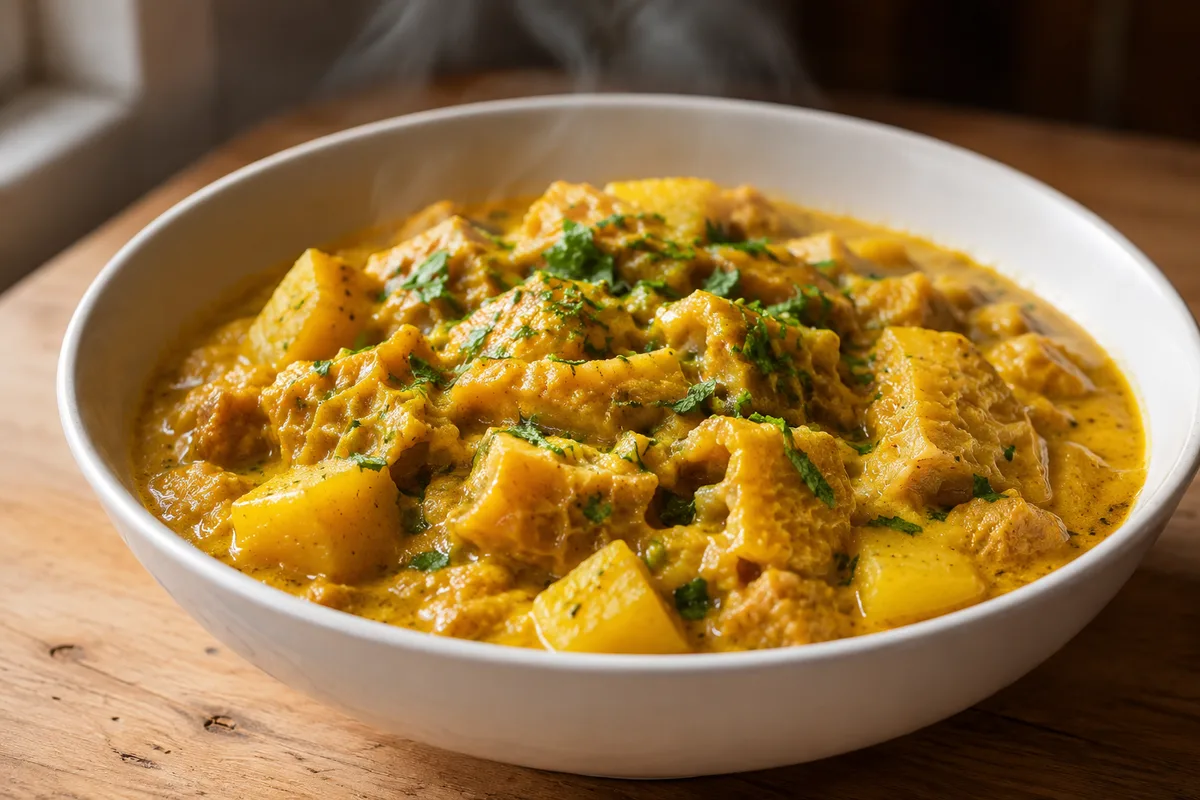
Cau cau is proof that an unglamorous cut of meat, handled right, becomes something people crave rather than tolerate. It's built from mondongo — beef tripe, the stomach lining that needs a long pre-boil before it's tender enough to eat — cut into small squares and finished in a bright, turmeric-yellow ají amarillo sauce built on the usual aderezo of onion and garlic cooked down slow that owes its name, most food historians agree, to Afro-Peruvian cooks working coastal kitchens, the same community credited with anticuchos and so much of Peru's criollo repertoire.
The name itself is disputed the way a lot of old street food is: some say it imitates the sound of the stew bubbling, others that it's onomatopoeia from a vendor's call. What nobody disputes is where it sits on the week. Cau cau is a segundo: the main plate of an ordinary lunch, the one that follows the soup, not a dish anyone saves for a birthday. At home it gets the affectionate diminutive — mondonguito, little tripe — which tells you more about how Peruvians feel about this cut than any menu description could. Either way, nobody argues about the taste — mint, turmeric, and slow-cooked tripe in a sauce thick enough to coat rice properly.
In Junín we put tripe in soup, not in a yellow stew — chairo was the version I grew up with. I met cau cau properly at a menú in Huancayo, one of those lunch counters where a soup, a segundo and a glass of something cold cost you almost nothing. What gave it away wasn't the color. It was the mint: you lift the spoon and the hierbabuena — spearmint, stirred in off the heat at the last second — reaches you before the tripe does. After that you can pick cau cau out of any lineup.
Tripe needs patience before it needs a pan
Mondongo is unforgiving if rushed — thrown straight into a quick sauté, it stays rubbery no matter how long you leave it there afterward. The fix is upstream: a long pre-boil, an hour to ninety minutes in salted water, until a knife slides through without resistance. Only after that does it belong anywhere near the ají amarillo sauce, and the reserved boiling broth becomes the stew's base liquid rather than being poured down the drain.
You can't rescue undercooked tripe with a longer simmer in the sauce. The pre-boil is the whole game — everything after that is just flavor.
Turmeric, not just ají, makes the yellow
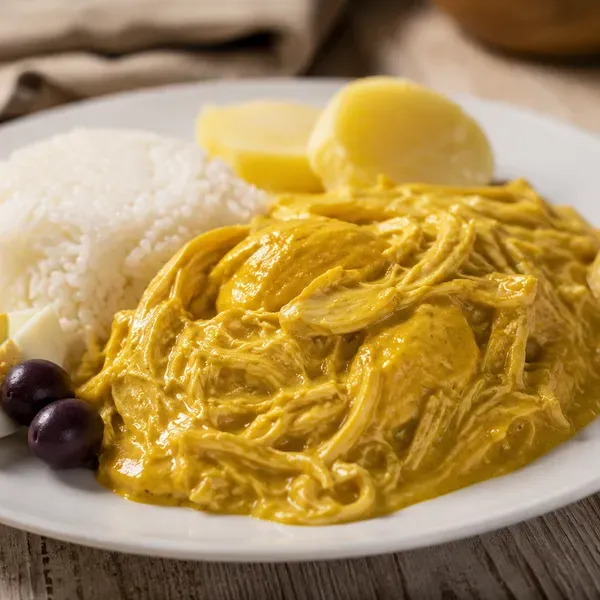
Cau cau's color comes from two sources working together: ají amarillo paste for heat and fruitiness, and ground turmeric — palillo, as every older Peruvian kitchen still calls it — for the deep golden cast that separates it visually from other ají-based stews like ají de gallina. Skip the turmeric and the dish tastes fine but looks pale and unfinished — the color isn't decoration here, it's part of what makes cau cau recognizable at a glance.
Buying and cleaning the tripe
Most butchers abroad sell tripe already bleached and part-boiled, which is the version this recipe assumes. It comes pale, faintly rubbery and almost odorless. If yours smells strongly of anything at all, it has not been cleaned properly — take it back rather than trying to fix it at home.
Ask for honeycomb tripe if you get a choice. It holds sauce in a way the smooth kind does not, which matters in a dish where the sauce is most of the point. Rinse it under cold water, trim off any gray or fatty patches, and cut it into squares roughly the size of a postage stamp before the pre-boil, not after — cutting cooked tripe is slippery, irritating work.
One kilo of raw tripe cooks down to noticeably less. Buy more than looks reasonable.
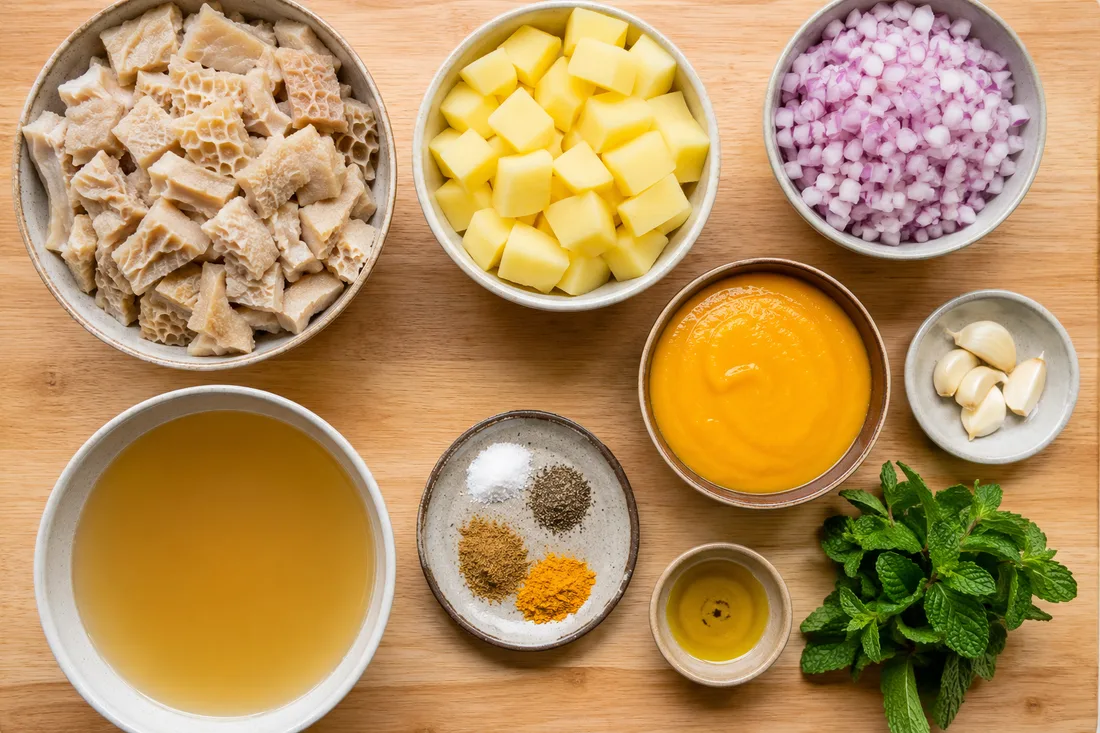
The recipe
Ingredients
- 1 kg beef tripe (mondongo), well cleaned and pre-boiled until tender
- 3 medium potatoes, peeled and diced
- 1 onion, diced · 4 garlic cloves, minced
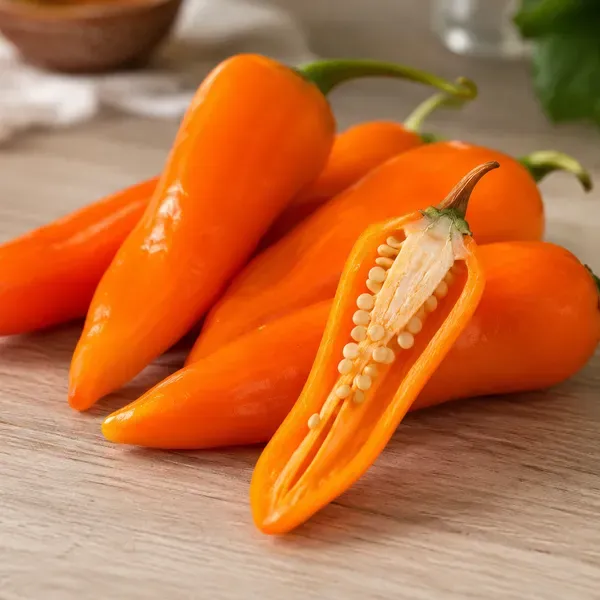
- 3 tbsp ají amarillo paste
- 1/2 tsp ground turmeric or palillo
- 2 cups broth (from boiling the tripe)
- 2 tbsp oil · salt · pepper · ground cumin
- 1/4 cup chopped fresh mint, plus extra to finish
Method
- Pre-boil the tripe in salted water for 1 to 1.5 hours until tender. Cut into small squares. Reserve the broth.
- Build the sauce. Cook onion and garlic in oil until soft. Add the ají amarillo paste and turmeric, cooking a few minutes until fragrant and deep yellow.
- Simmer. Add the tripe, potatoes and reserved broth. Simmer uncovered 20-25 minutes until the potatoes are tender and the sauce has thickened.
- Finish with mint, stirred in just before serving, with more scattered on top.
Troubleshooting, from experience
Tripe is still chewy. It wasn't pre-boiled long enough. There's no shortcut here — give it more time before it ever touches the sauce.
Sauce is thin, not clinging to the rice. Simmer uncovered longer, or mash one of the cooked potato pieces back into the sauce to thicken it naturally.
Mint tastes flat or muddy. It was added too early and cooked down. Stir it in at the very end, off or nearly off the heat.
What to serve it with
White rice is the standard, non-negotiable pairing — the sauce is built to be mopped up with it. A wedge of lime on the side brightens the richness of the tripe.

Junior Quintana learned to cook from his mother, Lina, in Junín, in the central Peruvian Andes — a kitchen where chicha morada simmered every Sunday and there were always native potatoes with cheese and choclo on the table. He started Andean Kitchen to share the food he grew up with, in English and without shortcuts: every recipe cooked and tested at home, where it's really made. His favorite dish is, and probably always will be, pachamanca. See how we cook, test and photograph.
Did you cook this?
Tell me how it went — including what did not work. I read every one, and with your permission I will put it on this page, with your first name, for whoever comes next.