
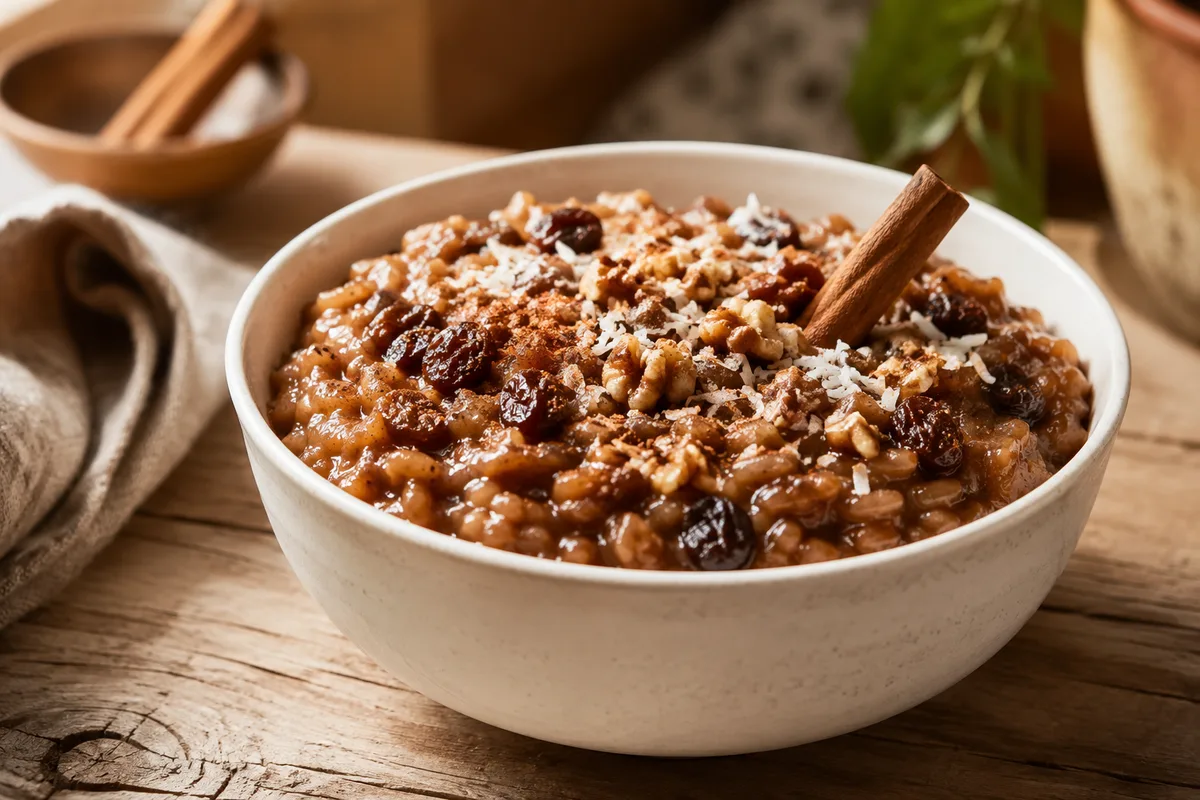
Arroz zambito shares an obvious relationship with arroz con leche — both start with rice simmered slowly into a creamy pudding — but the two land in completely different places. Where arroz con leche stays pale and milk-sweet, zambito is built on chancaca syrup and coconut milk instead of plain milk, turning the whole pudding a deep amber-brown and giving it a much more complex, spiced flavor from cinnamon, cloves and orange peel simmered in from the start.
The dessert has roots in Peru's Afro-Peruvian culinary tradition, the same community credited with cau cau and much of the country's criollo cooking, and it's often served alongside mazamorra morada at the same table — the two desserts frequently appear together at family gatherings, one purple and one deep brown.
Arroz zambito is a coast dessert, and we knew arroz con leche long before we met this one. The first plate I ate was in Lima, and I remember being a little annoyed: it was the same rice pudding I'd grown up with, except somebody had improved it with chancaca and nobody in the sierra had bothered to tell us. On the coast it's de cajón at any church fair — a given, not a choice.
The syrup comes first, always
Unlike arroz con leche, where rice usually simmers in milk from the very start, zambito's rice goes into an already-strained chancaca syrup — cook the syrup down and remove the whole spices before the rice ever joins, so you're not fishing out a cinnamon stick from a pot of half-cooked rice later. That order also lets the syrup concentrate properly before the rice starts absorbing it.
Zambito isn't rice with chancaca stirred in at the end. It's rice cooked entirely inside the chancaca's world from the start.
Coconut milk goes in after the rice has started to soften
Adding coconut milk too early, before the rice has had real time in the syrup, tends to mute the chancaca's deep flavor and can leave the texture greasier than creamy. Waiting until the rice is partway tender lets the syrup's flavor really develop first, with the coconut milk finishing the job and rounding everything into its final, thick texture.
Chancaca, and what to use instead
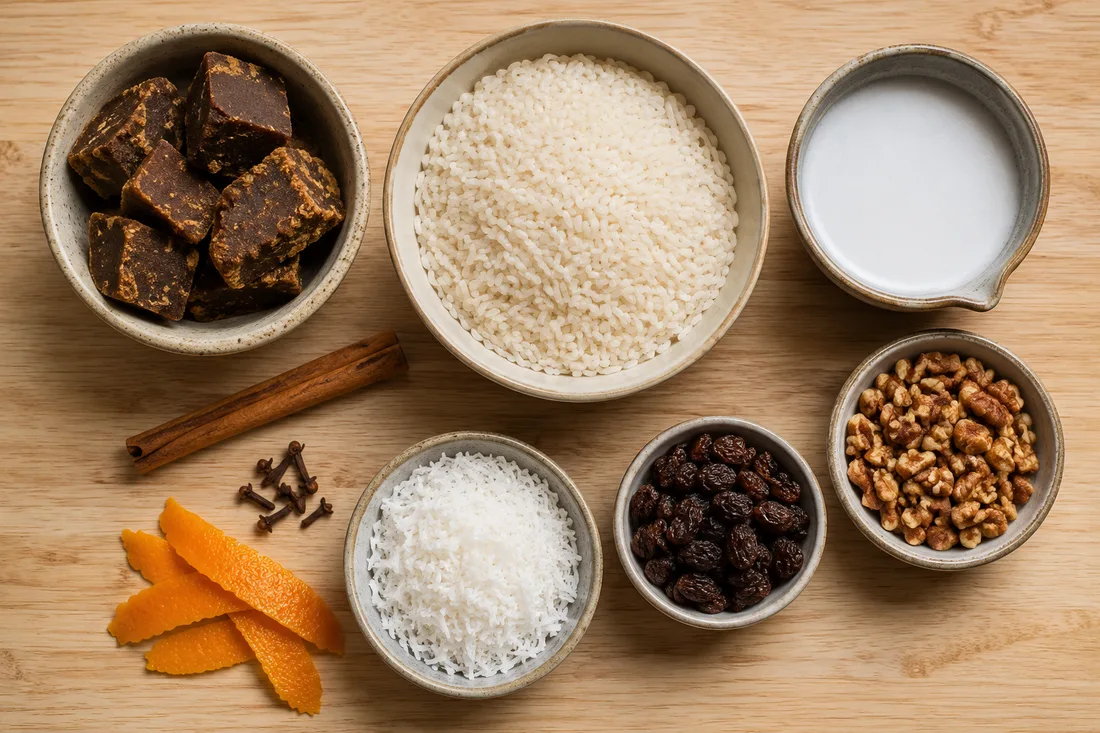
The syrup is the dessert, so this is the one ingredient worth chasing. Chancaca is unrefined whole cane sugar pressed into hard dark blocks — never refined, so nothing was taken out and the minerals stayed in. It is what turns the pudding amber instead of white.
- Panela or piloncillo. Not a substitute at all — the same product under a Colombian and a Mexican name. Colombian panela comes in round pucks, Mexican piloncillo in small cones. Either one is chancaca, and either one is easy to find at a Latin grocery.
- Dark brown sugar plus molasses. A tablespoon of molasses per cup of dark brown sugar gets you into the right territory. A shade less complex, and nobody at the table will complain.
- Dark brown sugar alone. Workable, noticeably milder. The pudding comes out paler and sweeter rather than deep and mineral.
The rice and the coconut milk
Use a medium or short grain — the same rule as arroz con leche. Those grains release the starch that makes the pudding bind. Long grain stays separate and the whole thing ends up loose and sad.
For the coconut milk, reach for full-fat canned, not the carton drink. The carton kind is mostly water and will thin the pudding rather than enrich it. Shake the can before opening, or stir the solid cream back into the liquid — the fat is exactly what you are after.
The recipe
Ingredients
- 1 cup rice
- 1/2 lb chancaca (or dark brown sugar), broken into pieces
- 3 cups water
- 1 cup coconut milk
- 1 cinnamon stick · 3 cloves · peel of 1 orange
- 1/2 cup raisins
- 1/2 cup shredded coconut
- 1/4 cup chopped walnuts or pecans (optional)
- Ground cinnamon, to finish
Method
- Make the syrup. Simmer chancaca in water with cinnamon, cloves and orange peel until dissolved, about 10 minutes. Strain out the solids.
- Cook the rice in the syrup, stirring occasionally, about 20 minutes until it starts to soften.
- Add coconut milk, raisins and shredded coconut, simmering another 15 minutes until thick and the rice is fully tender.
- Finish with walnuts if using, and a dusting of ground cinnamon. Serve warm or chilled.
Troubleshooting, from experience
Pudding tastes bland, not deeply spiced. The syrup wasn't simmered long enough with the whole spices before straining. Give it the full 10 minutes.
Rice stayed hard. Not enough total simmering time, or the heat was too high, evaporating liquid faster than the rice could absorb it. Lower the heat and add a splash of water if it's drying out too fast.
Texture came out greasy instead of creamy. Coconut milk went in too early or the pudding wasn't stirred enough while finishing. Stir regularly in the last stretch.
What to serve it with
Arroz zambito is traditionally served alongside mazamorra morada, the two spooned onto the same plate side by side.
Questions people ask
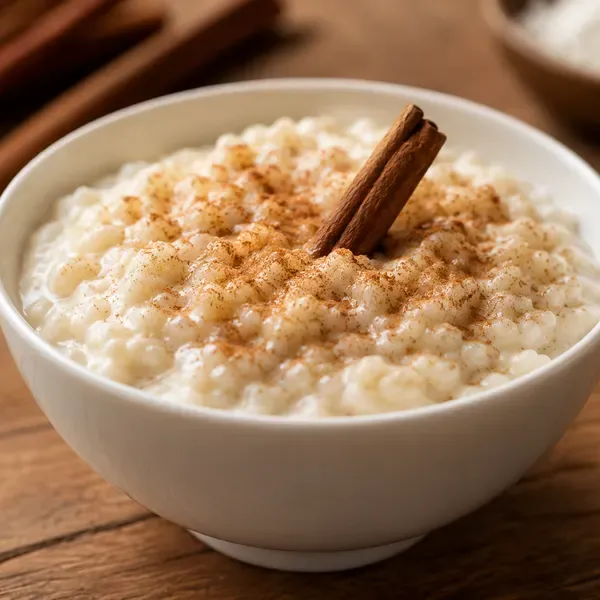
What is the difference between arroz zambito and arroz con leche? The same rice, a completely different world. Arroz con leche is built on evaporated and condensed milk and stays pale and sweet. Zambito is built on chancaca syrup and coconut milk, comes out deep amber, and tastes of cinnamon, clove and orange peel rather than of dairy.
Can I use light coconut milk? You can, but the pudding will be thinner and less rich. The fat in full-fat coconut milk is doing structural work here, not just adding flavor. If light is all you have, cook it a few minutes longer to reduce.
Why strain the syrup before adding the rice? So you are not fishing a cinnamon stick and half a dozen cloves out of a pot of half-cooked rice later. Cooking the spices in the syrup first also lets it concentrate properly before the rice starts drinking it.
How long does it keep? Four or five days covered in the fridge, and it thickens as it cools. Loosen it with a splash of milk or water when you reheat, or eat it cold — plenty of Peruvians prefer it that way.

Junior Quintana learned to cook from his mother, Lina, in Junín, in the central Peruvian Andes — a kitchen where chicha morada simmered every Sunday and there were always native potatoes with cheese and choclo on the table. He started Andean Kitchen to share the food he grew up with, in English and without shortcuts: every recipe cooked and tested at home, where it's really made. His favorite dish is, and probably always will be, pachamanca. See how we cook, test and photograph.

Did you cook this?
Tell me how it went — including what did not work. I read every one, and with your permission I will put it on this page, with your first name, for whoever comes next.