
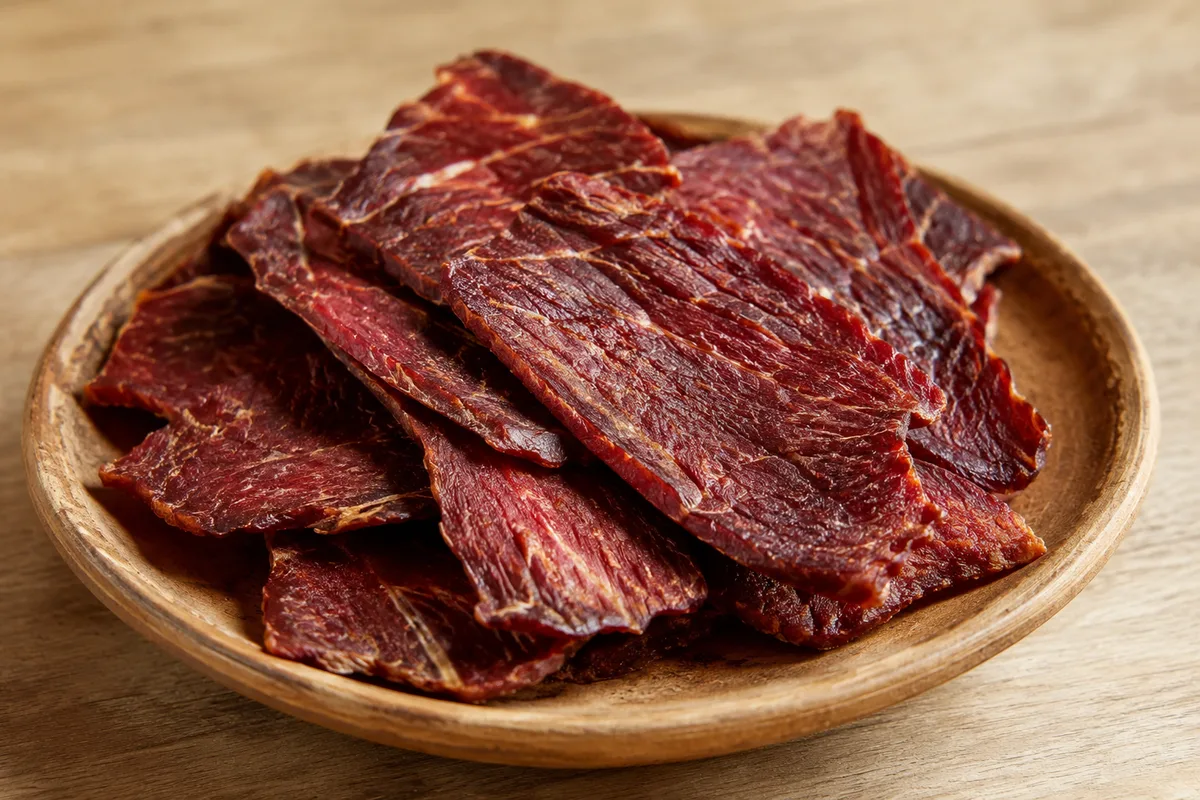
Cecina is pork, cut into thin strips or sheets, salted heavily, and preserved through a combination of smoking and sun-drying — a preservation method born from necessity in la selva, the jungle, where fresh meat spoils fast and refrigeration wasn't historically an option. It's the meat that anchors tacacho con cecina, one of the region's signature dishes, and it shows up across jungle breakfast tables in its own right, fried and served plainly.
The name "cecina" is used more broadly across Latin America for various cured or dried meats, but in the Peruvian Amazon it specifically refers to this smoked-and-dried pork, distinct from beef versions found elsewhere.
Peru solves the same problem twice, in two languages. Up in the Andes the answer is ch'arki — salted meat air-dried in the cold and thin air of the highlands, a Quechua word that traveled into English as "jerky". Down in the jungle there is no cold and no dry air to work with, so the answer is smoke. Same purpose, opposite climate, and the highland version kept its Quechua name while this one took a Spanish one.
What is Peruvian cecina, and how is it made?
Pork is cut thin, rubbed generously with salt, and then hung to smoke over a wood fire before finishing in the sun — the combination of salt, smoke and dehydration is what lets it keep for weeks without refrigeration. The result is intensely flavorful, salty and smoky, with a firmer, chewier texture than fresh pork.
Cecina isn't just seasoned pork. It's pork transformed by three separate preservation techniques working together.
How to cook Peruvian cecina
- Fried until crisp. The most common preparation — cecina fried in its own rendered fat until the edges crisp up, served alongside mashed plantain in tacacho con cecina.
- Shredded into rice or eggs. Its intense, salty flavor works well shredded thin into simple dishes that need a strong savory anchor.
- Simmered into soups. A small amount adds real depth to a broth, similar to how a smoked ham hock works in other cuisines.
In our kitchen cecina arrives the way most sierra kitchens get it: in a bag, from somebody who was just in the jungle. A cousin comes back from Tarapoto or Pucallpa and there it is, wrapped in paper, smelling of woodsmoke from two thousand meters lower down. It keeps for weeks without complaint, which is the entire reason it exists, and it turns a plain plate of rice into something worth sitting down for.
Peruvian cecina is not Spanish or Mexican cecina
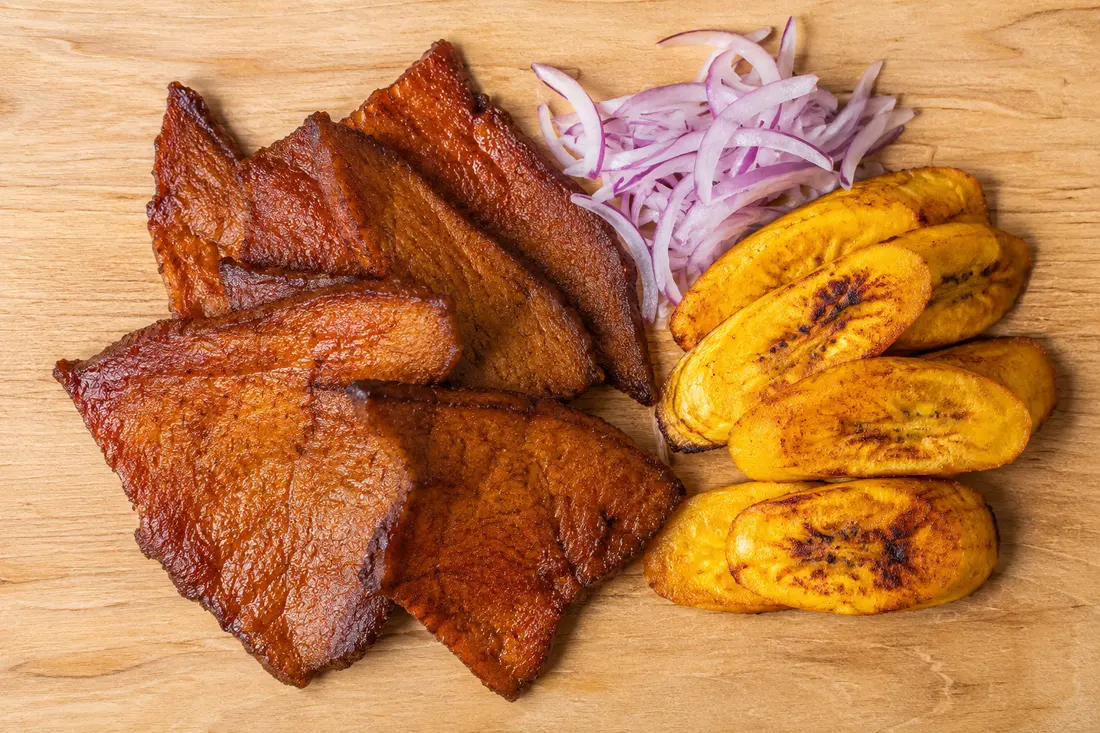
The word travels further than the product, and searching for it in English will hand you three unrelated things. Spanish cecina — cecina de León — is beef, cured and smoked into something closer to bresaola, sliced translucent and eaten cold with oil. Mexican cecina is beef too in most of the country, salted and pressed thin, though in Morelos cecina enchilada is pork rubbed red with chile. Peruvian cecina is pork, from the Amazon, salted and smoked and dried until it will survive a climate that destroys everything else.
They share a name and a purpose — meat made to last without a fridge — and almost nothing else. If a recipe calls for cecina and does not say which, look at what it is being cooked with: mashed plantain and jungle herbs means ours.
Where to buy Peruvian cecina outside Peru, ranked
- Peruvian or Amazonian importers online. The only way to get the real thing abroad. It ships well precisely because it was built to survive without refrigeration; look for it sold vacuum-packed, and expect it to arrive stiff and dark rather than soft.
- Latin American groceries. Worth asking, though cecina is far less commonly stocked than ají amarillo paste or purple corn. Shops serving Peruvian or Bolivian communities are your best chance.
- Make a rough version at home. Pork loin salted, air-dried a day or two and then cold-smoked gets you into the neighborhood. It will not be cecina, but it will be closer than anything in a supermarket.
Peruvian cecina substitutes, honestly ranked
- Slab bacon, thick-cut. The closest common stand-in: salted, smoked, and it renders its own fat the same way. Slice it thicker than you think and fry it hard.
- Pancetta. Right texture and salt, less smoke. Good where cecina is a background flavor, weaker where it is the point.
- Smoked ham hock, shredded. Only for soups and broths, where its job is depth rather than crispness.
One honest caveat: in tacacho con cecina, the cecina is the dish. Substituting there gets you a pleasant plate of mashed plantain and bacon, which is a fine thing to eat and not the thing you set out to make.
Recipes that depend on cecina
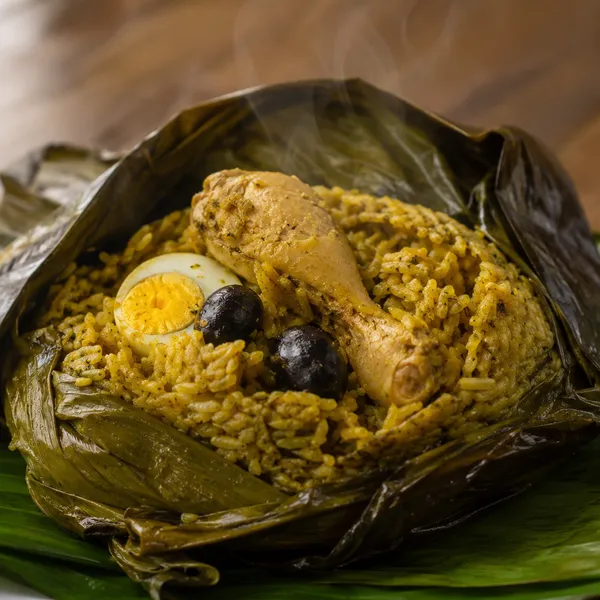
Its home is tacacho con cecina, where mashed roasted plantain and fried cecina do the same job for the Peruvian Amazon that potatoes and pork do for the sierra. Beyond that it works anywhere a dish needs salt and smoke it cannot get from anywhere else — stirred through rice, crisped into eggs, or dropped into a broth the way you would drop in a piece of juane's chicken to make it taste of something.

Junior Quintana learned to cook from his mother, Lina, in Junín, in the central Peruvian Andes — a kitchen where chicha morada simmered every Sunday and there were always native potatoes with cheese and choclo on the table. He started Andean Kitchen to share the food he grew up with, in English and without shortcuts: every recipe cooked and tested at home, where it's really made. His favorite dish is, and probably always will be, pachamanca. See how we cook, test and photograph.
Did you cook this?
Tell me how it went — including what did not work. I read every one, and with your permission I will put it on this page, with your first name, for whoever comes next.