
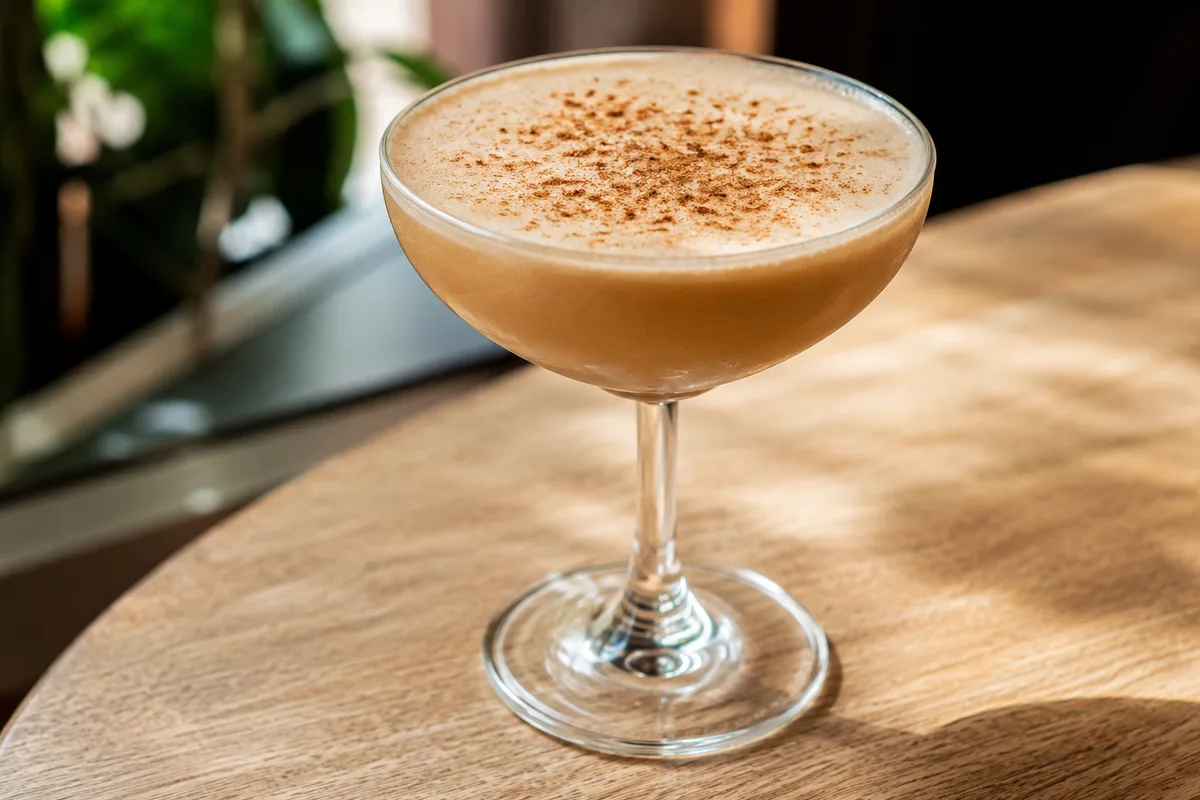
Algarrobina takes its name from the algarrobo tree, whose pods are cooked down into a thick, dark syrup similar in spirit to molasses, and blends that syrup with pisco, evaporated milk and egg white into something that drinks more like a dessert than a cocktail. It's strongly associated with Peru's north coast, where algarrobo trees actually grow, and it shows up at weddings and family celebrations as often as it does at any bar.
(This one's for readers of legal drinking age. Chicha morada is what we pour for anyone else at the table.)
Algarrobina belongs to the north, not to Junín, but it travels well — it turns up at family parties here the moment somebody's aunt decides the evening needs improving. In a proper jarana — the long, music-driven kind of Peruvian party that outlasts everyone's plans — it appears around the second hour. It's the drink people who insist they don't like pisco end up asking for a second time, and then a third, quietly.
Blend, don't shake
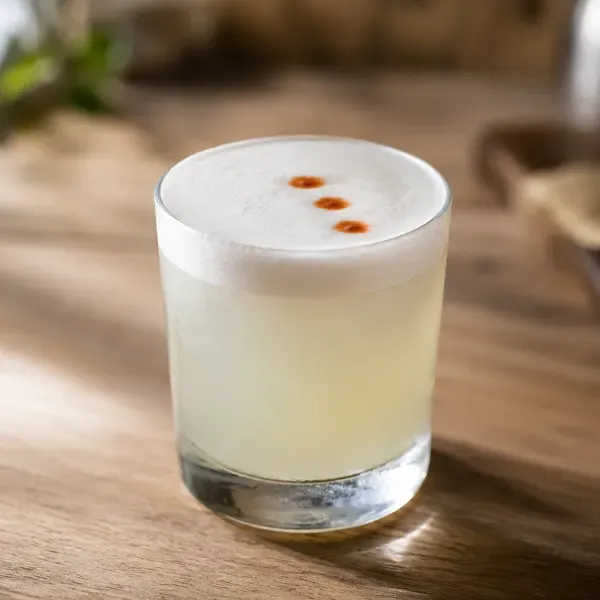
Unlike pisco sour, which relies on vigorous shaking to build its foam, algarrobina's thickness — from the syrup, milk and egg white together — calls for a blender rather than a shaker. Blending also does a better job of fully incorporating the algarrobina syrup, which is thick enough to sink and clump if just stirred or shaken.
This isn't a shaken cocktail with a syrup added in. The syrup's thickness is exactly why it needs a blender in the first place.
The egg white is doing real textural work
As with pisco sour, the raw egg white here isn't decorative — it aerates the drink slightly and softens the overall texture into something smoother and less syrupy-heavy than the algarrobina alone would produce. Use a fresh, clean egg, and if raw egg is a concern, a pasteurized egg white works as a direct substitute.
What algarrobina actually is
The syrup comes from the pods of the algarrobo, a thorny, deep-rooted tree that grows in the bosque seco — the dry forest covering much of Piura and Lambayeque, where it barely rains and very little else survives. The pods are boiled down over hours into a dark, heavy syrup that tastes closer to molasses and dates than to anything you would expect from a bar.
In the north the syrup has a second life entirely. It is sold in pharmacies and market stalls as a fortifier — the thing you give a child who is not eating enough, or someone recovering from an illness. That reputation is exactly why it ends up in a drink built on evaporated milk and egg white: the cocktail is the tonic, dressed for a party.
The word traveled further than the tree ever did. Algarrobo came into Spanish from Arabic al-kharrūba, the name of the carob tree of the Mediterranean. Spanish speakers arriving in Peru met a completely different and unrelated tree, decided it was near enough, and handed it the same name — which is how a Peruvian drink ends up carrying an Arabic word for a plant that never grew anywhere near Arabia.
Which pisco to use
Reach for a quebranta or an acholado. Quebranta is the workhorse grape, earthy and unaromatic, and it stays out of the way of the syrup. Acholado, which is a blend, works just as well. What to avoid is a strongly aromatic pisco such as Italia or Torontel: those fight the algarrobina rather than carrying it, and the drink ends up tasting like two things arguing.
Where to buy algarrobina outside Peru
- Latin American groceries. Look for bottles labeled simply “algarrobina” in the Peruvian section. It is a pantry staple rather than a specialty item, so it is often shelved near the evaporated milk instead of with the syrups.
- Online Peruvian food shops. The most reliable route if there is no Peruvian community near you. Unopened, the syrup keeps for months and does not need refrigerating.
- Carob molasses from a Middle Eastern grocery. The closest substitute you will find easily, and a fitting one: it is made from the Mediterranean carob the word originally described. Different tree, similar treatment, and it behaves the same in a blender. A little less bitter, so use slightly more.
What does not work is ordinary molasses on its own — it is sharper and more mineral, and it takes the drink over completely. If molasses is genuinely all you have, cut it with an equal part of date syrup to soften the edge.
The recipe
Ingredients
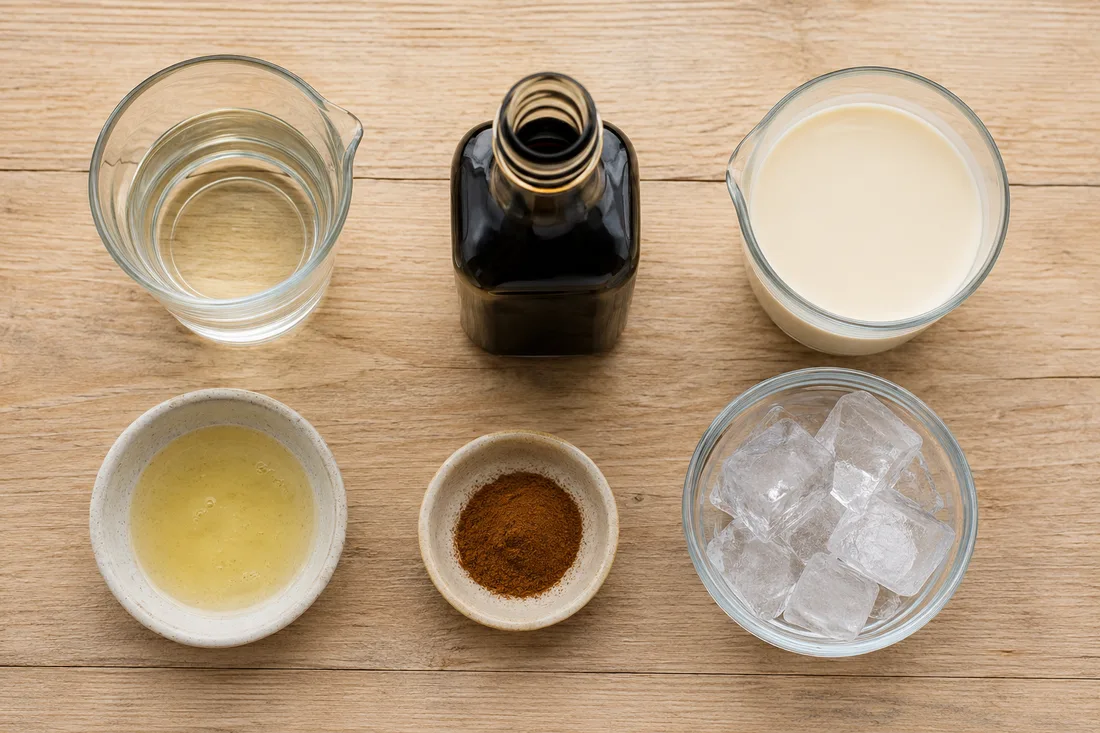
- 3 oz pisco
- 3 oz algarrobina (carob syrup)
- 3 oz evaporated milk
- 1 egg white
- 1/2 tsp ground cinnamon, plus more to garnish
- 1 cup ice
Method
- Combine pisco, algarrobina, evaporated milk, egg white and cinnamon in a blender.
- Blend on high about 30 seconds until smooth and slightly frothy.
- Add ice and blend again briefly until chilled.
- Pour and garnish with a dusting of extra cinnamon.
Troubleshooting, from experience
Drink came out too thick to sip easily. Not enough ice, or too much algarrobina relative to the other ingredients. Adjust the ice up gradually until it pours smoothly.
Syrup didn't fully blend in. The blender wasn't run long enough on the first pass, before the ice went in. Blend the syrup and liquids together thoroughly first.
Flavor tastes flat. Some algarrobina brands are milder than others. Taste and add a touch more if the carob flavor isn't coming through.
What to serve it with
Algarrobina is rich enough to stand alone as an after-dinner drink, closer to a dessert course than something sipped throughout a meal.
Questions people ask about algarrobina
Can I make it without raw egg white? Yes. Pasteurized egg white from a carton substitutes directly, in the same quantity. Aquafaba, the liquid from a can of chickpeas, also works, though it needs a few extra seconds in the blender to build the same texture.
Is algarrobina alcoholic on its own? No. The syrup is nothing but cooked-down pods, and Peruvians drink it on its own stirred into milk. The pisco is what makes this a cocktail; the algarrobina is a pantry ingredient like any other.
What does it actually taste like? Closer to a milkshake than to a cocktail — sweet and thick, with the pisco sitting underneath rather than on top. That is precisely why it is the drink that people who claim not to like pisco tend to finish.
Can I make it ahead for a party? Blend the pisco, syrup, milk and egg white ahead of time and keep the mixture cold, then blend the ice in just before pouring. Ice blended too early waters it down and the texture never comes back.

Junior Quintana learned to cook from his mother, Lina, in Junín, in the central Peruvian Andes — a kitchen where chicha morada simmered every Sunday and there were always native potatoes with cheese and choclo on the table. He started Andean Kitchen to share the food he grew up with, in English and without shortcuts: every recipe cooked and tested at home, where it's really made. His favorite dish is, and probably always will be, pachamanca. See how we cook, test and photograph.
Did you cook this?
Tell me how it went — including what did not work. I read every one, and with your permission I will put it on this page, with your first name, for whoever comes next.