
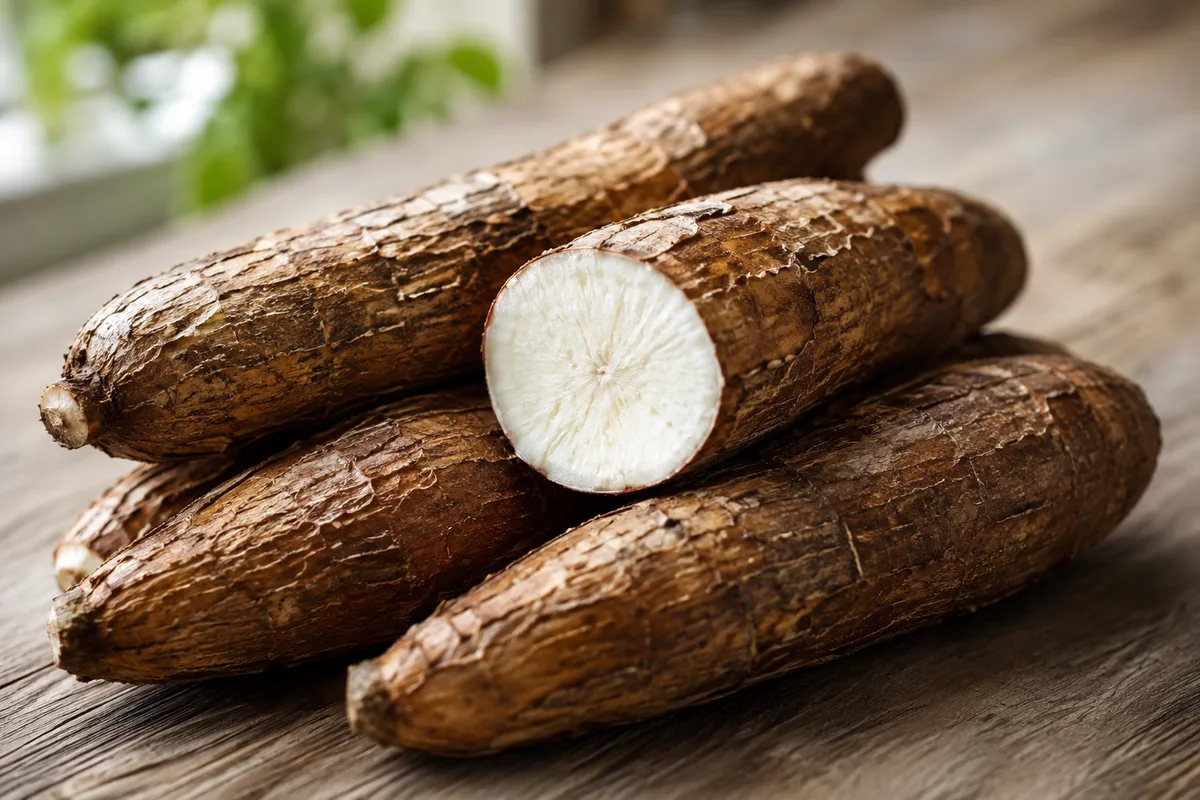
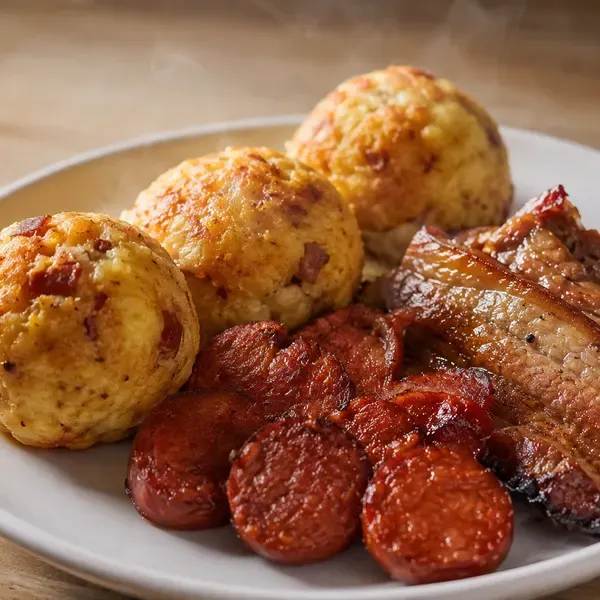
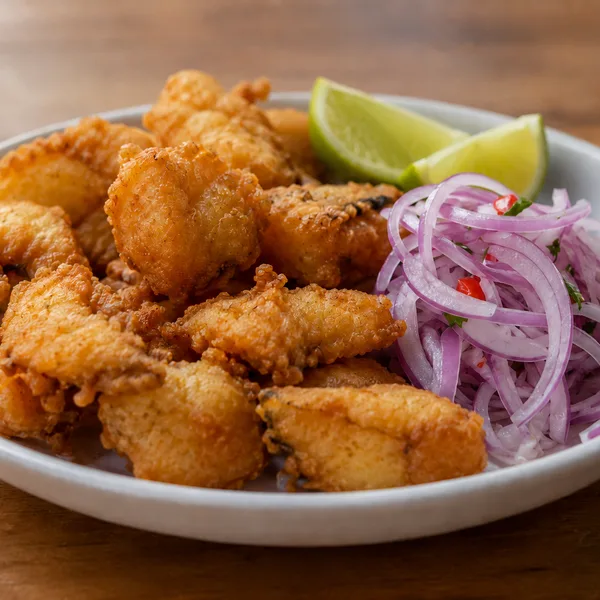
Yuca — cassava, in English — is a starchy root that shows up across Peru with almost the same frequency as potato or rice, from the mashed base of tacacho con cecina in the jungle to the fried sticks piled alongside chicharrón de pescado on the coast. It's a genuinely different texture from potato — starchier, slightly waxier once cooked, with a mild, faintly sweet flavor that takes on whatever it's paired with.
It's a staple crop across much of South America, Africa and Southeast Asia, though it needs specific handling that potato doesn't, which is worth understanding before cooking with it for the first time.
It is not a highland crop, though, and in Junín you feel that. Yuca comes up from the jungle, and in my house it arrived the way things from the jungle arrive: somebody went to visit family down there and came back with a few, or it turned up in an encomienda — a parcel sent up on the bus — along with fruit and sometimes pituca, the taro root that grows in the same places. So we did not eat it the way we ate potatoes, which is to say daily and without thinking. Yuca was a small event.
What it is, and how to peel it
Yuca has a thick, waxy brown skin over a thin pink layer, both of which need to come off before cooking — a sharp knife works better than a vegetable peeler given how tough the skin is. Cut the root into manageable sections first, then slice the skin away lengthwise in strips, going deep enough to remove the pink layer underneath as well.
Yuca's skin isn't just tough. It's genuinely inedible, and needs to come off completely before the root is cooked.
It needs to be fully cooked — no exceptions
Raw or undercooked yuca contains natural compounds that release cyanide when the plant tissue is damaged, and proper cooking — boiling, frying, or otherwise fully heating the root through — neutralizes this completely. This isn't a minor food-safety footnote to skip past: yuca should always be peeled and cooked thoroughly before eating, never eaten raw the way a carrot or potato sometimes might be.
Choosing one, and the black veins
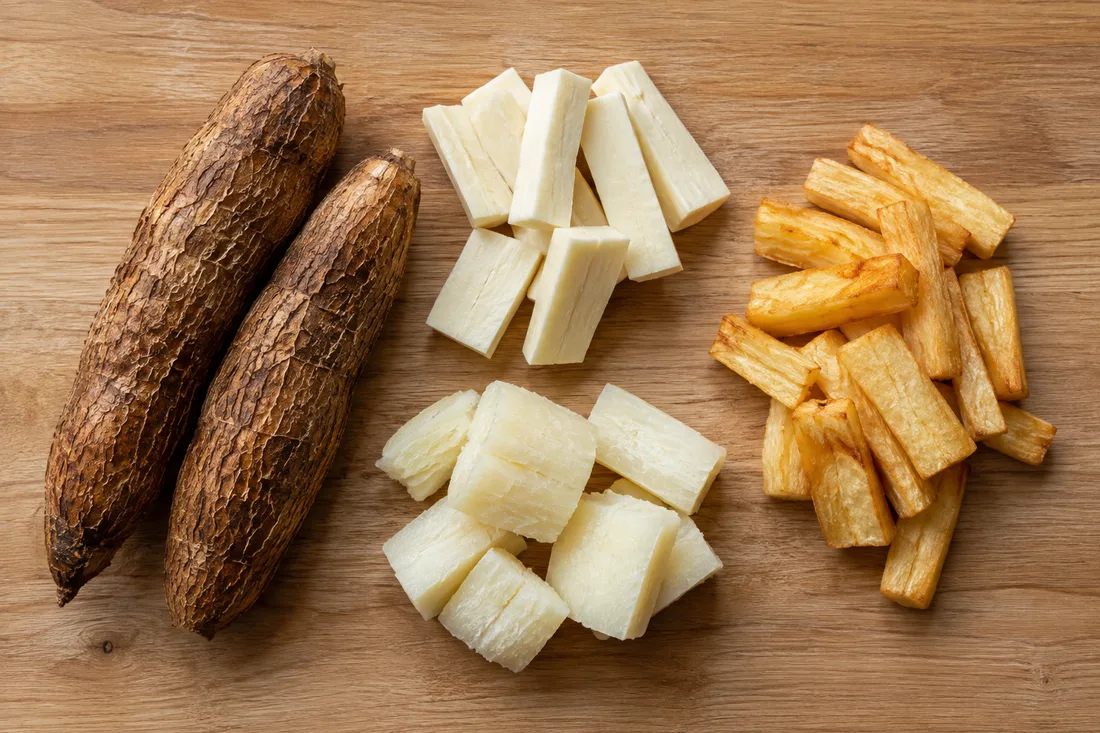
Yuca gives you very little warning from the outside, which is why people end up throwing half of one away. The skin is thick, waxy and often coated in a layer of actual wax for shipping, so the root can look perfect and be spoiled underneath. Pick them up: a good one is heavy for its size and completely firm, with no soft give anywhere along its length. If a market will let you, ask them to snap one — the cut face should be bright white and damp, like a fresh apple.
What you are looking out for is grey or black streaking running through the white flesh, sometimes with a blue-ish tinge near the edge. That is the root starting to break down, and it happens fast — within a few days of harvest if it was not handled well. Those streaks taste bitter and stay hard no matter how long you boil them. You do not need to throw out the whole root: cut back past the discoloured part until the flesh is clean white, and use the rest. If more than about a third of it is streaked, it is not worth the work.
One more thing about the cut face: fresh yuca oxidises quickly. Once peeled, keep the pieces under cold water until they go in the pot, the same way you would with potatoes, or the surface goes dull and faintly grey before you have finished peeling the rest.
Fresh or frozen — and when frozen is the better call
Outside Latin America, frozen yuca is usually easier to find than fresh, and it is sold peeled and cut in bags in the freezer aisle of any Latin or Caribbean market. This is one of the rare cases where the frozen version is not a compromise. It is picked and frozen quickly at source, which means it skips the slow decline that ruins so much of the fresh yuca that travels far, and it arrives already peeled — which, if you have ever fought that waxy skin with a vegetable peeler, is not a small thing.
Cook it straight from frozen, without thawing, into already boiling water. Thawed yuca goes mushy at the edges before the centre softens. The one thing frozen does not give you is the whole root for roasting or for dishes where you want big, irregular chunks with their own shape, and it is usually cut smaller than you would cut it yourself. For frying, boiling and mashing — which is most of what anyone does with it — fresh has no real advantage over a good frozen bag.
How Peruvian kitchens use it
- Boiled until tender. The simplest preparation, served plain alongside a saucy main dish the way boiled potato often is.
- Fried into sticks. Boiled first until nearly tender, then fried until golden — what arrives under a plate of chicharrón de pescado, and a common side across the coast.
- Mashed with fat. Boiled and mashed with oil or lard, as in tacacho con cecina, where it's shaped into balls and grilled.
Substitutes, honestly ranked
- Frozen yuca. Sold peeled and ready to cook at most Latin American grocery stores — the easiest way to use it outside Peru, and genuinely close to fresh once cooked.
- Taro root. A reasonable substitute in texture for boiled or fried preparations, though milder in flavor.
- Potato. Not a true substitute — the texture and flavor are both different — but usable in a pinch for dishes where yuca is mostly playing a starchy, absorbent role.
Questions people ask
Why is mine still hard after half an hour? Either it is an older root that was already going, or you have hit the woody core. Yuca has a firm central fibre running down the middle, thin in a young root and thick and stringy in an old one. It never softens. Split the cooked pieces and pull it out — it comes away cleanly — rather than boiling for another twenty minutes hoping it will give.
Can I eat it raw, or barely cooked? No. This is the one rule about yuca that is not a matter of texture or taste, and it is covered above: it has to be fully cooked through, every time, with no shortcuts.
Why did mine fall apart into the water? It went a few minutes too far. Yuca does not hold together the way potato does once it passes done — it goes from firm to collapsing quickly. Start checking at twenty minutes and pull it the moment a knife slides in without resistance. If it is destined for frying, slightly under is better than slightly over.
How do I store it? Whole and unpeeled, somewhere cool and dark, and use it within a few days — it does not keep like a potato and the clock starts the day it is harvested, not the day you bought it. Peeled and cut, it keeps a couple of days submerged in water in the fridge, or you can freeze it yourself in a bag and treat it exactly like the store-bought frozen kind.

Junior Quintana learned to cook from his mother, Lina, in Junín, in the central Peruvian Andes — a kitchen where chicha morada simmered every Sunday and there were always native potatoes with cheese and choclo on the table. He started Andean Kitchen to share the food he grew up with, in English and without shortcuts: every recipe cooked and tested at home, where it's really made. His favorite dish is, and probably always will be, pachamanca. See how we cook, test and photograph.
Did you cook this?
Tell me how it went — including what did not work. I read every one, and with your permission I will put it on this page, with your first name, for whoever comes next.