
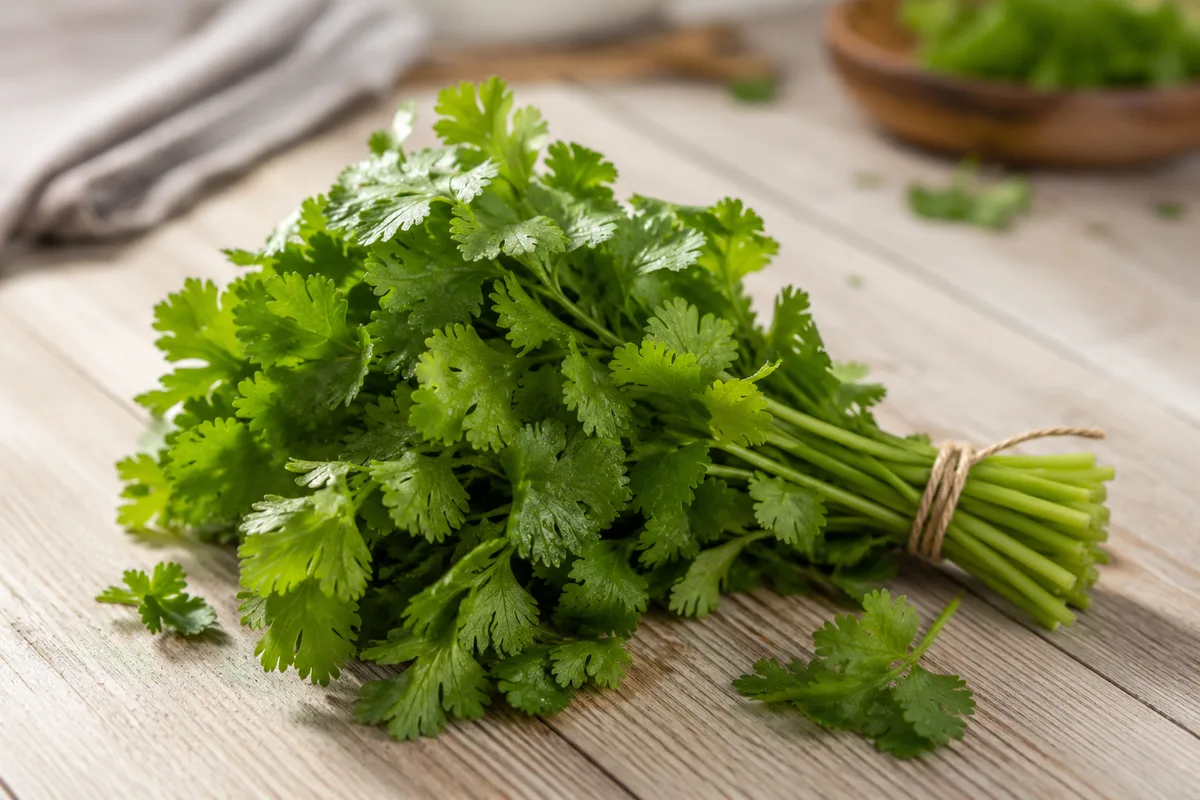
Culantro and cilantro share a name that sounds nearly identical and a flavor family that overlaps, but they are genuinely different plants — culantro in the Amazonian sense (Eryngium foetidum) has long, serrated, sturdy leaves and a stronger, more resinous flavor than round-leaf cilantro, and it's the herb of choice across Peru's Amazon region, showing up in inchicapi and timbuche the way cilantro shows up across the rest of the country.
For most of my life culantro meant cilantro — the soft-leaved stuff we throw into half of what we cook in the sierra. Then I went to the jungle and somebody handed me a leaf as long as my hand, called it by that same word, and it tasted like cilantro that had been concentrated down and given a temper. Both uses are correct. It is not a mistake anybody is making; it is just how the word works in different parts of the country.
One thing to be clear about before going further: on the Peruvian coast and in the highlands, most people say culantro when they mean ordinary soft-leaved cilantro. Ask for culantro in a market in Lima or in Junín and you will be handed coriander. This page is about the other plant — the long, serrated Amazonian one, sometimes called sacha culantro to tell them apart — which is a genuinely different herb that happens to share the everyday name.
Its sturdier leaves also hold up better to long cooking than cilantro, which wilts and loses flavor quickly — a practical reason it suits slow-simmered Amazonian soups better than the more delicate herb used elsewhere.
What is culantro, and how does it differ from cilantro?
Culantro's leaves are long, flat, and edged with small serrations, growing close to the ground in a rosette rather than on tall, branching stems the way cilantro does. The flavor is more intense — some describe it as cilantro concentrated, others as slightly more bitter and resinous — which is why recipes calling for culantro typically use less of it by volume than they would cilantro.
Culantro isn't a stronger cilantro exactly. It's a related but genuinely distinct flavor, sturdier in every sense.
How Amazonian kitchens use culantro
- Stirred into soups near the end. As in inchicapi and timbuche, chopped culantro goes in during the final few minutes, similar to how cilantro is used elsewhere.
- Ground into marinades. Its sturdier leaves blend well into pastes for grilled fish and meat.
- Used whole in broths. Whole sprigs simmered in a broth and removed before serving, perfuming the liquid without needing to be chopped.
Culantro substitutes, honestly ranked
- Fresh cilantro, a bit more of it. The closest and most accessible substitute — use a slightly larger quantity than the recipe calls for in culantro, since cilantro's flavor is milder.
- Fresh cilantro plus a small amount of parsley. Adds a touch more sturdiness and body, approximating culantro's slightly more robust character.
For most home cooks outside a Latin American or Southeast Asian grocery store, cilantro is a perfectly reasonable stand-in — the dishes it appears in, like inchicapi, will still taste recognizably right.
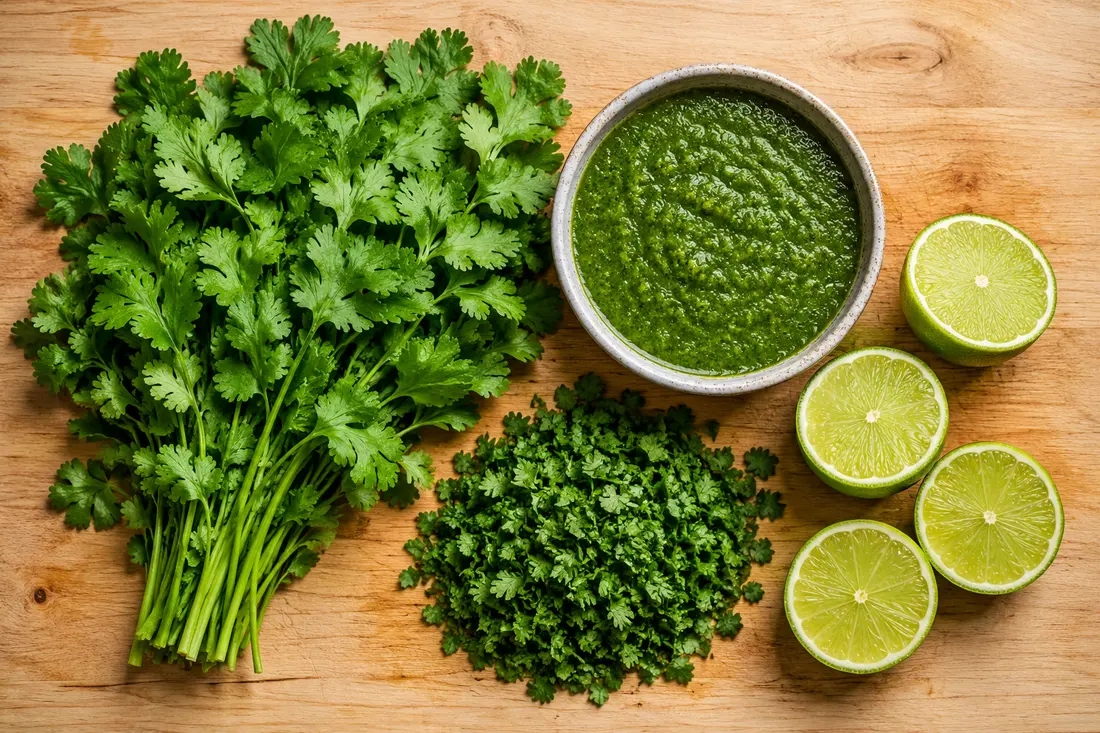
Recipes that depend on culantro
Almost everything in this section is Amazonian, which is the honest answer to where this herb belongs:
- Inchicapi. The peanut and chicken soup of the jungle. The culantro goes in at the end and it is what makes the bowl smell the way it does.
- Timbuche. A river-fish broth built around it. Cilantro will stand in and the soup will be good; it will not be the same soup.
- Marinades for grilled river fish. Ground into a paste with garlic and chile, where its sturdier leaf holds up to heat better than cilantro does.
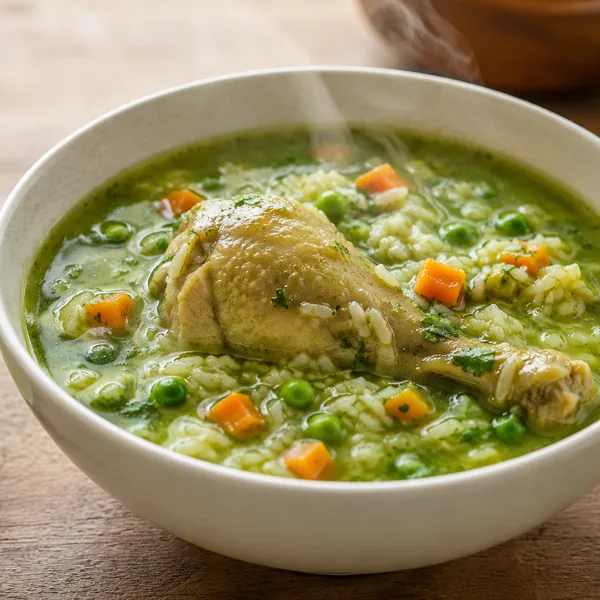
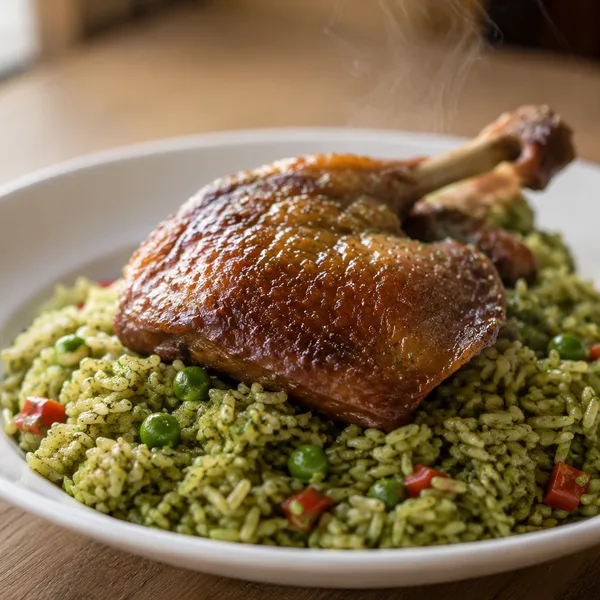
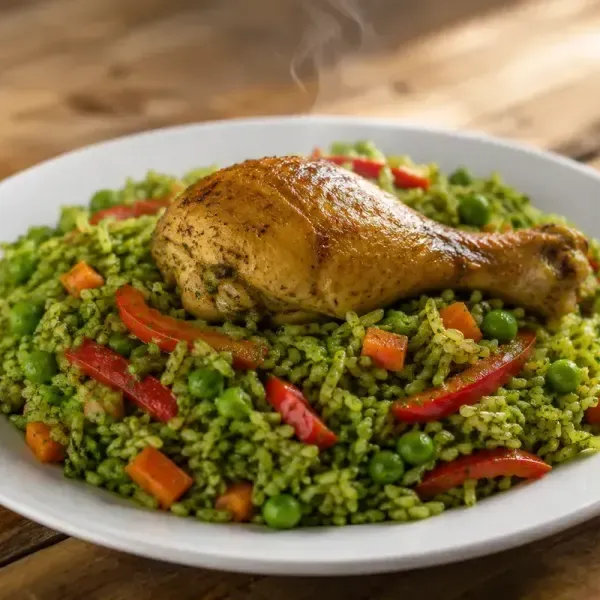
Outside the Amazon — in arroz con pato, in aguadito, in green rice — the word culantro on a Peruvian recipe means ordinary cilantro, and cilantro is what you should use. The two herbs are not interchangeable, but the word is, and knowing which one a recipe means is mostly a question of which side of the Andes it comes from.
Growing it, which is easier than buying it
Culantro is genuinely hard to find in most places and genuinely easy to grow, which makes it one of the few Peruvian ingredients you can solve at home rather than hunt for.
- It likes shade. Unusual for a herb, and the reason most people fail with it. Full sun makes it bolt to flower and the leaves turn bitter and thin. A shaded pot or the north side of a wall suits it.
- Cut the flower stalks off. The moment it flowers, leaf production stops. Keep cutting the central stalk and a single plant will produce for a year or more.
- Harvest the outer leaves. Take from the outside of the rosette and leave the center alone, the way you would with lettuce. It grows back from the middle.
- It survives indoors. A warm windowsill out of direct sun works through winter, which cilantro will not do.
Seeds are sold as culantro, recao, shado beni or ngo gai depending on whose shop you are in — all the same plant.
Questions people ask
Is culantro the same as cilantro? It depends where you are standing, and both answers are right. On the Peruvian coast and in the sierra, culantro is simply what people call cilantro. In the Amazon, culantro is Eryngium foetidum — a different plant with long serrated leaves and a much stronger flavor, sometimes called sacha culantro to tell them apart.
How much do I substitute? Roughly one culantro leaf for three or four sprigs of cilantro. It is considerably stronger, and it is the more common mistake to use too much. Start low; you can always add.
Can I cook with it? Yes, and unlike cilantro it holds up. Cilantro collapses if it meets heat for more than a moment, which is why it goes in at the end. Culantro survives a simmer and is often added early in Amazonian soups and juanes.
How do I store it? Wrapped in a damp cloth in the fridge it keeps a week or more, considerably longer than cilantro. It also freezes well — chop it and freeze it in oil in an ice tray, and it holds its flavor far better than most herbs do.

Junior Quintana learned to cook from his mother, Lina, in Junín, in the central Peruvian Andes — a kitchen where chicha morada simmered every Sunday and there were always native potatoes with cheese and choclo on the table. He started Andean Kitchen to share the food he grew up with, in English and without shortcuts: every recipe cooked and tested at home, where it's really made. His favorite dish is, and probably always will be, pachamanca. See how we cook, test and photograph.
Did you cook this?
Tell me how it went — including what did not work. I read every one, and with your permission I will put it on this page, with your first name, for whoever comes next.