
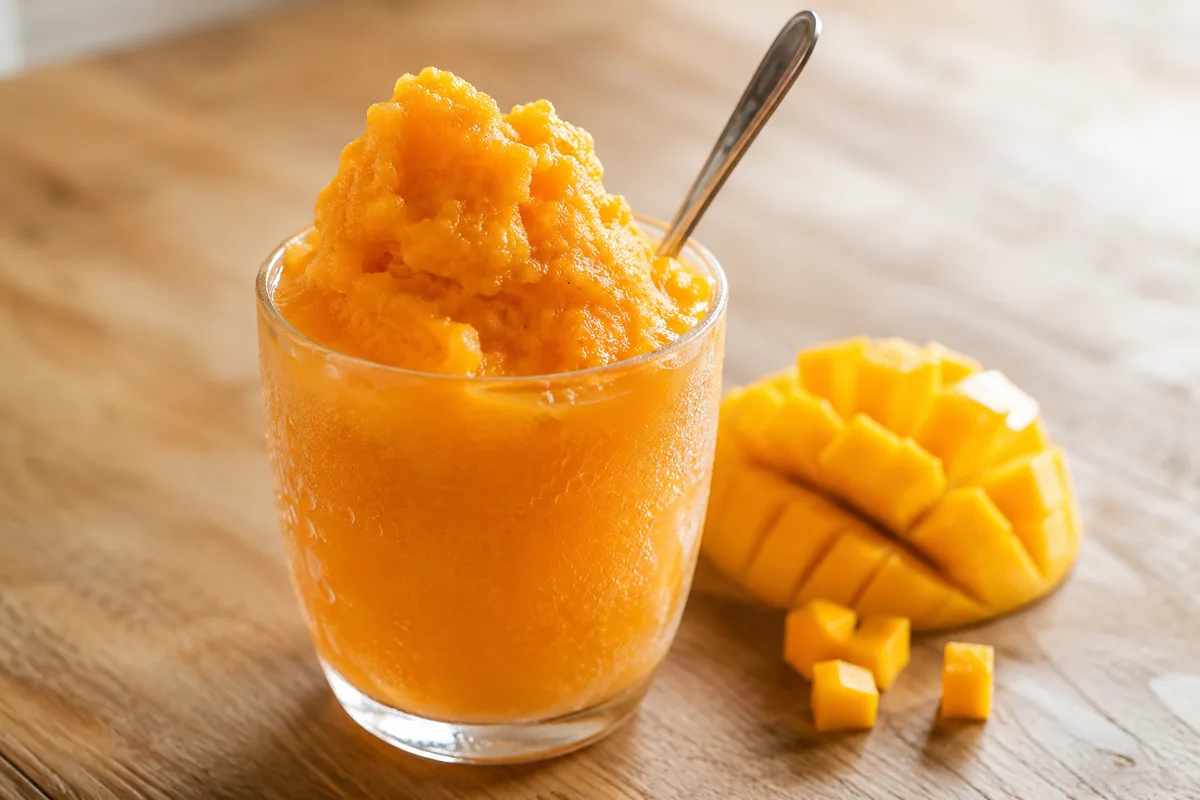
Cremoladas are Peru's street-cart answer to a hot afternoon — ice blended with fresh fruit into a thick, spoonable slush, sold from carretillas with a blender running continuously through the busiest hours. It's simpler than a smoothie in concept, built on ice as the base rather than juice or milk, which gives it a genuinely icy, granular texture rather than a smooth, creamy one.
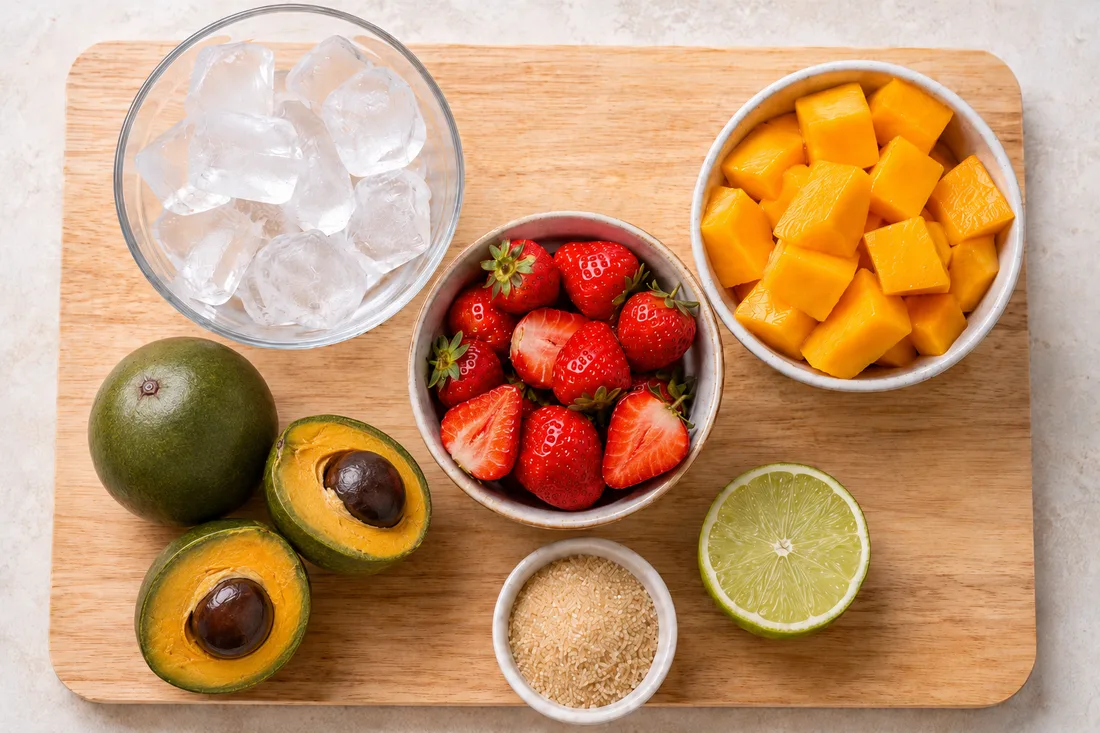
Mango and strawberry are the most common versions, though lúcuma — the same fruit behind Peru's favorite ice cream flavor — makes an excellent cremolada when it's in season, contributing its distinct maple-like sweetness.
The cremolada cart parked outside my school, and I do not believe I have ever walked past one without stopping. Lúcuma if they had it, maracuyá if they did not. It is shaved ice and fruit and nothing clever at all, and on a bright afternoon in the sierra — where the sun is far stronger than the temperature makes you expect — it is exactly the right thing.
Ice-heavy blending needs a strong blender and patience
Blending mostly ice is harder on a blender than liquid ingredients, and it can get stuck without enough liquid to move things along — pulse repeatedly, scrape down the sides, and add water a tablespoon at a time only as needed to keep it moving, without turning the whole thing watery.
A cremolada should be thick enough to eat with a spoon. If it's turned liquid, too much water went in trying to force the blend.
Serve immediately — it doesn't hold
Ice-based drinks melt fast, and a cremolada left sitting for more than a few minutes loses its slushy texture and separates into watery fruit juice. Blend it right before serving, not ahead of time.
Cremolada, raspadilla or jugo — they are not the same
Three cold things get sold from Peruvian street carts and visitors mix them up constantly:
- Cremolada. Fruit blended with ice into a thick slush you eat with a spoon. The fruit is in it, not on it.
- Raspadilla. A block of ice shaved into a cup and doused with colored syrup afterward. Lighter, sweeter, and the ice stays ice.
- Jugo. Straight fruit juice, blended and poured, no ice base at all — the thing you drink at a market stall in the morning.
If you have had a raspadilla and expected a cremolada, that is why it felt thin. And the reverse: a cremolada is close to a sorbet in body, dense enough that the spoon stands up in it for a moment before it starts to melt.
Which fruit works, and which does not
Not every fruit survives being blended with ice. The ones that work have enough body to hold their own; the ones that fail turn into flavored water, and no amount of blending fixes it.
- Best: thick, pulpy fruit. Lúcuma, mango, guanábana, chirimoya. They have enough flesh to keep the texture creamy even loaded with ice, which is where the name comes from.
- Excellent, for a different reason: sharp fruit. Maracuyá and strawberry are thin, but their acidity carries through the cold. Blend them with a little less ice and more fruit.
- Avoid: watery fruit. Watermelon, melon, orange. They are already mostly water, and adding ice gives you something that tastes of very little.
Frozen fruit works well and is often better outside Peru, where fresh lúcuma is hard to find and frozen pulp is not. Use less ice if the fruit is already frozen, or you end up with a cup of nothing.
The recipe
Ingredients
- 3 cups ice cubes
- 2 cups chopped fresh fruit (mango, strawberry or lúcuma work well)
- 1/4 cup sugar, or to taste
- Juice of 1/2 lime
- 2 tbsp water, if needed to help blending
Method
- Combine ice, fruit, sugar and lime juice in a blender.
- Blend on high, pulsing and scraping down, adding water only as needed.
- Blend until thick and slushy, no ice chunks remaining.
- Serve immediately.
Troubleshooting, from experience
Drink turned watery. Too much water added trying to force the blend. Add it sparingly, a tablespoon at a time.
Blender got stuck. Too much ice relative to liquid. Pulse and scrape down the sides repeatedly rather than running it continuously.
Texture melted too fast. Made ahead and left sitting. Blend right before serving.
What to serve it with
Cremoladas are a standalone treat, best enjoyed immediately on a hot day.
Questions people ask
What is the difference between a cremolada and a raspadilla? A raspadilla is ice shaved from a block with syrup poured over it. A cremolada is fruit blended with the ice, so the flavor is throughout rather than on top, and the texture is thicker. Both come off the same carts and they are not the same drink.
Do I need a special blender? A strong one helps a great deal. Ice is hard on a motor, so add it gradually rather than all at once, and pulse rather than running it continuously. If your blender struggles, crush the ice first in a bag with a rolling pin.
Can I make it ahead? No, and this is the one rule. A cremolada separates within minutes — the ice melts, the fruit sinks, and you are left with juice. It is made to order on every cart in Peru for exactly this reason. Blend it and hand it over.
Do I have to add sugar? It depends entirely on the fruit. Ripe mango or lúcuma often needs none. Maracuyá almost always does. Taste the fruit before you blend, because you cannot judge sweetness once the ice has diluted everything — and cold blunts sweetness, so it will taste less sweet than it does warm.

Junior Quintana learned to cook from his mother, Lina, in Junín, in the central Peruvian Andes — a kitchen where chicha morada simmered every Sunday and there were always native potatoes with cheese and choclo on the table. He started Andean Kitchen to share the food he grew up with, in English and without shortcuts: every recipe cooked and tested at home, where it's really made. His favorite dish is, and probably always will be, pachamanca. See how we cook, test and photograph.
Did you cook this?
Tell me how it went — including what did not work. I read every one, and with your permission I will put it on this page, with your first name, for whoever comes next.