
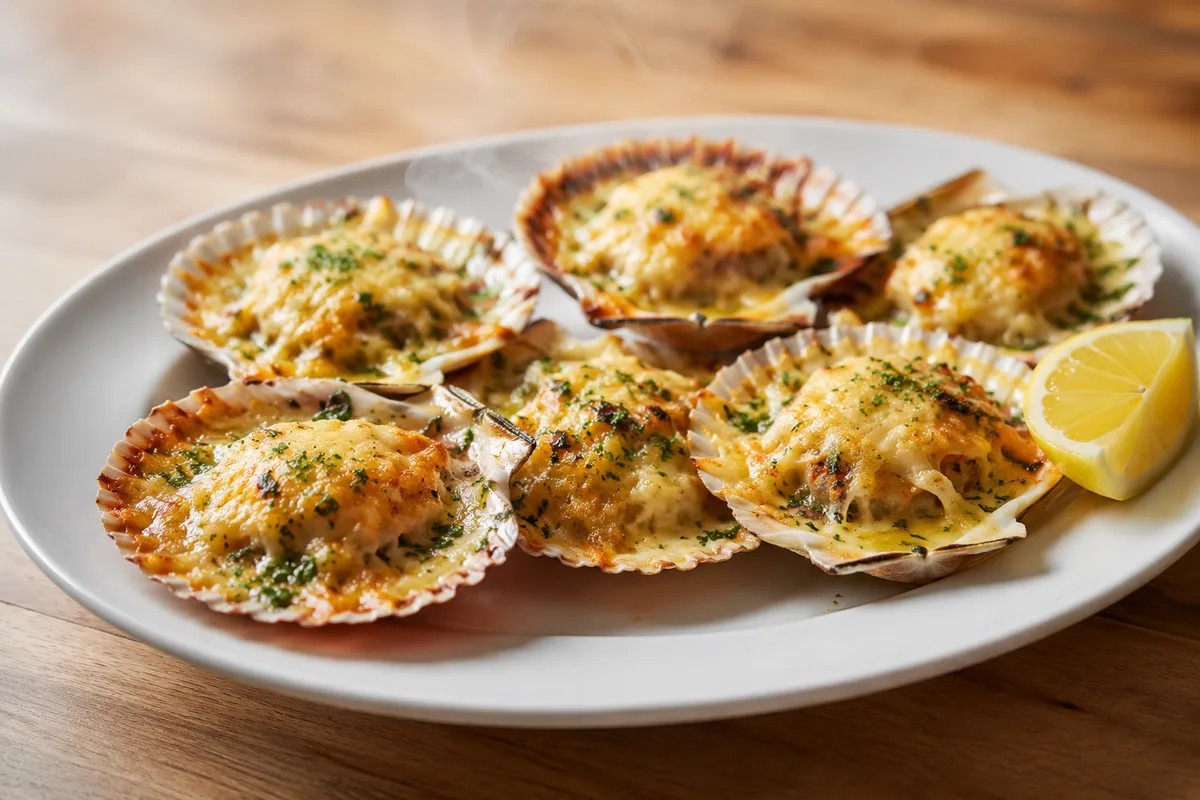
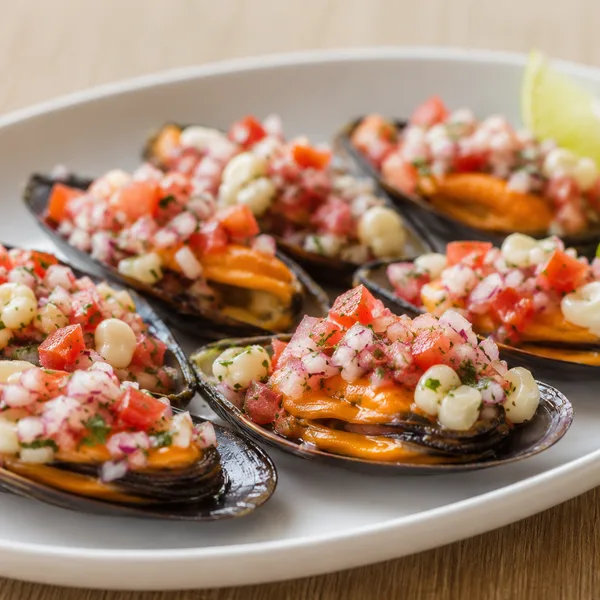
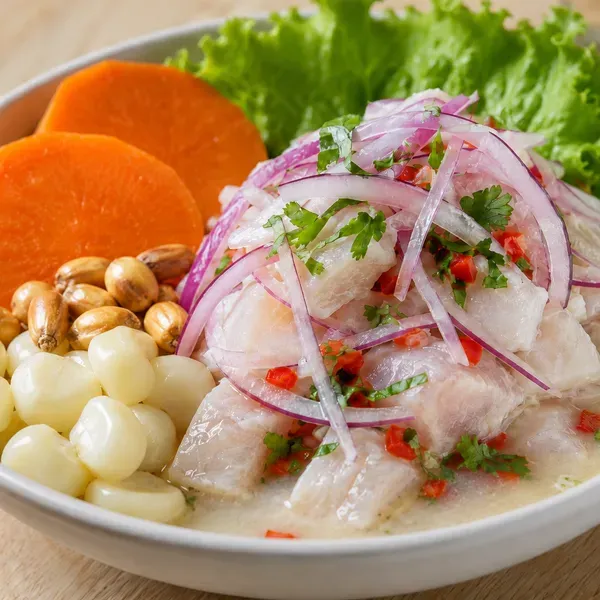
Conchitas a la parmesana is one of the clearest signs of Italian immigration's imprint on Peruvian coastal cooking — conchas de abanico — the fan-shell scallops of the Peruvian coast — broiled on the half shell under garlic butter and a heavy layer of parmesan until the cheese turns golden and bubbling. It sits on the piqueo plate right alongside choros a la chalaca and ceviche, but where those lean entirely on raw acid and citrus, this one goes in the opposite direction: hot, buttery, and broiled rather than served cold.
It's a quick, elegant starter, the kind of dish that shows up on menus in Lima's better seafood restaurants precisely because it's fast to execute and reliably impressive on arrival — bubbling cheese straight from the broiler tends to do that.
I grew up at 3,200 meters, so scallops were not a childhood food for me — they were something I met later, on a plate in Lima, with the honest suspicion of a man from the mountains being handed shellfish. I ate one to be polite. Then I ate the rest of them and looked around to see whether anyone had noticed.
The broiler does the work in minutes, not longer
This is a fast, high-heat finish rather than a slow bake — under a hot broiler, the scallops cook through and the cheese browns in five to seven minutes total. Leaving them in longer risks overcooking the scallops into rubbery bites underneath a perfectly browned top, so watch closely rather than setting a timer and walking away.
The cheese browning is not the signal that the scallops are done — it's just faster than they are. Check both.
A little garlic butter goes a long way
Because the parmesan layer on top is already rich and salty, the garlic butter underneath only needs to be a modest spoonful per scallop — too much and the dish turns greasy rather than balanced. The white wine and lemon juice in that butter mixture are what keep it bright instead of one-note.
Buying scallops for this
You need them on the half shell, and that is the whole difficulty of making this dish outside Peru. Loose scallop meat works for eating but not for serving: the shell is the dish, the portion and the plate all at once.
At a fishmonger, ask for scallops in the shell and have them opened and cleaned for you, keeping the deeper half of each shell. Frozen half-shell scallops, sold at most Asian and Latin American groceries, are a genuinely good option here — they are frozen on the shell within hours of being caught, and the broiler is forgiving about the difference.
The Peruvian concha de abanico comes with its orange coral attached, and it stays on. It cooks in the same few minutes and it is half the color of the finished plate. Anywhere the coral has been trimmed off, the dish looks paler than it should.
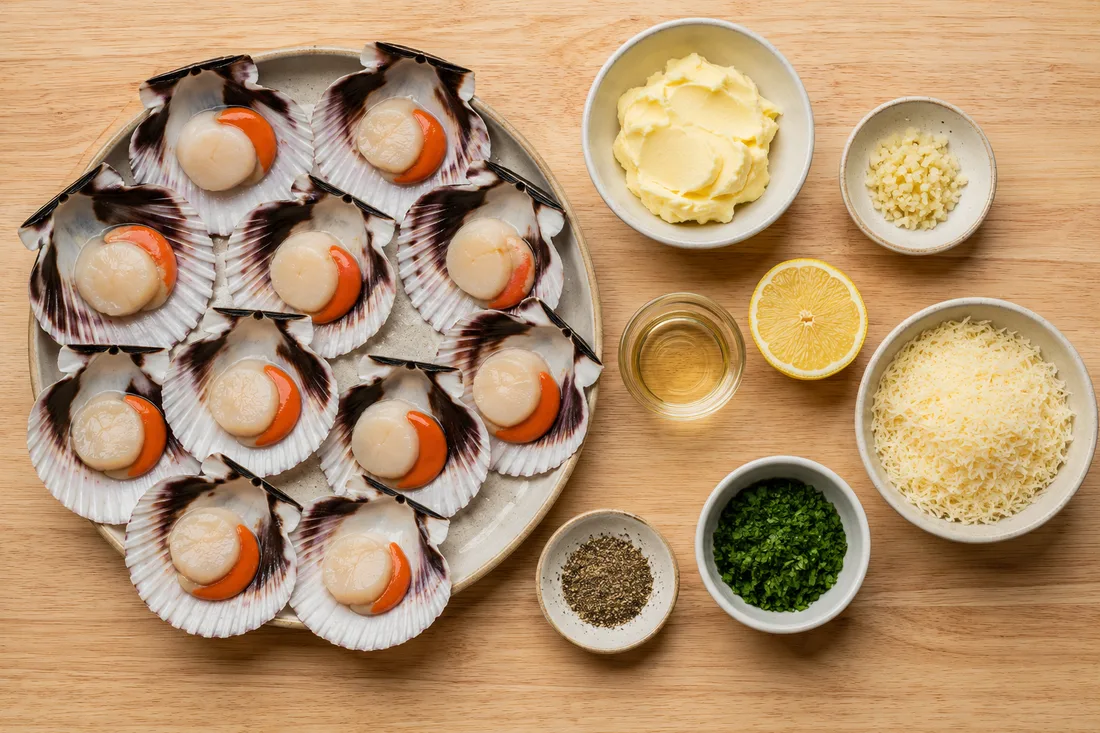
What to do when you cannot get them on the shell
The shell is not decoration here. It holds the butter, it holds the cheese, and it is what people pick up. But scallops sold loose are far more common outside Peru, and the dish still works if you handle it right.
- Small gratin dishes. The best substitute. One or two scallops per dish, same butter, same cheese, same broiler. You lose the picking-up and keep everything else.
- A spoon of the shell shape. Ceramic shells are sold cheaply in kitchen shops and last forever. If you make this more than once, they are worth it.
- Do not use a single large dish. Crowded together the scallops steam instead of broiling, and they release enough liquid to drown the butter. Whatever you use, keep them apart.
One thing does not substitute: the scallop itself. This is a dish with four ingredients and no hiding place, so a tired scallop is a tired plate.
The recipe
Ingredients
- 16 scallops on the half shell
- 4 tbsp butter, softened
- 3 garlic cloves, minced
- 2 tbsp white wine
- 1 tbsp lemon juice
- 1 cup grated parmesan
- 2 tbsp chopped parsley
- Salt · pepper
Method
- Make the garlic butter. Preheat the broiler. Mix softened butter with garlic, wine, lemon juice, salt and pepper.
- Top the scallops with a small spoonful of the butter mixture each.
- Cover with parmesan, generously, over each scallop.
- Broil 5-7 minutes until golden and bubbling and the scallops are just cooked through. Finish with parsley.
Troubleshooting, from experience
Scallops turned rubbery. Left under the broiler too long. Pull them as soon as the cheese browns, checking at the 5-minute mark.
Cheese didn't brown evenly. Oven racks vary — rotate the tray halfway through if your broiler has hot spots.
Dish tastes greasy. Too much butter per scallop. A modest spoonful is enough given how rich the parmesan already is.
What to serve it with
A squeeze of extra lemon and crusty bread on the side, to catch whatever garlic butter escapes the shells.
Questions people ask
Fresh or frozen scallops? Frozen is fine and often better than fresh that has traveled. What matters more is that they are dry-packed rather than soaked in solution — treated scallops leak water under the broiler and you end up with cheese floating in liquid. Thaw in the fridge and pat them genuinely dry.
Which cheese, if I cannot find parmesan? Any hard, salty, fine-grating cheese: grana padano, pecorino, a dry aged cheddar at a push. What you cannot use is anything that melts into strings — mozzarella turns the top rubbery and the whole point is a thin browned crust.
How long under the broiler? Three to five minutes, and do not walk away. The scallop is cooked the moment it turns opaque, which happens fast; the cheese browning is what you are actually watching for. Overcooked scallop goes from tender to rubber with no warning in between.
What is a concha de abanico? The Peruvian scallop, named for the fan shape of its shell. It is smaller and sweeter than the big Atlantic ones and comes to the table on the flat half of its own shell. Any scallop works for this dish, but the Peruvian one is what the recipe was built around.

Junior Quintana learned to cook from his mother, Lina, in Junín, in the central Peruvian Andes — a kitchen where chicha morada simmered every Sunday and there were always native potatoes with cheese and choclo on the table. He started Andean Kitchen to share the food he grew up with, in English and without shortcuts: every recipe cooked and tested at home, where it's really made. His favorite dish is, and probably always will be, pachamanca. See how we cook, test and photograph.
Did you cook this?
Tell me how it went — including what did not work. I read every one, and with your permission I will put it on this page, with your first name, for whoever comes next.