
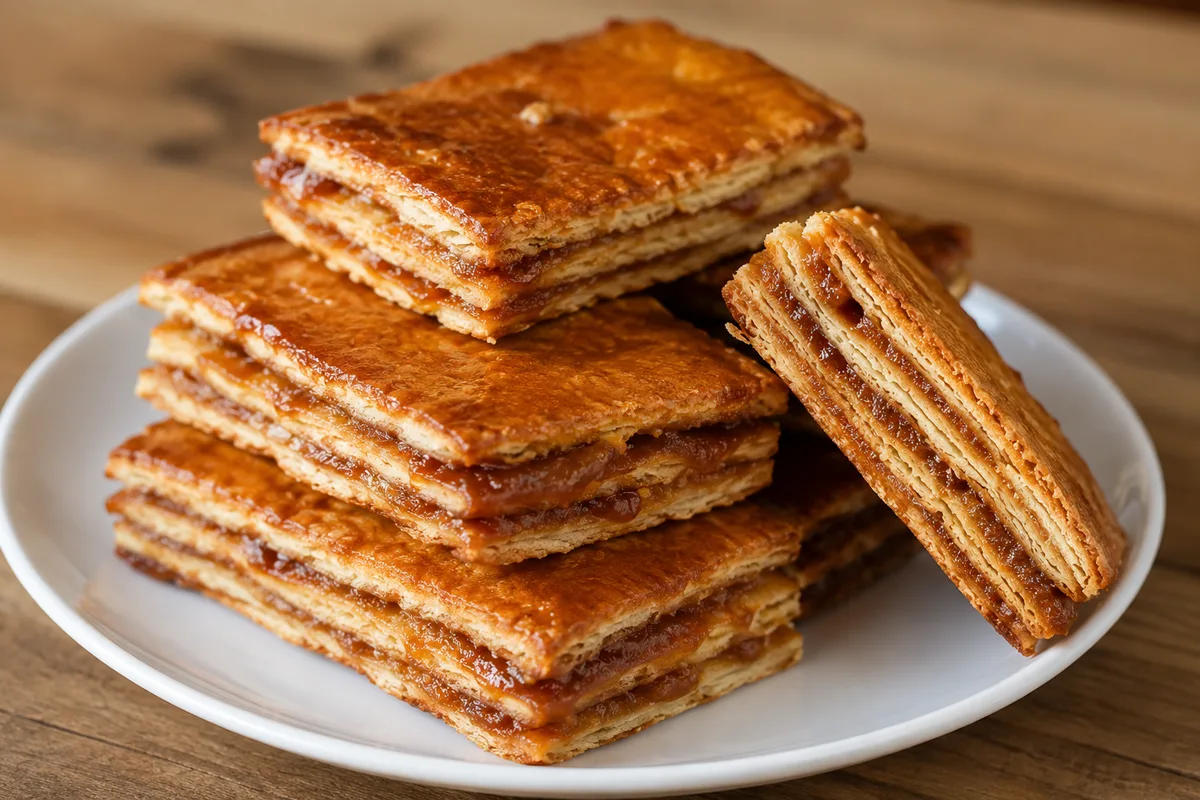
Chumbeque shares its home region and its basic layered-and-glued logic with King Kong, but the execution runs in a different direction entirely — thin, crisp cracker layers stacked and pressed together with chancaca syrup until the whole thing hardens into a dense, sliceable candy bar, closer to a candy than a cake. It is a norteño specialty from Chiclayo, historically made to travel well, sturdy enough to survive a trip without the softer manjar blanco layers of its cousin.
The name and dessert are said to trace back to Chinese immigrant confectioners in the region, another example of Chinese-Peruvian influence showing up outside chifa cooking specifically.
Chumbeque reached me long before I reached Chiclayo. Somebody in the family came back from the north with a box of it, the way people bring sweets back from a trip, and it sat on a shelf for weeks because nobody wanted to be the one who finished it. That is chumbeque exactly: built to survive the journey, and then to sit there daring you.
Roll the crackers thin, and prick them well
These need to bake up genuinely crisp, closer to a thin cracker than a soft cookie — roll the dough thin and prick it thoroughly with a fork to prevent puffing, which would ruin the flat, stackable layers this candy depends on.
Chumbeque's whole structure depends on flat, crisp layers. A puffed or soft layer breaks the stack.
Press hard while the syrup is still hot
Firm, even pressure while stacking, applied while the syrup is still warm and pliable, is what fuses the layers into a single solid block once everything cools and hardens. A loosely stacked chumbeque falls apart into individual crackers rather than staying together as bars.
Why it keeps, and how to store it
Chumbeque was built to survive a journey, and it does. There is almost no water left in it — crisp baked layers and boiled-down syrup, nothing soft, nothing fresh — which is exactly why it holds for weeks at room temperature while its cousin King Kong, full of manjar blanco, does not.
Keep it wrapped and dry, and keep it out of the fridge. Refrigeration pulls moisture into the layers and the crackers go soft, which is the one thing that ruins it. A tin or an airtight box on the shelf is right.
Cut it with a heavy knife and some conviction, in short bars rather than squares. It is meant to be broken off and eaten in pieces, not served on a plate with a fork.
Getting the syrup to the right stage
Everything else in this recipe is straightforward. The syrup is where it is won or lost, and chancaca makes it harder to read than plain sugar because it is already dark and you cannot judge it by color.
- Too loose and it never sets. The layers slide, the candy stays sticky, and it will not keep. This is the common failure.
- Too far and it turns to glass. Chumbeque should snap and then give; syrup taken to hard crack shatters and cuts the roof of your mouth.
- The test that works without a thermometer. Drop a little into cold water. It should form a firm ball you can flatten between your fingers with some effort — a punto, as Peruvian cooks say when something has reached exactly the right stage — around 250°F. If it dissolves, keep going. If it goes brittle and clicks against the glass, you have gone too far.
Work fast once it is there. Chancaca syrup at that stage stiffens quickly, and the layers have to be pressed while it is still moving.
The recipe
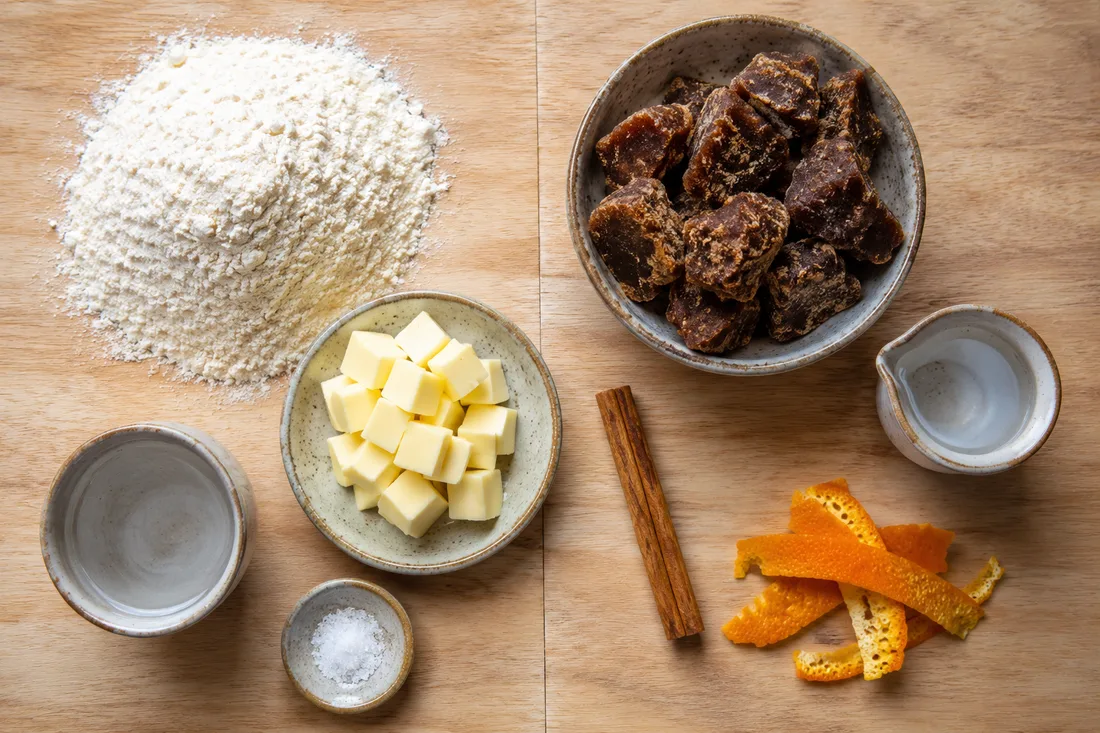
Ingredients
- 3 cups flour
- 1/2 cup butter, cold and cubed
- 1/4 cup cold water · pinch of salt
- 1 lb chancaca, broken into pieces
- 1/2 cup water
- 1 cinnamon stick · peel of 1 orange
Method
- Make the dough from flour, cold butter, salt and cold water. Rest 15 minutes.
- Roll thin, cut into rectangles, prick well, and bake at 180°C (350°F) 10-12 minutes until crisp. Cool.
- Make the syrup from chancaca, water, cinnamon and orange peel, 15-20 minutes. Strain.
- Stack and press, brushing each layer with hot syrup. Cool and harden completely before cutting.
Troubleshooting, from experience
Layers separated after cooling. Not enough pressure applied while stacking, or the syrup cooled too much first. Press firmly while it's still hot.
Crackers puffed instead of staying flat. Not pricked enough before baking. Prick thoroughly across the whole surface.
Candy stayed soft instead of hardening. The syrup wasn't reduced enough before assembly. Cook it until it visibly thickens.
What to serve it with
Chumbeque needs nothing beyond itself — a portable candy meant for snacking, not plating.
Questions people ask
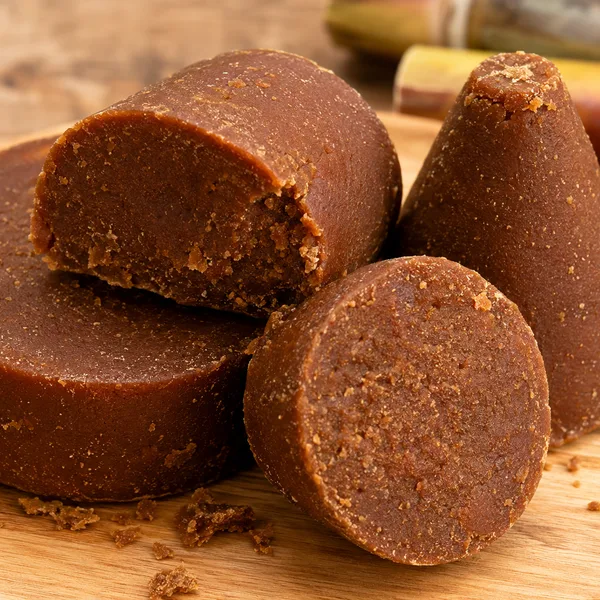
What is chancaca, and can I substitute it? Unrefined whole cane sugar pressed into hard dark blocks, sold as panela in Colombia and piloncillo in Mexico. Brown sugar with a spoonful of molasses per cup gets you close in a pinch, though the result is milder — chancaca is what gives chumbeque its faintly smoky depth.
Why did my layers come apart? The syrup cooled before you pressed, or you did not press hard enough. There is no adhesive here beyond the syrup itself, so the assembly has to happen while it is hot and it has to be pressed under real weight — a board with something heavy on top, not just hands.
Why prick the crackers? So they stay flat. Unpricked dough puffs in the oven and a domed layer will not sit flush against the one above it, which is how you end up with gaps and a candy that breaks apart when cut.
How long does chumbeque keep? Weeks, and it was designed that way. Wrapped and kept dry it holds its texture for a month or more, which is why it travels out of Lambayeque as a gift. Humidity is the only enemy; a damp kitchen will soften it in days.

Junior Quintana learned to cook from his mother, Lina, in Junín, in the central Peruvian Andes — a kitchen where chicha morada simmered every Sunday and there were always native potatoes with cheese and choclo on the table. He started Andean Kitchen to share the food he grew up with, in English and without shortcuts: every recipe cooked and tested at home, where it's really made. His favorite dish is, and probably always will be, pachamanca. See how we cook, test and photograph.
Did you cook this?
Tell me how it went — including what did not work. I read every one, and with your permission I will put it on this page, with your first name, for whoever comes next.