
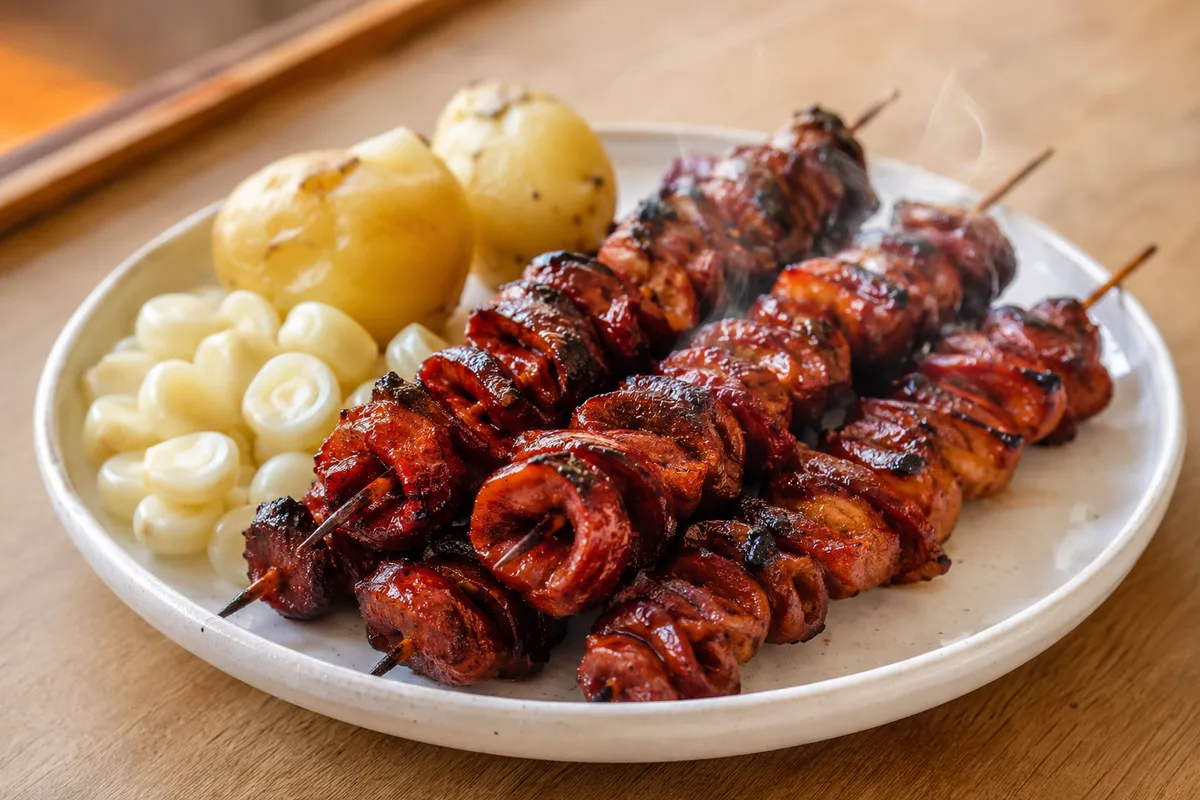
Choncholí sits on the same carretillas as anticuchos — often literally the same grill — but where anticuchos are built on beef heart, choncholí uses beef intestine, cleaned thoroughly, braised until tender, and then marinated and grilled the same way. It's one more example of Peru's broader culinary instinct to use every part of the animal well, treating what could be considered a scrap cut as worth its own dedicated preparation.
Properly made, choncholí has a distinct chewy-crisp texture once grilled, with charred, slightly crackling edges that pick up the same ají panca marinade anticuchos are known for.
The carretilla on my corner sold anticuchos to everyone and choncholí to the people who already knew. It cost less and it took longer to eat and it came off the same grill, and ordering it was a small way of saying you had been there before. I ordered anticuchos for years before I asked what the other skewer was, which I now think was a waste of several years.
Cleaning is the whole game before anything else happens
Beef intestine needs thorough cleaning — turned inside out, scraped, and rinsed repeatedly — before it's ready for the pot. This isn't a step to shortcut; properly cleaned intestine cooks up with a clean, mild flavor, while poorly cleaned intestine carries an unpleasant off-taste no amount of marinade can fully mask.
Everything that happens later — the braise, the marinade, the grill — depends on the cleaning being done right first.
Braise long before it ever sees the grill
Like beef heart in anticuchos, intestine needs a genuine pre-cook to become tender — a full hour and a half to two hours of simmering — before it's ready for the quick, high-heat finish on the grill. Skipping straight to grilling leaves it tough and chewy in the wrong way.
Buying it, and what to ask for
You are looking for beef small intestine, sold as chitterlings or beef runners depending on where you are. Most butchers who carry it sell it already cleaned, which saves the worst part of the job — ask directly, because the difference between cleaned and uncleaned is hours of work, not minutes.
Latin American, Caribbean, West African and Chinese butchers are the reliable places to find it. Frozen is fine here. Look for pieces that are pale and uniform rather than gray or patchy.
If you can only get it uncleaned, the method is the one in the section above and there are no shortcuts in it. Turn, scrape, rinse, repeat, and give yourself the afternoon. Everybody who sells choncholí from a carretilla did this first, before the sun came up.
Choncholí and anticucho on the same grill
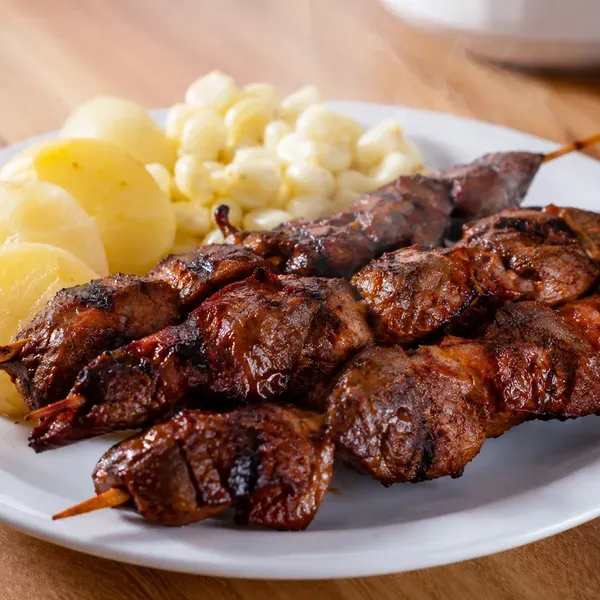
They arrive from the same cart, brush through the same ají panca marinade and land on the same plate with the same potato and corn. What separates them is what is on the stick, and that changes everything about how they are cooked.
- Anticucho is beef heart. Lean, dense muscle. It marinates and then it grills hot and fast — a couple of minutes a side, and overcooking it is the only real way to ruin it.
- Choncholí is intestine. It has to be cleaned properly and then braised until tender long before it sees fire. The grill is the last five minutes of a job that started hours earlier.
Which is why a cart that sells good anticuchos does not automatically sell good choncholí. The heart forgives an impatient cook. The intestine does not forgive anything at all.
The recipe
Ingredients
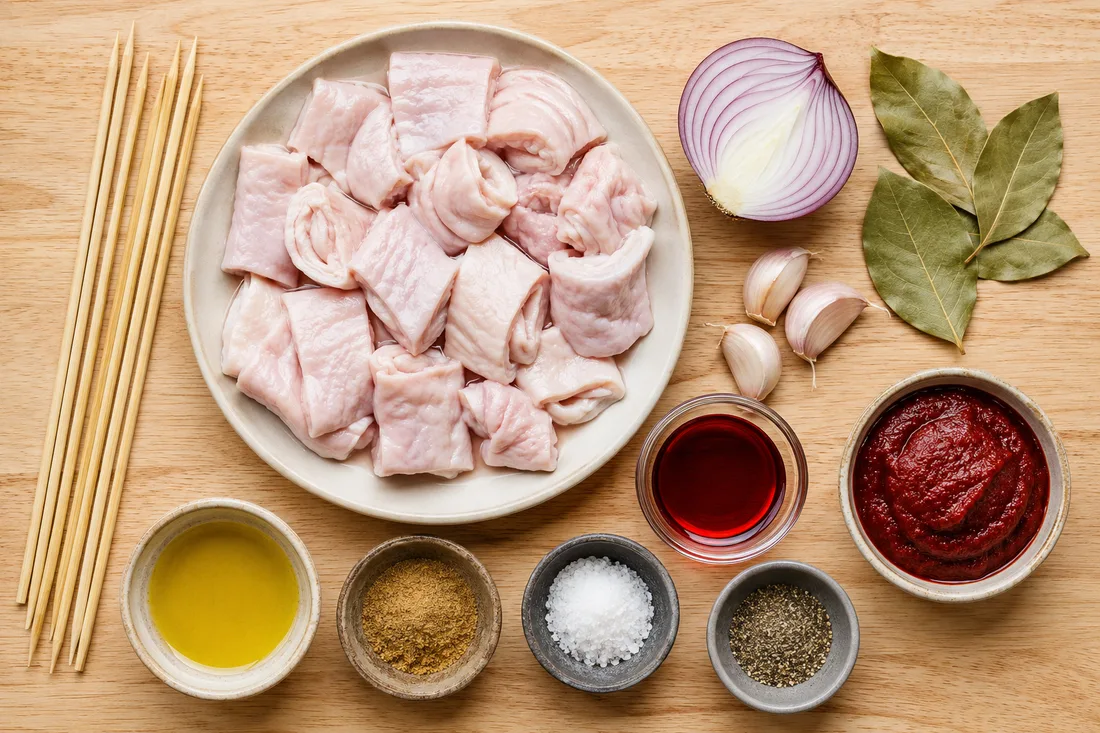
- 1 kg beef intestine, thoroughly cleaned
- 1 onion, halved · 2 bay leaves · 4 garlic cloves
- 3 tbsp ají panca paste
- 2 tbsp red wine vinegar
- 1 tsp ground cumin
- 2 tbsp oil · salt · pepper
- Bamboo skewers, soaked in water
Method
- Boil the intestine with onion, bay leaves and garlic 1.5 to 2 hours until tender. Cool.
- Skewer, cut into lengths and thread in a folded ribbon pattern.
- Marinate in ají panca, vinegar, cumin, oil, salt and pepper at least 30 minutes.
- Grill 3-4 minutes per side, basting, until charred and crisp.
Troubleshooting, from experience
Off-flavor or unpleasant smell. Cleaning wasn't thorough enough. Take the time to clean it properly before cooking.
Still tough after grilling. The braise was cut short. Give it the full 1.5 to 2 hours before it goes anywhere near the grill.
Skewers burned before charring properly. The grill was too hot, or they were too close to direct flame. Baste and monitor closely.
What to serve it with
Boiled potato and a wedge of lime, exactly as with anticuchos — the classic street-cart pairing.
Questions people ask
How do I clean it properly? Turn it inside out, rinse under running water until it runs clear, then rub it hard with salt and lime or vinegar and rinse again. Do this two or three times. It is unglamorous and it is the whole difference between a good skewer and one nobody finishes.
How long does the braise take? An hour and a half to two hours at a bare simmer, until a piece gives easily when you press it. Undercooked intestine is rubbery in a way that grilling will never fix, and this is the single most common mistake. Braise it the day before if that is easier.
What can I ask for at the butcher? Beef small intestine, sometimes sold as chitterlings or tripe rope. Some butchers sell it pre-cleaned, which saves the worst of the work and is worth paying for. Pork intestine is a different thing and is used elsewhere, not here.
Do I have to grill it over charcoal? Charcoal is what a carretilla uses and the smoke is part of the dish, but a hot cast-iron pan or a broiler gets you most of the way. What matters more is that the pieces are already tender and that the last few minutes are genuinely hot, so the edges catch.

Junior Quintana learned to cook from his mother, Lina, in Junín, in the central Peruvian Andes — a kitchen where chicha morada simmered every Sunday and there were always native potatoes with cheese and choclo on the table. He started Andean Kitchen to share the food he grew up with, in English and without shortcuts: every recipe cooked and tested at home, where it's really made. His favorite dish is, and probably always will be, pachamanca. See how we cook, test and photograph.
Did you cook this?
Tell me how it went — including what did not work. I read every one, and with your permission I will put it on this page, with your first name, for whoever comes next.