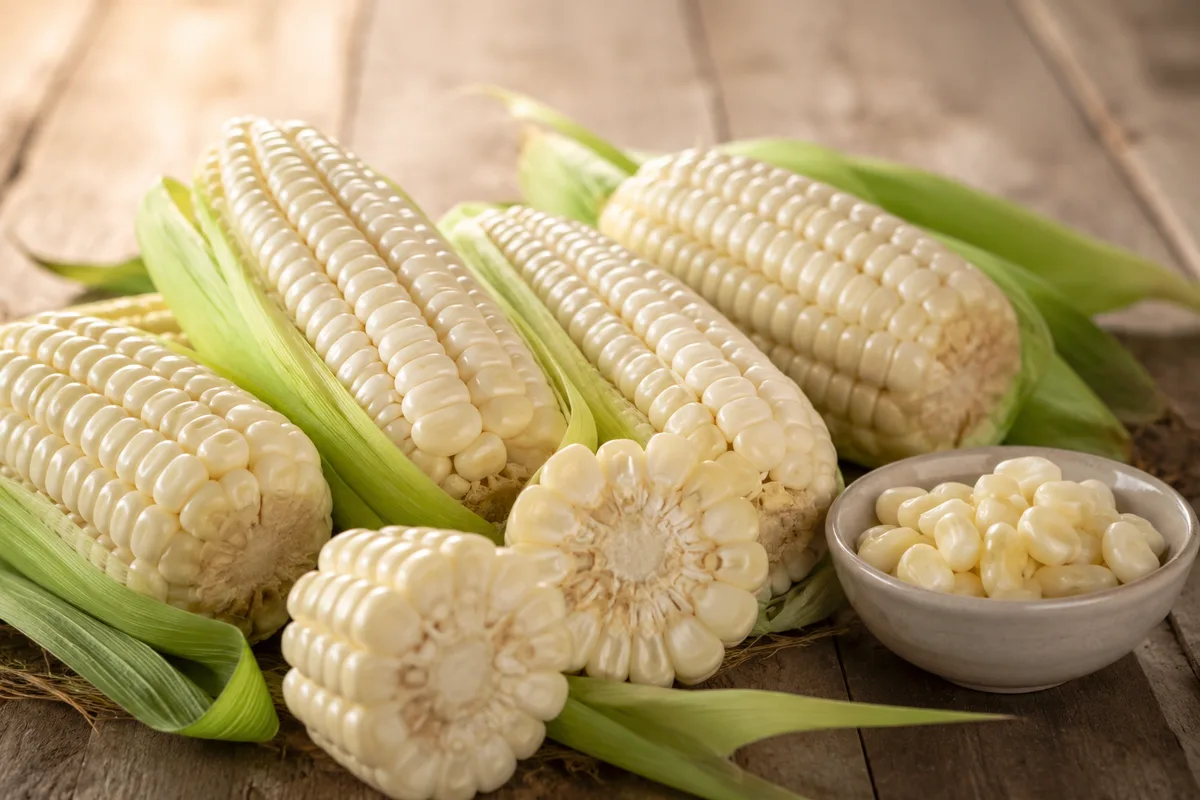
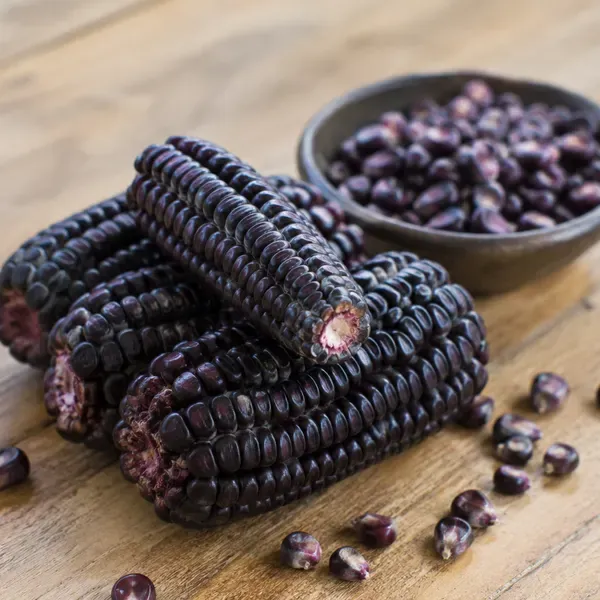
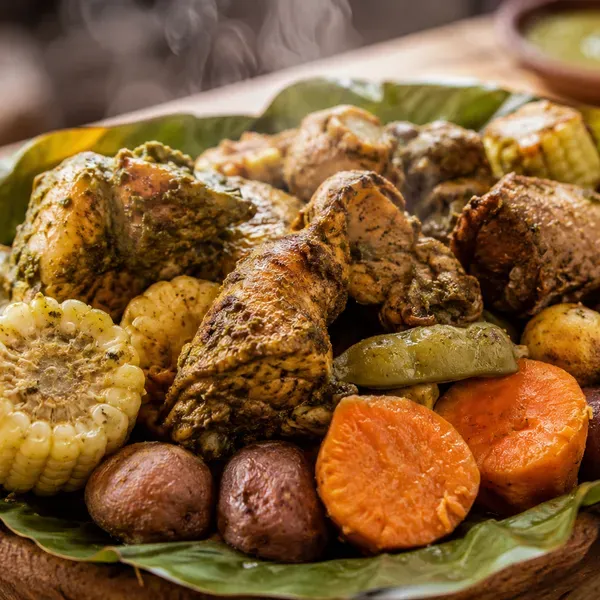
Choclo is Peru's own corn — large, pale, starchy kernels distinct from the small, intensely sweet kernels most of the world thinks of as "corn on the cob." It grows widely across the Andes, including around Junín, and it's genuinely satisfying eaten plain, boiled and served with a slice of queso fresco, the way it appears alongside papa a la huancaína and countless other Peruvian dishes as a standard side.
Where I am from, corn is not a vegetable you buy — it is a field somebody in the family has an opinion about. I grew up eating choclo boiled with a piece of queso fresco, handed over hot with no plate involved, and I was a grown man before I understood that most of the world thinks of corn as sweet. Ours is not sweet. Ours is starchy and enormous and tastes of the ground it came out of.
The variety most prized for its size and flavor, choclo gigante del Cusco, produces kernels genuinely larger than a standard fingernail, with a mild, starchy sweetness rather than sugar-sweet corn's more candy-like flavor.
What is choclo, and what does it taste like?
Choclo's kernels are pale yellow to white, much larger and starchier than standard sweet corn, with a mild flavor that leans savory rather than sweet. It's typically harvested a bit later in maturity than sweet corn, which contributes to its firmer, chewier bite once cooked.
Choclo isn't unripe or underripe sweet corn. It's a genuinely different corn, bred and grown for size and texture, not sugar.
How Peruvian kitchens use choclo
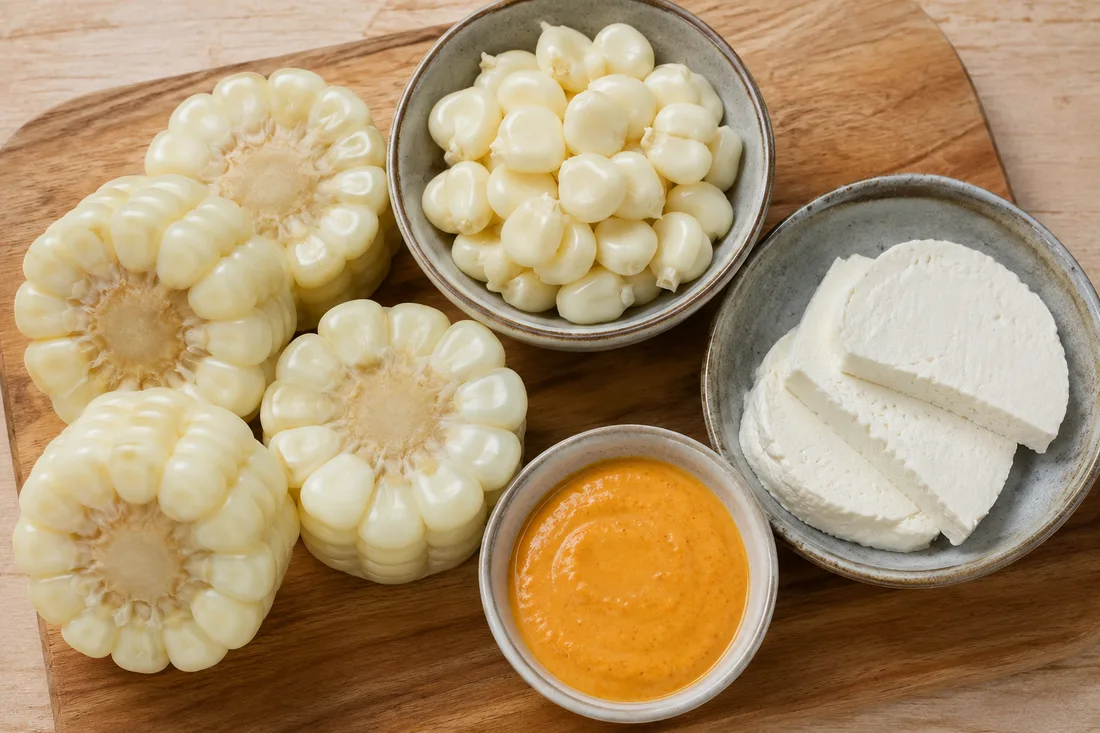
- Boiled and served plain. With a slice of queso fresco, as a side to nearly any main dish.
- Blended into soups. As in sara lawa, fresh kernels blended directly into the broth.
- Ground into fritters. As in tortitas de choclo, partially blended and bound with egg.
- Toasted dry, as cancha. A related dried corn variety, toasted until crunchy, served as a snack or garnish alongside ceviche.
Where to buy choclo outside Peru, and substitutes
Fresh or frozen choclo is sold at Latin American grocery stores outside Peru, sometimes labeled "Peruvian corn" or "cuzco corn." Standard sweet corn is a workable substitute in most recipes, though the texture will be noticeably sweeter and less starchy — for dishes where choclo's specific bite matters, like served plain alongside huancaína sauce, it's worth seeking out the real thing.
Recipes that depend on choclo
Plenty of dishes are improved by it. These are the ones where swapping in sweet corn changes what you end up with:
- Ceviche. The kernels are there for texture and for relief — something starchy and bland against all that lime. Sweet corn adds sugar exactly where the dish does not want it.
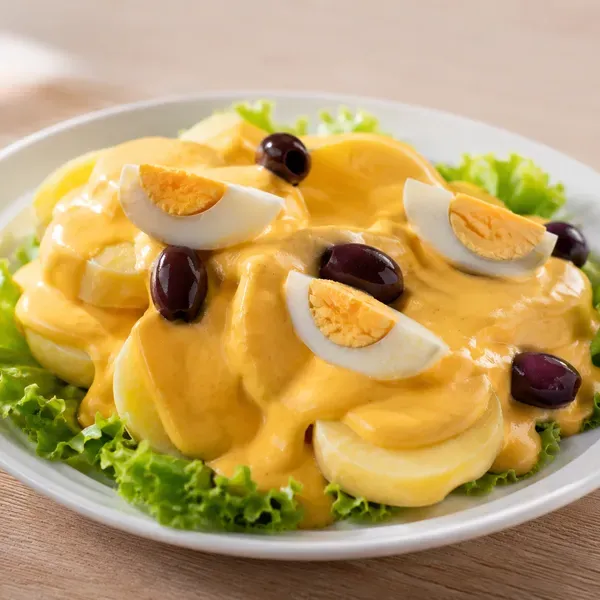
- Papa a la huancaína. Choclo, potato and egg under the sauce, and the choclo is the only part that gives any resistance.
- Humitas. Here it is the entire dish rather than a component — fresh choclo ground into a batter and steamed in its own husk.
- Solterito and any Arequipeño salad. Choclo, broad beans, queso fresco, rocoto. Sweet corn makes it taste like a different salad.
Everywhere else — soups, stews, anything where it goes in whole and cooks a while — sweet corn will do, and nobody at the table will run an investigation.
How to boil it, which is the only technique that matters
Almost every use of choclo starts here, and it is a short list of rules that Peruvian kitchens follow without discussing them.
- Salt the water, and add a little sugar. A spoonful of sugar in the pot is standard and it is not there to sweeten — it rounds off the starch. Some households add a sprig of anise as well.
- Twenty to thirty minutes, and test a kernel. Choclo takes far longer than sweet corn. It is done when a kernel is tender but still has body; it should never go soft.
- Leave a few leaves in the pot. The husk gives the water flavor. Vendors in the sierra boil the corn in its own leaves as a matter of course.
Eaten on its own it wants nothing but salt and a slab of fresh cheese. That combination — boiled corn and white cheese in the hand — is one of the most ordinary things in the Andes and one of the ones people miss most when they leave.
Questions people ask
Can I use regular sweet corn instead? For a garnish beside ceviche, yes, and it will taste different but do the job. For anything where choclo is the point, no — sweet corn is bred for sugar and small tender kernels, and choclo is starchy with kernels the size of a thumbnail. They behave differently in a pot and on a plate.
Where does the word come from? From Quechua chuqllu, the fat-kerneled Andean corn. The Spanish word traveled out from the Andes and is now used across much of South America, which is a fair indication of where the corn itself came from.
Is frozen choclo any good? Yes, and outside Peru it is usually the realistic option. Latin markets sell it frozen on the cob and off it, and the texture survives freezing well because the kernels are dense to begin with. Boil it from frozen, adding a few minutes.
What is the difference between choclo and cancha? The same plant at different stages, treated differently. Choclo is the fresh corn, boiled. Cancha is a smaller dried variety toasted in a dry pan until it splits — crunchy, salty, and what arrives on the table before the food does in half the restaurants in Peru.

Junior Quintana learned to cook from his mother, Lina, in Junín, in the central Peruvian Andes — a kitchen where chicha morada simmered every Sunday and there were always native potatoes with cheese and choclo on the table. He started Andean Kitchen to share the food he grew up with, in English and without shortcuts: every recipe cooked and tested at home, where it's really made. His favorite dish is, and probably always will be, pachamanca. See how we cook, test and photograph.
Did you cook this?
Tell me how it went — including what did not work. I read every one, and with your permission I will put it on this page, with your first name, for whoever comes next.